
Remember the city’s 2016 acquisition of an uninhabitable Ash Street office tower? Or elected leaders’ disastrous moves beginning in 1996 to underfund city pensions? Measure A, which goes before San Diego voters in the June 2 election, continues City Hall’s appalling tradition of rushing into decisions without anything resembling due diligence.
Placed on the ballot by the City Council, it would impose an initial annual tax of $8,000 on an estimated 5,000-plus homes that are vacant for 183 days or more, with a $4,000 surcharge for corporate-owned units. The tax would later rise to $10,000, with the surcharge going to $5,000.
The alleged goal is to get more housing on the market by encouraging the rental or sale of “non-primary” homes. But given council members’ manic attempts over the past year to squeeze money out of taxpayers to pay for the ever-rising cost of salaries and pensions, the real goal may be obtaining the revenue it would generate, estimated at from $9.2 million to $21.4 million in its first year.
Yet there are good reasons to think it will actually cost the city more money than it makes — because of the inevitable costly legal challenges if it is approved and because of the likelihood those challenges will succeed.
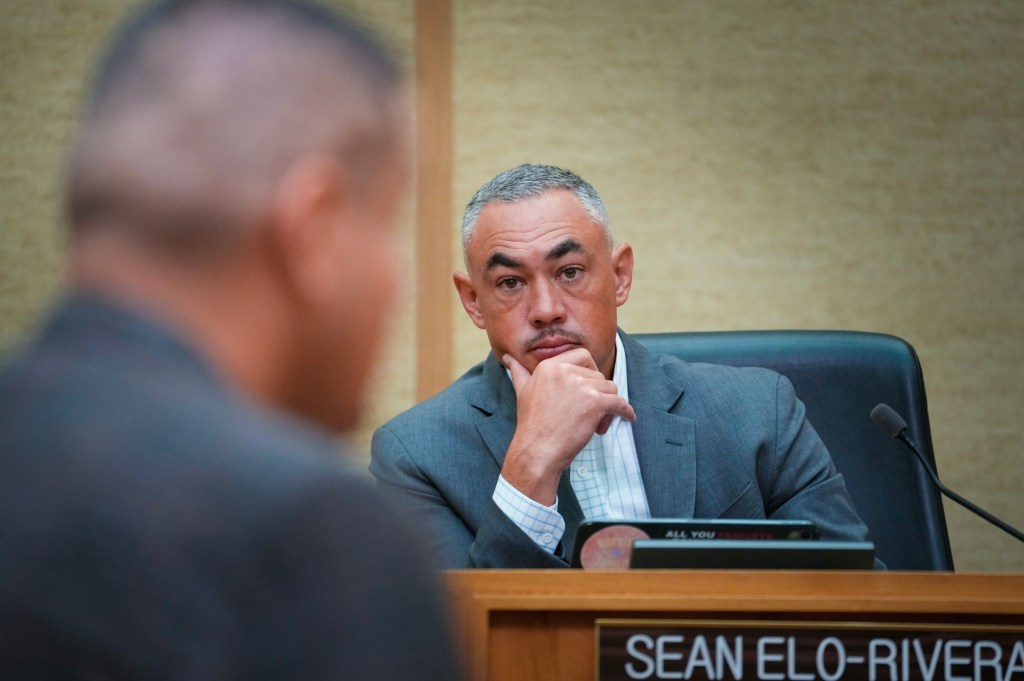
Consider what happened in San Francisco. That city’s Empty Homes Tax, which has many parallels to the local measure crafted by Councilmember Sean Elo-Rivera, was thrown out in 2024 by Superior Court Judge Charles F. Haines. The case never even went to trial. Haines issued a summary judgment agreeing with those challenging the law. They argued that heavily penalizing owners for keeping units empty violated the U.S. Constitution’s Takings Clause by coercing landlords into renting against their will, and that it was in direct conflict with California’s Ellis Act, which guarantees a property owner’s right to exit the rental market.
Yes, as has been reported, Oakland’s and Berkeley’s taxes on second homes remain intact. But Oakland’s law is far different than San Francisco’s in that it applies broadly to any underutilized land, including commercial and industrial parcels. It also only applies to properties used less than 50 days a year and includes heavy exemptions for low-income seniors, disabled owners and nonprofits. As a result, the case can be made that the law’s primary intent is preventing blight, which courts have found to be within cities’ purview.
Berkeley’s law is like San Francisco’s. The Berkeley Property Owners Association has not sued the city because it is piggybacking on the San Francisco court case, in which it filed an amicus brief. It expects a state appellate court to uphold Judge Haines’ ruling, making the demise of Berkeley’s law inevitable.
Reflecting this assumption, landlords of homes that violate Berkeley’s law have refused to pay $1.5 million of the $1.9 million assessed by the city in the first year of the tax, according to an April 30 report.
No wonder that Raul Castillo, the Harvard-educated lawyer who was the only council member to oppose placing the tax on the San Diego ballot, asked in vain for “a robust legal memo analyzing the tax’s ability to withstand a lawsuit.”
But even if Measure A were likely to hold up in court, there are strong reasons to doubt its wisdom. It would create huge hardships for older couples who worked their whole lives to be able to afford two homes, forcing many to make precipitous decisions that could prevent their children from eventually inheriting the houses they grew up in.
And who in their right mind thinks that the city would do a competent job of inspecting many thousands of homes to determine which owners had broken the law, given how many basic tasks it already mishandles? Who doubts the law would be enforced in a ham-handed way, with people being denied the presumption of innocence?
Cities make mistakes. But healthy cities learn from them. Three decades of history show that’s not the San Diego way.