
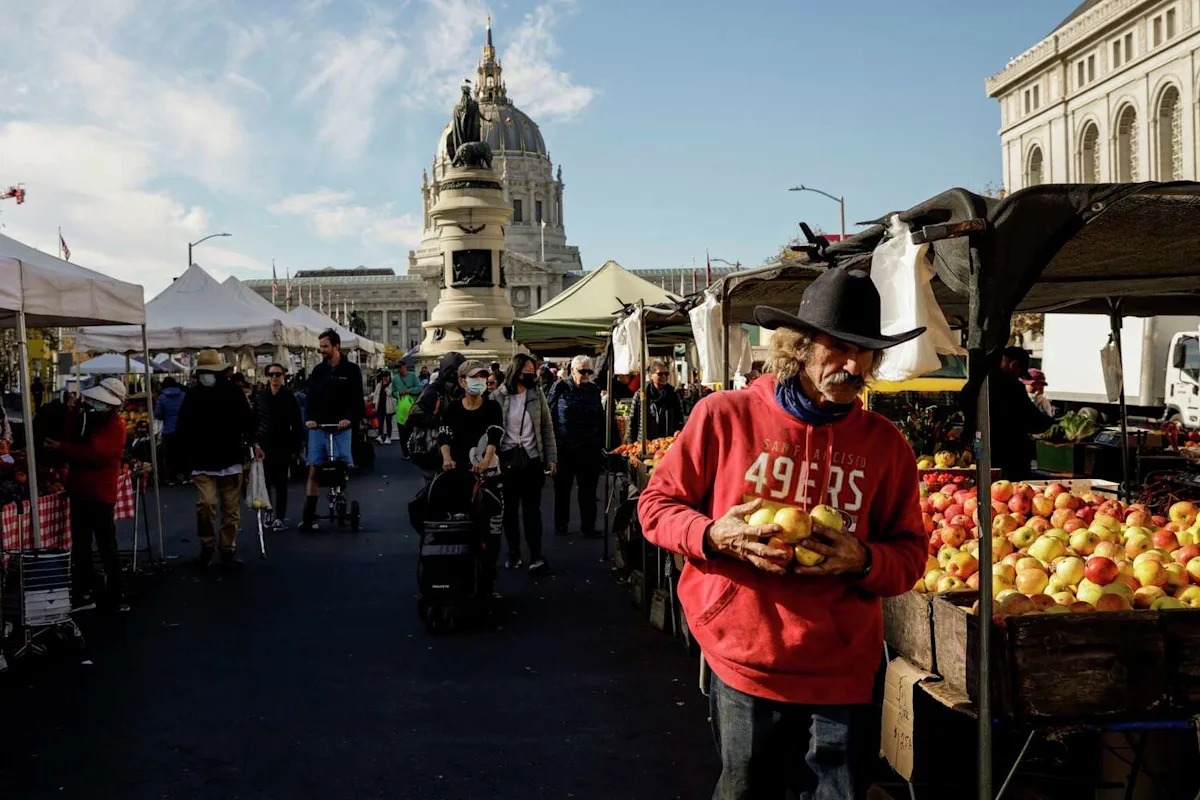
Parking rules bend for no one in San Francisco: Not a delivery driver; not a person with hazard lights blinking; certainly not a vendor loading an unmarked van.
Aruna Lee learned this the hard way. She had just packed up from last Saturday’s Taiwanese American Cultural Festival in Union Square when she saw the slip of paper on her windshield.
“Unattended/no activity,” said the ticket, which carried a $108 fine for blocking the flow of traffic. Lee had parked perpendicular to the curb on Powell Street as she broke down her food booth and hauled equipment to the vehicle on a dolly. She assumed any parking enforcement officer who rolled by would understand the arrangement was temporary. After all, the festival grounds were still buzzing, and other cars were parked the same way.
“When I saw the ticket that said ‘unattended,’ it made me so upset,” Lee recalled in an interview. “I had to take down all of my stuff and carry it. How is that process not obvious to the city government?”
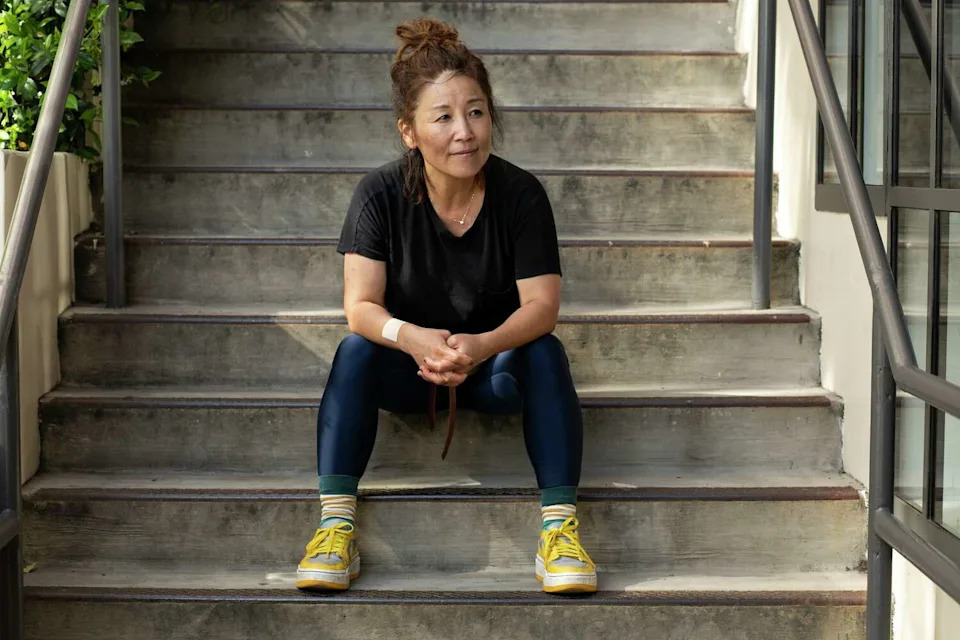
Aruna Lee, shown in 2022, said she was given a $108 fine for parking while loading up her gear from selling vegan kimchi at the Taiwanese American Cultural Festival in Union Square. (Salgu Wissmath/The Chronicle/The Chronicle)
Other merchants said they have experienced the same problem working at festivals, particularly those downtown where curb space is limited. Their concerns have mounted at a moment when San Francisco leaders are trying to activate public spaces, treating outdoor events as a key strategy in the city’s economic recovery. Promoters are throwing outdoor concerts at Civic Center; night markets in Chinatown, Glen Park and the Sunset; art walks in the Castro; movies in neighborhood parks. Each one is a tightly choreographed dance of street closures and temporary loading zones, and none would succeed if the vendors don’t want to participate because they fear they will go home with a ticket.
Merchants say their anxiety over parking is legitimate, considering how the city leans into enforcement.
“I’ve turned down a lot of events because loading and unloading is too much trouble,” said Jennie Chen, owner of Lunar Bakery. Though Chen has not been ticketed at a festival, she knows how strict San Francisco parking officers can be about loading; she’s been nailed in the five-minute zone outside her commissary on Hyde Street.
Chen tested her luck with the city’s parking enforcement by working the Taiwanese American Cultural Festival on Saturday. At the end of the day she parked near Lee to pack up, pointing her car toward the street instead of parallel to the sidewalk. She believes she was spared a ticket because a friend was sitting in the car.
Generally, the onus is on event organizers to create temporary loading zones in partnership with the city. People who run farmers’ markets, outdoor concerts and other happenings typically apply for curb space with the San Francisco Municipal Transportation Agency, a somewhat complex process that includes a fee, site assessment and 10-day public comment period before a city traffic engineer can approve the change. SFMTA spokespeople said people are encouraged to go through the steps, and many complete them successfully. One organizer, Diana Brito, compared the whole machinery of street-permitting to a “chaotic ballet” that requires careful communication with both the city and vendors.
Events in Union Square fall in a different category, since Recreation and Parks controls that location, while SFMTA manages the streets. City staff said vendors sometimes use the Powell Street curb as a temporary loading zone, though they are expected to stay only for a brief period. Parking control officers can’t always deduce why someone is camped out in an illegal spot with their vehicle facing the wrong direction.
“These officers have a really tough job,” said Janet Tarlov, chair of the SFMTA board of directors.
In this case, their job was probably made tougher by an ad hoc loading system. Constrained by a tight budget, the Taiwanese American Cultural Festival had not provided temporary curb space for vendors, said Alan Ma, the festival director. He had heard about Lee’s citation and wanted to work with her to try to resolve it, or at least figure out how to avoid such penalties in the future.
“We told vendors that there were no loading zones, so their option was to park in the garage beneath Union Square,” Ma said. He acknowledged Lee’s predicament: The garage option, while fine during the day, didn’t really work for someone trying to cart a large cooler and folded-up tent on a dolly. Several vendors wound up parking illegally, a recourse that Ma and other festival staff did not condone but also couldn’t really police. Ma said they would try to set up temporary parking next year.
Even if event producers follow procedures to secure a loading zone, they can’t guarantee that vendors will have a convenient, legal parking space, said Azikiwee Anderson, founder of Rize Up Bakery.
“Say you have an event that’s four blocks long, and you have a loading zone at the end,” he posited. “That won’t really work unless people can still drive up to their booths and drop everything off. You can’t be walking four blocks with all your stuff. And then you still have to take your car and park.”
Anderson views the parking citations at festivals as symptomatic of a larger struggle for small businesses, who rack up tickets daily as they’re dropping off merchandise at stores. He cites his own delivery truck drivers as an example. They have drawn at least 20 citations over the past year, largely from double-parking for a few minutes.
“I’ve gotten to the point where I assume it’s a tax,” Anderson said. “I’ve got three trucks, they’re pulling up to deliver at, say, Bi-Rite on Divisadero Street. There’s four big trucks, everyone is doing deliveries. You pull in. You double-park. You run in real quick. You come out literally four minutes later, and there’s a person ticketing you.”
Some small business owners wonder if they are more vulnerable to penalties because they operate out of small vans, as opposed to larger, official-looking rigs like the ones used by Safeway or Amazon.
If day-to-day operations are tricky, festivals and events present an even bigger quandary.
“We get invited to a lot of things, and part of what we ask is, ‘Where are we going to park? ‘” Anderson said. “As a small business, sometimes the cost outweighs the benefit. Especially when you add in having to deal with a ticket, or spending time on the phone fighting it.”
Absent help from the event producers or lenience from the city, merchants are left to fend for themselves. For some, parking has become a pesky operating expense. Lee said she paid $40 to park all day in the Union Square garage, but had to move her van to pack the equipment at 4 p.m. Clean-up was taxing. She and a helper made at least five trips, lugging signs, a folded table and a cooler filled with ingredients for Lee’s famous vegan kimchi.
Although people had swarmed Lee’s booth at the festival, her profit margins after working a ten-hour day were lean. With the cost of the garage and the $108 citation, she would ultimately spend a good chunk of her festival income on parking.
In an Instagram post Tuesday, Lee didn’t hide her frustration.
“Small business vendors are often the driver, cook, cashier, set-up crew and clean-up crew all at once,” she wrote, attaching a photo of the citation. “Cities love celebrating small businesses and cultural events, but where are vendors supposed to safely load and unload?”
The post drew nearly 400 likes and a long comment thread where other pop-up business owners and micro-kitchen chefs chimed in.
“Yep, we got one the other day too,” wrote Monica Martinez of Don Bugito, a snackeria that sells edible insect treats like chile lime crickets with pumpkin seeds. Martinez later described her parking ticket ordeal to the Chronicle. She had been volunteering at an event on Pier 17, where parking was highly competitive and there didn’t seem to be a designated curb for vendors. Martinez parked at a meter and dragged out her merchandise in a wagon. She fed the meter until 6 p.m., unaware that SFMTA extended the hours to 10 p.m. this year.
When Martinez returned to her car, she saw the piece of paper flapping in her windshield. She realized, with a spasm of regret, that it signified a $108 mistake – and a cost of doing business in San Francisco.
Subscribe
There’s more to San Francisco with the Chronicle. Subscribe today for just 25¢.
This article originally published at San Francisco wants more street festivals. Vendors say parking tickets could drive them away.