
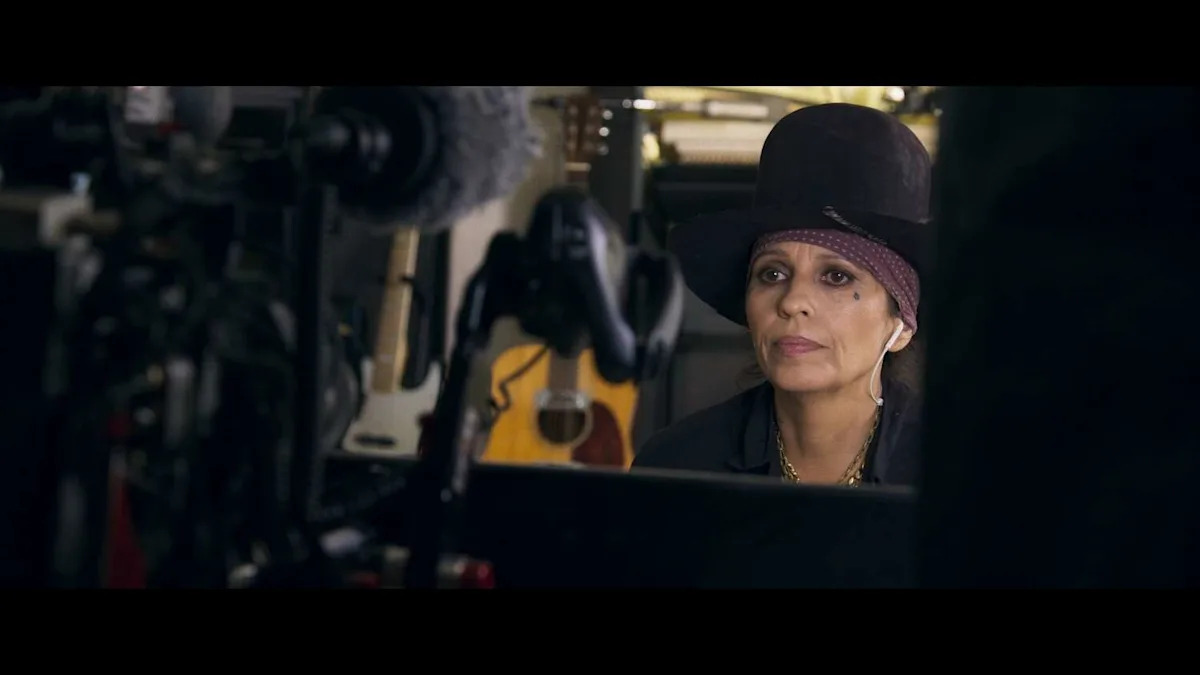
When Linda Perry agreed to let cameras into her life, she thought audiences would see the confident music visionary behind hits like 4 Non Blondes’ “What’s Up?”
“I didn’t know it was going to be about how f-d up I am,” the co-founder of the San Francisco ’90s alt-rock band said of “Linda Perry: Let It Die Here.”
The documentary’s director, East Bay filmmaker Don Hardy, didn’t initially intend to make a movie about Perry at all. The two met while Hardy was working on a documentary about Sean Penn’s humanitarian efforts in Haiti and Perry expressed interest in scoring it.
“Wow, that would be amazing,” he initially thought of bringing in the Songwriters Hall of Fame inductee. Then he thought, “I hear she can be difficult, and we already have Sean Penn …”
But they decided to work together anyway. He asked if he could sit in on her scoring sessions to observe, and he shot some of them. After showing Perry the footage, he asked if she’d consent to telling her story on camera.
“She said, ‘Absolutely not,’ ” Hardy said with a grin, “and here we are.”
What emerged from that unlikely collaboration became a far more intimate portrait than Perry ever expected.
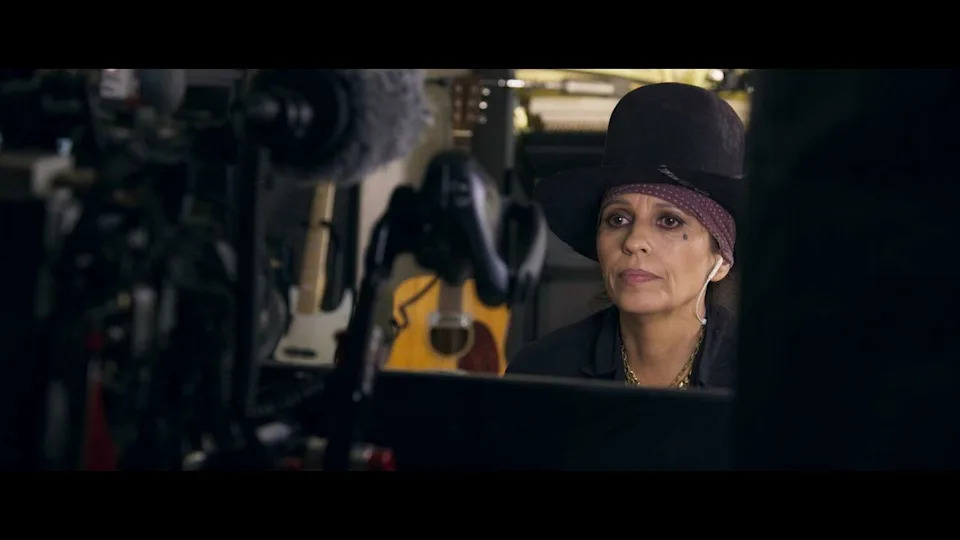
Linda Perry in a scene from “Linda Perry: Let It Die Here,” a documentary directed by East Bay filmmaker Don Hardy. (KTF Films)
“He’s a sneaky, talented man,” Perry told The Chronicle, not entirely joking about the six-time Emmy Award winner. “When Don was in the studio, he was invisible. His energy is calm. And we bumped heads. There were things that annoyed me about him. There’s things that annoyed him about me, but there was a mutual respect and I trusted him. And to me, the greatest things come from trust.”
“Linda Perry: Let It Die Here,” which screens at San Francisco’s Roxie Theater on Sunday-Monday, May 17-18, is not an ordinary celebrity portrait. There’s behind-the-curtain footage of the workaholic writer-producer-musician-singer in her element, along with painful, unflattering moments.
Hardy describes the film as “a conversation” between him and Perry. He encouraged Perry to shoot with her phone if something came up and he wasn’t around, which “ended up yielding one of the most powerful moments in the film,” he said.
One of the film’s most vulnerable scenes began with Perry casually recording herself dancing in her closet.
More Information
“Linda Perry: Let It Die Here”: Documentary. Directed by Don Hardy. (Not rated. 93 minutes.) Screening with a live acoustic performance by Perry, plus a Q&A with Perry and Hardy. 3:15 p.m. Sunday, May 17 • Screening, plus Q&A with Hardy. 8:05 p.m. Monday, May 18. $11.62-$16.62. The Roxie, 3125 16th St., S.F. https://roxie.com
“Let It Die Here,” the album companion to the documentary, is available on vinyl and CD at www.lindaperry.com.
“I remember that day feeling actually quite good. I went into my closet and thought, ‘I’ll talk about EqualizeHer because it was on my mind,’ ” Perry said, referring to the nonprofit organization she co-founded to promote women in all facets of the music industry.
She played some music on her iPad. When Supertramp’s “Take the Long Way Home” came on, she started dancing. Then the emotions hit.
“I’m a terrible, terrible dancer,” she lamented, weeping in the clip, “but I used to not care.”
Even today, she swears, “I have no idea what happened. I sent it to Don: ‘I don’t know what this is, but I’m sending it to you because I’m deleting it.’ “
When Hardy saw it, he immediately thought: “This is revelatory.”
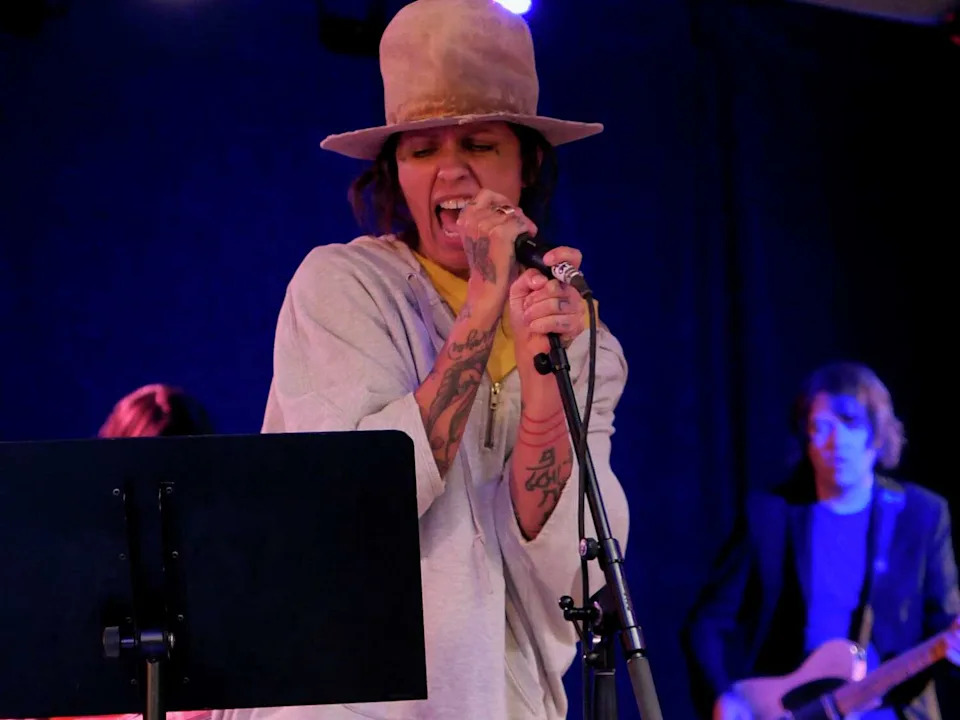
Linda Perry during the filming of Don Hardy’s documentary “Linda Perry: Let It Die Here.” (KTF Films)
It’s not difficult to see how the abusive, repressive upbringing Perry describes in the film shaped the driving personality and relentless schedule that define her today. That intensity shows up in her therapy-like sessions with other musicians, including Christina Aguilera and P! nk – whose hits “Beautiful” and “Get the Party Started” Perry wrote – as well as Kate Hudson, dragging them out of their comfort zones.
“I like to dig around in (collaborators’) emotions and figure out what’s really going on to pull out something more real,” she said. “I think the film is about me not being able to do that to myself.
“‘What would Linda write for Linda? ‘ I don’t f-g know.”
The answer may be in the film’s accompanying album, “Let It Die Here,” released in February. The documentary captures some of its tracks taking shape in real time during a lengthy shooting process that coincided with a series of personal earthquakes, including when Perry went in for elective surgery and discovered she had an aggressive malignancy – what her doctor called “an ‘angry cancer.'”
“I got cancer at the top of ’22, I had a double mastectomy, and at the end of ’22, my mother died. So that was a lot of emotion,” she said. “No one in my family has cancer. Stress brought that on. I truly believe that.”
But seeing it all play out on screen ultimately gave her perspective.
“I was able to process a lot out of that film,” she said.
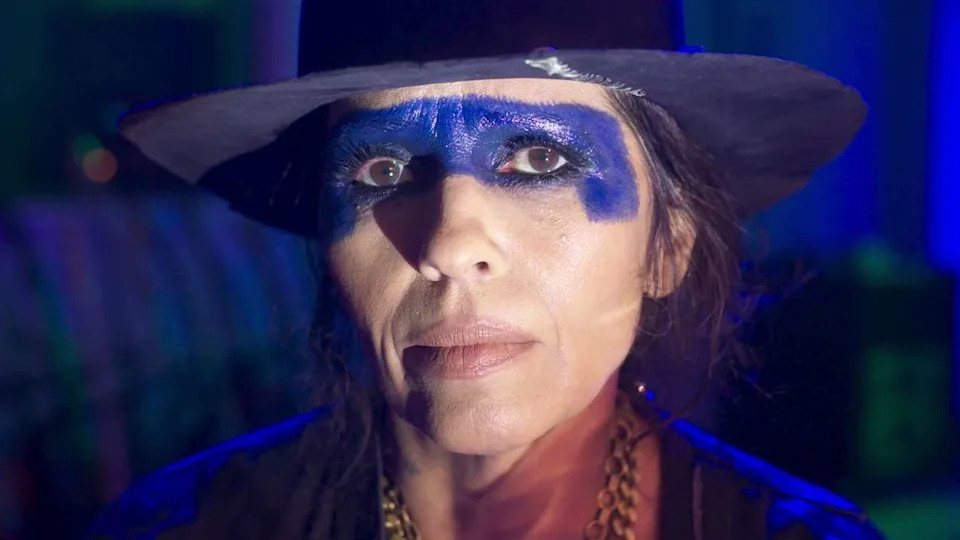
“Linda Perry: Let it Die Here” is a documentary about Linda Perry, a singer-producer-songwriter-musician most famous as the lead singer of 4 Non Blondes. (Frameline)
Perry was also processing her complicated relationship with her mother through her new music. She calls the bare-knuckled title track as “just a very descriptive song … It was almost comical that I’m writing this song about my mom dying. I’m describing exactly what I see.”
Sorting through her mother’s death, Perry called Hardy to alert him she was going to assemble a full band in a rehearsal space. By 2 a.m., she wrote “What Lies with You.” The end of the documentary captures that track production later that morning, with Perry teaching the band the song, arranging it and recording it in a matter of hours.
“I feel like we knew we were coming to the end of a long journey,” Hardy said. “That’s how I felt going there that day.”
Though she has said she initially didn’t know they were making a documentary about her, Perry endorses Hardy’s warts-and-all portrayal.
“It’s about a real person having real emotions and breaking down,” she said. “That closet scene happens to us all, but you don’t film it and you don’t f-g put it in a documentary.
“That’s what the film is. It’s kind of awesome in that way.”
Michael Ordoña is a freelance writer.
Subscribe
There’s more to San Francisco with the Chronicle. Subscribe today for just 25¢.
This article originally published at San Francisco alt-rock icon reveals emotional collapse in unflinching new documentary.