
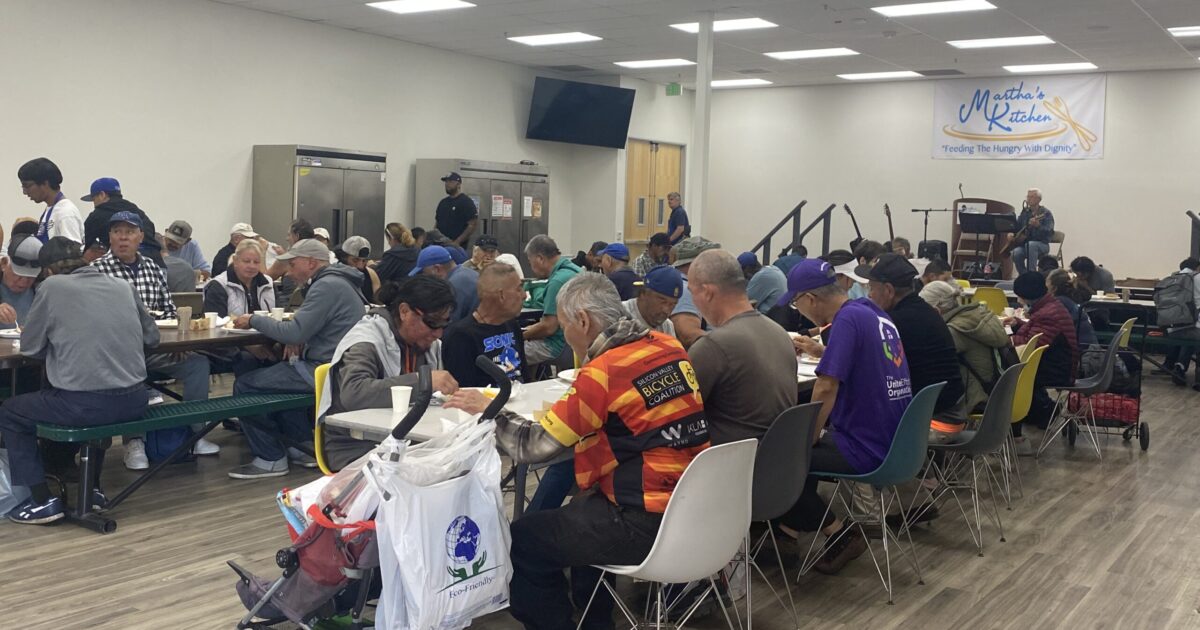
An essential food service provider in Santa Clara County is being stretched thin under federal cuts — including not knowing how it will pay for its new facility.
Martha’s Kitchen, a nonprofit that provides millions of cooked meals every year for people in need, has moved into a 31,900-square-foot building on 749 Story Road in San Jose. But it’s paying off a $7.5 million loan for the facilities, and needs an additional $3 million to $5 million to construct a commercial kitchen. In addition, Martha’s Kitchen is getting fewer food donations to make meals, causing it to dig deeper into its own pocket.
Executive Director Bill Lee said he had been talking with San Jose officials to apply for federal Community Development Block Grant (CDBG) funds for the building. But those grants have been halted due to President Donald Trump imposing certain conditions to receive funding, including not using grants to help undocumented immigrants. CDBG funds programs that focus on community development, including meals for older adults, home and building repairs, microenterprise programs and more.
Community organizations are feeling the weight of funding uncertainty amid Santa Clara County’s ongoing lawsuit against the Trump administration over the issue.
“Losing CDBG leaves a big gap,” Lee told San José Spotlight. “I’m confident we’ll be able to raise a good chunk of it. If we aren’t able to raise it all, we’re going to have to cut services.”
In lieu of potential CDBG funding, Martha’s Kitchen has been leaning on private donations. It has received $1.2 million to date.
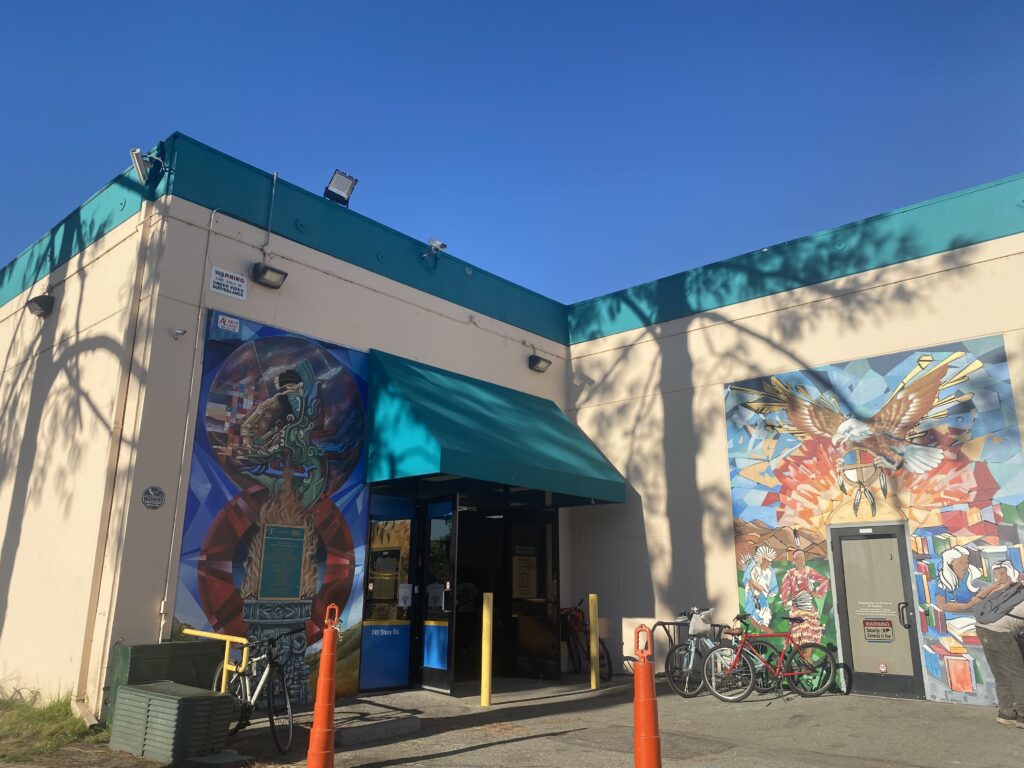 Martha’s Kitchen has moved into a 31,900-square-foot building at 749 Story Road in San Jose. The nonprofit was expecting to get federal grant money to help pay down a $7.5 million loan for the building. Photo by Joyce Chu.
Founded in 1981, Martha’s Kitchen provides hot meals to people in need, primarily in Santa Clara County. What started as a grassroots effort to feed homeless people in a San Jose garage evolved into the nonprofit providing about 2.4 million meals annually, or 200,000 meals a month, to keep the most vulnerable fed.
The nonprofit previously operated out of a church on Willow Street, but the weekday meals and overall growth kept the church from using the facility for its programs. Martha’s Kitchen moved out of the church and into the building on Story Road in August, but is still using the church’s kitchen until its own is built.
“We were bursting at the seams, we were not labor efficient where we were,” Lee said. “We really didn’t have much choice on the timing (of the move).”
Federal grant uncertainty
Lee said city officials told him it was unlikely CDBG funds would come through without the nonprofit in its own facility. For months they searched for the right building that could support the organization’s needs.
He said they were lucky to have this new space, which was necessary for the long-term sustainability of the nonprofit’s mission, despite the federal challenges. Once the kitchen is constructed, Lee said the nonprofit will be able to provide 7 million meals a year.
Due to the uncertainty of federal grants, San Jose is prioritizing funding programs for rental assistance, senior nutrition and homeless outreach. Capital projects are deferred “until there is more clarity regarding federal funding availability,” according to a city memo.
Housing Director Erik Soliván said the city has reserves to help fund some programs this fiscal year. But cutbacks to services will be necessary next fiscal year if the federal government doesn’t agree with the city’s grant terms.
“That’s the challenge,” Soliván told San José Spotlight. “Everyone likes to point at us, but we’re just reacting to federal cuts, to state cuts, and now we have to make really hard choices on an upcoming budget deficit that’s already at $25 million.”
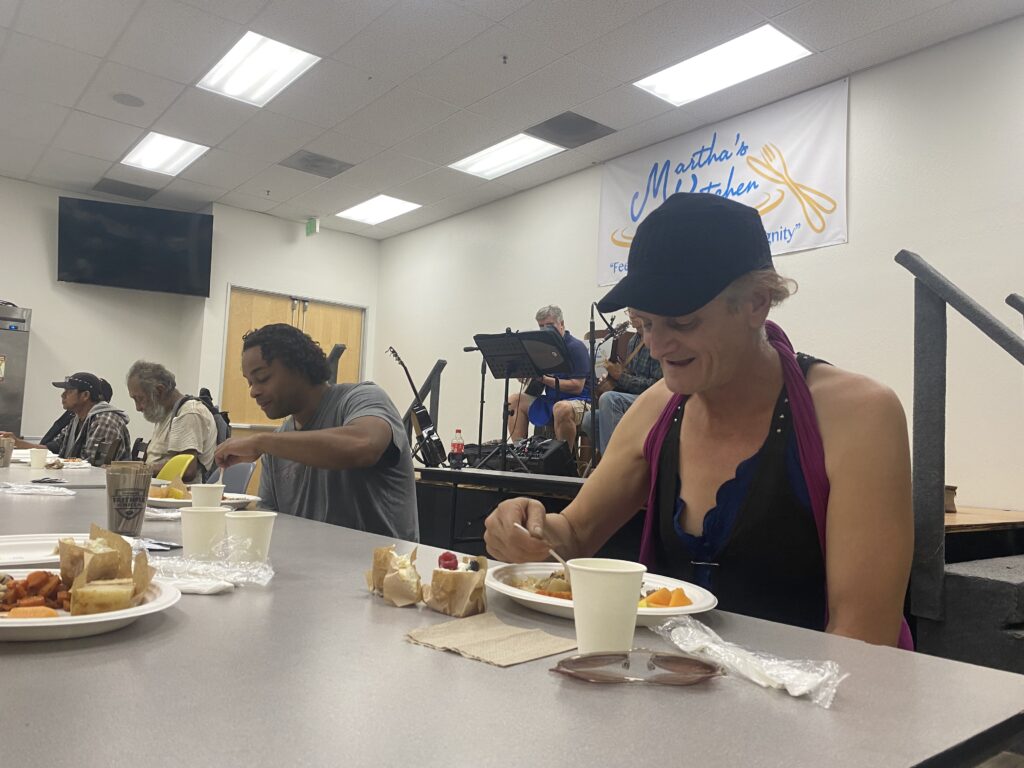 Homeless resident Richard Hess has been getting meals from Martha’s Kitchen for the past 12 years. He relies on the hot meals and is worried about his food aid running out. Photo by Joyce Chu.
Dwindling food supply
The loss of expected grant funds isn’t the only issue Martha’s Kitchen is dealing with. The nonprofit has also been getting fewer food donations from Second Harvest of Silicon Valley, which it has historically relied on to produce meals.
This past fiscal year, Martha’s Kitchen received an average of 87,000 pounds of food a month from Second Harvest, the largest food bank in the region. Now, food donations are down to 34,000 pounds a month, according to data provided by Martha’s Kitchen. Lee said Martha’s Kitchen is purchasing food to address that shortfall.
“We’ve definitely had to make reductions to things like our protein items, or any items we purchase, just due to the high cost of food and the fact that we’re still serving a half-million people as a network — as many people as we are serving at the height of the pandemic,” Second Harvest CEO Leslie Bacho told San José Spotlight.
Food banks — and people who rely on them — are about to be stretched even thinner. The Trump administration has announced no food aid will go out through the Supplemental Nutrition Assistance Program (SNAP) starting Saturday due to the ongoing federal government shutdown. Some local restaurants are providing free and discounted meals in response.
Essential food provider
Martha’s Kitchen is one of the main meal providers for homeless shelters across Santa Clara County and produces meals for about 8,000 people daily. It also offers meals every Tuesday and Wednesday at its Story Road location. The nonprofit previously provided meals every weekday prior to the move, and a Martha’s Kitchen spokesperson said they plan to scale back up soon.
“Our clients don’t have a kitchen or a fridge, and if we’re not feeding them… they’re going to get sick and turn up in the hospitals,” Lee said. “(For) a lot of our clients, the only meal they get is from us.” Resident Richard Hess has been getting meals from Martha’s Kitchen for the past 12 years. He lined up outside of the building to eat dinner at 4 p.m. Wednesday — his first meal of the day. He said the meal of meatloaf, mashed potatoes, carrots and cantaloupe was satisfying and tasteful.
“Over all the other places, I would have to say I experience the most dignity here,” Hess told San José Spotlight. “I don’t even know what I would do if it isn’t for places like this.”
Hess, who is homeless, said he’s worried about his food benefits running out Saturday.
“But as long as places like this can hold up,” Hess said. “I expect them to be getting more people in the next few months at least.”
Contact Joyce Chu at [email protected] or @joyce_speaks on X.