
Two mighty California rivers converge, delivering a river town on the eastern rim of the Bay Area. A patchwork of tree-lined streets expand from the banks into downtown Antioch. It’s a lively confluence where the San Joaquin and Sacramento Rivers intersect, but on a recent Friday afternoon, a stolid mood pervaded downtown.

Few people milled about to absorb the Delta breeze or take advantage of Antioch’s nautical backdrop. Instead, a teenager asked for help with directions to leave downtown and venture into the suburban sprawl.
Antioch has never been a tourist attraction as such, but it’s far more than the dead end of the yellow BART line. The neglected hinterland has legitimate appeal to the wider Bay Area through its exceptional public park. The Black Diamond Mines Regional Preserve is worth the hike, both for its above- and below-ground attractions. There are tours through historic mining tunnels and a hike to a lost town preserved in tombs.
Article continues below this ad
An entrance into the Rose Hill Cemetery in Antioch, Calif., on May 8, 2026.
Silas Valentino/SFGATE
Add in a Guatemalan bakery preparing some of the thickest and tastiest tortillas in the region, and a day trip to Antioch starts to make sense. However, the city is often overshadowed by blight. It has had some of the highest levels of poverty in the Bay Area, and locals aren’t shy about admitting how their waterfront is in a rut — reminded each time a passing train blows its horn. Amtrak is closing its riverside station next year, placing some of the blame on the unhoused population downtown. Meanwhile, BART, unless voters bail it out this fall, said Antioch is on the short list for closures.
Caught in an eddy, the river town calls on visitors for refuge.
Last week, Antioch’s leaders held the first meeting for updating its general plan, a comprehensive document dictating how the city should grow and navigate the next couple of decades. One objective is for the city to become a “destination” for the greater Bay Area. Alongside Black Diamond Mine, the city believes it can draw more people in after reactivating its deserted downtown.
Article continues below this ad
The historic downtown buildings in Antioch, Calif.
MattGush/Getty Images
But there’s a conflict over exactly how to revitalize the waterfront, and it’s coming to a head by the San Joaquin River.
Formerly a lumber mill, a vestige of Antioch’s industrial past, the vacant lot on Second Street is now a tipping point. A city-owned property, the size of two city blocks, the yard will help decide what’s better for stimulating downtown: open it up to private development, or advance its original plan for establishing a town square.
A choice between prioritizing public gains or private interest is playing out in Antioch, and the verdict could pave the way for the city’s overdue redemption.
Article continues below this ad
Losses, gains after a town becomes city
Born by the river, Antioch once prospered from its relationship with water. It was founded in the same month that California became a state — in September 1850 — and for its first few decades, it was only reachable by boat.
The city went on to pioneer certain water services and spearheaded state policy. In the 1950s, it was among the first cities in California to fluoridate its drinking water, improving residents’ dental health. More recently, the city opened a desalination plant, the first for the Bay Area in a generation.
Article continues below this ad
But after multiple attempts, the city seems incapable of capitalizing on its great asset. “How many Bay Area cities are lucky to have a riverfront downtown?” lifelong resident Jody DeArnold told SFGATE.
Evan Naylor relocated from Southern California and took over the tattoo parlor Flying Dutchman Studio.
Silas Valentino/SFGATE
“I came from Palm Desert,” said Evan Naylor, the owner of the tattoo parlor Flying Dutchman Studio. “I thought, ‘Holy s—t, that’s cool.’ I’ve never been around water and boat culture.”
Although Antioch’s riverside downtown has had repeated calls for revitalization since the onset of the century, they’ve mostly gone unachieved. The city successfully updated and beautified Waldie Plaza, but it wasn’t enough to spur a renaissance. City leaders are blunt with their assessment; in a recent analysis of housing in Contra Costa County, it wrote that “past revitalization efforts have been largely considered failures.”
Article continues below this ad
Having lived in Antioch for about 15 years, Lola Piilani said the city has “its ups and downs.” Last year, she opened a cafe bookstore downtown called Twisted Lovers that specializes in all genres of romance.
“The city has beautiful moments,” Piilani pauses, and she calls to her friend in the corner of the store: “… Melissa, help me out.” Near the entrance, Melissa McFarlane stops decorating a poster for the shop window. “It has its charms. I tried leaving, and I’ve always come back,” McFarlane said. “It’s home.”
Twisted Lovers, a cafe bookstore that specializes in all genres of romance, opened in downtown Antioch, Calif., in 2025.
Silas Valentino/SFGATE
Lola Piilani of Twisted Lovers bookstore in Antioch, Calif.
Silas Valentino/SFGATE
In 2020, the New York Times trumpeted Antioch’s affordability, calling it a commuter city that has grown with its multiple housing development booms but suffered from the lack of local jobs.
Article continues below this ad
Behind the counter at 4Jays, a vintage video game shop downtown, DeArnold recalled her distant childhood growing up in Antioch. Cruising in a car was a way of life for teenagers, and the riverfront benefited from hosting a smaller population. “Everyone I knew in high school worked at the factory,” she said, noting bygone plants for the DuPont chemical company or U.S. Steel in neighboring Pittsburg.
Now, DeArnold said, “It’s a little town that turned into a big city.”
Antioch’s population may have spiked from about 28,000 residents in the 1970s to over 115,000 today, but it has not benefited from the riches of a boomtown.
Once reliant on a 20th century industrial economy, the city lost most of its factory jobs, driving residents to find employment elsewhere by commuting away. It’s hollowed out some of its core personality, leaving behind a city of latchkey kids and overworked parents.
Article continues below this ad
In turn, third spaces like the extensive Somersville Towne Center or the downtown waterfront suffer from the missing community.
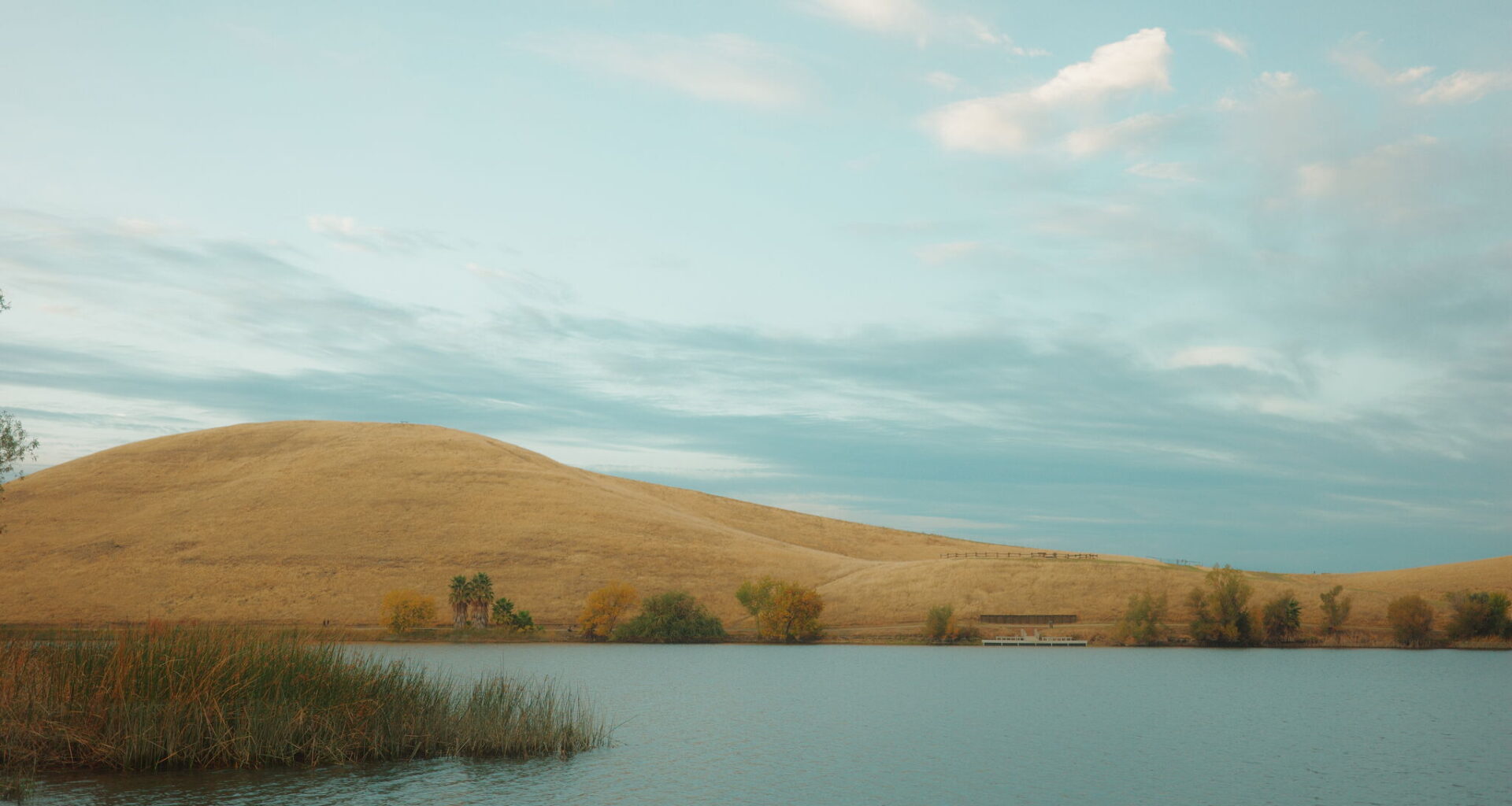
The Contra Loma Reservoir, an 80-acre lake in Antioch, Calif.
Juan / 500px/Getty Images/500px Plus
Nevertheless, Michael Gabrielson believes in the untapped power from his neighbors and activity works to generate a better riverfront. He’s the vice president of Celebrate Antioch Foundation, a champion of community spirit, and he runs the boutique emporium Willow Park Mercantile downtown.
Gabrielson is enthusiastic about building a town square on the site of the former lumber mill. The Rivertown Community Space would host concerts, farmers markets and serve as a central hub for people to recharge by the river. “I really think downtown would thrive in a community space like this,” he said.
Article continues below this ad
In 2021, the City Council unanimously approved a plan to move forward with the town square, and the project was folded into the city’s capital improvement plans. A price tag was set for around $4.7 million, and funding started coming in, but during a recent council meeting, Gabrielson said the plan was unceremoniously scrapped.
“It was two minutes at the end of the council meeting,” Gabrielson said. “We were furious.”
City planner Kevin Scudero confirmed that the project was removed from the five-year capital improvement plan and pointed to financing issues. “There was no funding identified,” he said. “That may have been the reason.”
As the city begins envisioning its future through the general plan, the riverfront property is now a contentious crossroads. “That’s one of the parcels in the city that will garner a lot of attention and discussion,” Scudero said. “There are groups that strongly feel it should be public space, while others think it should be private development to stimulate downtown.”
Article continues below this ad
Homes across from the vacant lot in downtown Antioch, Calif., where the city is deciding how to revitalize its waterfront.
MattGush/Getty Images
Gabrielson singled out council member and former Mayor Donald Freitas as one of the critics of the town square. During the first meeting about the general plan last week, Freitas spoke of a “concern” he had about “community-centric” planning.
“A lot of the things that we discuss or that we want become pie-in-the-sky, you know, recommendations,” Freitas said, without naming specifics. “And there’s no reality to it. And again, as we’re going through here, you know, I think one of the means test is how would it be financially feasible?”
SFGATE left messages for Freitas but did not receive a response.
Article continues below this ad
To the left of the council member was real estate and business investor Sean McCauley. Over the years, he’s purchased a dozen structures in downtown Antioch to redevelop into office buildings or other businesses. He also purchased Humphrey’s on the Delta, a historic restaurant in the marina, and last year, he renamed it Smith’s Landing in honor of Antioch’s original name.
During the meeting, McCauley spoke in favor of keeping downtown Antioch friendly to developers. “As we all know, our job is to stimulate economic development and growth,” he said. “That’s paid for by developers, and it’s paid for by business owners.”
Bay Area’s coolest gift shop
The road into Black Diamond Mines passes by the Somersville Towne Center after exiting Highway 4. Both the road and mall are named after a nearby ghost town, a fateful curse for the mall. The center is a collapsing star, lacking major anchor stores and mostly a black hole of commercialism — but a rose grows in the shadow of a dying mall.
Article continues below this ad
Panaderia Guatemalteca Gloria is located within a dying mall in Antioch, Calif.
Silas Valentino/SFGATE
Tommy Flores and her husband Bayron Giron dine at Panaderia Guatemalteca Gloria in Antioch, Calif., on May 8, 2026.
Silas Valentino/SFGATE
Panaderia Guatemalteca Gloria is a strip mall delicacy. The bakery and luncheon’s exterior is painted light blue and white like its country of origin. Serving Central American cuisine (fried plantains, a bowl of caldo de pata), the panaderia is celebrated for its specialty corn or flour tortillas. They’re thicker than the usual flatbread, allowing the structure to hold after spooning in black beans, sweet plantains and a house cream for a delicious breakfast.
“We have fallen in love with how authentic their recipes are,” Tommy Flores said while dining with her husband, Bayron Giron.
Article continues below this ad
Black Diamond Mines is couched in a bald mountain range about 5 miles from the waterfront. There’s no public transit option connecting the BART station to the park, but Tri Delta Transit has an on-demand shared shuttle service called Tri MyRide for reaching the entrance. From there, it’s about a 2-mile trek to the Greathouse Visitor Center, a home base for exploring the more than 8,500 acres.
The Black Diamond Mines Regional Preserve in Antioch, Calif., in April 2026.
Smith Collection/Gado/Getty Images
Isolated but abuzz in lore, Black Diamond Mines is a playground for hikers, mountain bikers and picnickers, with 65 miles of trails through unspoiled splendor. Trail-makers are vestiges of another era. On a knoll above the visitor center, a few Italian cypresses appear like headstones to mark the Rose Hill Cemetery. Mostly Welsh immigrants with a Protestant background relocated for the once dominant mining industry and are now entombed on the hill.
A peaceful pit stop, the graveyard is not immune to danger. Bay Point resident Daniel Rios strolled by the gates and slowed to a halt. He cautiously peered into a hole the width of a football that’s carved into the foot of the cemetery. A Northern Pacific rattlesnake curled inside like an ominous extension cord, tasting his scent with each flickering tongue. “I usually come with my family,” he said. “I’m glad my wife isn’t here — she’s scared of snakes.”
Article continues below this ad
Gravestones at the Rose Hill Cemetery in Antioch, Calif., on May 8, 2026.
Silas Valentino/SFGATE
A trail in the Black Diamond Mines Regional Preserve in the hills outside Antioch, Calif., on May 8, 2026.
Silas Valentino/SFGATE
The area was an active mine for over a century until the 1970s. Multiple settlements with homes and businesses appeared among the oak woodland and chaparral to service the state’s largest coal mining operation. Dirty to some, coal was a diamond to others, worthy of burrowing through a network of tunnels spanning hundreds of miles beneath Contra Costa County.

Stay informed, and entertained.
By signing up, you agree to our Terms Of Use and acknowledge that your information will be used as described in our Privacy Policy.
After coal, the next rock commodity was sandstone. A chamber dug into the hillside, which was so cavernous that it could host a small wedding, previously hosted the miners as they extracted high-quality silica sand. It’s now the Greathouse Visitor Center, where visitors embark on guided tunnel tours on weekends. The room remains at 56 degrees, even when the sun torches the surface in the summer. Without even trying, Antioch has the coolest gift shop in the Bay Area.
Article continues below this ad
The hills are usually alive with wildflowers during spring, but a heat wave in March propelled the preserve into summer. Dry and tawny, the terrain is nevertheless enchanting. “Not a lot of people know about Black Diamond,” a hiker named Daniel Carrillo said. “We keep it to ourselves.”