
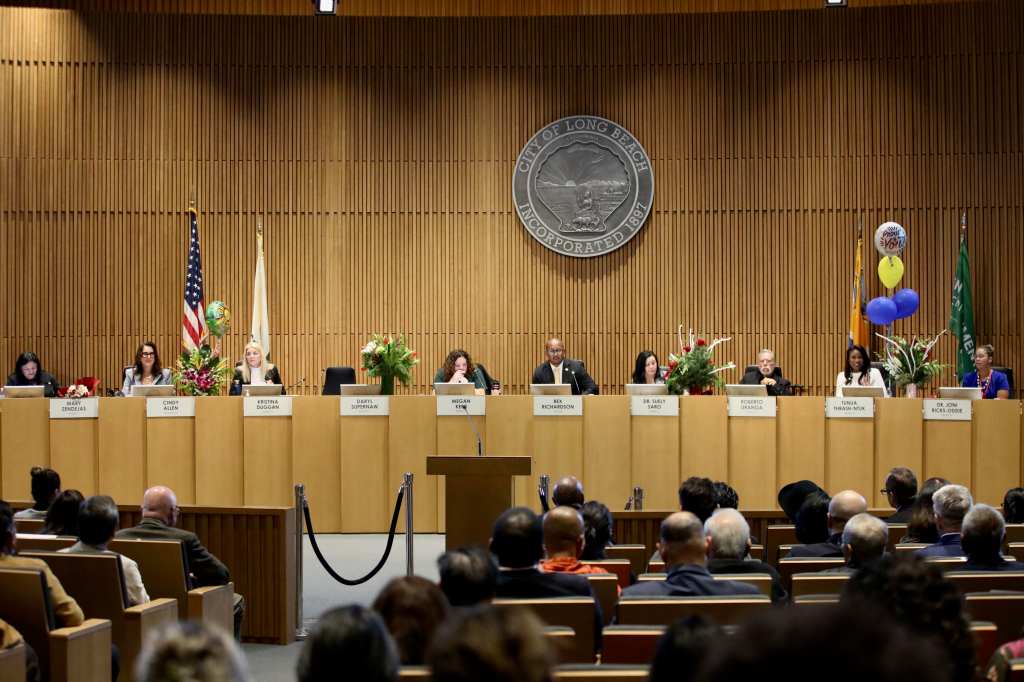
The way Long Beach City Council meetings are structured could potentially change – particularly when and how long residents will have to speak to their elected officials.
City leaders recently began discussing how they could reorganize council meetings to make them more accessible to the public, but also accommodate new state laws for remote public comments.
The council last week moved forward with directing the city attorney prepare an ordinance to amend the Long Beach municipal code based on several proposed modifications, such as adjusting the public comment process and the timeline for publishing the supplemental agenda — as well as having council meetings start an hour earlier.
There will be more discussions on the potential ordinance in the coming weeks, with residents also able to provide input on the proposed changes.
The council’s vote on Tuesday, May 12, meanwhile, was simply to have the city attorney draft the proposed ordinance and bring it back. If approved, the ordinance would likely go into effect in July, when the state law on virtual public comment – Senate Bill 707 – will also begin.
SB 707, which takes effect July 1, significantly expands requirements for public participation in local government meetings, including providing remote access, equal options for remote and in-person speakers, enhanced accessibility and language requirements, and new procedures for addressing technical disruptions.
Long Beach had already been working on making council meetings more accessible to residents. In October, for example, the Government Operations and Efficiency Committee received a presentation outlining potential changes to the order of business for meetings, aimed at improving efficiency and increasing public participation, according to the staff report.
In November, the City Council directed staff to further evaluate these proposals and return with recommendations, including considering new requirements under SB 707, the staff report said. The council also directed staff to recirculate a community survey and engage the Citizens’ Advisory Commission on Disabilities to gather additional input.
Staff then conducted expanded outreach, including a multilingual community survey and a presentation to CACoD, and provided analysis of the GOE Committee’s proposal in a memo released on May 1.
Changes required by state law are intended to increase participation opportunities and reduce barriers related to physical attendance, city staff said, while also necessitating updates to meeting procedures and the order of business of council meetings to ensure compliance and effective implementation.
“One of the challenges, oftentimes, for people to participate in City Council meetings is a work schedule,” Deputy City Manager Tyler Bonanno-Curley said during last week’s council meeting. “It may be hard to get down here even at 5 p.m. if you have to drive down to City Hall, but if you have an opportunity to call in or to participate remotely, that can change public participation opportunities.”
Based on their analysis, city staffers recommended the council consider changing the regular meeting start time to 4 p.m., as well as move the supplemental agenda publication to Thursday — from Friday — to help with transparency and to give residents more time to know what’s happening at the next meeting, Bonanno-Curley said.
For public comment, staff recommendations included establishing a single public comment period at the beginning of council meetings – following the call to order, roll call, pledge of allegiance and ceremonies and presentations.
Recommendations also included setting a limit on how long each public commenter could speak per meeting; closing speaker sign-ups at the start of the public comment period; requiring speakers to specify which items they want to speak on when they sign up; capping the total public comment period at 90 minutes; and allowing the mayor, as presiding officer, limited discretion to extend time limits or reopen public comment in exceptional circumstances.
Other cities and governing bodies that have a similar public comment process include Long Beach Unified School District, Los Angeles and the Los Angeles County Affordable Housing Solutions Agency.
“If we have hybrid meetings similar to what we had during COVID, there’s a balance that needs to take place in terms of additional participation,” Bonanno-Curley said, “as well as managing the public comment process and making sure people in-person, as well as online or hybrid, have the same opportunity to provide public comment and input.”
The City Council discussed these changes during last week’s meeting, with suggestions from the elected officials ranging from getting rid of the 90-minute cap on the public comment period, adding another comment period at the end of the meeting, and exploring the idea of transitioning the council into full-time positions, rather than the current part-time seats. The council also said more community input was needed.
“It’s unrealistic to think that we won’t be limiting public comment in some way,” Fifth District Councilmember Megan Kerr said, “but how are we doing it, in a way that invites as many people who are locally impacted by the work we’re doing, in a way that is realistic for the work getting done, and allows people to feel heard? There’s no easy answer here.”
Ultimately, Mayor Rex Richardson and the council agreed on directing city staff to have the proposed ordinance include: Having the 90-minute public comment period take place at the beginning of meetings, with the mayor having the discretion to add 30-minute increments if there is high participation; having the 90 minutes split into 30 minutes for general public comment and an hour for agenda items; allowing all residents 90 seconds for their comments; and cutting off signups for public comment by 5:30 p.m.
The proposed ordinance would also align the city with SB 707, meaning the city would add a method for people to comment virtually.
The panel also agreed to start the meetings at 4 p.m. and move the supplemental agenda publication to Thursday. Moving up the start time, Richardson said, would allow the city to get all the ceremonial presentations and public comment out of the way — with people able to speak virtually — so the meeting starts in earnest around 6 p.m., meaning that people wouldn’t have to rush to make it to City Hall and that the meetings would also end earlier in the evening.
The council voted 7-1 to direct the city attorney to draft the proposed ordinance. First District Councilmember Mary Zendejas was the lone dissenting vote.
Zendejas said that, as a disabled woman, she knows how important the implementation of SB 707 is for residents in the disability and senior community. But she did not support the council’s direction and said that more time was needed for community members to share their input on the staff’s recommendations.
“I think it’s very important for us to be able to have that engagement with our community, be able to hear them out,” she said, “because I do think that one of the most important things about creating policy is when we all work together, meaning city, staff and the community.
“That’s why I have a problem with how little time was given to our community when presenting these items,” Zendejas added. “It’s very difficult to say that we’re working with the community when even the council just had a little bit of time. I feel that for something this big and this huge of a change in our city and the way our City Council is run, we really need community engagement.”
Over the next three to four weeks, however, Long Beach residents, however, will have the opportunity to comment and share their input on the proposed ordinance during upcoming council meetings over the next three to four weeks, City Manager Tom Modica said.
To go into effect alongside SB 707, the first reading of the draft ordinance needs to be during this week’s meeting. If approved by council, the second reading would happen on June 9 and would go into effect on July 10. The first meeting back from summer recess, with the new order of business changes in effect, would be on July 21.