
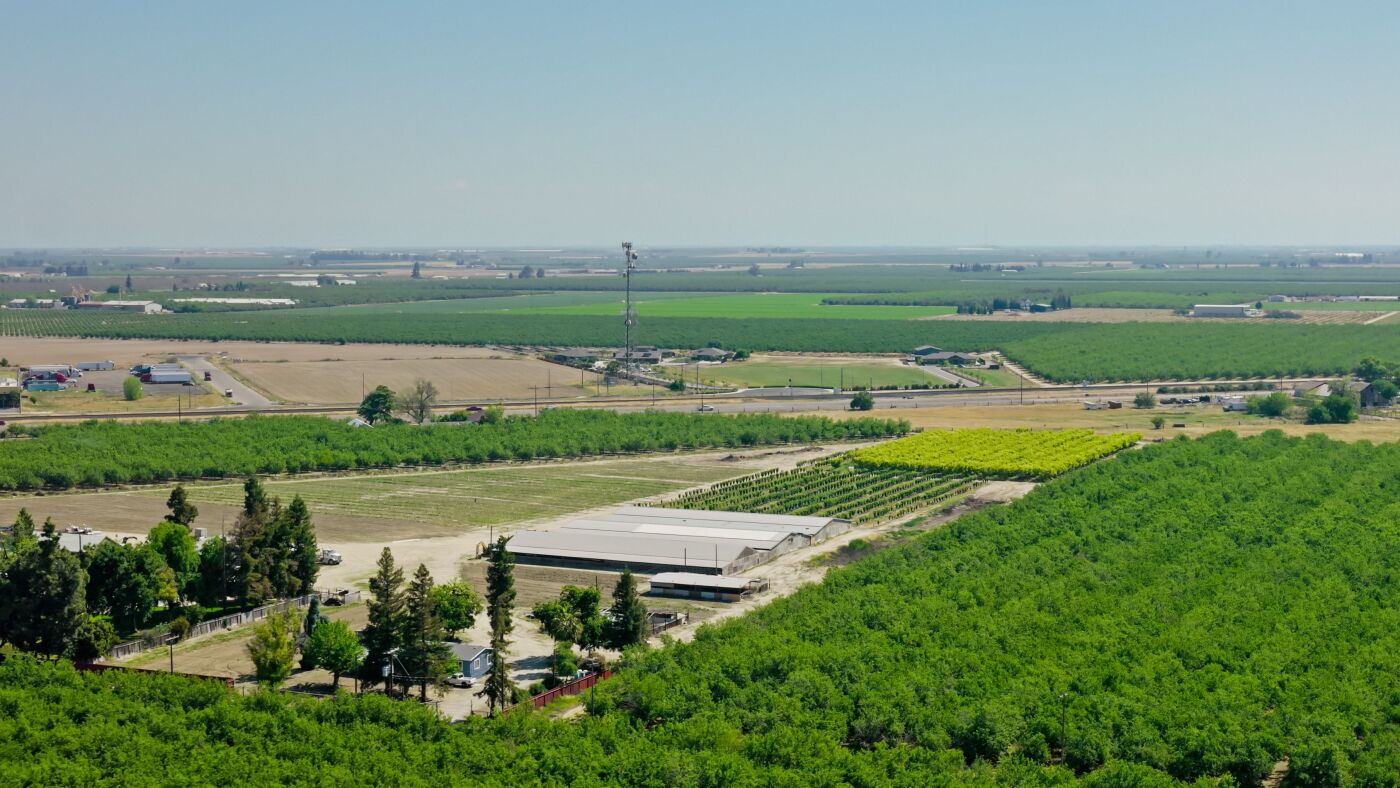
California’s Central Valley is the country’s single biggest source of many foods, including almonds, pistachios, walnuts and peaches.
Hal Bergman/Getty Images
hide caption
toggle caption
Hal Bergman/Getty Images
For years, farmers in California have been pumping huge amounts of water from their wells to irrigate their crops. The state’s Central Valley is the nation’s single biggest source for many different foods. But all that water use is making aquifers shrink, wells go dry and, in some places, the ground sink. Science reporter Dan Charles has been looking into the issue and is on the show today to talk about what happens when water gets scarce. What is it like for farmers? And for the people enforcing new water restrictions?
If you liked this episode, check out some of our other recent water stories – including why the world’s freshwater is getting saltier, what’s happening to our groundwater supply, and what happens when a city runs out of water.
Interested in more stories about water, farming and food production? Email us your question at shortwave@npr.org.
Listen to every episode of Short Wave sponsor-free and support our work at NPR by signing up for Short Wave+ at plus.npr.org/shortwave.
This episode was produced by Hannah Chinn. It was edited by Rebecca Ramirez. Dan Charles checked the facts. The audio engineer was Kwesi Lee.