
 The road to Wall Street is clear for Altman and Musk after Oakland verdict Proactive uses images sourced from Shutterstock
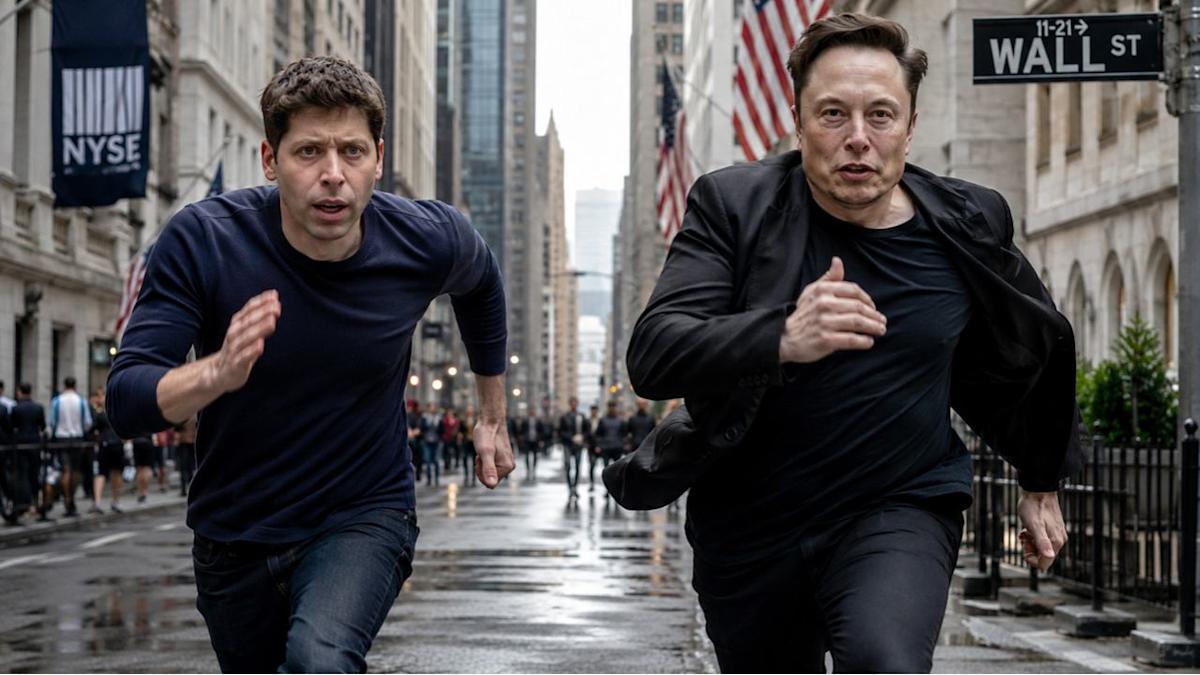
The symmetry is striking. Two men who co-founded OpenAI in 2015 and fell out bitterly over its direction are now racing each other to the public markets within months, each carrying a valuation that would have seemed fantastical even two years ago
The jury in Oakland, California, took less than two hours on Monday to dismiss Elon Musk’s lawsuit against OpenAI, and in doing so removed the last significant obstacle between Sam Altman and what is expected to be a $1 trillion initial public offering later this year.
The verdict came at a critical time for both men, as each pushes a flagship company toward the public markets in what are expected to be record-breaking offerings.
The nine-member advisory jury found unanimously that Musk had brought his claims too late, exceeding the three-year statute of limitations, and Judge Yvonne Gonzalez Rogers immediately adopted their finding as her own.
Had the case gone the other way, the IPO plans underpinned by OpenAI’s $852 billion valuation could have been derailed entirely, with Musk having sought the dismantling of the for-profit structure, the removal of Altman as chief executive, and damages exceeding $130 billion.
Instead, the swift resolution hands OpenAI a clean bill of legal health just as the company enters the most intensive phase of its listing preparations.
OpenAI is targeting a fourth-quarter 2026 public listing with a valuation goal of up to $1 trillion, aiming to raise roughly $60 billion in what would surpass every previous technology IPO by a wide margin.
The groundwork is already extensive. In March, OpenAI closed a $122 billion private funding round at a post-money valuation of $852 billion, with SoftBank, Amazon and Nvidia among the anchor investors.
The company is now generating roughly $2 billion in revenue per month and has more than 900 million weekly active ChatGPT users.
OpenAI has been holding informal talks with Wall Street banks and has hired key finance executives to oversee investor relations, while its corporate restructuring from a capped-profit entity into a public benefit corporation, completed in late 2025, removed the structural barrier that had made a traditional listing impossible.
The expected timeline sees OpenAI filing confidentially with the SEC during the current quarter, completing the review process through the summer, and launching the offering in October or November.
Musk, meanwhile, is on an even faster track. SpaceX, which merged with his AI company xAI in February, is targeting a Nasdaq listing on 12 June under the ticker SPCX, aiming to raise as much as $75 billion at a valuation of $1.75 trillion, which would make it the largest IPO in history.
The timeline has accelerated from an initial late-June target, driven by a faster-than-expected SEC review, with a public prospectus filing anticipated as early as this week, the investor roadshow beginning on 4 June, and pricing expected around 11 June.
At $1.75 trillion, SpaceX would immediately rank among the ten most valuable publicly traded companies in the world, surpassing Meta, Berkshire Hathaway and Tesla.
The symmetry is striking. Two men who co-founded OpenAI in 2015 and fell out bitterly over its direction are now racing each other to the public markets within months, each carrying a valuation that would have seemed fantastical even two years ago.
Musk’s lead attorney said after Monday’s verdict that the team would appeal to the Ninth Circuit, but an appeal is unlikely to carry the same disruptive force as a live trial with $150 billion in potential damages.
For Altman, the message from Oakland was unambiguous: the legal cloud has lifted, and the window to Wall Street is open.