
Photo: Sinna Nasseri for New York Magazine
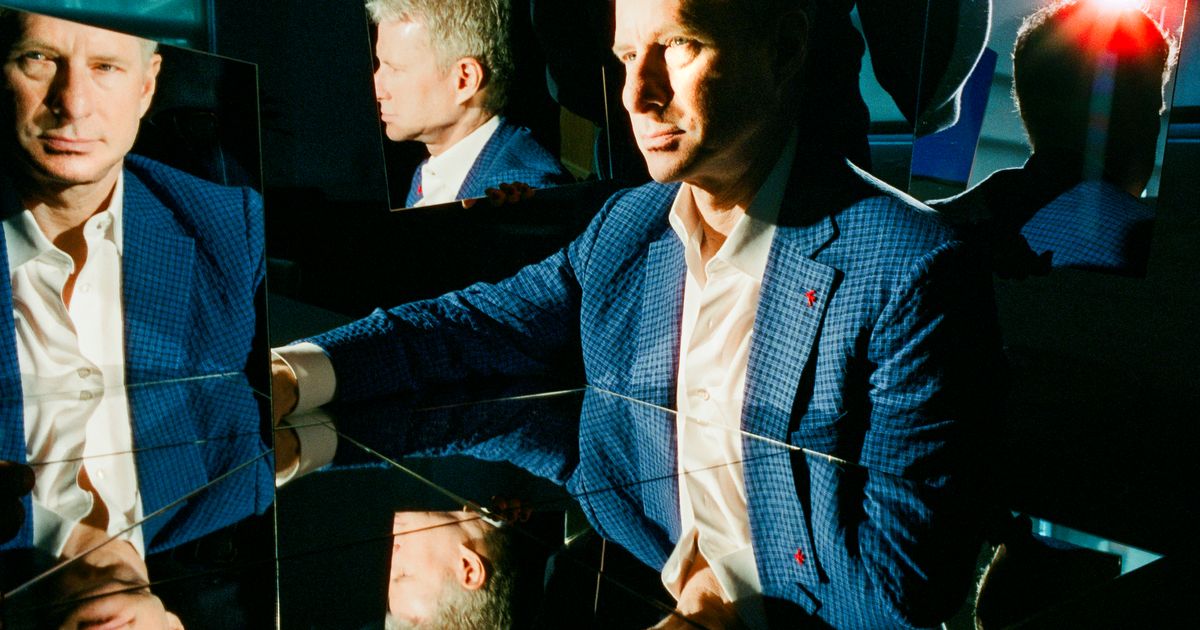
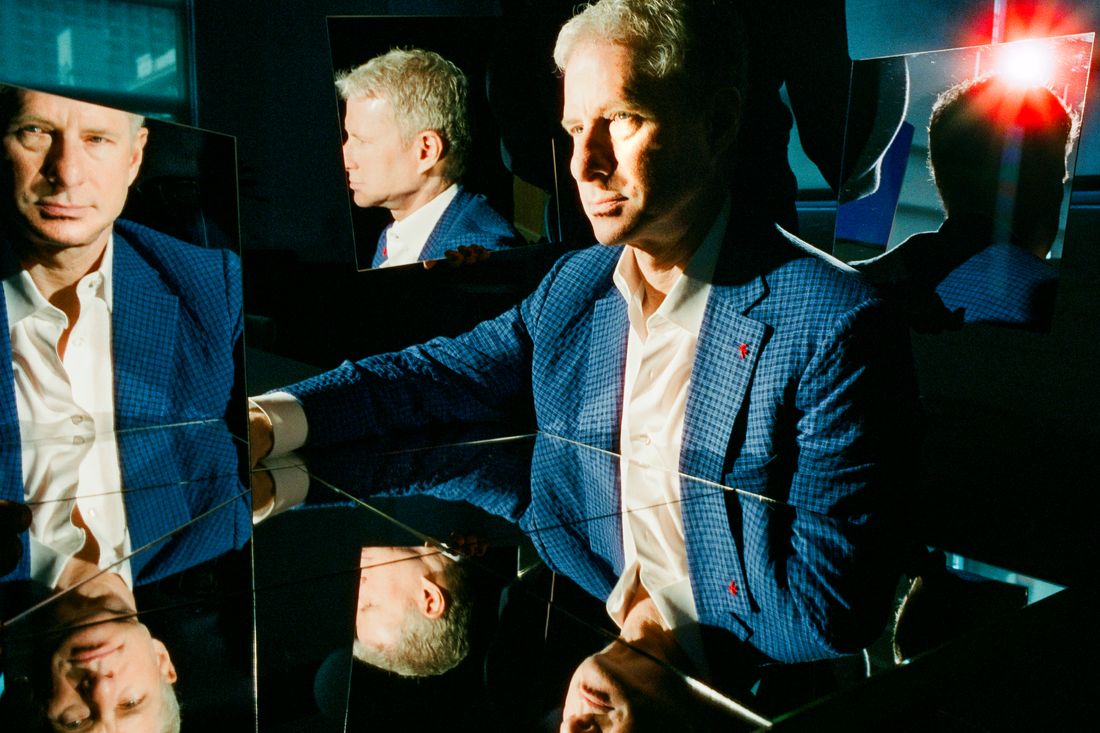
Chris Larsen, co-founder of the crypto company Ripple Labs and the 252nd-richest person on the planet, is studiously unostentatious. He speaks in an even voice with analytical efficiency, calibrating whether to politick or pounce. He considers schmoozy events a waste of time and disappears from appointments at precise moments in a black SUV. Although he’s called Silicon Valley’s “fetish for disruption” self-indulgent and “Trump-like,” he prefers to move with speed. “I don’t like that Giving Pledge thing at all,” he tells me. “It’s slow money. You make an announcement, but the money doesn’t get out. So I think it’s like, Go, go, go fast.” He’s recently written checks to a range of pressing causes: $3.5 million to Alex Bores, the New York congressional candidate who wants to federally regulate AI; $2 million to study how the oil-and-gas industry can transition from, well, oil and gas. An ongoing target of his impatience is his hometown. “A frustrating thing about San Francisco: Everything just takes forever because of the bureaucracy. So anything we can do is just go, go, go.”
In the years since San Francisco emerged blinking from COVID, the evidence of Larsen’s largesse has been visible on nearly every street, paying for things the city’s too strapped for tax dollars to cover. In the Mission and Chinatown and the Avenues, merchant corridors that he helps power-wash ($3 million). In the Tenderloin, street festivals and decorative security gates on storefronts ($5 million) and a bid to turn a gambling den into a community center ($2 million). In the Castro, a new rainbow flag ($10,000).
His biggest contribution — what he considers his “legacy project,” according to his team — is in the realm of public safety. A decade ago, as rates of petty crime were cresting, Larsen found a way to overlay neighborhoods with a network of private cameras. This could have been where the project ended, the hobbyhorse of an idiosyncratic billionaire. San Francisco had long been Big Brother skeptical, a progressive bastion that kept a tight lid on surveillance. But in 2024, as outrage about property crime and street conditions swelled, the city elected a new mayor, Daniel Lurie, the Levi’s heir and former nonprofit CEO who won on a moderate platform of public safety and his skill at tapping private money to solve social problems. A major goal of his administration is to “reverse the so-called doom-loop narrative”: the story, amplified by the media, of San Francisco’s pandemic descent from a sparkling tech hive to a hellscape of fentanyl users and criminal mayhem. Expressing admiration for Michael Bloomberg, Lurie took a $1 salary and walked into a looming budget crisis declaring a new era of public-private partnerships.
Today, the camera network Larsen built plugs into San Francisco’s post-doom-loop policing apparatus, where it’s being combined with drones and license-plate readers to make quicker arrests. Those arrests are coordinated at the Real-Time Investigation Center, housed in Larsen’s former Ripple headquarters on the eighth floor of a Renaissance Revival high-rise in the Financial District. Where Larsen once sat, flat-hierarchy style, among employees, San Francisco Police Department officers now watch a wall of screens displaying 911 dispatch calls and “hot list” hits from Flock Safety license-plate readers. Police can beam into 2,700 private cameras posted around the city and watch footage from a growing fleet of 93 drones. The total cost came to $9.4 million, all paid by Larsen.
At the unveiling in December, an upbeat Mayor Lurie credited RTIC with helping usher in the city’s comeback. “Precise, fast, safe,” he said at the press-conference podium with Larsen standing behind him between the sheriff and the police chief. A slideshow announced 800 arrests so far. Lurie ticked off more stats. Crime down 30 percent citywide. Car break-ins at 22-year lows. “For the last year, we’ve made progress making our streets safer and cleaner. This morning, walking the streets, it’s happening again downtown, and I’m so fired up about it.” He ended with his effervescent slogan: “Let’s go, San Francisco!”
A reported 57 billionaires live in the city proper, more than one for each square mile. Some belong to the old-money clans of Pacific Heights like the mayor’s, their names adorning schools, arenas, and museum wings. Then there’s the new tech money, which tended to skip past local institutions for more global ambitions: to eradicate disease, revolutionize education, experiment with basic income. “There’s not a culture in the tech world around being good civic actors and investing in home,” says a former mayoral staffer. “We always said, ‘If only we could be like New York in that way.’”
After grueling years in which San Francisco hemorrhaged business and people, those tech fortunes — built on crypto and AI and the ads sold against your clicks — are wading in to finance its rebound. Larsen is out front, pushing for a tech community that acts less like a swarm of gold-rush speculators and more like an entrenched civic and political force. A moderate Democrat in a town that breaks its elected officials into two rough teams (progressives being the other), Larsen says that for too long, tech-industry types like himself shied away from city hall. “I think it let the far left just sort of take over,” he muses, echoing the recent refrain of his political tribe. Housing was stalled and blocked; the main legislative body, the Board of Supervisors, focused on “political nonsense” (“Why is San Francisco even weighing in on international stuff as if we’re the U.N. or something?”) instead of the pragmatic business of making the city run. He argues that policies aimed at keeping police in check hamstrung their ability to fight crime at all. A live-and-let-live, “performative-bullshit freedom,” as he once put it — tolerating homelessness and public drug use — let people languish and often die in the streets.
“We love our far-left brothers and sisters, but they shouldn’t be driving the bus,” Larsen says, clearly unworried about what those brothers and sisters say in rebuke. “They just drive the bus off the cliff.” He’s confident that private wealth — through targeted philanthropy and campaign donations — can continue nudging the city in his preferred direction. “We’re all learning now that little things can go a long way,” he says. “It’s a small town.”
Video from stationary surveillance cameras and drones used by the SFPD’s Real-Time Investigation Center. Photos: SFPD/Vimeo.
Video from stationary surveillance cameras and drones used by the SFPD’s Real-Time Investigation Center. Photos: SFPD/Vimeo.
Growing up, Larsen, who is 65, resented the kind of figure he is today: “Just what I’d see on TV or the upper-crusty people. My dad was always very angry, and I think I caught that from him.” He was sitting in the new Ripple HQ, wearing his typical pin-striped Neapolitan Isaia suit, after apologizing for arriving a few minutes late — he’d come from a meeting with Ron Conway, the “godfather of Silicon Valley” and a long-standing player in city politics.
Larsen’s father was a union man, an airplane mechanic who often complained about banks stiffing him on loans. For pocket money, Larsen dinged out neighbors’ car dents in the driveway of the family’s San Jose home. He got a business-and-accounting degree at San Francisco State, a first-generation college student and the only one of his siblings to go. When he went to Stanford for an M.B.A., he brought class bitterness along. “I would just hate the Dartmouth people,” he says. “In my mind, I’m the state-university person, and I just assumed these people are looking down on me, so screw them.”
During the ’90s dot-com boom, Larsen founded his first start-up, E-Loan, an internet mortgage broker that was the first to allow customers to see their FICO scores. He developed a reputation for defending consumer privacy, funneling $1 million into signature gathering for a ballot measure to ban banks from sharing people’s financial information without their permission — which pressured Sacramento to pass a bill.
At a company party, he met his wife, Lyna Lam, the sister of employees whose family had fled the Khmer Rouge in Cambodia. By the time Larsen had made millions at E-Loan, “I was cooling down a little” on the class-anger front. He and Lam bought a house in Russian Hill and raised two sons. He started a lending platform for people to borrow money from one another instead of a bank; during the Occupy movement, he crowdsourced lunch money for protesters and urged them to use his site. Only in his early 50s did he make the blowout bet with Ripple: a blockchain-based infrastructure for banks to move money internationally more cheaply than via traditional transfers. It propelled Larsen’s net worth to almost $2 billion by 2019, $4.3 billion by 2022, and some $12.5 billion today.
After he stepped back from his role as Ripple’s CEO to become executive chairman in 2016, Larsen’s patronage went to causes typical of the Davos tech set: climate projects, state and federal Democratic races. But the sound of breaking glass kept intruding. Larsen lived by Lombard Street, where “bipping crews,” as the local terminology goes, were smash-and-grabbing luggage from tourists’ cars, leaving a “San Francisco snow” of glass on the pavement. Violent-crime rates don’t match those of other big cities, but petty theft was a tiresome fact of life, and by then the prior criminal profile of the disheveled loner “trying to keep from getting dope-sick,” as a police lieutenant says, had evolved into organized crews in stolen cars or with stolen plates. Larsen would stroll by people casing vehicles and ask, “Can I help you?”
Up went a Nest camera in his front-yard tree. “I hate the Nest cameras,” Larsen tells me. They recorded audio, and “you realize quickly, Oh, I’m picking up people’s conversations.”
At a neighborhood meeting, Larsen listened as police explained that bipping was low risk, high reward for perpetrators. Policy typically forbade car chases for property crimes. San Francisco had strong strains of progressive protest and legal activism with a wary eye toward police, never joining the CCTV build-out of London and post-9/11 New York. The only publicly owned cameras were run by a mishmash of local agencies, not the cops. Footage was grainy and often failed to solve cases. At the Russian Hill meeting, police said citizens handing over private porch-cam footage of crimes could help.
Larsen called a private camera company and paid to post networked cameras on the homes of willing neighbors. He toured a web of cameras already operating in the Union Square shopping district, run by a nonprofit that used special fees levied on area property owners to fund street cleaning and safety upgrades. To him, the system struck a balance between safety and privacy: The cameras took no audio recordings and used no facial recognition but were networked so they could follow suspects as they moved through city blocks. The footage was high definition and time-stamped, ready to hold up in court.
He also noticed the lack of red tape. Union Square’s cameras had received the district attorney’s blessing and the needed buy-in from the nonprofit board and property owners to be installed. Larsen gave $250,000 for Union Square to expand the network. He eyed the patchwork of more than a dozen other “community-benefit districts,” like Union Square’s, across the city. “Chris likes to move fast,” says Dmitri Shimolin, the head of the camera company. “Chris, I think, was impressed with how a CBD can operate almost like a microgovernment in an area and have impact right there so, so efficiently.”
Soon, Larsen found himself speaking about bipping to the police chief and the DA, a conversation he recalls as “almost like, ‘What are you gonna do? We’ll never catch them, you know; we’ve got other things to do.’” Even if a camera caught a suspect or license plate, he learned, investigators could retrieve the footage only hours after the incident to start piecing together an ID.
He plowed ahead, meeting with more CBDs. “It got its hooks into me at that point,” he says. Several accepted his money to set up or expand existing camera networks over the following years: Fisherman’s Wharf, Mid-Market, the Tenderloin. Japantown, which had an annual budget of $400,000, accepted $750,000 for camera equipment. Lam describes the investment as a sort of noblesse oblige. Of Russian Hill, she says, bippers “don’t mess around with that neighborhood anymore. We have our security: They would chase people down in the middle of the night. But it shouldn’t only be because we can afford it. That’s why we spread the camera system around.” Each CBD set its own rules for the footage; most didn’t retain it longer than 30 days, and they would hand it over to police, the DA, the public defender, and other requesters on a case-by-case basis.
In 2019, when many of the CBD cameras were already up and running, a top progressive passed a law that made San Francisco a national privacy model. It banned facial-recognition use by the municipal government and handed the Board of Supervisors veto power over all city surveillance tech, including the cops’. The law capped off nearly a decade of strife between the city and the booming tech industry: While city hall tried to rein in e-scooters and Airbnb rentals, protesters — angry about gentrification and evictions — blocked Google commuter buses. But the following year, as COVID drained downtown of workers and the drug crisis worsened, the city’s problems changed: It was no longer what to do with all the tech wealth. It was what to do if it leaves.
During the pandemic, Larsen got an unusual behind-the-scenes view of the turmoil about to upend San Francisco. He and Lam had become close with the moderate mayor, London Breed, who would stop by his office or for dinner to chat through her frustrations with the progressive-majority board (“It was a consistency in wanting to see me fail,” Breed tells me) and the police commission. “She kind of reminds me of Lyna,” Larsen says. Both grew up in public housing, and “there’s a certain toughness and no-bullshitness to that.” (The two women go to karaoke together, he says.) He gave more than $40,000 to Breed’s legal-defense fund in an ethics case in 2021 and bolstered her ballot measures. Once the crisis of the initial lockdown passed, Breed found it hard to get the city’s wealthy to pitch in; her chief of staff was fielding calls from irritated philanthropists and CEOs asking why San Francisco wasn’t reopening as fast as Miami. Larsen became “one of the main people I could rely on,” Breed says. “He wasn’t a complainer.”
Larsen also formed a friendship with Chesa Boudin, the son of former Weather Underground members, who had eked out a razor-thin victory as a progressive prosecutor in the 2019 DA race. Though Larsen had supported Boudin’s moderate opponent, an acquaintance urged them to get in touch, and when the pandemic began, the two walked miles together along the San Francisco Bay. Larsen spoke to Boudin about crypto policy; Boudin talked about his father, who was still in prison, and explained his reform measures — ending cash bail, ignoring the escalating sentences of California’s “three strikes” law. He also vented about the challenges he was facing in office. Boudin and the cops were locked in a toxic battle of finger-pointing. Early on, Larsen had urged the mayor and Boudin to show unity after the election, in which Breed had endorsed his opponent; she ultimately swore the DA in. But, Boudin says, as time went on, the mayor would barely meet with him. (Breed disagrees: “We had regular meetings. We stayed in touch.”) Larsen helped him strategize on how to navigate his relationship with the mayor and city hall, Boudin says. “He wanted San Francisco’s criminal-justice system to work.”
Boudin supported the cameras. “Juries want video,” he tells me. “They want tech. They expect it.” Plus video helped prevent false identifications of suspects. The DA, too, was antsy about theft: He wanted to go upstream of the bippers to investigate the fencing networks they sold to. Larsen found the idea “pretty radical” and paid (via a nonprofit) for Apple laptops outfitted with GPS trackers to lay as bait inside cars, circumventing procurement red tape. One laptop was placed in a Chevy parked in front of the Japantown CBD cameras, which recorded a masked thief stealing it, after which it was traced to a boba shop in the Tenderloin. According to Boudin, the police told him they were too busy to haul away the 130 boxes of evidence; the DA’s office had to rent a U-Haul.
In July 2020, the Electronic Frontier Foundation, a national privacy nonprofit headquartered in San Francisco, had learned from public-records requests that the SFPD had monitored George Floyd protests with the permission of the Union Square nonprofit’s cameras. The EFF and ACLU sued the city, alleging this violated the 2019 privacy law. Meanwhile, as the pandemic wore on, San Franciscans became increasingly enamored of citizen surveillance. An armada of iPhones and porch cameras caught a thief rolling stolen goods on a bike out of Walgreens, a stolen car flying Dukes of Hazzard style off a hill, attacks on elderly Asians, a masked man pepper-spraying a homeless person on the sidewalk. A new class of Twitterati filmed the open drug-using and desperation in the Tenderloin, blaming city hall. It didn’t matter that some types of crime (larceny theft, robberies) were below pre-pandemic levels; statistics couldn’t quell the outrage and viral videos.
As for the police department, which fell hundreds of officers short one year into COVID, “we didn’t have the tools then, and in reality, it was a free-for-all,” says Commander Tom Maguire. After yet another embarrassing Union Square looting in late 2021, in which thieves raided multiple designer stores, the police chief started pushing for real-time access to the CBD cameras: “If we can’t use technology,” he said, “why do we have it?”
A growing chorus of fed-up citizens, backed by business and tech billionaires, started end-running city hall themselves. They recalled progressive school-board members who’d embarked on an ill-researched school-renaming spree. They sacked Chesa Boudin. After nine months of political wrangling, the Board of Supervisors gave the cops the green light to tap into the camera networks live for certain situations with the CBDs’ permission. The EFF lost its lawsuit; an appeal was dismissed as moot. The camera network that Larsen had set up as an efficient bypass of city hall came one step closer to being an extension of it.
By late 2023, the police were reporting some success: Car break-ins were plummeting as plainclothes patrols and bait cars began posting up at bipping hot spots. Winning a state grant, the city rolled out hundreds of Flock Safety license-plate readers, set to ping cops if they detected stolen or wanted plates. When Breed spoke with the SFPD, it asked for more tech — specifically, the drones that were spreading throughout other departments to respond to 911 calls. The 2019 law had banned new surveillance technology unless it was first approved by the supervisors, who had a progressive majority. “We knew the votes wouldn’t be there,” recalls Breed’s spokesman at the time. “Or would be watered down or would take forever. She wanted us to go fast.”
Breed went straight to the March 2024 ballot with a far-reaching police proposal — drones and the ability for SFPD to put up its own cameras; the ability to do car chases for violent misdemeanors; the ability to use any other surveillance tech for a year without the supervisors’ approval. Out campaigning for Prop E, Breed appealed to voters awash in Ring cams and phones. “There’s no privacy anymore, that’s what I’ll say,” she said on the local news. To raise money, she called Larsen. He gave $250,000 to Prop E, one of the largest individual donations. It passed with 54 percent of the vote.
Three months later, a police drone whirred above a domestic-violence suspect jumping a backyard fence. Officers arrested him within minutes. “That was a big moment,” the drone operator tells me. “We realized that we were going to be able to quickly chase down violators. There was nowhere that they could hide.” In a new deal with the CBDs, officers could directly tap into a camera network to rewind through past footage to investigate a case. (Live monitoring requires more layers of authorization and reporting to the city.)
Police showed Larsen around the coordination room at the decrepit 1960s Hall of Justice. Extension cords were taped to the carpet. Turning on the Keurig or microwave could trip a breaker, killing contact with drones midflight. “We walk out, and Chris looks to me, and it’s like, ‘We got to do something about this, right?’” recalls Larsen’s political strategist, Alex Tourk.
Larsen told Tourk to go work with the police on a better hub. With Larsen, the department came up with a list inspired by a field trip to Beverly Hills and Santa Monica, where investigators were combining drones, license-plate readers, and cameras.
Larsen had backed Breed for reelection, but when Lurie emerged as the ranked-choice victor, he called Larsen to say he wanted to work together. The new mayor sat down with police and Tourk to look at the real estate for an expanded Real-Time Investigation Center. Among other options, Larsen had offered Ripple’s former office, a “plug and play” tech hub sitting vacant with two years left on its lease.
Until recently, a good analogy for the tech industry’s relationship with civic San Francisco was the Google commuter bus: an unavoidable juggernaut mostly just passing through. CEOs tended to act as emissaries of their companies in local politics, focusing on ballot measures that directly affected their bottom line (or signaled corporate virtue). Ed Lee, Breed’s predecessor who supercharged the city’s start-up boom with a corporate-tax break, forged political alliances with figures like Ron Conway and gingerly started testing the city’s leverage to entice moguls to give back directly. (When Lee asked Salesforce CEO Marc Benioff to donate public-school laptops, the magnate famously replied, “You guys need to think bigger,” before committing $100 million to schools.)
When he took office last year, Lurie inherited a budget shortfall — some 20 Salesforce Towers’ worth of vacant office space, foot traffic still well below pre-COVID levels, ballooning personnel costs, and now incoming cuts from the Big Beautiful Bill Act — and went to work rousing private dollars for everything from homelessness ($37.5 million from donors including the Schwabs’ foundation and Crankstart, the family foundation of philanthropist and venture capitalist Michael Moritz) to food stamps (another $9 million from Crankstart). Larsen sits on the board of the Downtown Development Corporation, a Lurie campaign promise inspired by the Lower Manhattan Development Corporation that formed after 9/11 to raise private money to boost downtown. (It has gathered more than $60 million from Google, OpenAI, Salesforce, and Ripple, among others.) Larsen is also a member of the Partnership for San Francisco, which Lurie modeled after New York’s, formalizing heavy hitters like Sam Altman, Airbnb’s Brian Chesky, and Laurene Powell Jobs into a civic-focused business panel with a direct line to city hall.
Local progressives caution that relying so much on the ultrawealthy to expedite his agenda might sway the already business-friendly mayor to govern to their interests even more. They point to Lurie’s proposal to halve the transfer tax on properties worth more than $10 million, which Lurie argues will unlock stalled housing projects and create union jobs to build them. Others fear that allowing Medicis to underwrite a renaissance gives them sway in naming its priorities. “If Chris Larsen was willing to fund public housing instead of surveillance cameras, the city would be taking that money and not this,” says Matthew Guariglia at the EFF. “He gets to change the policy of the city based on what he’s willing to pay for.”
One thing that’s become clear to Larsen is that philanthropy needs politics in order to scale. “As I go more into it, I think it’s the most important part,” he says. “Policy and communications and shaping public views, that’s where the leverage is.” He counts himself among the tech-industry members who once avoided local politics. “It was like, Beautiful city. Love it here, making tons of money. Or we all assumed, Ah, city hall, what a mess. Let’s just focus on what we’re doing,” Larsen says. “And then it got worse: the anti-Google-bus thing, which is probably six people who hated it. The bus saves on energy — what is the problem with that? I think we all got cowed by a relatively small group of bomb throwers.”
In his political giving, Larsen has found common cause with an array of new moderate political groups and affiliated PACs that formed during COVID, backed by not just fellow billionaires but a wider swath of techies and white-collar workers. Sachin Agarwal, co-founder of one group, GrowSF, says his story mirrors their typical donor’s: He was so disconnected from local news while working at his start-up and Twitter in the 2010s that he didn’t even know there was a tech backlash. Deciding to stay and raise his children in the city “made me start to look around.” GrowSF now has a base of more than 1,000 largely tech and business donors, many of whom had never donated to politics before, often for fear of public disclosure. “At the macro level, Chris Larsen has shifted the window of who’s willing to give,” Agarwal says.
This new slate of groups — which has helped oust a democratic-socialist supervisor and endorsed measures like Prop E’s drones — has permanent staff; the ability to outspend progressives ten to one; and, according to progressive campaign consultant Jim Stearns, a willingness to use “everything that tech companies have learned about how to disrupt and take over.” Larsen broke ranks when he backed Boudin against the recall, but he has given some of the groups hefty sums, and his name holds influence. “If someone calls you asking for a donation to Prop B, and it got the Chris Larsen stamp of approval, that probably means it’s on the right side,” Agarwal says.
One wonky obsession of the newly activated local billionaire class is to streamline city hall by changing its charter. Like many political observers, they argue that the more than a hundred piecemeal ballot initiatives tweaking the city’s operating manual over the past 30 years diluted the mayor’s power and strengthened the board and commissions, creating gridlock. (Opponents counter that it introduced needed checks and balances.) In November, Lurie will ask voters for changes that echo two think-tank white papers funded by Larsen and another by a Moritz-funded political nonprofit. The two billionaires contributed $2 million each to the mayor’s campaign. The playbook looks similar to that of Larsen’s surveillance build-out: bankrolling the groundwork, then scaling via ballot measure, all from outside city hall. In 2023, Larsen told Kara Swisher that he’d rather “vomit blood from my eyeballs” than run for office: “You can do better work on your own, quietly.”
One day last spring, an officer launched a drone to Twin Peaks, where it spotted a Honda whose license plates, minutes earlier, had been revealed by a Flock search to be stolen. The drone hovered above as a man exited the Honda, opened a neighboring SUV’s door, and grabbed something. Moments later, a second man jumped out of the Honda, broke the SUV’s back window to dive in, and popped out with a backpack. It never occurred to them to look up. The Honda began to flee down the hill, but ground officers unfurled a spike strip in its path. Upon arrest, police looked inside the car and found two Apple laptops, stolen earlier that morning from another car across town.
Word of the SFPD’s abilities is spreading. Suspects have been seen looking out their windows for drones. During the “doom loop” period, the dominant law-enforcement image had been of police running up to cars of fleeing retail thieves like cops in a Charlie Chaplin film. Now the department edits drone and body-cam footage into action sequences of arrests, overlays it with pounding music, and blasts it out on SFPD social media: Burberry thieves followed back to the Tenderloin with a drone. A car crashing into others like in Grand Theft Auto, the suspects’ captures unfolding with the inevitability of a mouse trap. “The amount of man hours that are saved by this tech is just huge,” a lieutenant told me. Last year, the police department saw the first net increase in officer recruits since COVID.
In February, a group of RTIC officers and supervisors showed me a promotional slide deck of past arrests. One featured a thief on a scooter grabbing a phone from a pedestrian’s hand. Officers tapped into area CBD cameras and rewound to follow the suspect, who handed the phone to a fence in the Tenderloin, who wrapped it in foil and a Faraday bag before stowing it in a parked Mercedes nearby. A drone flew out to find both suspects for arrest. According to the police report, one suspect told the officers, “Y’all clearly see me; I take full accountability.” “The DA really loves that kind of storytelling,” a captain said. “Those are the kind of cases that never go to trial because the defendants know that there’s no way out.” Other agencies have been calling, “saying, we want to do what you’re doing,” says Commander Tom Maguire.
Of all Larsen’s activities around town — from his political donations, which the press characterizes as post–Citizens United money engulfing local politics; to the street fairs he backs, which some artists allege are a Trojan horse for gentrification — it’s the RTIC that differentiates him in the public’s gaze. In Gilded Rage: Elon Musk and the Radicalization of Silicon Valley, author Jacob Silverman calls him an example of the local politically ascendant clan’s “tepid social liberalism” mixed with “soft authoritarianism.” Though Larsen donates mostly to Democrats, Ripple has donated to Trump’s second inauguration and his ballroom. Progressive watchdogs write of his “fetishistic interest in public surveillance.”
Still, Larsen’s views on policing and privacy frequently resist easy classification. He will often point to the dangers of overzealous policing. “The U.S. has a habit of swinging from one extreme to the other,” Larsen said at a press conference last year — from tough-on-crime measures like three-strikes laws to “defund the police.” In lieu of jail time, some suspects whose arrests were coordinated by RTIC have been ordered into court diversion programs, which, as it turns out, Larsen also helped pay for.
The way he sees it, RTIC actually represents a continuation of his long-standing interest in weighing privacy and safety. Last year, Larsen spoke with Barry Friedman, an NYU law professor who advocates for legislative authorization of and guardrails on police surveillance. (Friedman wrote me that while he spoke to Larsen, “I have not expressed any view about the propriety of what is happening in San Francisco.”) “Police can easily go too far,” Larsen says, “and you can have the safest city in the world but everybody feels violated.” He views the omnipresent CCTV systems in New York and London as overreach — China’s, obviously so — and he doesn’t like any practice that has the whiff of profiling. “Hey, if we want to just end all crime, that’s pretty easy to do. That’s why I question what really goes on in Singapore, right? To be that good, what really has to happen?” He turns back to home: “I think San Francisco has the best, because we are” — he smirks — “the privacy groups are incredibly, you know, active.”
Attorneys, meanwhile, have been scrambling to mount a defense. RTIC evidence sails through preliminary hearings, they say, with judges waving away attempts to question how the tech works or its accuracy. “It’s next-level surveillance,” says Ilona Yañez of the public defender’s office. “It’s just terrifying to me as a person who cares about privacy.”
Sometimes the new tech is layered onto tactics that have long irked defense attorneys. In October, an undercover cop rode up to a bus stop on a $2,500 scooter, expensive enough to make stealing it a felony. He parked it, unlocked, its lights glowing and flashing, and left. A drone hovered above as a man walked up, gazing in the scooter’s direction before riding it away. Police cars chased him around the block while he U-turned and veered onto sidewalks before getting tackled by one of the officers — “playing with their surveillance toys to manufacture crime,” said a public defender’s spokesperson.
The police and the mayor point directly to the RTIC — plus the new DA’s consistent prosecution and messaging of consequences — as responsible for plummeting crime. But while the new tech is no doubt speeding up arrests, the claim that it’s the reason criminals are pursuing fewer crimes here is harder to prove. Bipping rates started falling in late 2023, months before the first drones were deployed, as the department rolled out other methods. Plus crime is down across the country, though San Francisco police counter correctly that the city’s drops have been even sharper.
Skeptics argue that the rebound, like the doom loop, was always equal parts narrative and fact: For a time, Lurie paid a team of public-affairs strategists out of pocket to relentlessly advertise the comeback story on social media, and polls show San Franciscans growing happier with the state of the city. Now that moderates are in power, aligned tech CEOs and the new political groups are less motivated to blast out every crime. “People are like, ‘Yeah, it’s cool, let’s not talk about that right now,’” says Jim Stearns, the progressive campaign consultant. After the noisy political years that ushered in this era, the city, at least on the topic of surveillance, seems calm.
After a December morning rain, Larsen padded up the Tenderloin in his well-worn Gucci sneakers, his security guard several paces behind. Accompanying him was Kate Robinson, head of the Tenderloin CBD, a human force field of cheer in the struggle to keep the streets and parks clean. Larsen showed no reaction while passing the typical Tenderloin tableau, though it’s nowhere near as concentrated as the COVID years: a man sleeping in a doorway behind an improvised cardboard fence, another leaning over a rolling playpen filled with stuff to light a pipe.
Like many with a stake in the city’s reputation, Larsen has a fixation on San Francisco’s grittiest neighborhood. “If the Tenderloin isn’t doing well, the city can’t do well,” he said. He calls “total bullshit” on tolerating skid-row conditions in a district with the most children per capita, a low-rent refuge for immigrants and other people who can’t afford elsewhere. “Why did we let this go for so long?”
He glanced up at a camera, part of the network he funded. “What percentage of the district now is covered?” he asked Robinson.
“I want to say it’s at 60 percent.”
“Do you still have the need to go to 100? Or is that less of a priority now?” Larsen sounded like a man ready to write a check.
Police say hundreds more cameras may be added to RTIC’s network this year. Already, Larsen’s cameras for UC Law San Francisco’s campus in the Tenderloin have added AI software that can detect guns, fire, and fights. Larsen has been impressed: “They probably all should have it.” Facial recognition, which is still illegal in San Francisco, remains a bright line for him, as is any misstep that could set public opinion swinging against the RTIC. “All it takes is a couple of bad incidents, and boom, there you go,” he said.
For all the motives people read into his donations, Larsen summed up his rationale as uncomplicated: “I love the city. My parents met here. I was born here. Proud of it. It makes me feel good to do all this.” He believes a person’s peak productivity runs from age 35 to their late 50s, which puts him past it, and impatience is creeping in: “If I feel like I’m doing the right thing, I should just do it. I don’t have that many days left here, and I have a lot of resources.” Even progressive Aaron Peskin, author of the 2019 privacy law, said, “I think he gives a shit about the town. So that makes him a little different than the full-on hard-rock miners who are moving in, extracting, exploiting, and moving on.”
That was mid-January. A week later, Peskin called me and took it back. State unions were angling to place a onetime 5 percent tax on California billionaires’ wealth on the November ballot to compensate, they argue, for the Big Beautiful Bill’s cuts to health care for the poor. In San Francisco, voters will decide on another measure on June 2 to hike taxes on companies whose CEOs make a hundred times more than the median worker. In a business Hall of Fame ceremony, Larsen, who would become the mascot of the billionaire opposition, told the room to prepare for a “permanent political fight” to rival the power unions have long wielded in California Democratic politics. “The businesses are driving the revenue that pays for everything in this city,” he said. “We have to realize big business makes this city work, and we have to stop pretending otherwise.”
Larsen said he supports higher taxes on the rich federally, but doing it just in California will make more of his billionaire cohort bail. (They don’t expect the January 1, 2026, residency deadline to hold up in court.) With the AI industry here and IPOs on the way, “it’s like the entire world is sending a check to California. We’re taxing at 13 percent, and that’s going right into our general fund,” he told me. “Let’s not kill the golden goose at a moment when it’s about to deliver, like, hundreds of golden eggs.” Early in the governor’s race, Larsen had supported Katie Porter, “playing a pretty active role in introducing her to leaders in Northern California,” Tourk says, but withdrew his support after she came out in favor of San Francisco’s CEO tax. (Larsen has also supported Republican Steve Hilton and is now waiting to see primary results.) He calls the billionaire tax a “sideshow” to his bigger worry, the potential job loss and inequality of unregulated AI: “A couple of trillionaires, 20 to 30 percent unemployment, which is basically society falling apart, violence, revolution — once you go there, it’s really hard to pick things up again.”
Back in December, as we walked through the Tenderloin, Larsen and Robinson stopped at the entrance to Little Saigon. Two mythical lions sit atop posts by a row of Vietnamese restaurants, several spots boarded up and graffitied. Planting seeds for a reinvigorated Southeast Asian corridor, Larsen has injected $5 million into more power-washing, street festivals, and some 20 decorative, colorful security gates on businesses to replace the prisonlike ones, so “it doesn’t look like Fort Knox,” Larsen said.
“When there’s a place that is visibly cared for, the negative activity doesn’t want to be there,” Robinson said.
“We’re not going to call that what some other people call that, right?” Larsen said. “We’re just not going to say that.”
The silence hung. Gentrification? I asked.
“Broken windows,” Larsen corrected me — the theory that blight begets more blight by signaling that no one cares, which, of course, became more controversial when it evolved into a 1990s New York police strategy that justified stop and frisk (which Larsen considers another line that can’t be crossed).
Last fall, a city-hall rally put San Francisco’s new law-and-order consensus on display. One of the moderate supervisors, Stephen Sherrill, a former Bloomberg-administration staffer appointed by London Breed after she had Larsen meet him, was flanked by three other moderate supervisors whose elections had been buoyed by the new PACs and Larsen. Sherrill was calling on the cops to come up with a plan to enforce drug laws near schools and parks: “We are fed up seeing our city being taken down by the scourge of fentanyl and meth. We are fed up seeing our families at risk, and we are fed up with people dying, and we will no longer let them die.” A Salvation Army recovery-program director announced, “Everyone I know got clean and sober in a set of handcuffs.”
On my walk home, I passed a bus shelter on Mission Street with a TAX THE RICH! poster. Nearby were sidewalks routinely power-washed thanks to Moritz’s and Larsen’s donations. INDIGENIZE SAN FRANCISCO banners hung from lampposts: a cultural-district branding project supported by another Larsen grant. One block down, a new surveillance cam: the fruit of Larsen-backed Prop E. At any moment, Larsen-funded drones could have zoomed above, transmitting back to the RTIC. It was a snapshot of a brewing fight over what billionaires owe society. It was also a portrait of what Chris Larsen gave because he decided to. Would he ever leave over these taxes? I asked him in May.
“Never,” he replied, breaking his stream of analysis to sound quite earnest. “Never-never-never.”
He’ll stay here and pay?
“Well,” he said, chuckling. “I’ll stay here and fight.”
Thank you for subscribing and supporting our journalism.
If you prefer to read in print, you can also find this article in the May 18, 2026, issue of
New York Magazine.
Want more stories like this one? Subscribe now
to support our journalism and get unlimited access to our coverage.
If you prefer to read in print, you can also find this article in the May 18, 2026, issue of
New York Magazine.
Related