
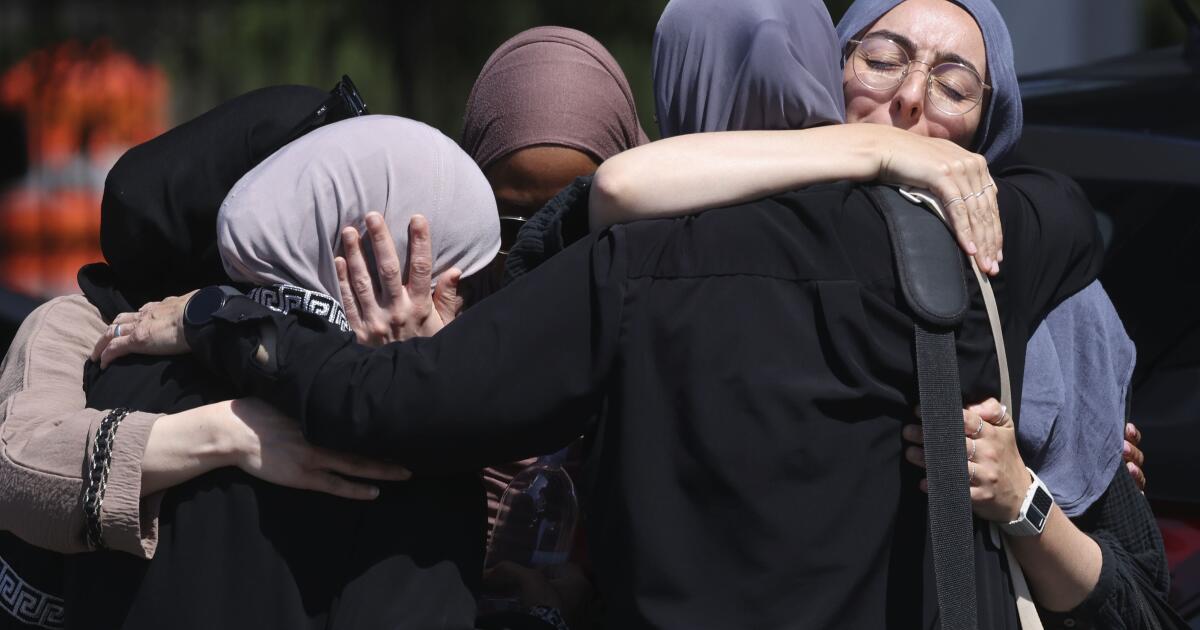
When news broke about the shooting at the Islamic Center of San Diego on Monday, many of us had a sick feeling about where the story was heading.
And over the next few hours, the revelations unfolded with sad familiarity. Authorities found “hate speech” scrawled on one of the guns used by the two gunmen. One of the shooters left a suicide note “writing about racial pride.”
Mayor Todd Gloria tried to comfort a wounded city, declaring “hate has no home in San Diego.” But we’ve been through too much to believe such an eviction is possible.
You’re reading the Essential California newsletter
Sign up to start every day with California’s most important stories.
By continuing, you agree to our Terms of Service, which include arbitration and a class action waiver. You agree that we and our third-party vendors may collect and use your information, including through cookies, pixels and similar technologies, for the purposes set forth in our Privacy Policy such as personalizing your experience and ads.
The SoCal inclusion paradox
One of the great paradoxes of Southern California is how a land that so celebrates diversity is also a place where extremist hate lurks in the shadows. The white power movement has a long history here, going back to the days when the Ku Klux Klan could march freely through Orange County and skinheads rocked out to punk in Huntington Beach. With COVID-19 and the Jan. 6 siege of the U.S. Capitol, a new brand of suburban extremism emerged, fueled in clandestine corners of the web.
A new book tries to understand what is going on. In “American Reich,” author and former L.A. Times journalist Eric Lichtblau examines the high-profile murder of gay Jewish teenager Blaze Bernstein at the hands of a former classmate who had become radicalized as a white supremacist.
The Bernstein case is terrifying, but I found myself most disturbed by the mosaic of disparate hate crimes that he chronicles. They were scattered in the pages of newspapers as random attacks, but Lichtblau pulled them together with an urgent call for more action. Among the many:
What’s so striking about the list is how completely disconnected it is, with individuals acting on their own rather than as part of some larger, organized conspiracy.
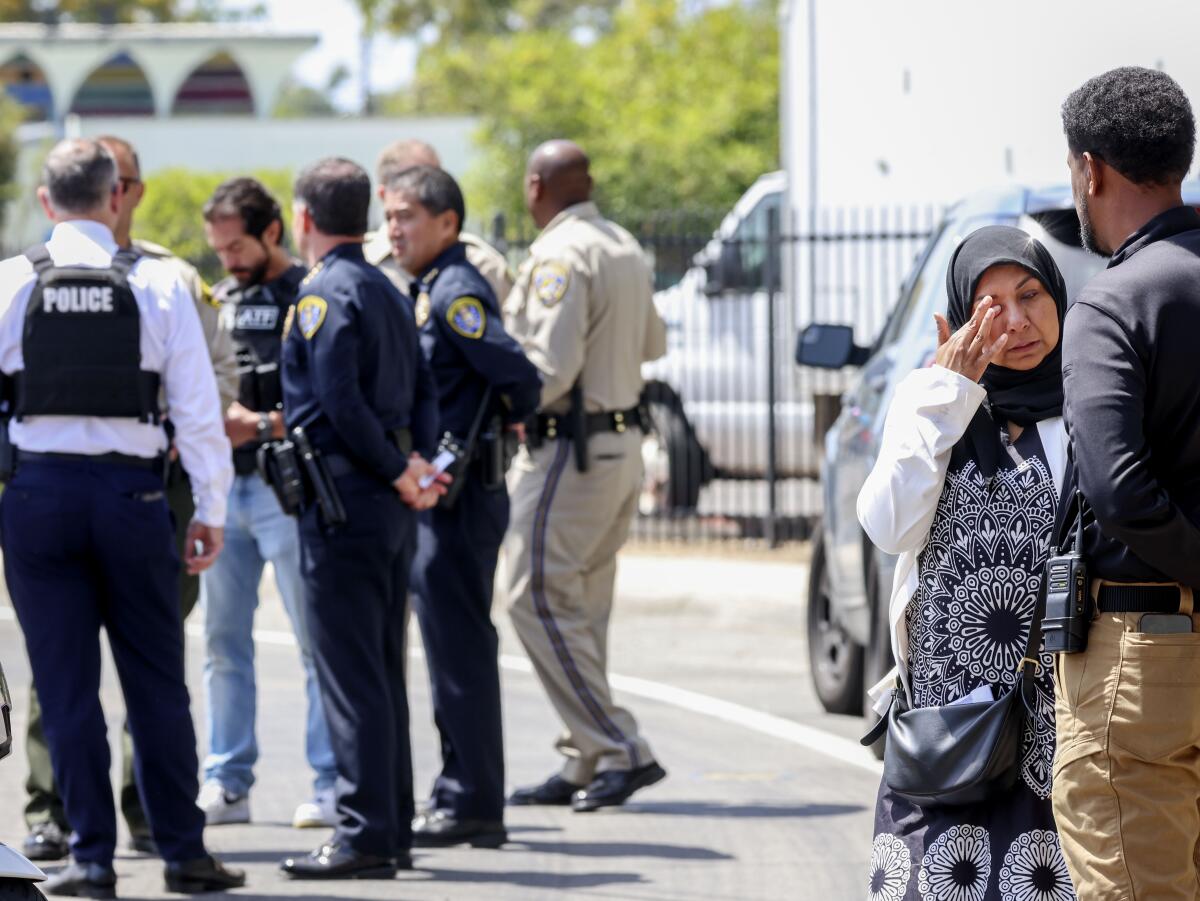
A woman weeps outside the Islamic Center of San Diego on Monday after two shooters entered the facility and opened fire.
(Sandy Huffaker / For The Times)
A symbol for California today
We know very little about the motives of the two shooters who killed three people at the Islamic Center of San Diego before taking their own lives. The investigation is still in its early stages. The mother of one of the assailants had called police shortly before the attack, saying her son was suicidal and guns were missing. Officers were interviewing her when the first reports of an active shooter crackled through the radio.
And why did they target the Islamic Center, which had gained fans across San Diego County for its work fostering cultural tolerance and helping the community’s less fortunate? In some ways, it was a model for a highly diverse region.
But that might end up being the hardest part of all.
Political scientists have warned over the years that some white nationalists rebel against the California melting pot, seeing it as “the time-travel machine of what America must avoid,” as one expert put it.
Lichtblau made a similar point in an interview earlier this year, saying it was significant Bernstein was killed not in the Deep South but in a progressive place where demographics were rapidly changing.
“It’s Disneyland. It’s California.”
But California is far from standing down. If anything, the attack has united San Diego, bringing many groups together in outrage and support. Mayor Gloria, in an interview with CBS News, said that the polarized state of our politics heightens tensions and that messages of unity and tolerance don’t always generate the clicks on social media.
But in California, they might ultimately be our secret weapon.
Today’s top stories 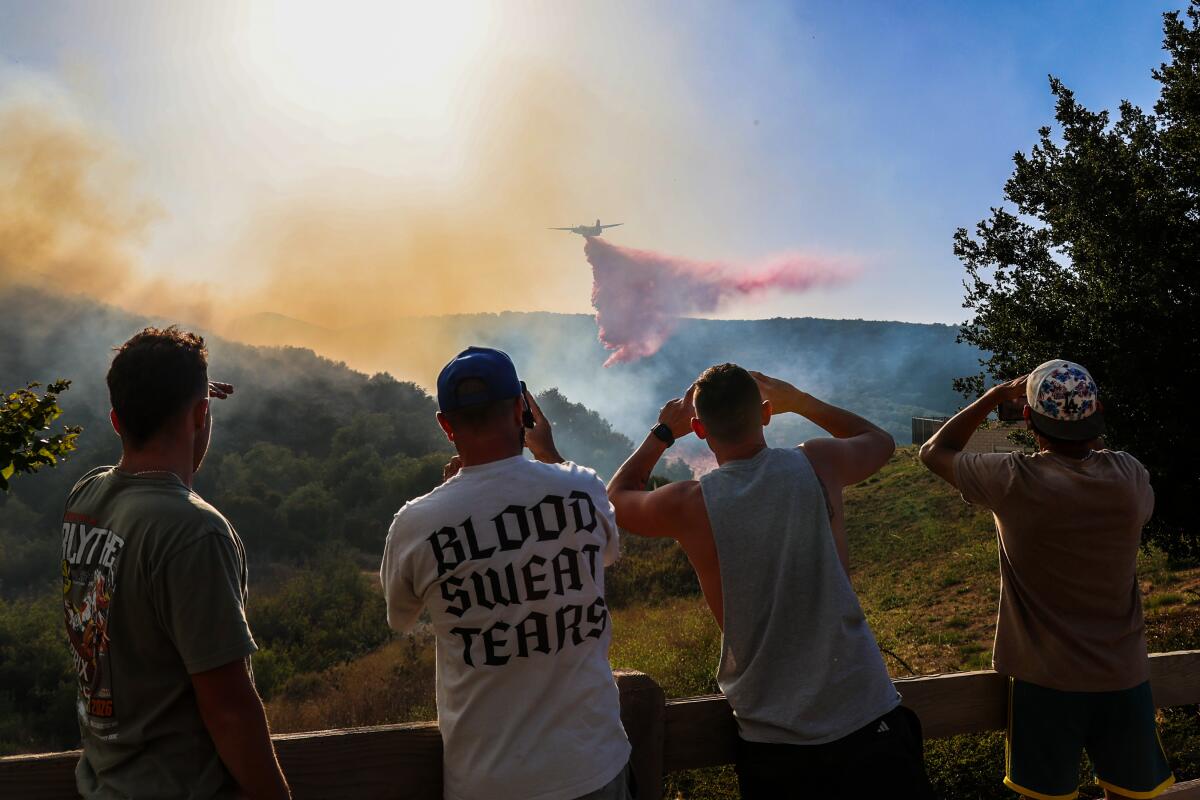
Residents look on from Redwood Grove Court in Simi Valley as the Sandy fire burns in Runkle Canyon.
(Robert Gauthier/Los Angeles Times)
Fire crews continue to fight against SoCal blazesHilton and Becerra lead the polls in California governor’s raceA warm winter just wiped out SoCal’s little-known cherry harvestIn May, Leona Valley is usually bustling with families who arrive from across Southern California for an annual tradition: U-pick cherries. But this year has been so warm that the trees produced no fruit. Orchards that usually attract hundreds of visitors on weekends now sit empty.What else is going onCommentary and opinionsThis morning’s must-readFor your downtime 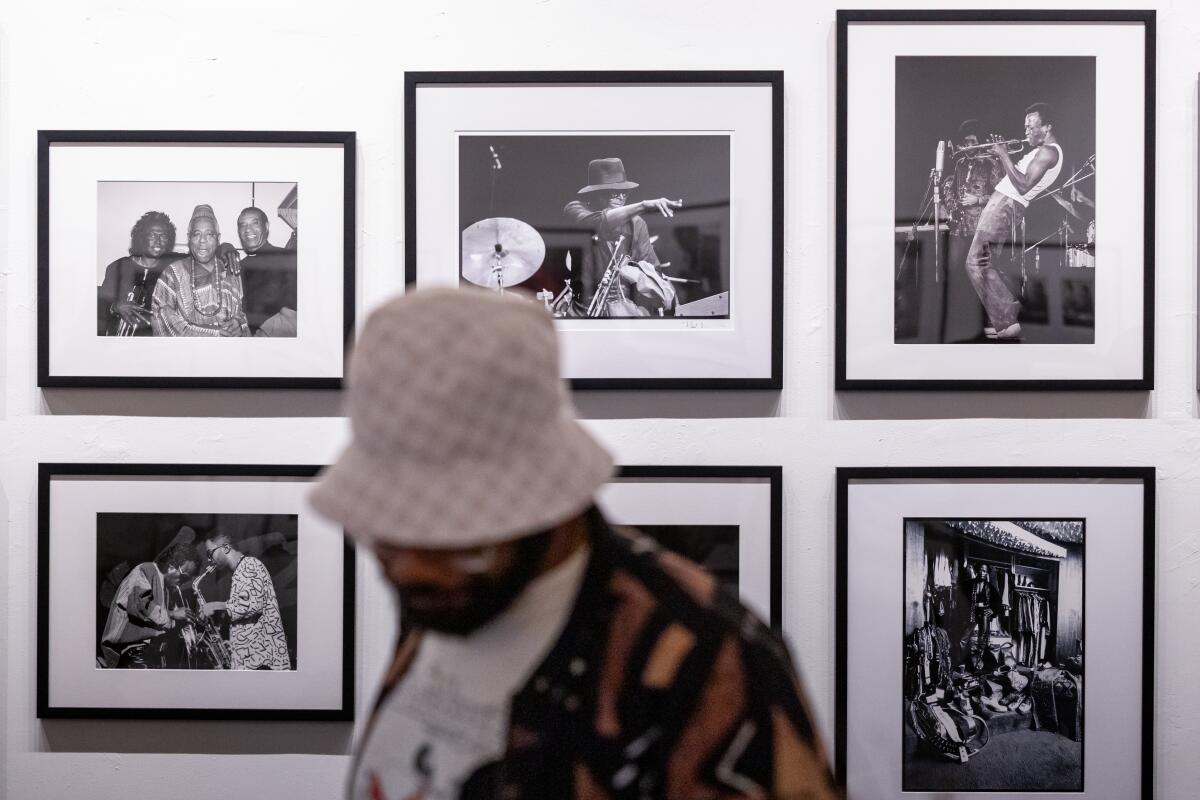
Music and photography lovers attend Musichead Gallery’s photography exhibition marking the centennial celebration of legendary jazz musician and cultural icon Miles Davis in Los Angeles.
(Jason Armond / Los Angeles Times)
Going outStaying inSticker shock: Send us examples of California houses with sticker prices that truly shocked you.
Is it worse than this burnt-out three-bedroom in Torrance that sold for over $1 million? Email us at essentialcalifornia@latimes.com, and your response might appear in the newsletter this week.
And finally … your photo of the day 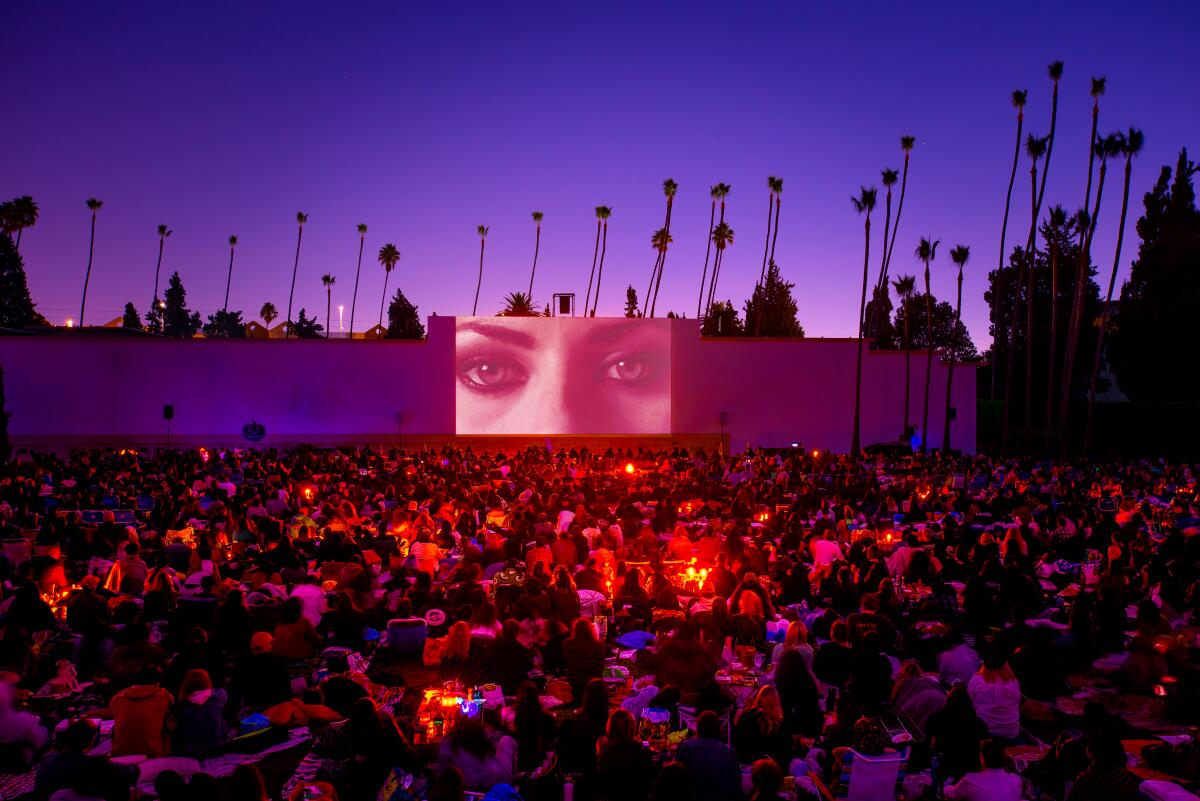
Cinespia turned a Hollywood cemetery into L.A.’s summer utopia.
(Kelly Lee Barrett / Cinespia)
Today’s great photo is from Kelley Lee Barrett at a film screening on the lawn of Hollywood Forever, where Cinespia has turned the cemetery into L.A.’s summer utopia.
Have a great day, from the Essential California team
Hailey Branson-Potts, staff writer
Hugo Martín, assistant editor, fast break desk
Kevinisha Walker, multiplatform editor
Andrew Campa, weekend writer
Karim Doumar, head of newsletters
How can we make this newsletter more useful? Send comments to essentialcalifornia@latimes.com. Check our top stories, topics and the latest articles on latimes.com.