
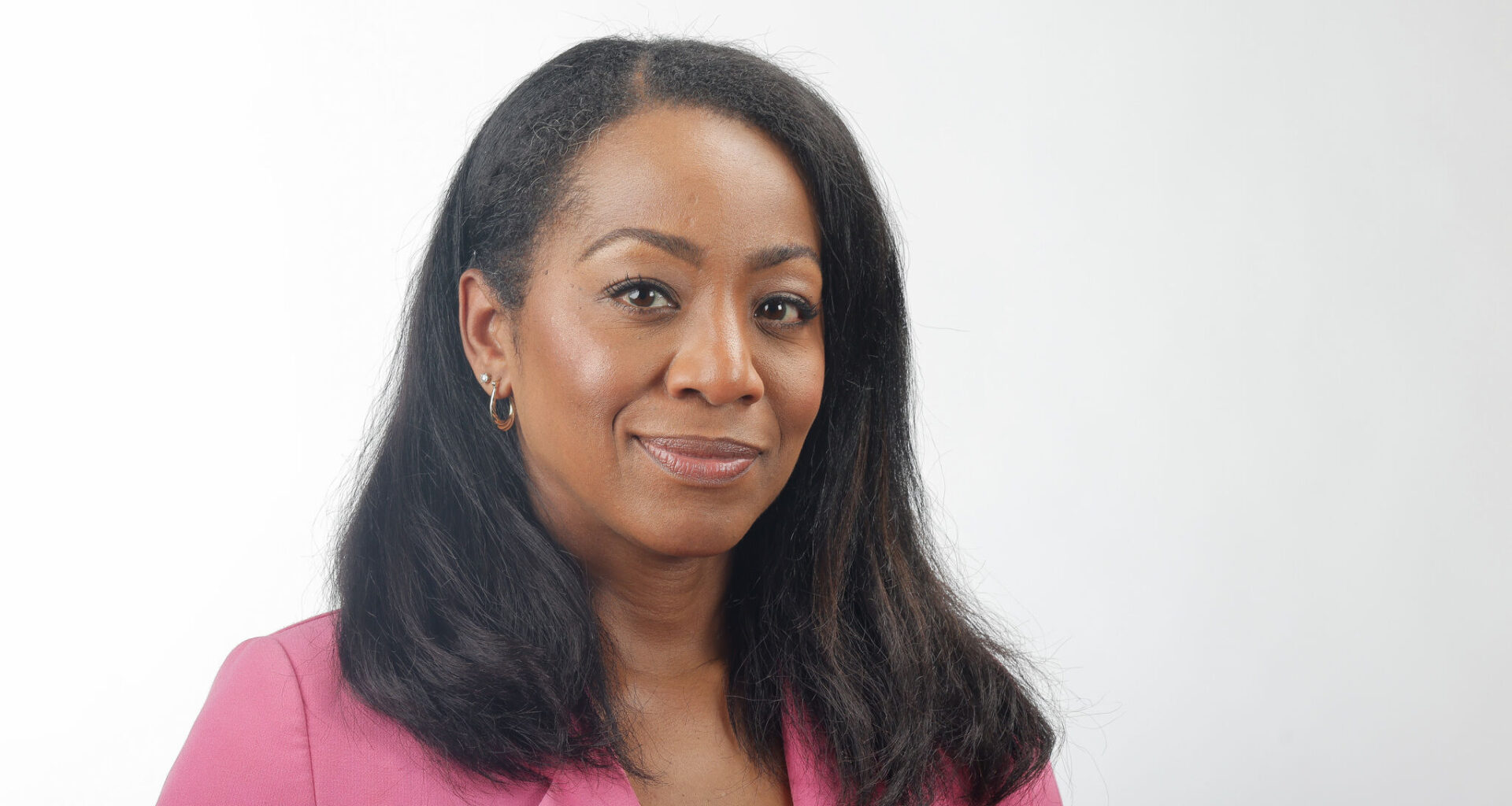
While the editorial board has reservations about Controller Malia Cohen due to several high-profile errors from her office, her work on fiscal transparency and improving the state’s bond rating merits another term.
Lea Suzuki/S.F. Chronicle
Waste, fraud and abuse.
It’s a catchphrase politicians can’t seem to get enough of these days.
Rightfully so. Many Californians are beyond frustrated that state officials didn’t adequately track costs or outcomes for the $24 billion funneled into homelessness programs in recent years — and that the anticipated cost of high-speed rail ballooned from $45 billion to $126 billion amid glacial progress on its construction.
Article continues below this ad
In a broader national climate of distrust and affordability concerns, accurate, detailed information on California’s expenditures has never been more important.
The person best positioned to provide it is California’s chief fiscal officer — the state controller.
San Francisco Chronicle Logo
Make us a Preferred Source to get more of our news when you search.
Add Preferred Source
The State Controller’s Office is California’s internal auditor — empowered to investigate how state agencies and local governments are spending state funds — and its accountant, handling payroll for state employees, overseeing the statewide accounting system, issuing reports on the state’s finances and operations and working to return unclaimed property and funds to their owners. The controller also sits on 70 boards and commissions, including those of the state’s two largest pension funds, which together manage nearly $1 trillion in assets.
It’s a serious job with serious stakes.
Article continues below this ad
Does Democratic incumbent Malia Cohen, a former member of the state Board of Equalization and San Francisco supervisor, deserve another four years in office?
We didn’t endorse Cohen in 2022, over concerns that she wouldn’t aggressively investigate spending in a Democratic-led state when she was clearly hoping to rise within the party.
Some of those worries were borne out.
Cohen, who told us in an endorsement interview that it took her “about two years” to learn the nuances of the job, didn’t follow through on her campaign pledge to investigate the state’s homelessness spending and fraudulent payments at the Employment Development Department. She said this was because the external state auditor was already looking into those programs, and she didn’t want to “duplicate” those efforts.
Instead, Cohen told us she prioritized the punctual completion of the California Annual Comprehensive Financial Report, an audited look at the state’s spending from the prior fiscal year. The report is indeed incredibly important — credit rating agencies use it to determine whether the state can borrow money affordably, and the federal government considers it when awarding funds. But California hadn’t published it on time since 2018, prompting the state auditor to classify it as a “high-risk” issue in 2020.
Article continues below this ad
Cohen promised to get the reports on track by March 2026. She didn’t quite hit that goal; the most recent report for fiscal year 2024-25 was published this month. Nevertheless, California is now finally caught up on its fiscal evaluations, which has led to improved bond ratings. The latest report also received an “unmodified” opinion from the state auditor — a mark of high praise signaling a fair and accurate presentation of facts — for the first time since 2019.
That’s important and impressive progress. And yet some of our concerns about Cohen’s management persist.
When the state auditor reviewed the Annual Comprehensive Financial Report for fiscal year 2022-23, it found the “controller made material errors” of about $11 billion when reconciling state education funding. There were improvements in the next fiscal year, the state auditor noted, but the “controller once again made material errors totaling $6.1 billion.”
That’s among the reasons the state auditor continued to classify the controller’s production of the report as “high-risk” in 2025 — a designation Cohen forcefully disputed — and contracted an independent accounting firm to review the process. But, the auditor said, the controller’s office “spent more than a year resisting” the review, which is ongoing — almost prompting the auditor to take the controller to court.
In a statement, Cohen’s campaign said her “efforts to reason” with the state auditor “were never about resistance, transparency or refusing oversight” — instead, she wanted to ensure the review didn’t interfere with her office’s work to produce an on-time financial report. As for the reconciliation errors, they were “identified within the audit process itself, corrected and transparently disclosed,” which is “how audited financial reporting is supposed to work.” Cohen said she also strengthened internal financial controls to prevent similar errors in the future.
Article continues below this ad
But cracks remain. In March, an error in the controller’s payroll system resulted in 11 school districts being either overpaid or underpaid. Cohen said the finances were straightened out and the employee responsible was “retrained.” The larger issue, she said, is that California is still using a payroll system from the 1970s — one so ancient it can take a year for raises to go into effect. A modernized system won’t be fully in place until 2030.
These lapses are concerning. But it’s hard to overstate the importance of Cohen’s work on the Annual Comprehensive Financial Report. Additionally, in response to the largest charter-school fraud scheme in state history — which occurred before Cohen took office — she led a task force that identified ways to strengthen state oversight of school finances. And under Cohen’s watch, state agencies are also expected on July 1 to finally finish transitioning to FI$Cal, a unified budgeting and finance system launched nearly two decades ago.
Overall, we think Cohen has made enough progress to merit another term. But Californians should stay watchful to ensure she keeps the positive momentum going.
Cohen’s top competitor is Herb Morgan, a Republican financial services manager who extolled his experience stabilizing public finances as a former president of the San Diego City Employees’ Retirement System. We share his goal of leveraging technology to make it easier to trace taxpayer dollars — but we’re skeptical of the feasibility of his proposal to use artificial intelligence to create a real-time transaction ledger encoded on blockchain.
The editorial positions of The Chronicle, including election recommendations, represent the consensus of the editorial board, consisting of the publisher, the editorial page editor and staff members of the opinion pages. Its judgments are made independent of the news operation, which covers the news without consideration of our editorial positions.
With Cohen largely grounded in the duties of the job, it makes little sense to switch to another candidate who will take time to come down to earth.
Article continues below this ad
Also running is Peace and Freedom Party candidate Meghann Adams, a San Francisco school bus driver who wants to push the state to divest from weapons manufacturers and fossil fuel companies.
Reach the editorial board with a letter to the editor: www.sfchronicle.com/submit-your-opinion.