
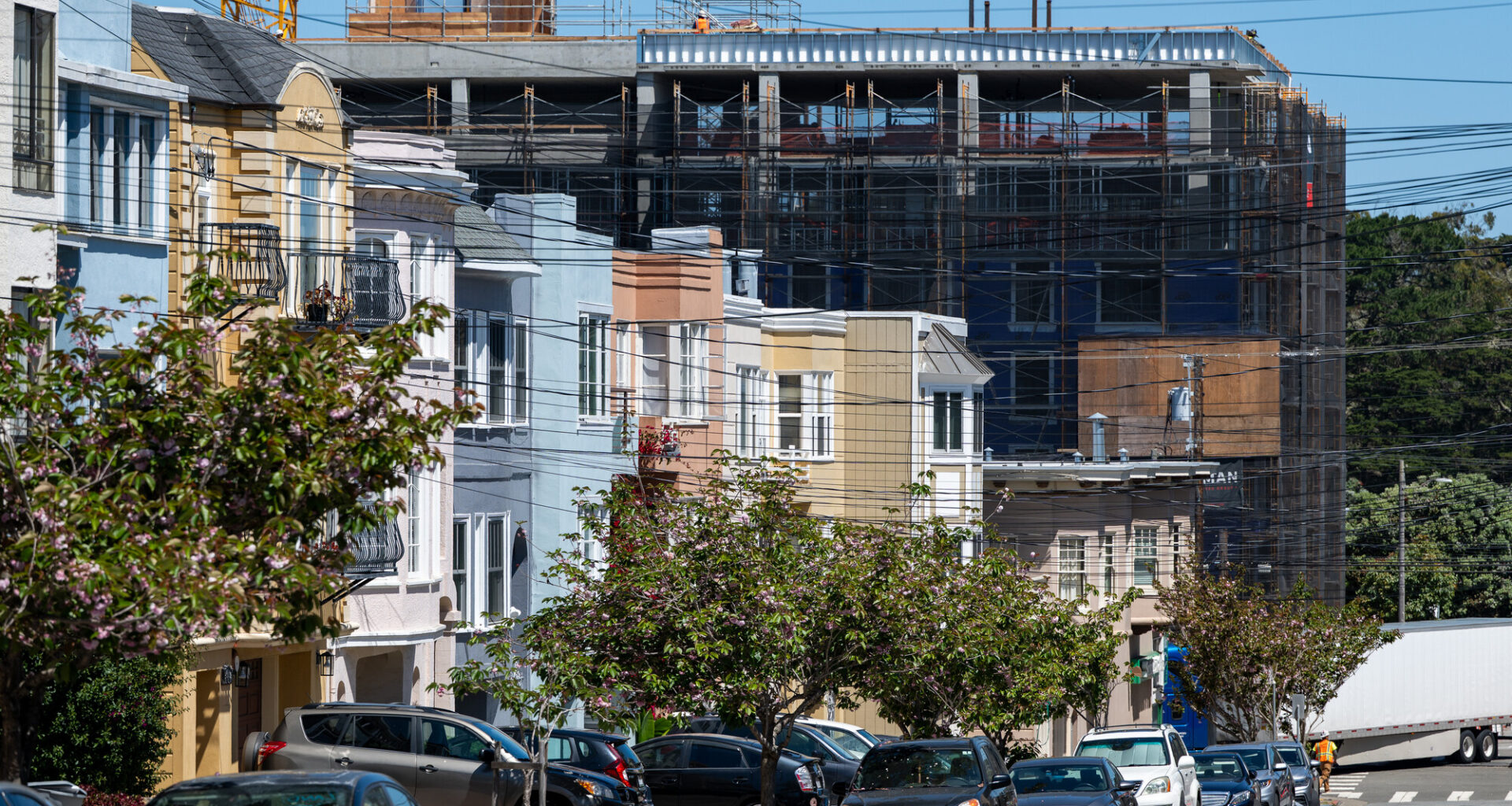
Other candidates are focusing on what the state can do now to incentivize and ease the path of traditional building methods. State Superintendent Tony Thurmond has campaigned on building 2 million affordable homes on school district-owned surplus property. Riverside County Sheriff Chad Bianco wants to end the “over-regulation of our building industry.”
British American political commentator Steve Hilton and Mahan, mayor of San Jose, have both talked about capping fees that cities often impose on developers to offset the impact of new development. A recent study from UC Berkeley’s Terner Center for Housing Innovation found that these “impact” fees contribute to less than 5% of total development costs, but can nonetheless deter it.
When it comes to protecting the interests of renters, the candidates are divided on the best course. Steyer, Becerra, Villaraigosa and Thurmond have said they are in favor of some form of government-imposed rent caps, including extending and enforcing the Tenant Protections Act, a 2019 law that limits annual rent increases and restricts evictions. It’s set to expire in 2030, within the next governor’s term. But Porter, a former state representative, has bucked that trend. In a KQED Town Hall, Porter said that she opposes rent control. And while she said she supports the Tenant Protection Act, she argued that it can slow down construction and force people to stay put, regardless of whether moving would benefit their family or lifestyle.
Data center builders don’t tell the public how much water they use, according to a new report — and the industry is encroaching into water-stressed and vulnerable communities.
The report, by the think tank Next10 and researchers at Santa Clara University, finds that planned data centers — the ganglia of artificial intelligence — are spreading to regions reliant on overtapped groundwater and strained surface water, with potentially major effects in the Central and Imperial Valleys. But, reinforcing previous studies, the researchers found that a patchwork of state, federal and local policies allow data center operators to avoid publicly disclosing their actual water use.
California lawmakers tried to address this last year, but California Gov. Gavin Newsom vetoed the measure. Now, the Legislature is trying again, with bills mandating disclosures about water use and planning. “We have this huge build out, and we have very little data,” said Irina Raicu, who directs the Internet Ethics program at the Markkula Center for Applied Ethics at Santa Clara University.
Few environmental impact reports for California’s data centers were publicly available online, the researchers found. Raicu and a team led by Iris Stewart-Frey, a professor of environmental science and the main author of the study, went looking for the reports, meant to assess and disclose a project’s impacts for both nature and people under the landmark California Environmental Quality Act. They found almost none. The ones they did find were largely for facilities in the city of Santa Clara.