
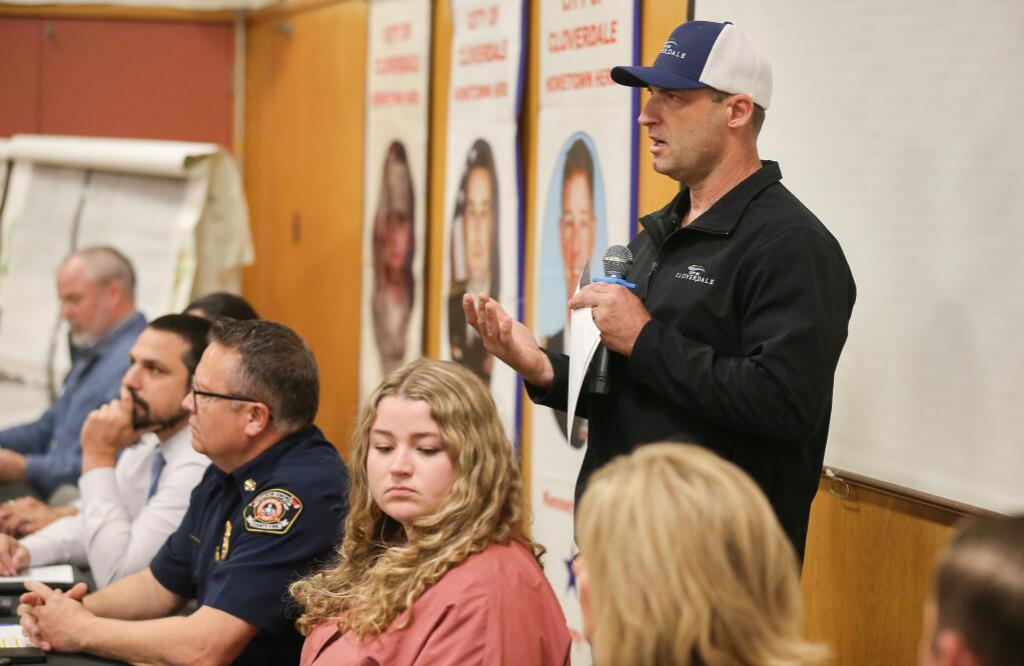
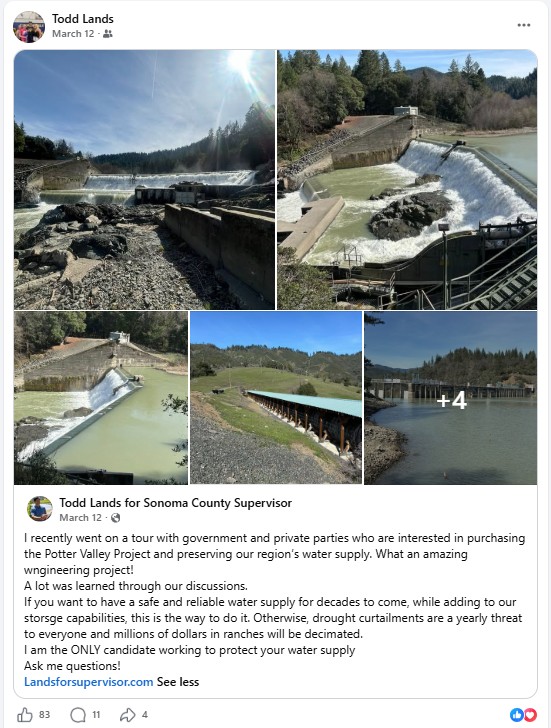
On March 12, Todd Lands posted about a trip on Facebook.
It wasn’t to an exotic or far away locale. Instead, he’d visited Potter Valley, the Mendocino County farming community just up the road from his home and political base in Cloverdale.
“I recently went on a tour with government and private parties who are interested in purchasing the Potter Valley Project and preserving our region’s water supply … I am the ONLY candidate working to protect your water supply. Ask me questions!”
It was the 39th time Lands had posted about Potter Valley on social media since declaring himself last summer a candidate to succeed Sonoma County’s 4th District Supervisor James Gore.
“If you want to have a safe and reliable water supply for decades to come, this is the way to do it!” he wrote.
For the past two years, Lands, a Cloverdale city council member, has been among the most vocal and visible critics in Sonoma County of a plan to tear down two Pacific Gas and Electric Co. dams on the Eel River in Lake and Mendocino counties.
PG&E no longer wants to operate the dams, and after no local entities stepped up to take them over, PG&E has begun a federal process to decommission them.
Lands and allies say that move would jeopardize a key source of supplemental Eel River water that is diverted into the upper Russian River, where it helps bolster drinking and irrigation supplies for northern Sonoma County. As a candidate for higher office, Lands has staked his campaign for supervisor around defending the Scott and Cape Horn dams — a political stance he says is warranted to ensure water security for the region.
“We got into this situation exactly because our current elected officials have not properly planned for the possibility of dam removal and its broader impacts,” Lands said in a written response to The Press Democrat after he declined an interview for this story.
Kent Porter / The Press Democrat
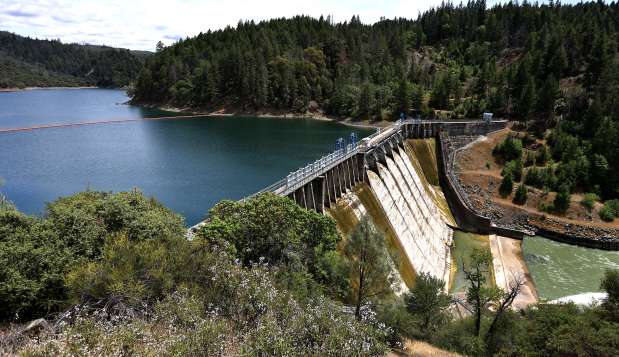
Scott Dam at Lake Pillsbury, Wednesday, May 14, 2025, in Lake County. The reservoir is the larger of the two that would be drained if PG&E is given approval to decommission Scott Dam and the downstream Cape Horn Dam on the Eel River. (Kent Porter / The Press Democrat)
In the closing weeks of the June 2 primary election, however, the issue has become more politically complicated for Lands and other local allies after a turn they nonetheless welcomed: Two Southern California water agencies have stepped forward with interest in potentially taking over the North Coast waterworks.
Both are some 600 miles away, in Riverside County.
And that has caused ripples close to home, where the specter of another Southern California water grab echoes some of the state’s fiercest fights over an often-scarce resource.
Lands’ two rivals in the race for the north county supervisor seat have pounced, putting him on defense.
“This doesn’t make a heck of a lot of sense,” said Tom Schwedhelm, the former Santa Rosa mayor and retired police chief. “I’m very concerned with them wanting to manage Northern California water that we’ve relied on for over 100 years. Why did they get involved?”
Melanie Bagby, a former Cloverdale mayor also vying for the 4th District seat, said the next north county supervisor needs to be committed to the pact reached in 2025 to guide future Eel-River water diversions, while returning tribal water rights and advancing restoration of California’s third longest river.
“They need to be committed to that and committed to keeping water in our local watershed for local farmers, wildlife and communities,” Bagby said.
 Sonoma County 4th District supervisor candidates, from left, Tom Schwedhelm, Melanie Bagby and Todd Lands. (courtesy photos)
Neither Riverside County agency has outlined exactly how a takeover would work, but a consultant’s report prepared for one, the Elsinore Valley Municipal Water District, noted the the water rights tied to the Eel River flows at issue “carry a market value in the half-billion to nearly billion dollar range.”
“Once the dams are removed, these rights become functionally worthless and can never be re-established,” the report noted.
Lands, in his written response to Press Democrat questions, insisted he was not responsible for helping to usher the Southern California interests to the table over the future of the Potter Valley Project. The project includes the two dams and shuttered PG&E power plant that has helped funnel Eel River water into the upper Russian River for more than a century.
“They were introduced to this project through various stakeholders who are advocating to protect Lake Pillsbury and the domestic water supply for our region,” he said.
Press Democrat
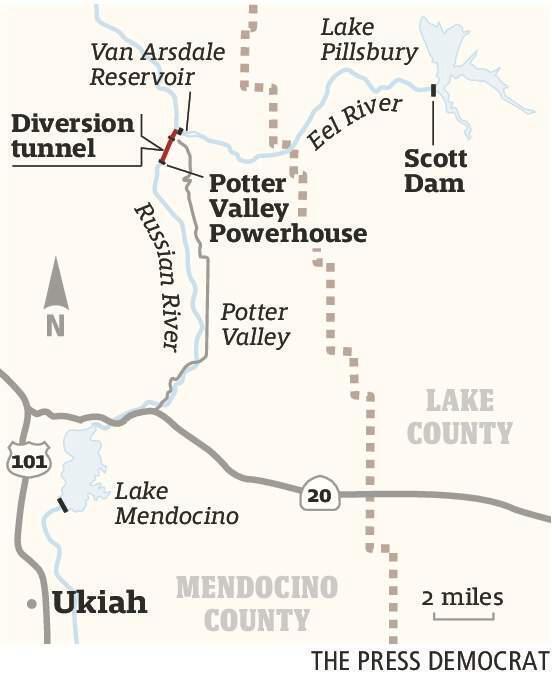
This diagram shows how water from Lake Pillsbury, through Scott Dam, flows downstream toward Cape Horn Dam and Van Arsdale Reservoir, where a portion of the water since 1908 has been diverted through a tunnel and to the Potter Valley Powerhouse into the East Fork of the Russian River and on into Lake Mendocino. The plant’s 9.2-megawatt capacity amounted to 0.1% of PG&E’s power production in 2017. (Press Democrat)
He did not name those stakeholders nor elaborate on his role in that process.
But dozens of his social media posts over the past year and other moves by Lands tell a fuller story of his activism, both out front and behind the scenes, leading up to the April announcement by U.S. Agriculture Secretary Brooke Rollins of Elsinore Valley’s interest in the Eel River dams.
PG&E’s path
Lands, a former Sonoma County sheriff’s deputy and now contractor, was a year away from his first election to the Cloverdale City Council when PG&E began taking steps in 2019 to abandon the Potter Valley Project, which no longer penciled out, according to the utility giant.
It faced the costly prospect of having to relicense the facilities, which was likely to trigger costly modifications for fish passage, among other upgrades.
The move to seek approval to abandon the dams was an “economical decision for our customers and their bills,” PG&E spokesperson Megan McFarland told The Press Democrat last summer. “The cost of generating is significantly higher than the cost of purchasing the energy on the open market.”
Should the federal agency responsible for such matters approve PG&E’s bid to decommission them, both dams are slated to eventually come down in what would be the nation’s next big dam removal project, freeing up the headwaters to help revive the Eel River’s troubled salmon and steelhead trout runs.

The Scott Dam at Lake Pillsbury, Thursday, April 23, 2026, in Lake County. (Kent Porter / The Press Democrat)
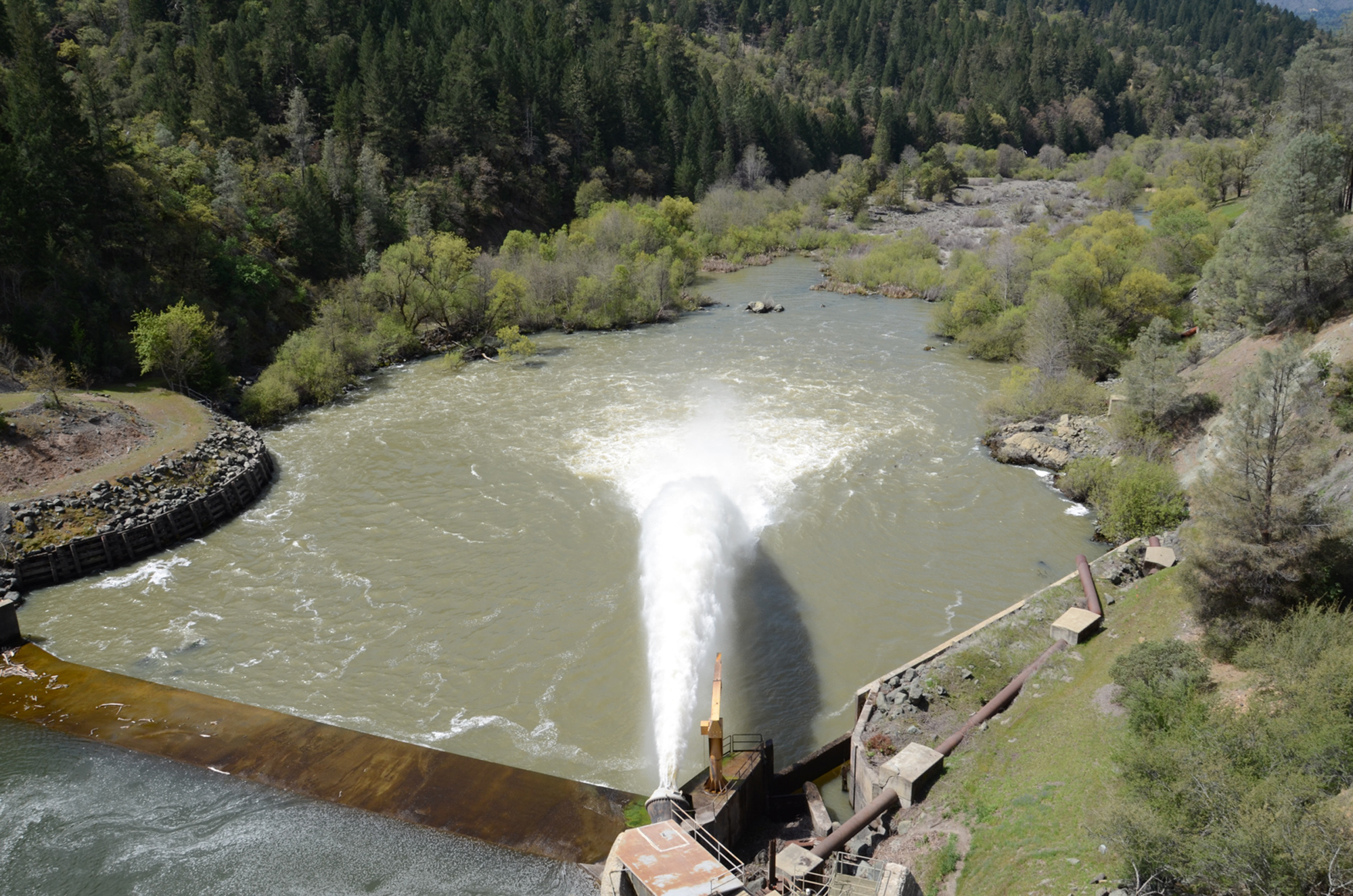
Water flows into the Eel River at Scott Dam, which was created for the Potter Valley Project.
(File photo/The Ukiah Daily Journal)
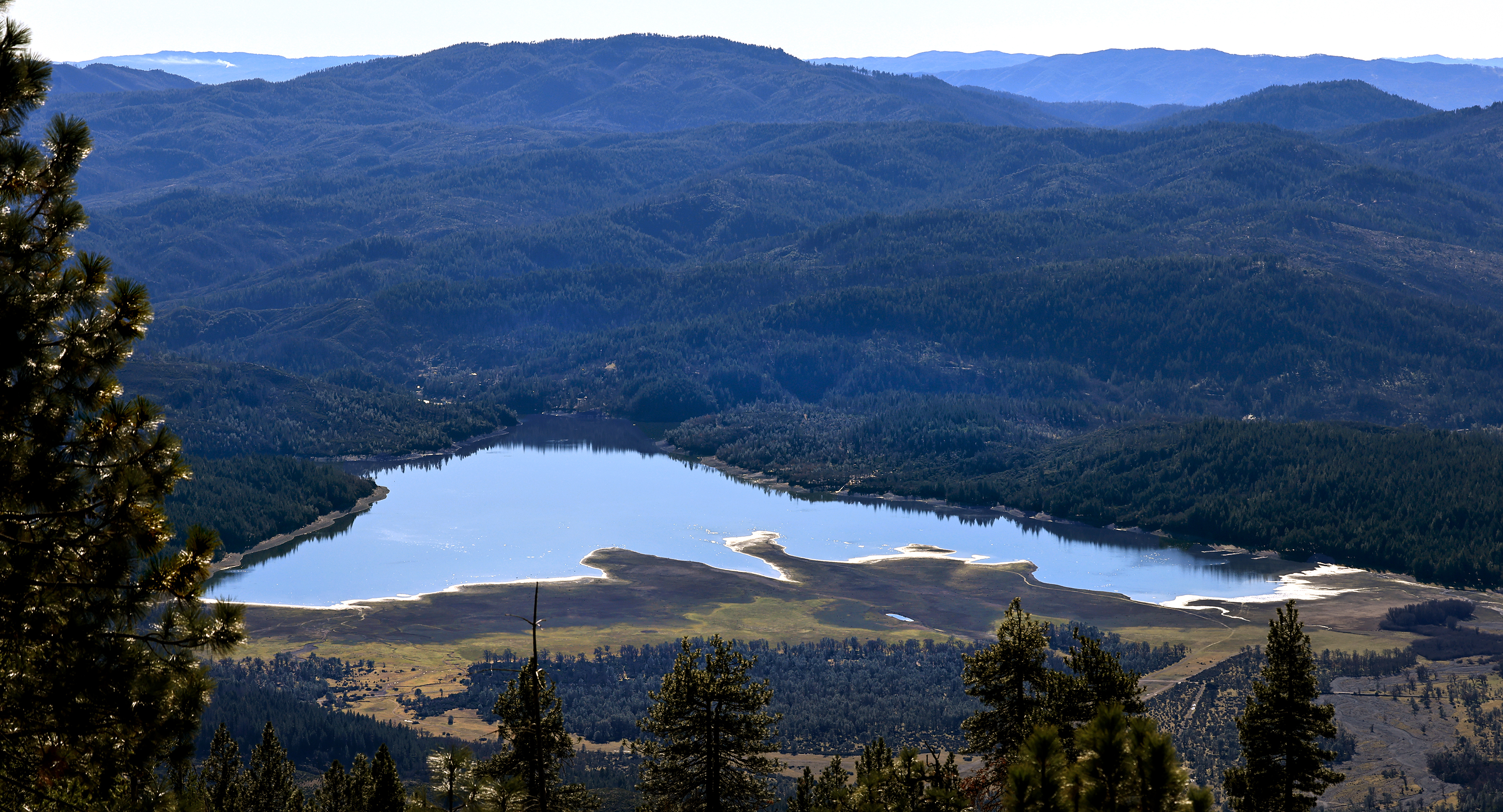
The view of partially depleted Lake Pillsbury above the snow line of Hull Mountain at 6,700’ in elevation, Wednesday, Dec. 10, 2025, in the Mendocino National Forest. (Kent Porter / The Press Democrat)
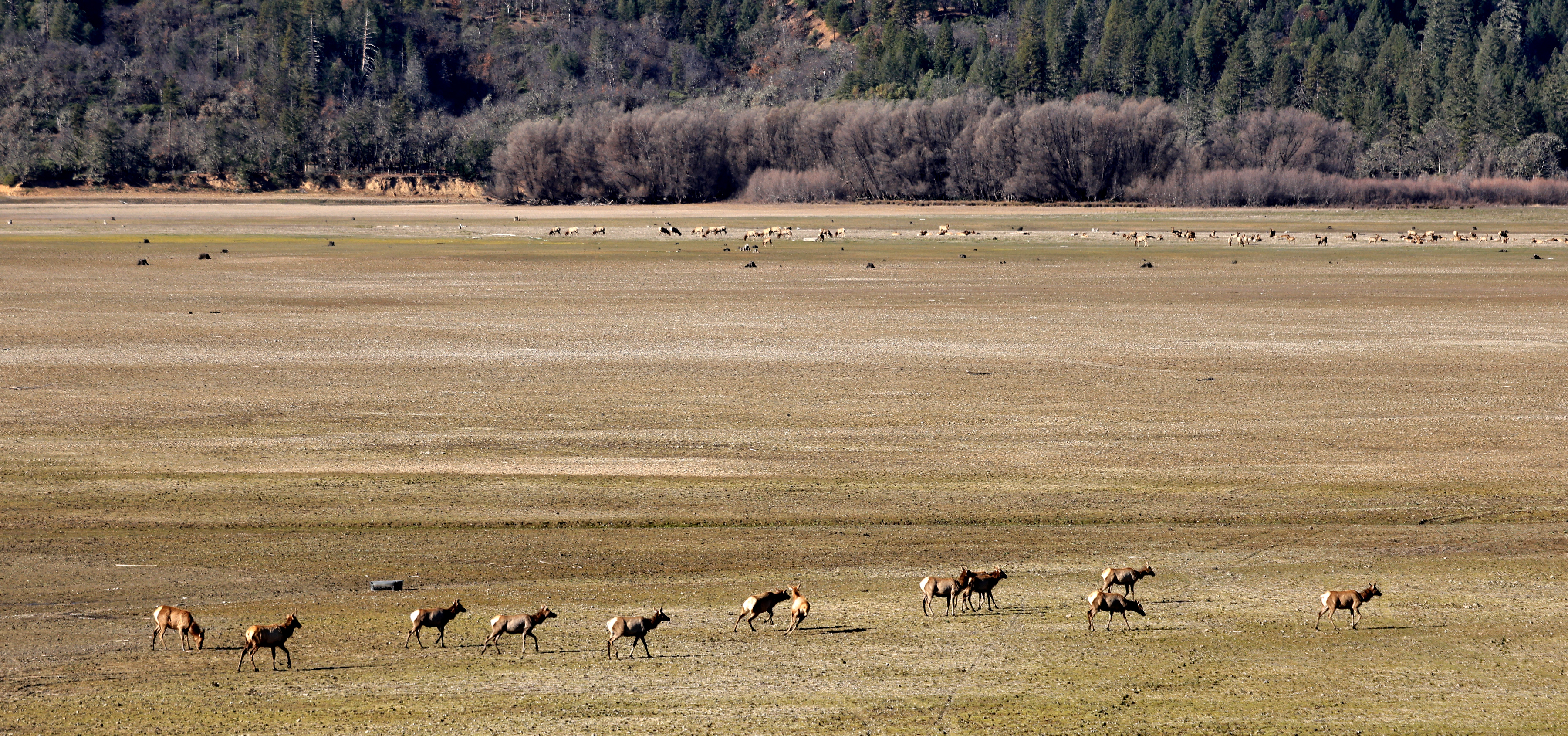
Elk graze across Lake Pillsbury’s partially dry lakebed, Wednesday, Dec. 10, 2025. (Kent Porter / The Press Democrat)
Amie Windsor / The Press Democrat
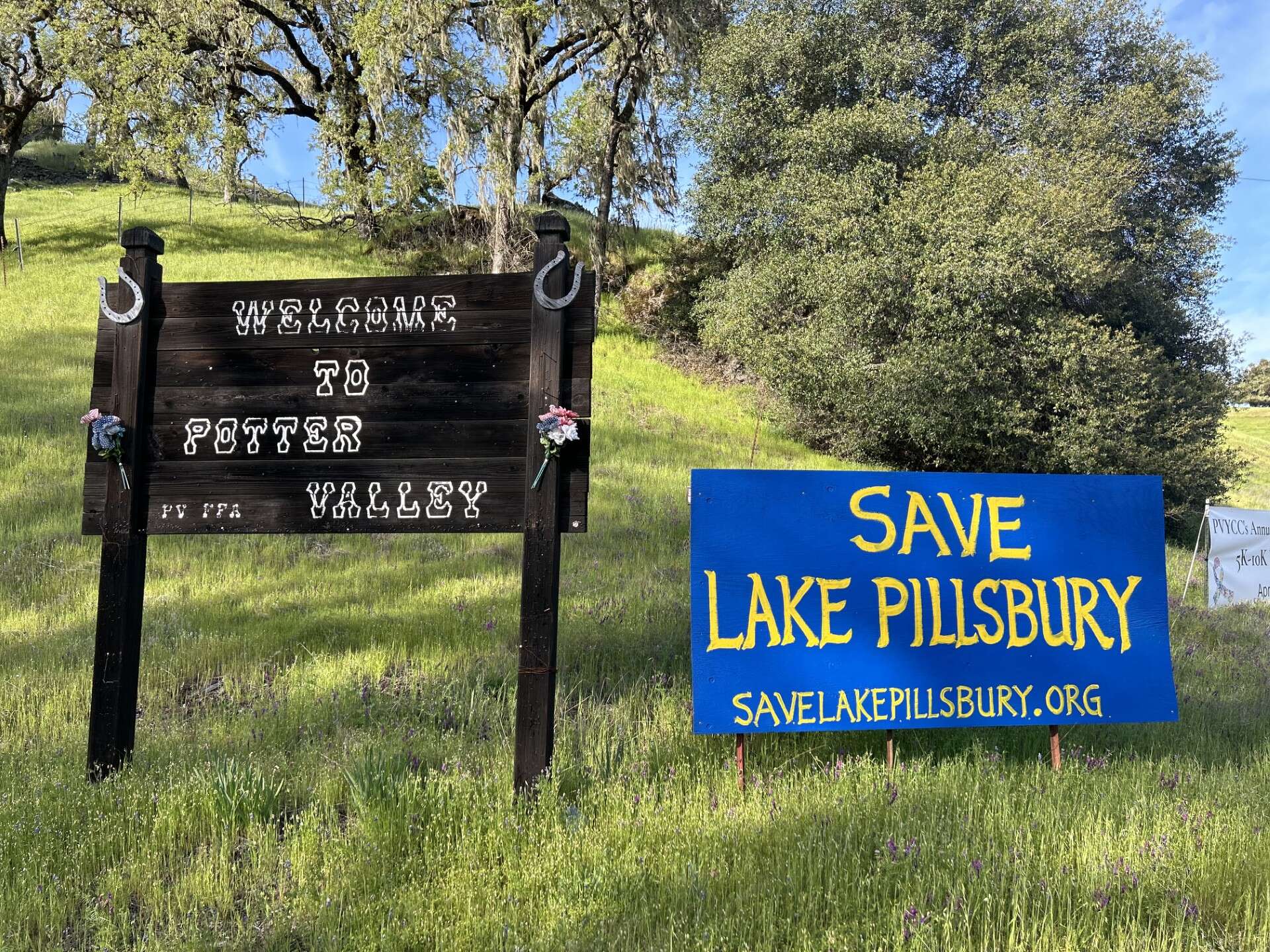
‘Save Lake Pillsbury’ signs can be spotted throughout the Lake Pillsbury watershed, including Potter Valley. (Amie Windsor / The Press Democrat)
Kent Porter / The Press Democrat
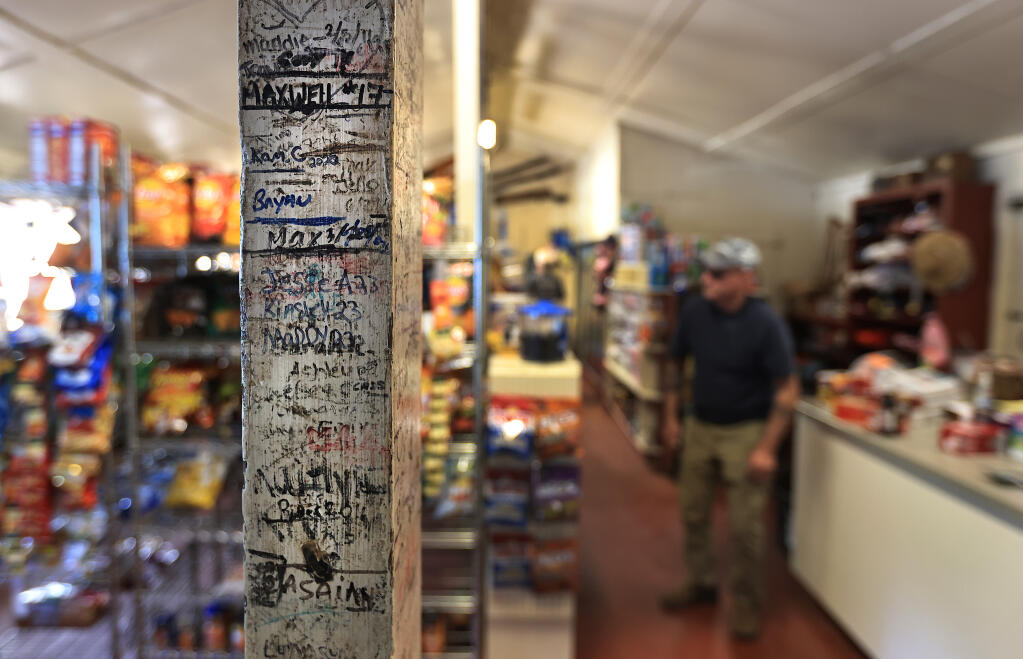
Decades of signatures from visitors to Lake Pillsbury cover support poles inside Soda Creek Store Wednesday, May 14, 2025. (Kent Porter / The Press Democrat)
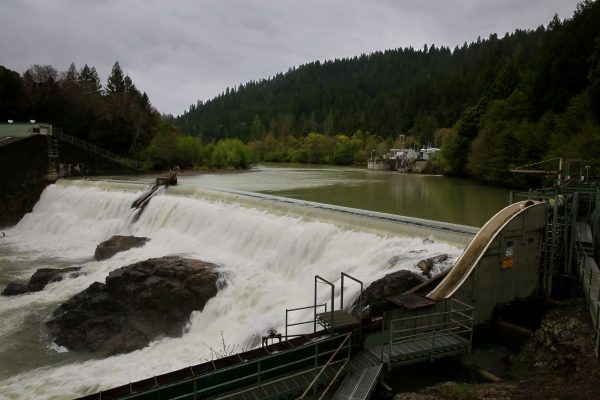
Water from the Eel River collects at the Van Arsdale Reservoir and flows over the Cape Horn Dam. A percentage of the water is redirected through a diversion tunnel, at the building in the background, to the Potter Valley Powerhouse and east fork of the Russian River. (Christopher Chung/ The Press Democrat)
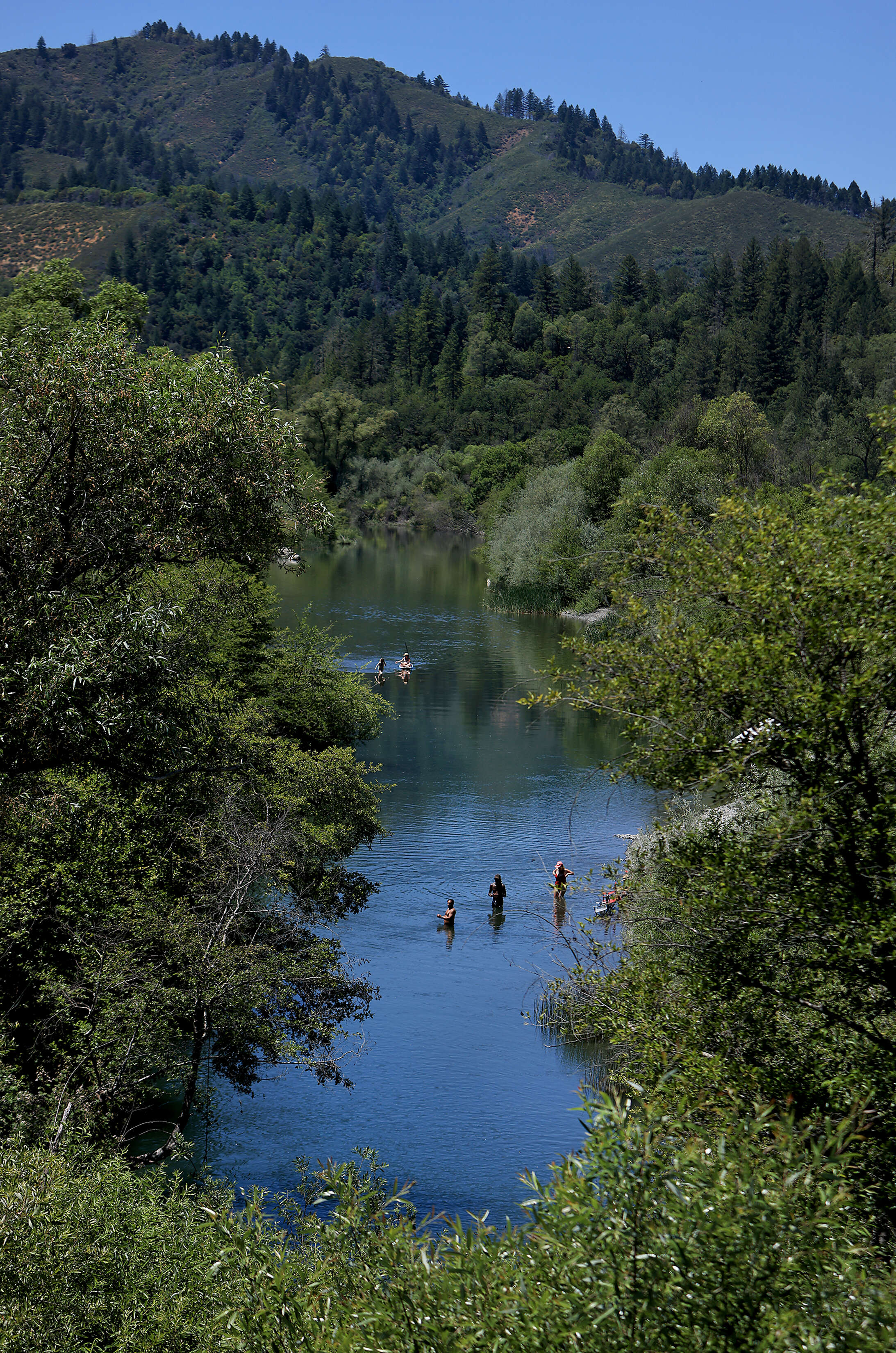
The Eel River east of Potter Valley is summertime slow and lazy creating a spot for day use with water backed up by the Van Arsdale Reservoir at the Cape Horn Dam, Friday, June 7, 2024. (Kent Porter / The Press Democrat) 2024
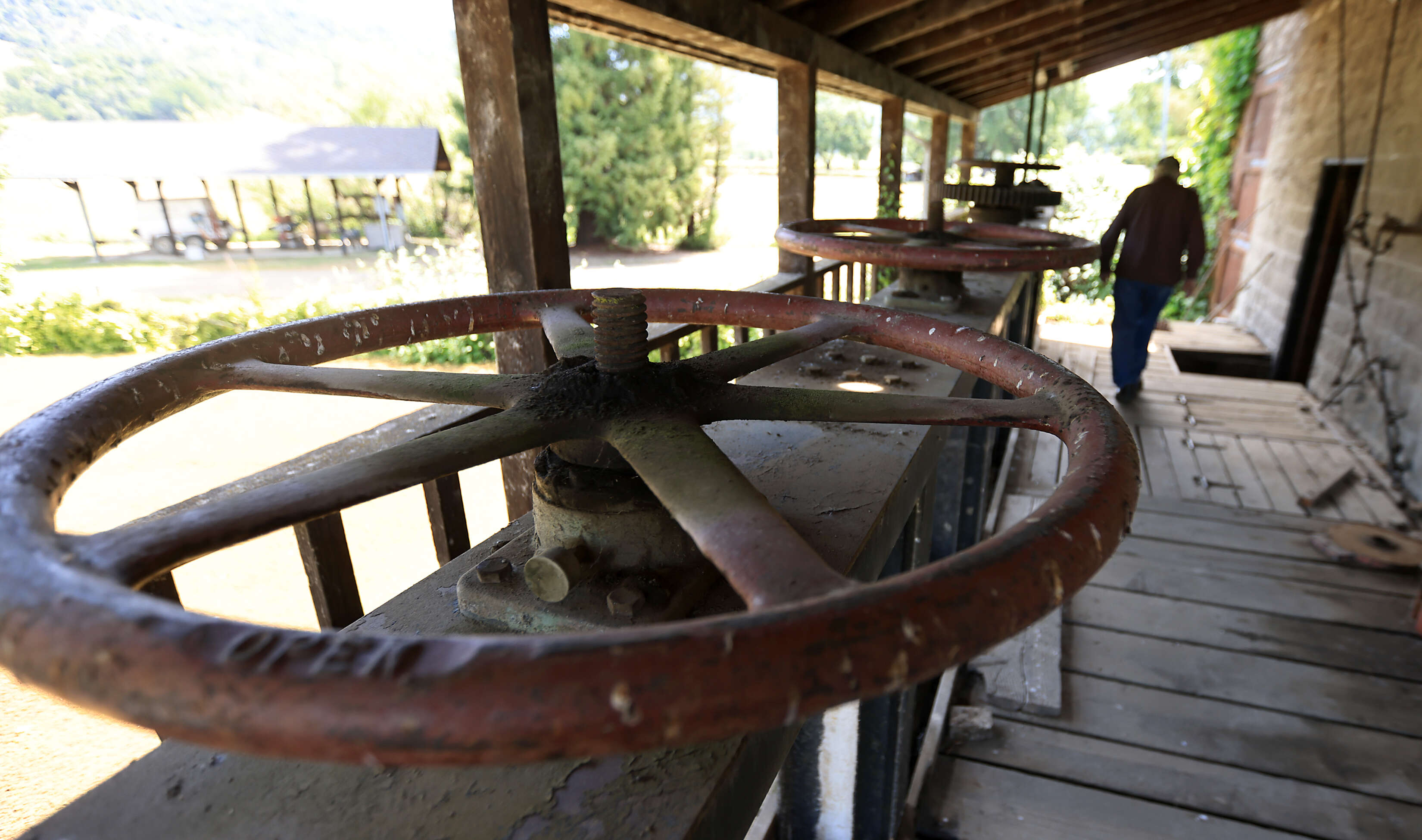
Kent Porter / The Press Democrat
Guinness McFadden brought in wheels from New York to help adjust flows of diverted Eel River water at his private powerhouse in Potter Valley, Wednesday, May 14, 2025. (Kent Porter / The Press Democrat)
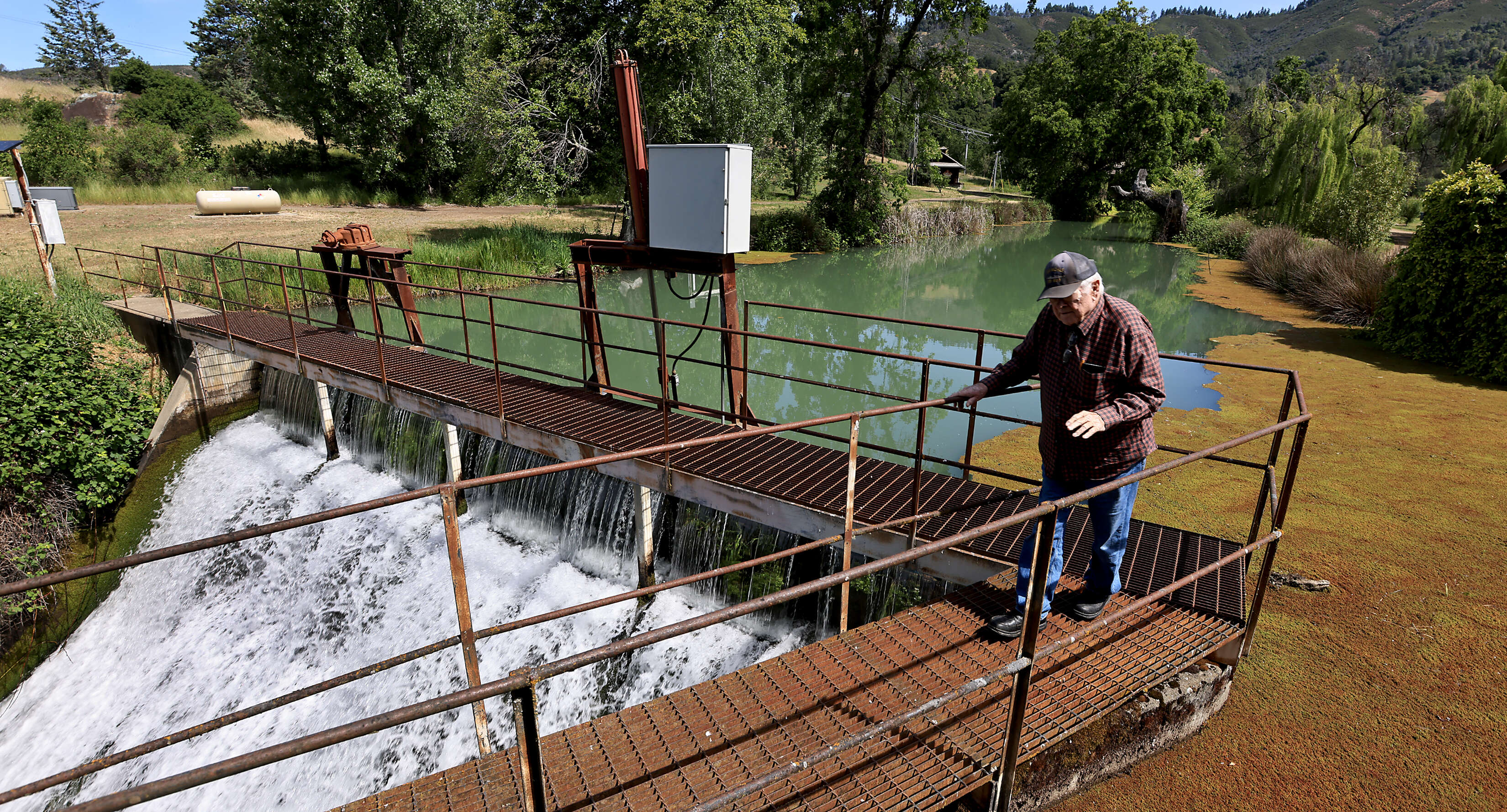
Kent Porter / The Press Democrat
Guinness McFadden checks on the flow of diverted Eel River water at his private powerhouse in Potter Valley, Wednesday, May 14, 2025. (Kent Porter / The Press Democrat)
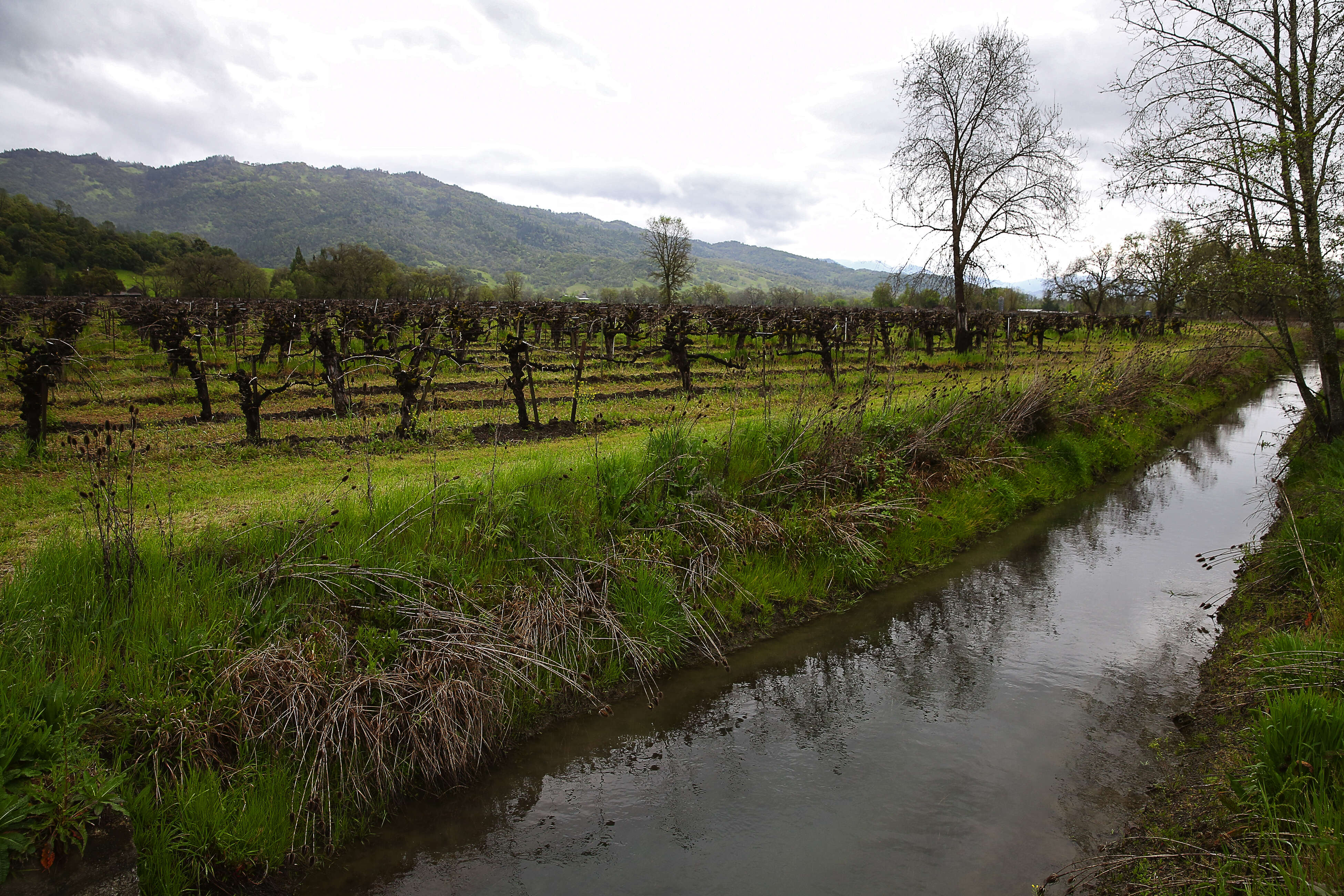
Christopher Chung/ The Press Democrat
Water travels past a vineyard along the East Canal downstream from the Potter Valley Powerhouse, in Potter Valley on Thursday, April 6, 2017. (Christopher Chung/ The Press Democrat)
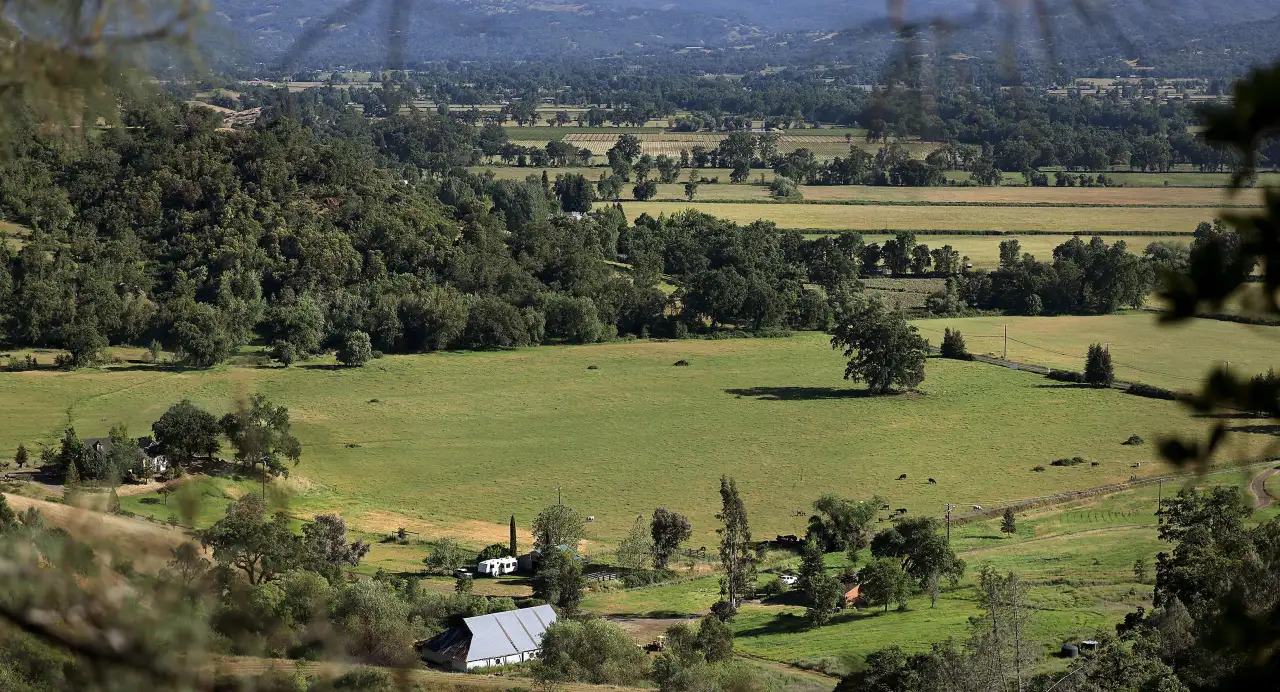
The north end of Potter Valley in Mendocino County basks in sunlight on May 14, 2025. (Kent Porter / The Press Democrat)
Show Caption
1 of 12
The Scott Dam at Lake Pillsbury, Thursday, April 23, 2026, in Lake County. (Kent Porter / The Press Democrat)
After that, a new proposed water diversion facility would allow Eel diversions into the Russian River, although on a more limited basis — only during high flow periods, typically in the winter — under a proposal reached through the agreement over a year ago involving tribes, local governments, environmental interests and water entities.
That compromise, dubbed the two-basin solution, leaves those who’ve come to rely on the supplemental flows, including Potter Valley farmers and urban and rural water users stretching from Ukiah to Healdsburg with a less reliable future supply, according to Lands and other dam removal opponents.
Replacement storage to capture those wintertime flows isn’t in place and the downstream ecosystem in the upper Russian River has come to depend on those long-standing diversions, Lands contended.
It “creates significant concerns for domestic water supply, river health, environmental stability, public health, equity and wildfire resiliency throughout our region,” Lands said.
Lands’ 45 posts
He has made that stance readily known, posting 45 times on Facebook about the Potter Valley Project since his July 29 campaign announcement for the 4th District supervisor post. He has shared articles, blog posts, videos or podcasts illustrating the reasons he says the dams should remain intact.
The activism has earned him political support from influential farming interests, including the Sonoma County Farm Bureau, which co-endorsed both him and Schwedhelm in the race.
He has also helped secure powerful allies in the Potter Valley fight. A letter writing campaign he helped spearhead in November sought help from the Trump administration. It paid off first in December, when Rollins, the agriculture secretary, filed a notice to intervene in PG&E’s federal bid to decommission the two Eel River dams.
Then came a January 2026 meeting Rollins convened in Anaheim with Potter Valley farmers and other interests opposed to dam removal. It was on the sidelines of the American Farm Bureau Federation conference. Lands was there.
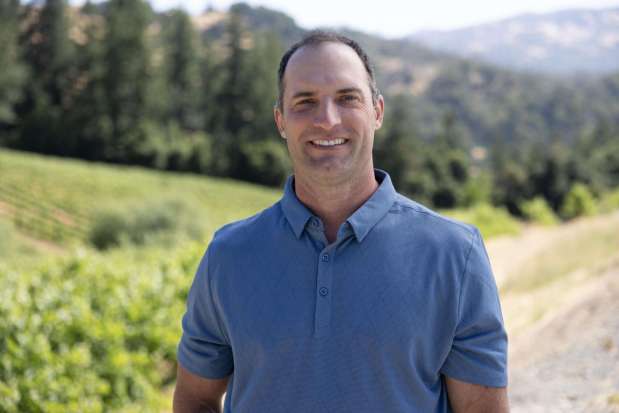
Courtesy of Todd Lands for Supervisor 2026
Cloverdale Vice Mayor Todd Lands is Sonoma County’s 4th District supervisor seat. (Courtesy of Todd Lands for Supervisor 2026)
He posted about the meeting on Jan. 12, tagging the Federal Energy Regulatory Commission, while sharing that he was “honored to be invited” to the meeting and grateful to “Secretary Rollins and (Natural Resources Conservation Service) Chief Aubrey Bettencourt for working so hard to bring this existential threat to light, and help protect and preserve the water needed to help our region thrive through ag, farm, public safety and environment.”
Over the next two months, Lands’ social media remained geared to updates about Potter Valley, including Rollins’ growing involvement, along with other campaign fodder and posts about upcoming Cloverdale events.
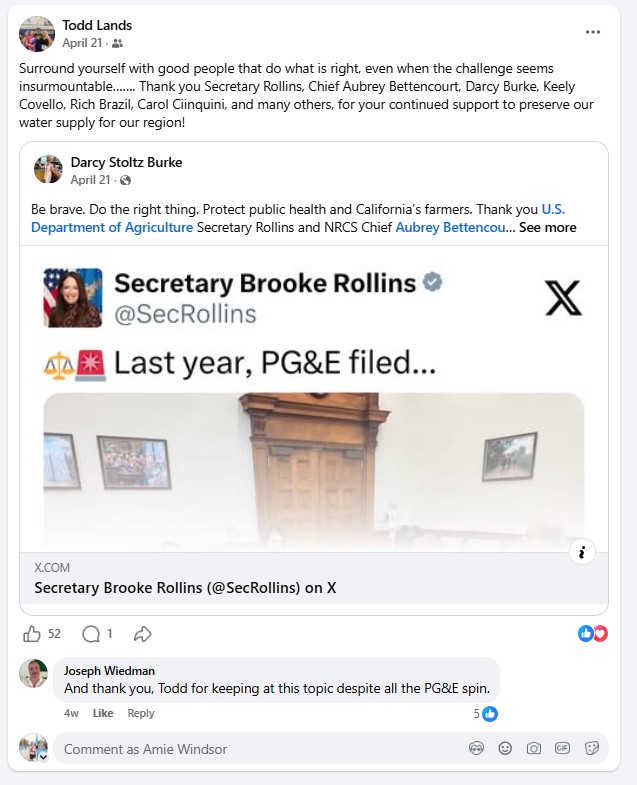
Then on April 21, Rollins took to social media with what amounted to a bombshell revelation in the world of California water management.
“Last year, PG&E filed to surrends its license and begin decommissioning the Potter Valley Project, removing the Scott and Cape Horn dams because of @GavingNewsom’s policy of putting fish over people. Last week, I hear from Elsinore Vally Municipal Water District. A legitimate buyer who expressed strong interest in purchasing the project from PG&E,” Rollins wrote on X.
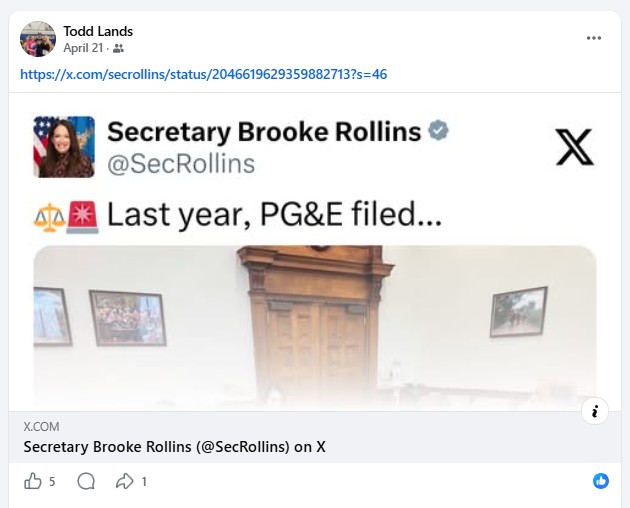
Lands turned to Facebook, sharing a repost of Rollins’ announcement, adding: “Surround yourself with good people that do what is right, even when the challenge seems insurmountable.”
His posts since then have tracked the latest developments with the Southern California agencies’ involvement.
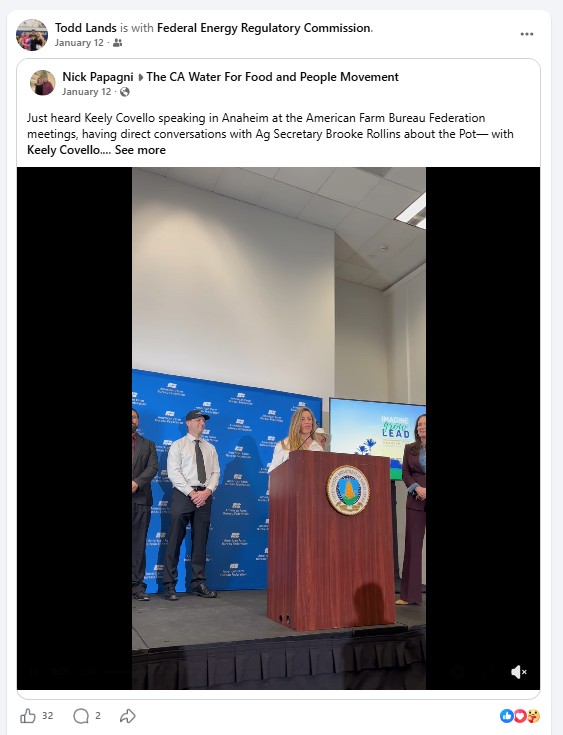
A screenshot from Todd Lands’ Facebook account highlights his efforts in working to create broader interest in the Potter Valley Project.

A screenshot from Todd Lands’ Facebook account highlights his efforts in working to create broader interest in the Potter Valley Project.
A screenshot from Todd Lands’ Facebook account highlights his efforts in working to create broader interest in the Potter Valley Project.
A screenshot from Todd Lands’ Facebook account highlights his efforts in working to create broader interest in the Potter Valley Project.
A screenshot from Todd Lands’ Facebook account highlights his efforts in working to create broader interest in the Potter Valley Project.
A screenshot from Todd Lands’ Facebook account highlights his efforts in working to create broader interest in the Potter Valley Project.
Show Caption
1 of 6
A screenshot from Todd Lands’ Facebook account highlights his efforts in working to create broader interest in the Potter Valley Project.
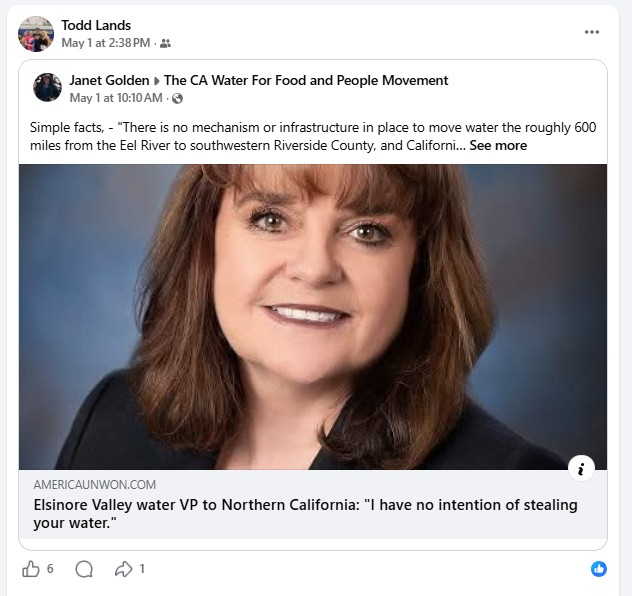
“Another option is being explored … where a qualified entity could purchase the project, maintain the infrastructure and provide water to the region,” he wrote to constituents on May 1, sharing a link to a blog post featuring an interview with Elsinore Valley Municipal Water District Vice President Darcy Burke.
Elsinore Valley and the second agency, San Gorgonio Pass Water Agency, earlier this month revealed they had signed a joint letter of intent that acknowledged their interest in the “potential acquisition of the (Potter Valley) Project and assets.”
The May 4 letter, obtained by The Press Democrat, said the agencies’ intent is to increase “water supply reliability for our service region and others.”
Local waves amid SoCal entrance
Even outside of those who have closely followed the Potter Valley dispute, that news is roiling matters.
“My concern with a SoCal water agency buying the water rights may result in an even worse solution to removing the dam,” Asti resident Erik Terreri responded to one of Lands’ April 21 post about Elsinore Valley. “If the water is somehow going to be transferred to SoCal and reduce flows to both the Eel and Russian Rivers. The details of this deal need to be explained.”
“This seems a little last minute…if they were interested, why didn’t they put a bid on it years ago?” Sonoma County resident Dan Wilson asked Lands on April 21. “Just nervous about an out-of-town district taking over water supply…what’s their relationship with Sonoma Water? Just because they’re a prospective buyer doesn’t mean the operation will work in our interest…”
“Stop the steal, protect the Eel! We need to continue to make sure that (Elsinore Valley Municipal Water District) hears just how poor of an idea it would be to acquire these failing, hazardous dams,” Friends of the Eel River, a Eureka-based environmental group, posted on May 18.
“No one has ever reached out to us from these two agencies about what their plans are about how we fit in,” said Sonoma County Supervisor David Rabbitt, chair of the Eel-Russian Project Authority, the multi-government agency poised to steer water management decisions involving the two river basins if and once the two dams come down.

John Burgess / The Press Democrat
From left, PG&E Hydro Licensing Director Janet Walther, Sonoma County Supervisor David Rabbitt, Sonoma Water Division Manager David Manning and SSU Economics Professor Dr. Robert Eyler take questions Tuesday, July 1, 2025, at a Potter Valley Project town hall meeting at the Finley Center in Santa Rosa. (John Burgess / The Press Democrat)
Lands, asked about his level of involvement in bringing on the two Southern California agencies, insisted he had none. “I did not bring the …. groups into this issue,” he said in his written response. “They were introduced to this project through various stakeholders who are advocating this project to protect Lake Pillsbury and the domestic water supply for our region.”
Again, he did not name those stakeholders and also denied having a close association with Burke, Elsinore Valley’s main proponent for the project, who has visited the waterworks twice — once in March and as recently as the first week of May.
Burke has re-posted three Facebook posts supporting Lands for supervisor in the past two months.
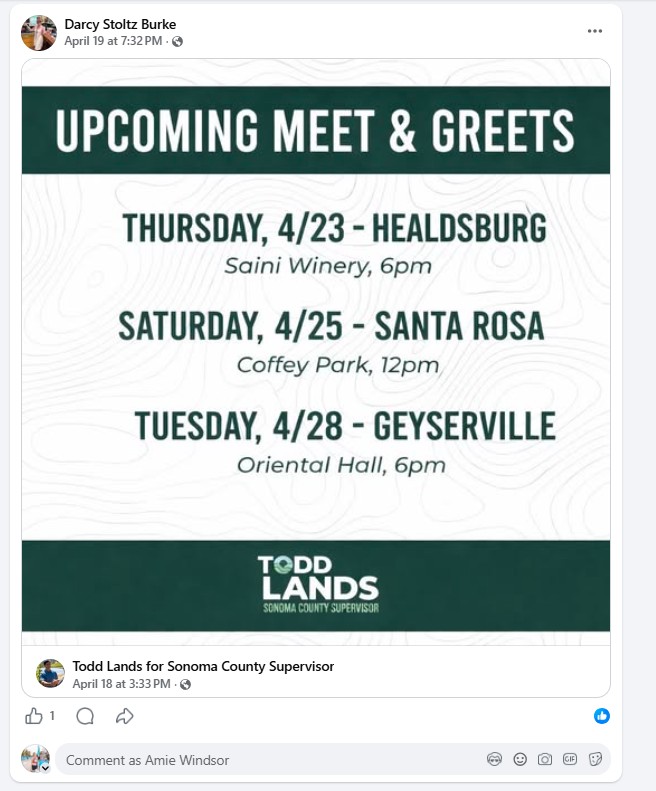
Elsinore Valley Municipal Water District Vice President Darcy Burke shared three posts made by Todd Lands, a candidate for Sonoma County 4th District Supervisor.

Elsinore Valley Municipal Water District Vice President Darcy Burke shared three posts made by Todd Lands, a candidate for Sonoma County 4th District Supervisor.
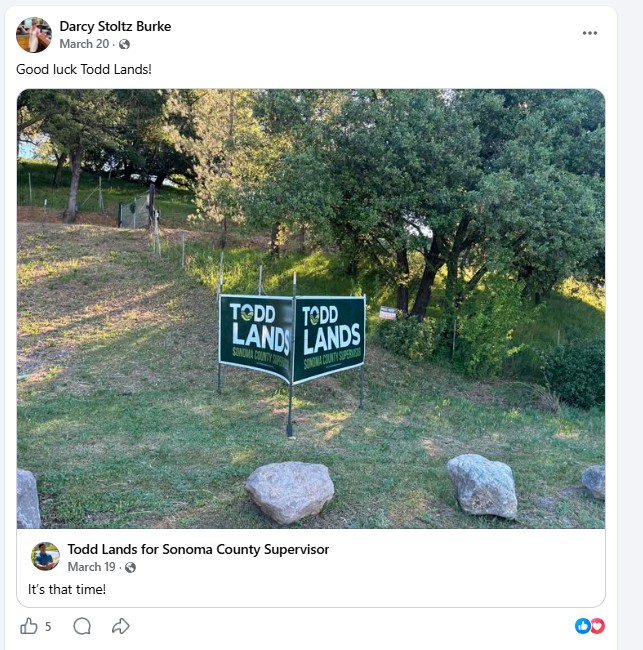
Elsinore Valley Municipal Water District Vice President Darcy Burke shared three posts made by Todd Lands, a candidate for Sonoma County 4th District Supervisor.
Show Caption
1 of 3
Elsinore Valley Municipal Water District Vice President Darcy Burke shared three posts made by Todd Lands, a candidate for Sonoma County 4th District Supervisor.
“I know Darcy in the same way I know many of the other individuals involved in this project — through meetings, conversations and public discussions surrounding the Potter Valley Project,” Lands said.
The Elsinore Valley Municipal Water District board has yet to hold any public discussions about the Potter Valley Project.
Local officials who’ve worked for years to forge a solution that could align with a post-dam future say any move by that agency to lock up control of Eel River water — and the rates charged to its users, including hundreds of farms and thousands of households — could represent a loss of local control.
“Knowing the players and what their concerns are makes a difference, as opposed to an organization that’s 600 miles away,” said Rabbitt. “It’s a headscratcher from day one.”
Some 4th District voters are concerned, too.
Daniel Frankston, a Cloverdale planning commissioner, said he worries about a future without the Potter Valley Project and supports finding a way to preserve the dams’ infrastructure. But he faulted Lands and questioned the Elsinore intervention.
“It feels like an 11th hour Hail Mary,” he said.
“Obviously decommissioning of the dam without (diversions) would be tragic,” Frankston said. “But I see a monkey throwing a wrench into the system. As a civic leader, you need to come up with solutions. You need to find a regional solution and the impression I get is that Todd is precluding others from exploring the other solutions.”
Gore, who has enjoyed support from farming interests in his district, is said to be highly frustrated over Lands’ involvement in the issue, according to sources close to the incumbent. He has endorsed Schwedhelm. He declined to comment for this story.
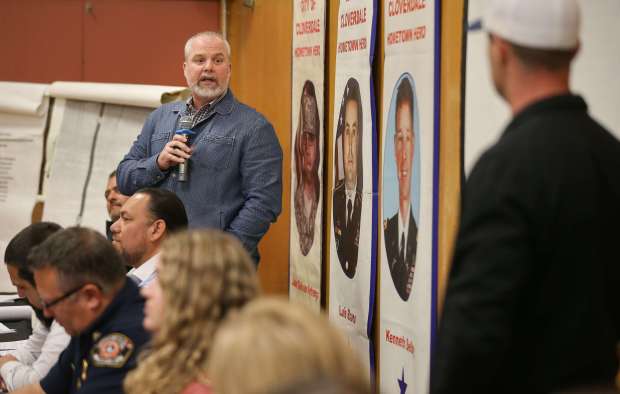
Christopher Chung/The Press Democrat
Sonoma County Supervisor James Gore addresses Cloverdale Mayor Todd Lands during the Potter Valley Project town hall meeting in Cloverdale on Thursday, March 20, 2025. (Christopher Chung/The Press Democrat)
Still others have welcomed the Southern California agencies’ interest as a step in the right direction. Lands’ social media posts on Potter Valley show the political support he’s amassed through his advocacy.
“You’ve got my vote!” Santa Rosa resident Nancy Horton wrote on Lands’ March 12 post. The 4th District stretches down to northern Santa Rosa, with most of its residents centered in Windsor, Healdsburg, Cloverdale and the Alexander and Dry Creek Valley wine growing regions.
“This is an obvious problem that needs a solution,” Healdsburg resident Justin Hendricks wrote in the comment field for the same March post. “Secure water and stop the destruction of a dam that would cost billions to remove.”
Civic leaders and organizations that have lined up behind Lands haven’t wavered.
“Without any investigation on my part, losing control over ‘our’ water is not an option,” Neena Hanchett, director of the Cloverdale Chamber of Commerce, told The Press Democrat. “Without access to water, Cloverdale withers, turns to dust and blows away. The same is true for many California cities.”
Hanchett clarified that she personally supports Lands and campaign finance reports through May 6 show she has donated $600 to his campaign. The chamber has not endorsed in the race.
The top official at the Sonoma County Farm Bureau voiced continued support for Lands, but noted that the organization’s top priority is maintaining a key local water source.
“If Elsinore is an economical possibility, then why would we turn it down without us knowing what that looks like?” said Executive Director Dayna Ghirardelli. “But it doesn’t mean we’re all in. If it is something that’s tangible and doable, we’re behind it.”
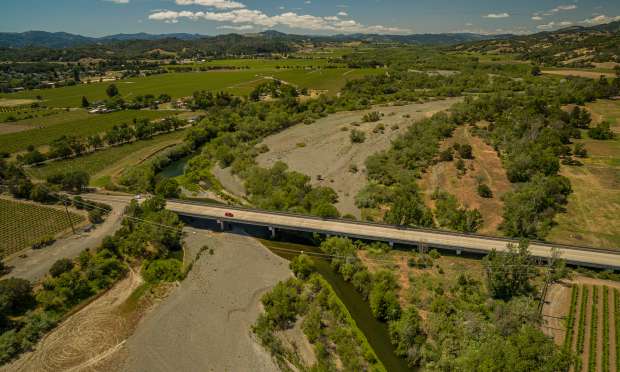
Chad Surmick/The Press Democrat file
The Russian River snakes underneath the Geyserville bridge at Highway 128 in an ever growing dry riverbed in May 2022. (Chad Surmick/The Press Democrat file)
The upshot could be costly for local customers, and especially for farmers, who currently pay cut rates for Eel River water.
In documents newly obtained by The Press Democrat through a public records request, Burke, the Elsinore Valley official, noted in a memo that the Eel River project’s primary value is water supply, adding that the Riverside County district had the capacity to manage it — and monetize it — from afar.
Most users served by Sonoma Water, the region’s dominant wholesaler, pay an average of about $1,500 an acre-foot for water, the lowest in the San Francisco Bay Area. Potter Valley farmers pay $35 per acre-foot for general water deliveries, with some additional fees of that top out at $175 annually for “garden-rate” users.
(An acre-foot is about the amount of water needed to cover a football field in a foot of water, or about enough for two to three average California homes for a year.)
The Elsinore Valley district showed its conservative estimates for market-based value of the senior water rights of the Eel River watershed between $8,000 and $15,000 an acre-foot, up to 10 times the local average wholesale rate.
Those estimates stunned Rabbitt and Ghirardelli. The Farm Bureau executive called them “a non-starter.”
Hot-button campaign question
So, how are Lands’ rivals addressing the standoff over the Eel River dams on the campaign trail?
Schwedhelm isn’t convinced the dams should be removed. He called decommissioning “ludicrous…without a solution in place.
“The two-basin solution sounded like a solution in place. But there are a lot of things to overcome, including storage,” he said.
Schwedhelm voiced his support for a less controversial proposal, to raise the level of Coyote Dam at Lake Mendocino, a project stalled under federal study, or a less vetted idea of building a pipeline from Cloverdale to Lake Sonoma, which could prove costly.
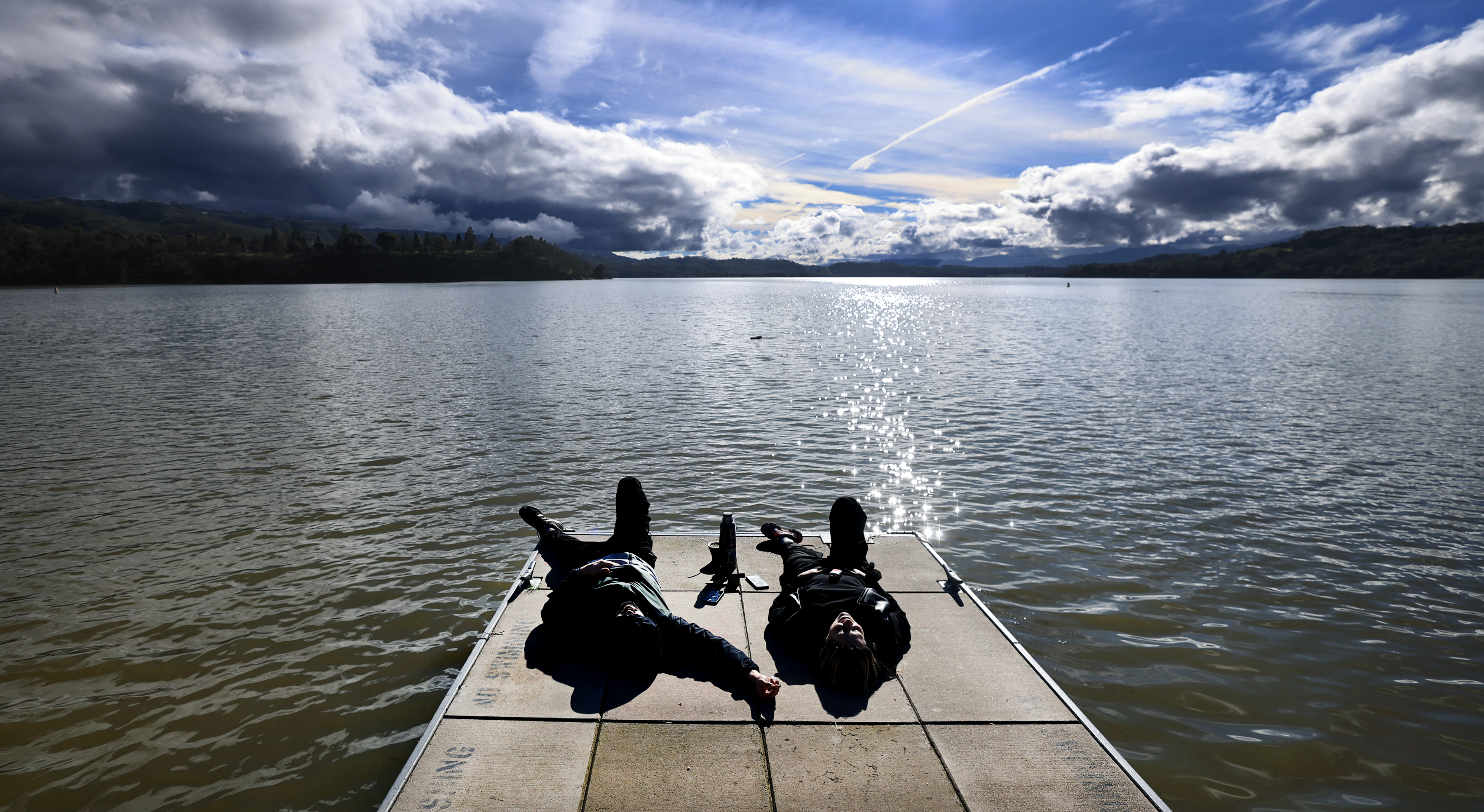
Gonzolo Garcia and Annabelle Rousseau enjoy their first day of vacation at Lake Mendocino. Tuesday, Jan. 6, 2026, north of Ukiah. (Kent Porter / The Press Democrat)
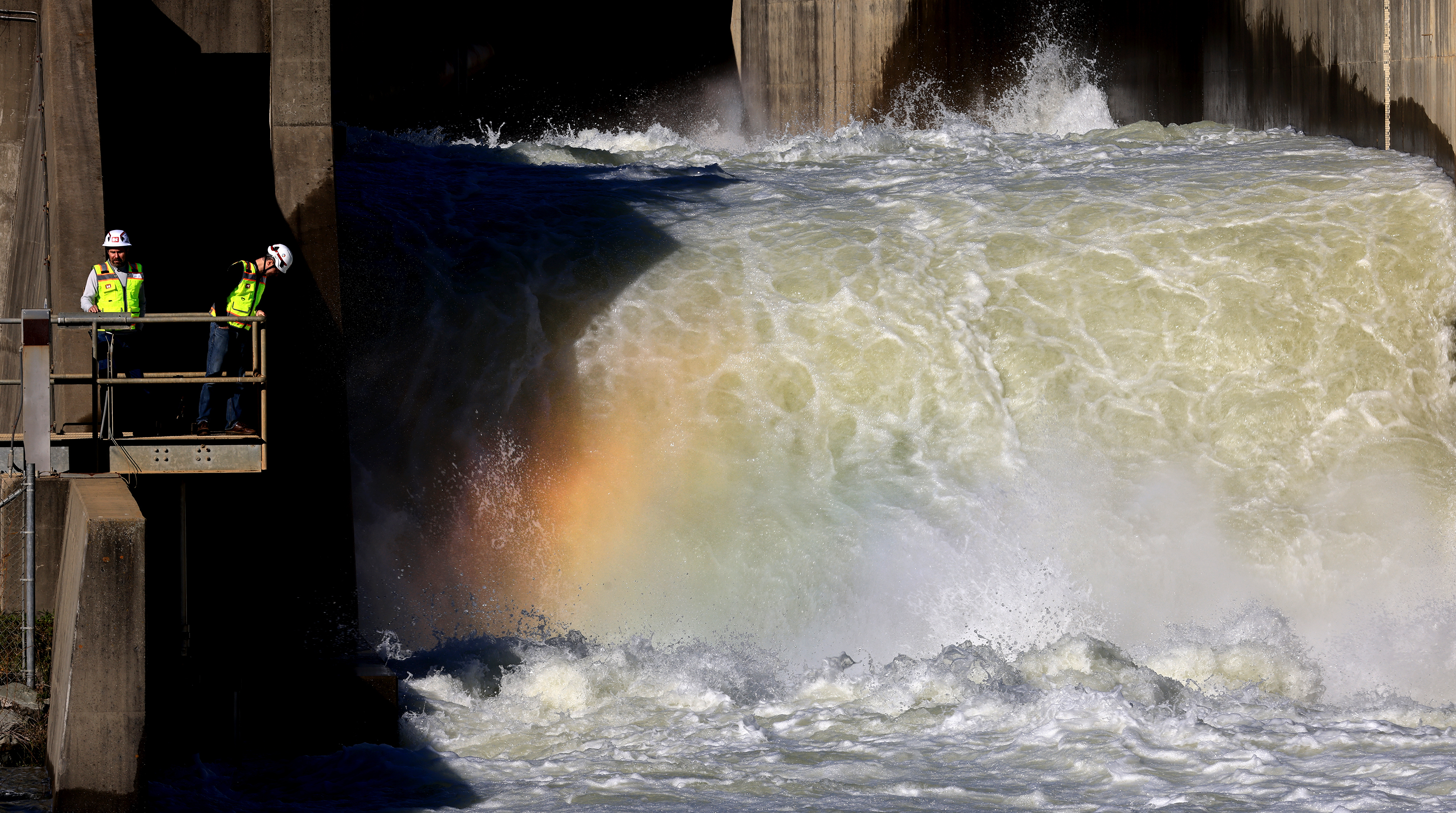
Army Corps. Of Engineers personnel, Nick Malasavage, left, the chief of operations and readiness division of the San Francisco district, and Ben White, operations project manager of Lake Sonoma, watch a steady 3,000cfs release of water from Lake Sonoma, Wednesday, Jan. 7, 2026. (Kent Porter / The Press Democrat)
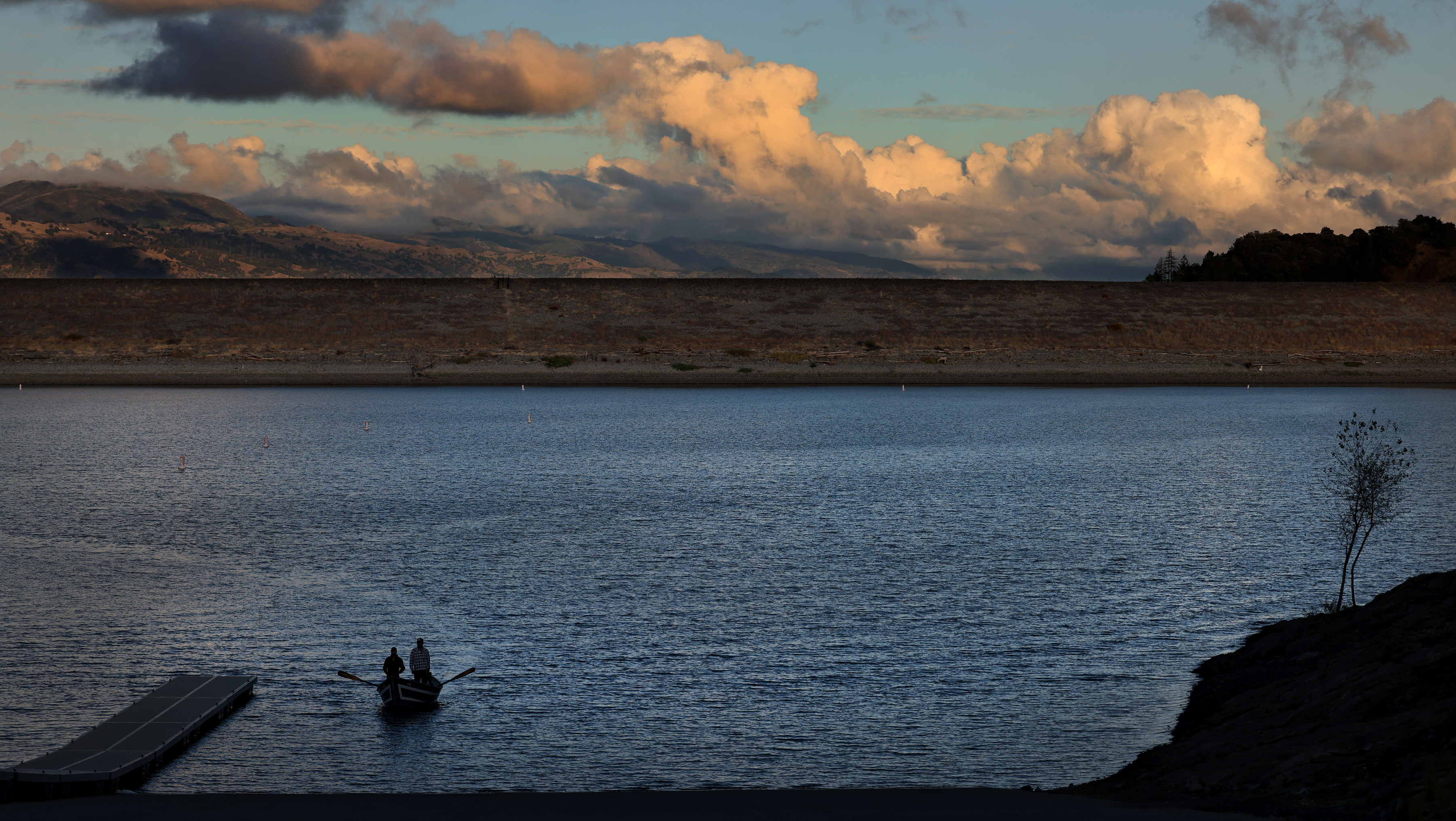
Sebastopol fishermen Jack Lyon and Hunter McKern head to the public boat ramp at Lake Sonoma, Wednesday, Oct. 1, 2025. The reservoir level is “abnormally normal” according to Sonoma Water. (Kent Porter / The Press Democrat)
Kent Porter / The Press Democrat
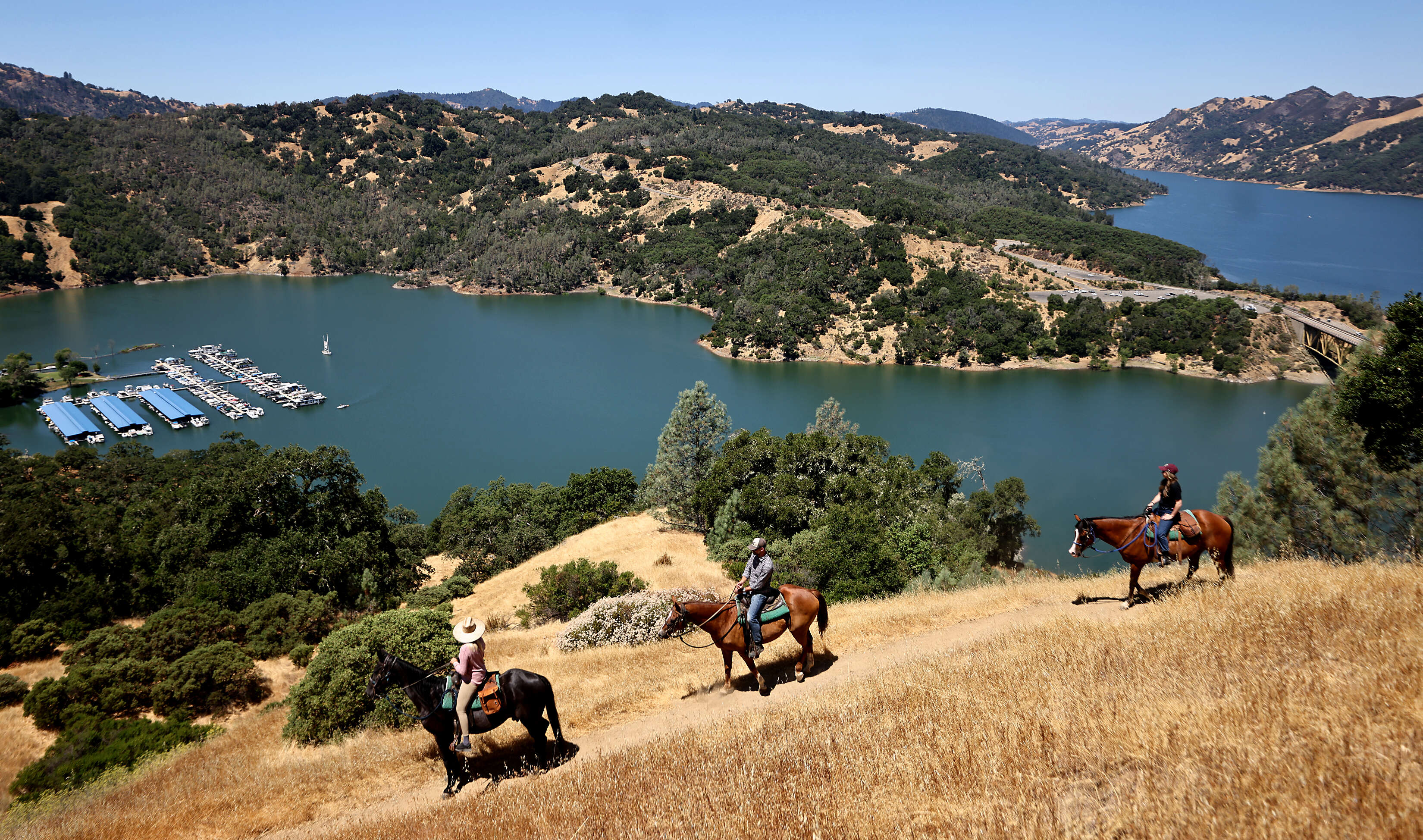
Nikki Baxes of the The Ranch at Lake Sonoma leads a trail ride with Petaluma visitors D.J. Gaker and Emily Cosin, celebrating their 10th Anniversary as a couple Wednesday July 17, 2024, overlooking Lake Sonoma. (Kent Porter / The Press Democrat)
Show Caption
1 of 4
Gonzolo Garcia and Annabelle Rousseau enjoy their first day of vacation at Lake Mendocino. Tuesday, Jan. 6, 2026, north of Ukiah. (Kent Porter / The Press Democrat)
Bagby stressed that the next 4th District supervisor needs to work in tandem with Eel-Russian Project Authority and Sonoma Water, not against them.
“Whoever is elected sits on that board of directors at Sonoma Water,” she said. She called for continued collaboration among all of the region’s stakeholders, stressing that a local solution is imperative.
“Denial isn’t a strategy,” Bagby said. “This is serious. The water supports our wildlife, farming and our communities.”
Lands said replacing storage at Lake Pillsbury, the Lake County reservoir behind Scott Dam, with storage elsewhere is untenable. The feasibility study for raising Coyote Dam is unfinished — frozen as the Trump administration withholds funding. No money has been tied to the future project.
Lands has boasted of the support he’s earned over his work on the issue. He was less comfortable acknowledging the heat that’s also come. His opponents, he said, had “spread misinformation.” They “framed” his work as “partisan,” he said.
The top finisher next month could claim the seat outright with a simple majority. Otherwise the top two-voter-getters will proceed to a November runoff — likely with more to debate about water.
All three candidates contacted for this story called it “non-partisan issue,” a stretch that overlooks the long history of political fights about water in California and across the American West.
“Water isn’t a partisan issue,” Lands said. “I am fighting to save our water supply because it is the right thing to do.”
Amie Windsor is the Community Journalism Team Lead with The Press Democrat. She can be reached at amie.windsor@pressdemocrat.com or 707-521-5218.