
For The Union-Tribune
It all came down to showing up and being persistent for Paradise Hills residents to transform the surface of what was once a small landfill into a native garden that now serves as landscape inspiration for the community and beyond.
Paradise Hills Native Garden, in the works since 2017, just had its debut during a grand opening celebration in the San Diego neighborhood on April 18. The 5-acre site, which is part of Paradise Hills Community Park, sits over a landfill that was capped in the mid-1960s but the ground had been left bare.
As co-lead Nancy Janssen tells the story: “It was inspired by retirement and a weed field being my community park, and feeling like I deserve better than this — my community deserves better,” she recalled.
Janssen, who lives with husband Wes just up the hill from the park, would see people walking around the track that surrounded the field.
“I’m thinking that it is so depressing to walk around weeds and nothing else. So we talked to the city, and they said, ‘It’s a landfill. Can’t do anything.’ And so we went back and said, I knew that you could do things on landfills, because I grew up in L.A. County and we put a golf course on a landfill — so I knew that it was not extreme, extensively prohibited.
“So we went back and did research, and the EPA says the best thing you can do to the landfill is put a native garden on it, because of the low water requirement.”
Janssen explained that the city had had concerns about the land moving and releasing chemicals, even though no landfill gas emissions had been detected for years and the land has been stable and subsidence-free for a long time.
But the Janssens, who are both master gardeners, were persistent. They explained to the city that no irrigation for a native garden was needed. In fact, they offered to bring water from home in buckets — mostly because they didn’t expect the garden to be very big.
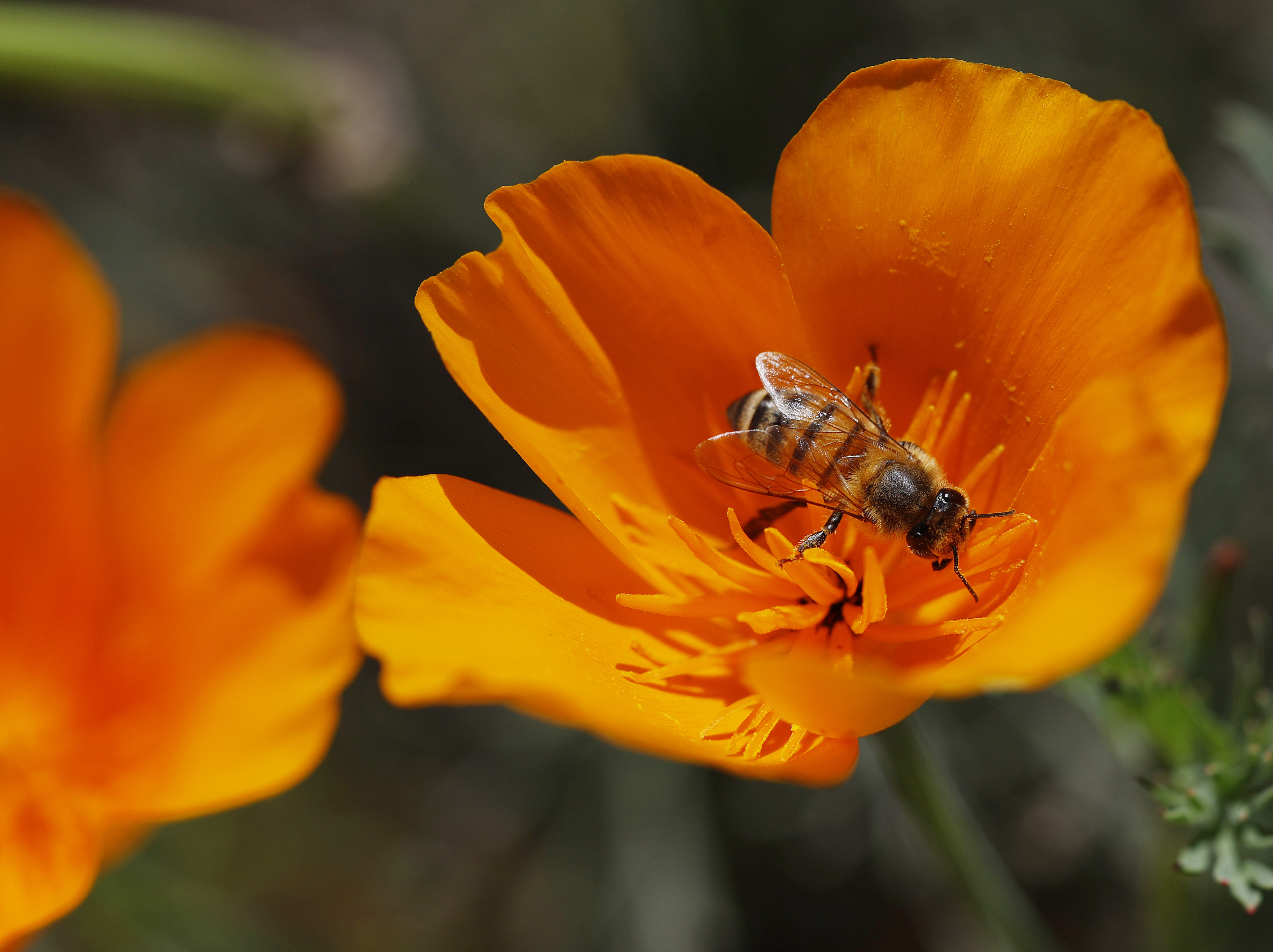
A bee forages in a California poppy. (K.C. Alfred / The San Diego Union-Tribune)
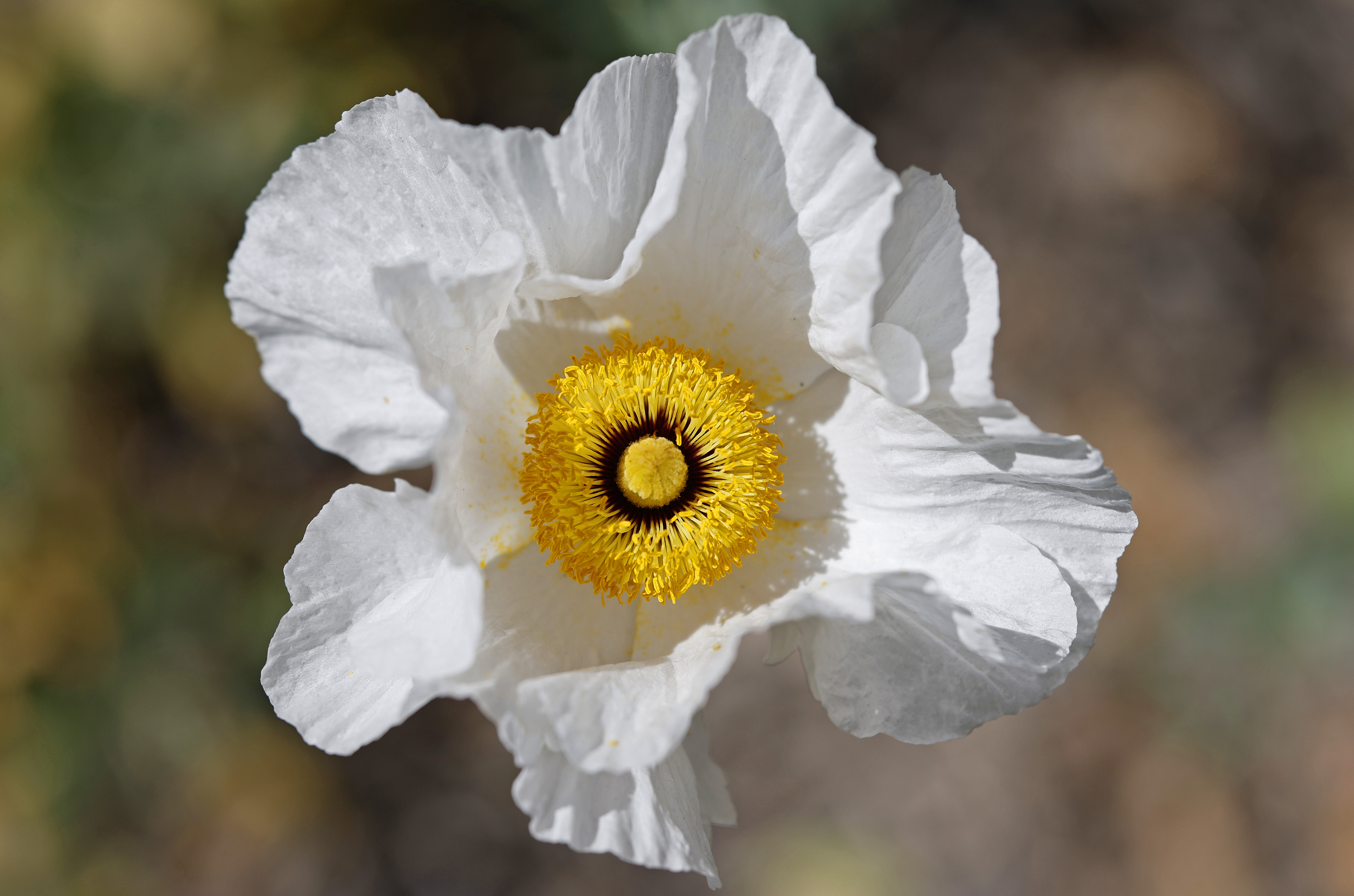
A Matilija poppy, aka “fried egg poppy.” (K.C. Alfred / The San Diego Union-Tribune)
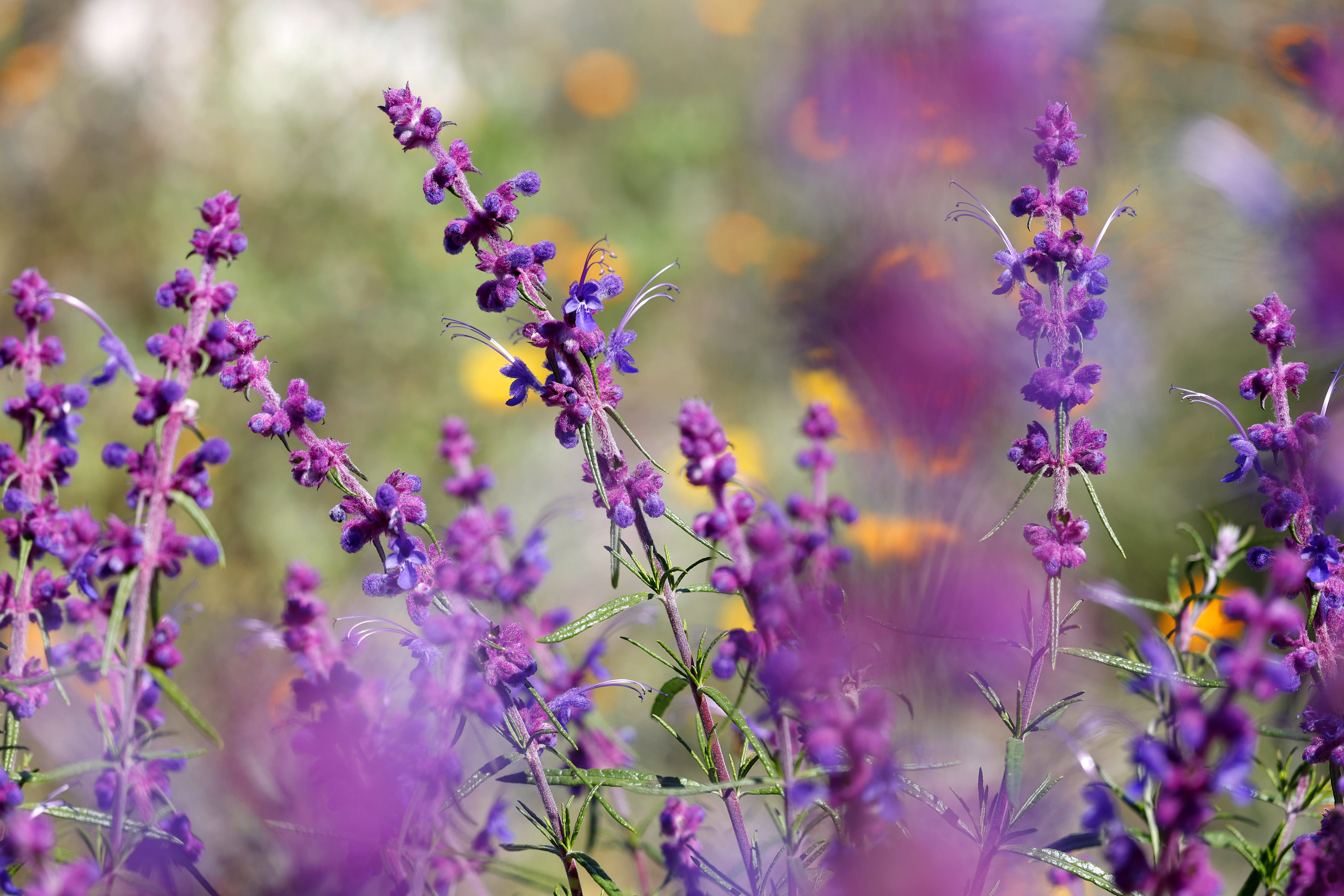
Woolly bluecurls are one of the “real showstoppers,” according to Wes Janssen. (K.C. Alfred / The San Diego Union-Tribune)
Show Caption
1 of 3
A bee forages in a California poppy. (K.C. Alfred / The San Diego Union-Tribune)
That was back in 2017. Things turned around when the San Diego city manager who kept turning them down retired. The new city manager, Ron Augustin, “has been fabulous,” said Janssen. “We couldn’t have done this, not monetarily as much as just making things happen, without him.”
What happened finally launched in 2019 with the founding of Paradise Gardeners, which is a member of California Garden Clubs Inc. The new club, which started as a five-week garden class back in 2017, was then able to apply for grants and other funding. Janssen took on grant writing with the help of a friend who is a retired librarian and had worked for a grant-writing group. Over the years, she has raised $150,000. And that’s not counting the over 1,000 unique individual community volunteers and allied groups, including the Master Gardener Association of San Diego County. There have been in-kind donations, and the city has contributed materials such as gravel and decomposed granite for walking paths.
The 5-acre site is adjacent to the community park’s skate park and the south fork of Paradise Creek. It has a small parking lot and fenced-in dog park by Potomac street off Paradise Valley Road.
The first planting, during the depths of the pandemic in September 2020, was a group of eight native Engelmann oaks planted in the parking area. After sending an application to the master gardeners for funding, somebody in the Village Garden Club of La Jolla saw the application. Typically, said Janssen, they only put in jacarandas, but the club loved the idea of planting native trees, so they funded the purchase and the city of San Diego planted them because it was before the group had the right of entry.
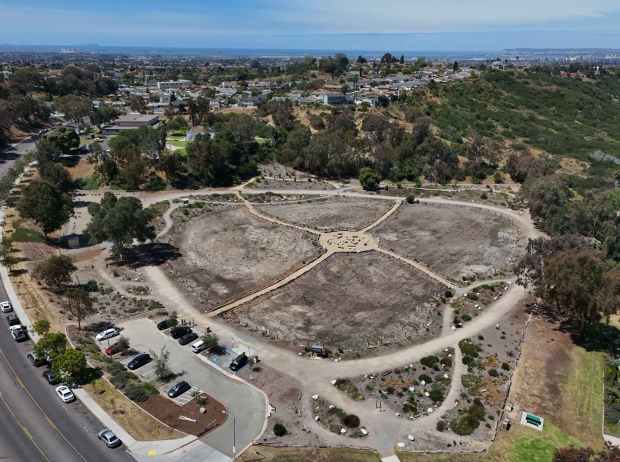 The 5-acre plot, over a capped landfill, contains five themed garden areas and is the largest of four demonstration gardens for the Master Gardener Association of San Diego County. (K.C. Alfred / The San Diego Union-Tribune)
There were still lots of hoops to jump through — and accommodations to make. For instance, in November 2020, the Paradise Gardeners were given permission to start working, but they didn’t have an appropriate gas meter, so all they could do was lay down mulch — which usually goes in after planting. Finally, in March 2021, they identified and bought the right meter and planted their first plants. But because of the landfill, all the digging had to be monitored, said Wes Janssen.
The Janssens held volunteer planting days with SDG&E, which also provided funding to buy plants.
And they decided that it would be helpful to divide the site into themed gardens. Originally there were three: a pollinator garden, Western garden and ethnobotany garden.
“The Parks and Recreation architect used my preliminary drawings to create the CAD drawings,” said Wes Janssen, a graphic designer.
From there, they ended up also creating a woodland garden and butterfly garden, basically filling out the whole 5 acres. Each garden has signage designed by Wes Janssen for the garden theme and for most of the trees and plants within.
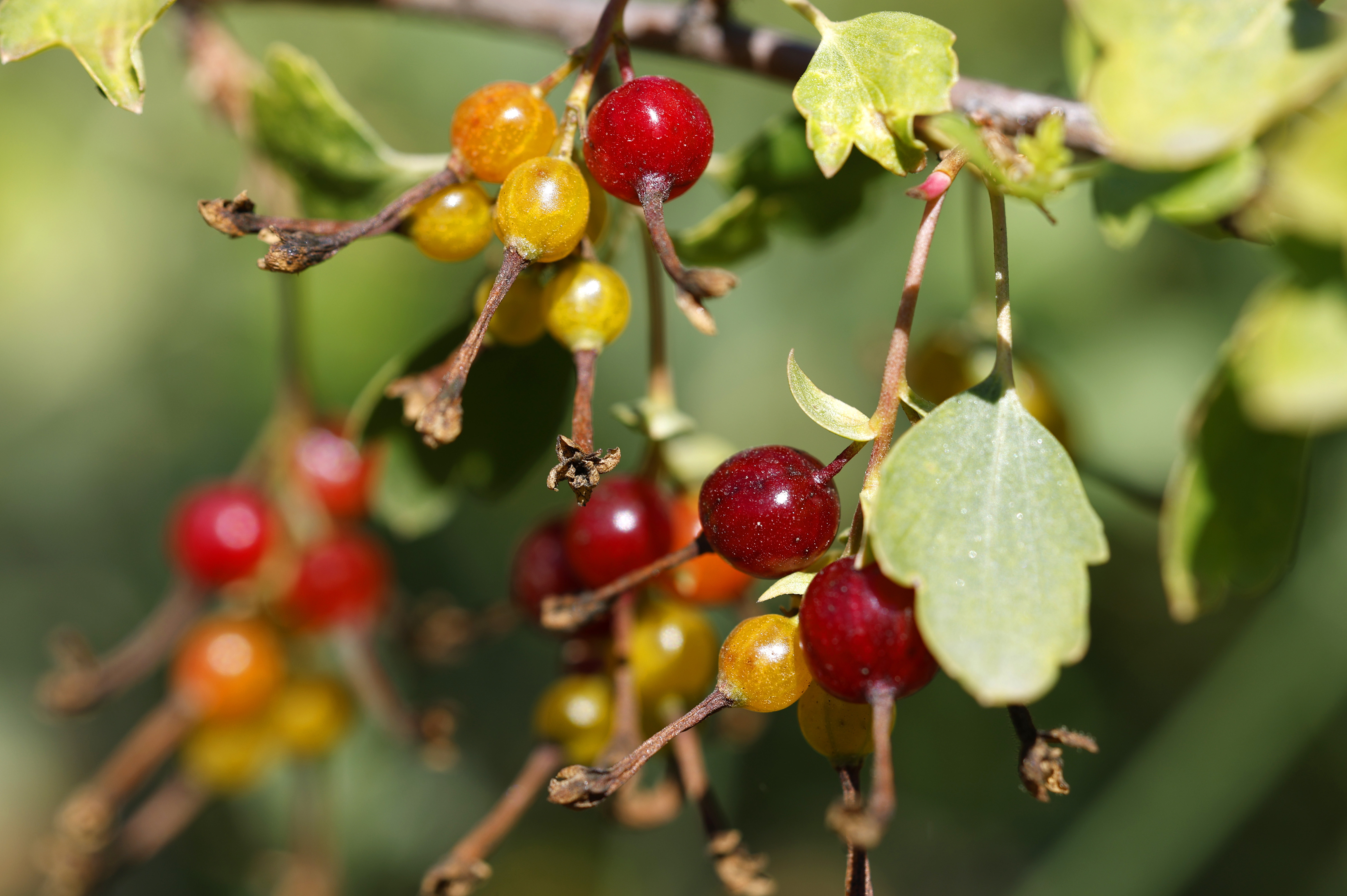
Golden currants, among plants grown by local native peoples, are planted in the Kumeyaay Ethnobotany Garden. (K.C. Alfred / The San Diego Union-Tribune)
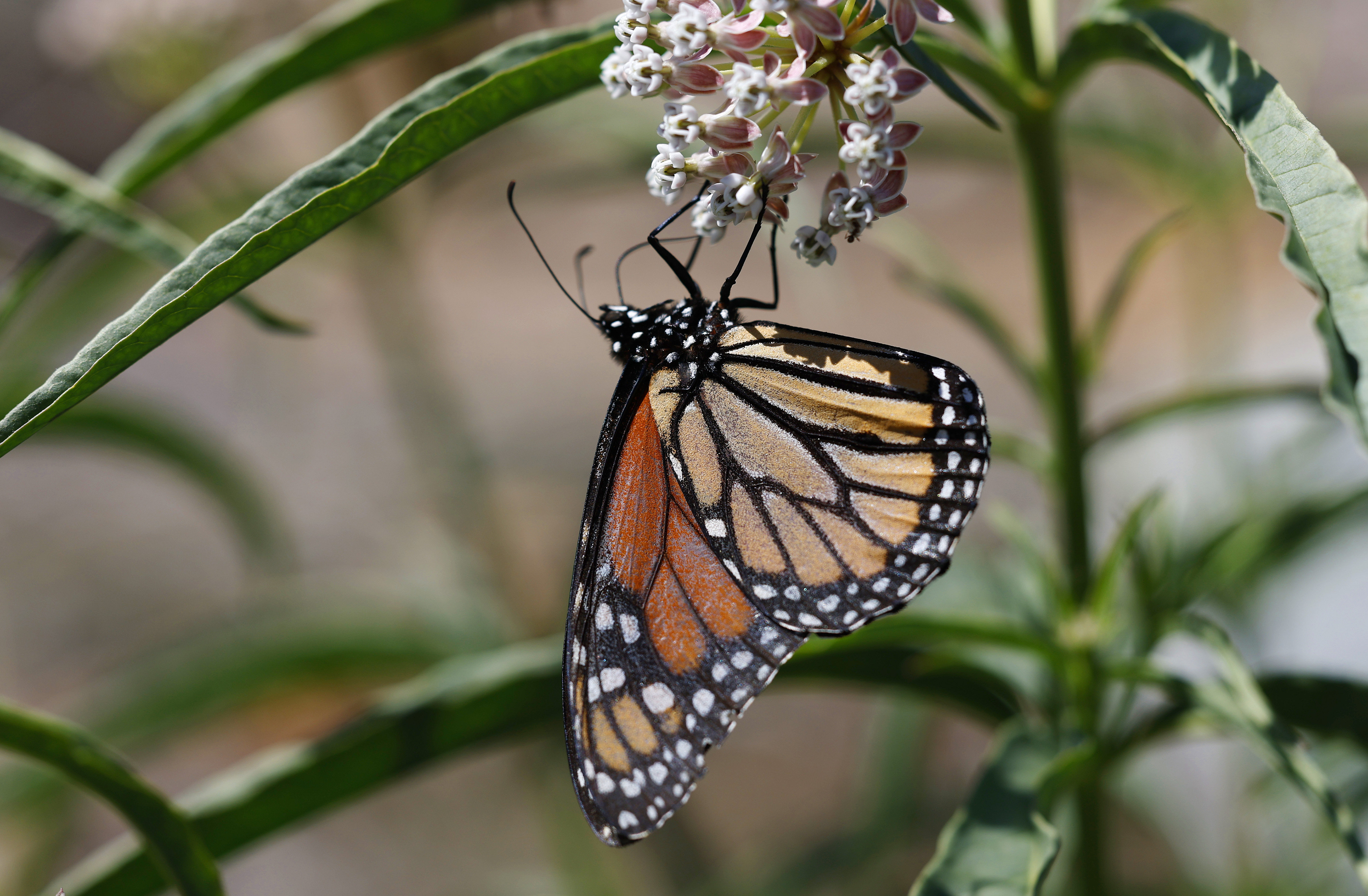
A monarch butterfly lands on milkweed. (K.C. Alfred / The San Diego Union-Tribune)
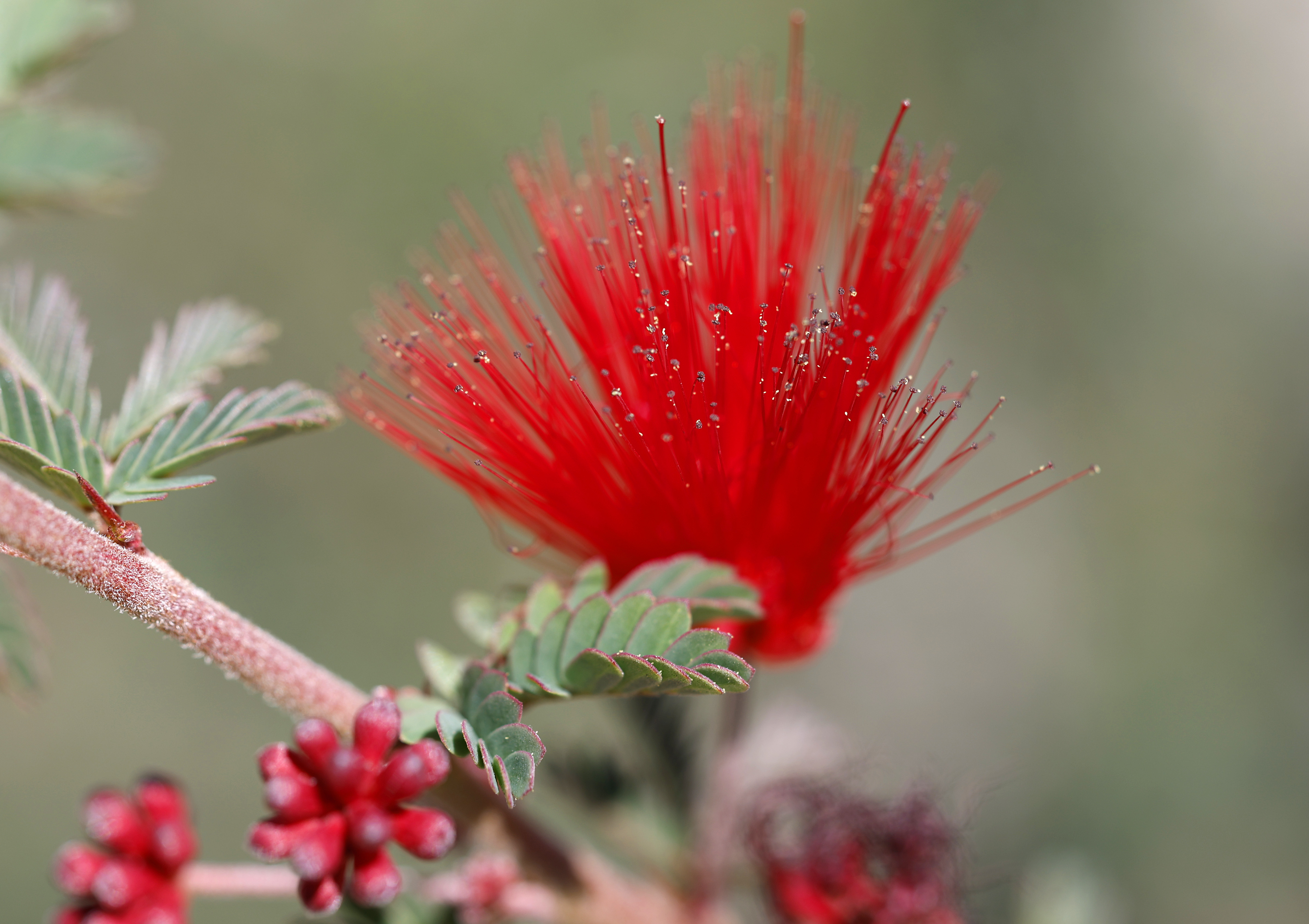
A Baja fairy duster plant. (K.C. Alfred / The San Diego Union-Tribune)
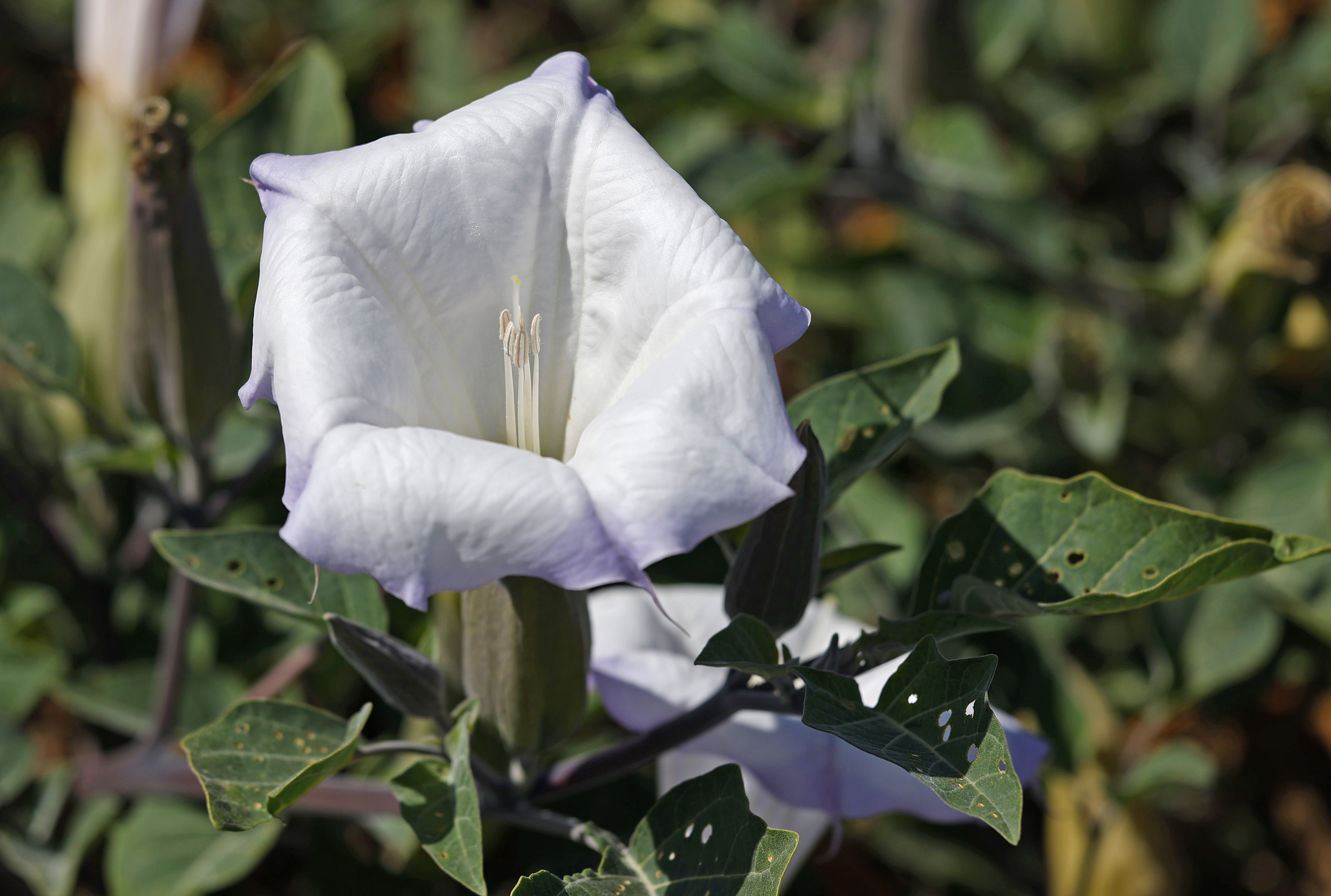
A sacred datura flower. (K.C. Alfred / The San Diego Union-Tribune)
Show Caption
1 of 4
Golden currants, among plants grown by local native peoples, are planted in the Kumeyaay Ethnobotany Garden. (K.C. Alfred / The San Diego Union-Tribune)
“We couldn’t stop,” said Nancy Janssen, “and we kept getting funding.”
The five gardens surround the center, native wildflower meadows, which are cordoned off.
“We built paths we want people to stick to because of pest management problems, especially a really bad pest plant: the puncturevine,” said Wes Janssen. “If people walk anywhere, they’ll take those with them.”
The wildflower meadows show clumps of poppies, as well as bluebells and yellow tidytips. In other sections are lupine — which bunnies have been enjoying — as well as desert bells.
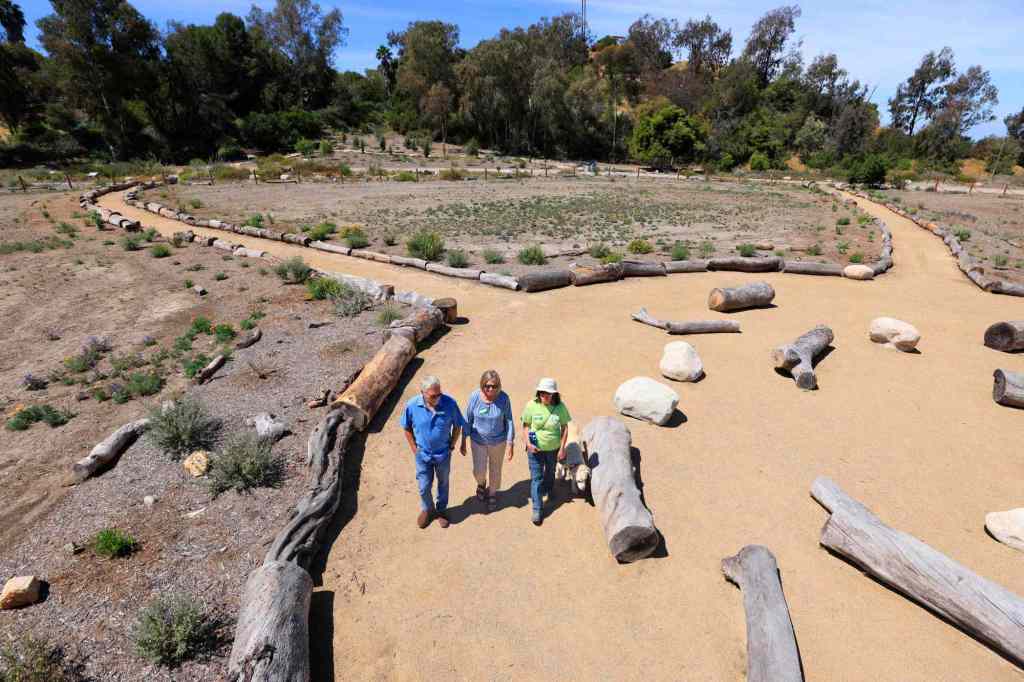
In the very center of the meadows is a large circle of decomposed granite, topped by logs and boulders.
“It’s called a children’s adventure area,” Nancy Janssen said. “People go out there and read a book. Kids play.”
The first garden I stopped in was the Pollinator Garden, or Habitat. There were bladderpods just starting to put out yellow flowers, prickly Shaw agaves beside bright yellow-orange poppies, Western redbuds with round leaves, wild marigolds, clumps of Mexican rush and Howard McMinn manzanita, as well as sunset manzanita and dozens more. Bees were crowded together on some of the plants, while monarch butterflies were soaring and then resting on others.
The nearby Butterfly Garden, next to the parking lot, featured a young burgundy desert willow sporting delightful burgundy flowers. Mirabilis, typically with deep pink flowers, was starting to fade before going dormant during the dry season, as was the Encelia, or California bush sunflower.
“It’ll just keep drying out and turn all brown until, hopefully, next winter’s rain and then, boom, it’ll just be all green again,” said Wes Janssen.
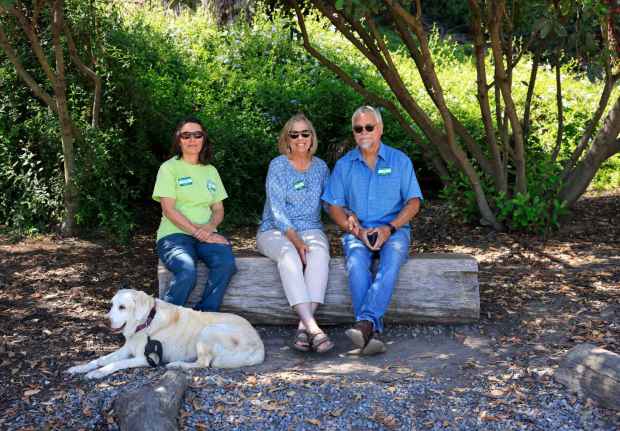 Sherry Ashbaugh, left, and Nancy and Wes Janssen of Paradise Gardeners recount the years of grant writing and volunteer work that culminated in Paradise Hills Native Garden. (K.C. Alfred / The San Diego Union-Tribune)
The Janssens have such deep knowledge of the plants that they were pointing out the offspring of the original plants.
Next, we strolled into the Kumeyaay Ethnobotany Garden, which features native plants that native peoples in the area used for medicinal, culinary and other applications. The Janssens, along with Sherry Ashbough, the incoming president of Paradise Gardeners, pointed out the golden currant shrubs, Mirabilis, golden bush and Cleveland sage.
Nancy Janssen called the golden currant the “crown jewel” of the garden, but her husband countered with what he said were three “real showstoppers”: woolly bluecurls, with their dramatic, curled, fuzzy blue and lavender flowers; Matilija poppies, which have huge white flowers with a bright yellow center that has given them the nickname “fried egg poppies”; and the flannel bush, with its vibrant yellow flowers.
Then there’s the white sage, with its velvety leaves and strong, almost medicinal scent.
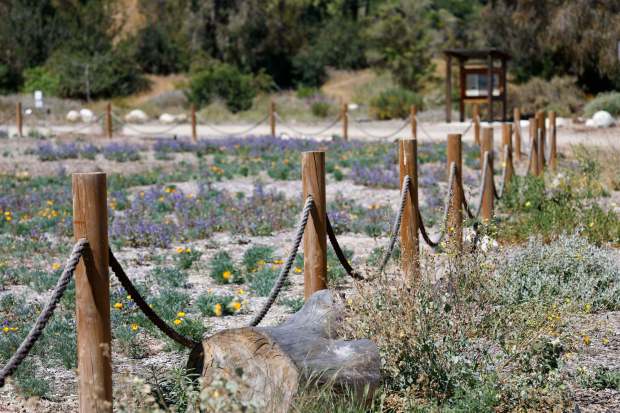 Wildflowers grow in a central meadow at the Paradise Hills Native Garden. (K.C. Alfred / The San Diego Union-Tribune)
The nearby Woodland Garden is just what you’d want in a woodland space — pines and wildland that you can envision in 10 years, as the trees mature, as shady and cool — and the perfect home for wildlife. Already, there were rabbits (whose voracious eating has led the Janssens to cover some plants with cages to protect them), squirrels, coyotes, skunks, red-tailed hawks, turkey vultures and other birds and lizards.
But it’s not just filled with pines. There are four Cuyamaca cypresses, a California incense cedar, a holy leaf cherry and dozens of other trees and shrubs including Hollywood berries and tea trees. Ashbaugh pointed out giant buckwheat. The garden also has a small labyrinth meditation spot.
Between the Pollinator Garden and Butterfly Garden are dense stands of milkweed for the monarch butterflies.
The Paradise Hills Native Garden has been designated a demonstration garden and is the largest of the Master Gardener Association of San Diego County’s four Demonstration Gardens.
While the major work in the garden is mostly completed, gardens, of course, are never done, always requiring constant work and modifications. But it’s no longer the sole responsibility of the Janssens. As a nonprofit, Paradise Gardeners (paradisegardeners.org) has a board of directors and officers. They still rely on volunteers and groups to help maintain the garden. But the Janssens are thrilled with the way their project has become part of the community.
“This garden has exceeded our vision,” said Wes Janssen.
Paradise Hills Native Garden
Where: 6800 Potomac St., San Diego, 92139
To volunteer, donate or for more info: paradisegardeners.org/native-garden