
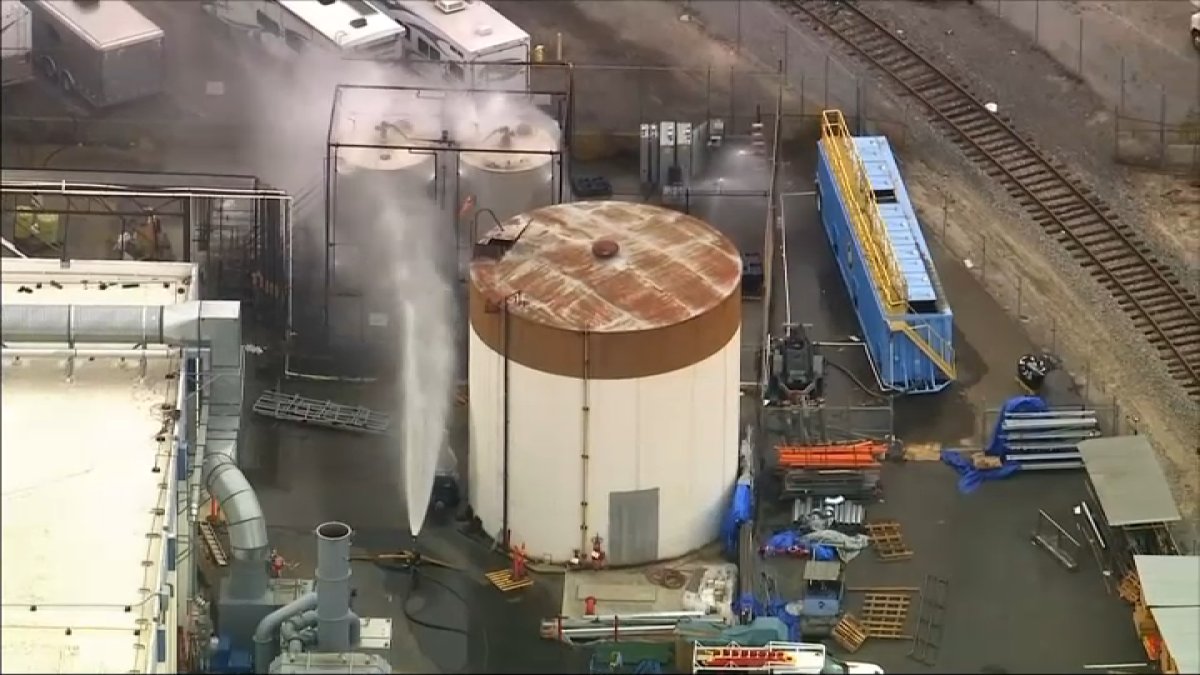
GKN Aerospace, the company that owns the troubled chemical tank in Garden Grove that led to tens of thousands of people being evacuated this week, recently settled an air quality safety violation and agreed to pay a fine of more than $900,000.
This is a business that routinely deals with all sorts of toxic and hazardous chemicals as it manufactures airplane canopies, windows and other parts that have to hold up in extreme heat and extreme cold. The company is heavily regulated by local, state and federal agencies, so inspections are the norm.
The violations that were settled in the last year stemmed from an inspection in 2020. This agreement between GKN Aerospace and the South Coast Air Quality Management District, a state agency, says that in November 2020, GKN had violated environmental regulations.
It says some of the chemicals being used in manufacturing went beyond what had been specifically allowed in permits and that GKN had allowed other chemical emissions that exceeded what’s allowed under the law. It also cited the company for failing to keep complete records and failing to get permits for some equipment or procedures.
According to the settlement, the company admitted no wrongdoing but also didn’t dispute the listed violations.
In early 2025, the company agreed to pay $909,935.95 to the AQMD.
The infrared technology from a drone gave a specialized hazmat team confirmation that there’s a potential crack in the tank. Hetty Chang reports for the NBC4 News at 8:30 p.m. on Sunday, May 24, 2026.
More recent inspections have found the company to be “in compliance” with other regulations. NBC4 Investigates searched through federal and local court records, and violation data held by regulatory agencies, and didn’t see other penalties or failed inspections.
GKN Aerospace has to regularly report its use and transportation of hazardous material, both to the state’s toxic substances agency and the feds, so the kinds of chemicals on the site were well known to safety agencies.
It’s not clear whether any of those violations noted nearly six years ago were connected with the chemical at the center of the problems there, but the specific chemical at issue this week is not mentioned in those documents.
Both the AQMD and the Environmental Protection Agency have representatives who’ve been on-site for the last few days taking air samples. They want to make sure no hazardous chemicals are being released while the tank situation is being managed.
Local officials say they expect a comprehensive inspection of everything going on at the facility — once the danger has been managed — before it is allowed to begin any work inside.