
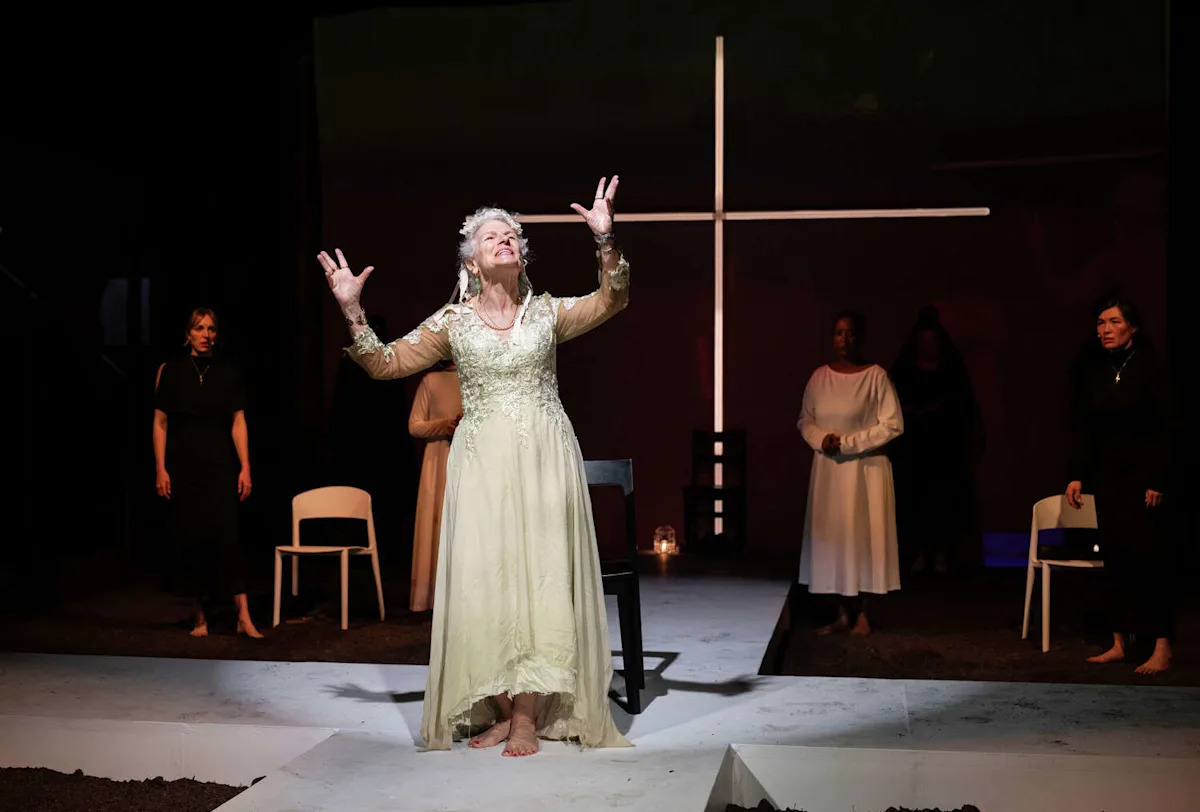
In Oakland Theater Project’s “The House of Bernarda Alba,” the house earns its place in the title.
Plexiglas cages the actors on all three sides of the show’s thrust stage at Omni Commons in Oakland. A floor piled with dirt is crisscrossed by two bright white walkways, like the aisles of a very old church. Seated and sedate, the women resemble zoo animals with the life sapped out of them. One wafts around brandishing a flower.
Even before the show proper starts, it’s clear: No one can leave this place.
“For the next eight years, we will mourn,” Bernarda (Lisa Ramirez) announces early in Federico García Lorca’s 1936 tragedy, which opened Sunday, May 24.
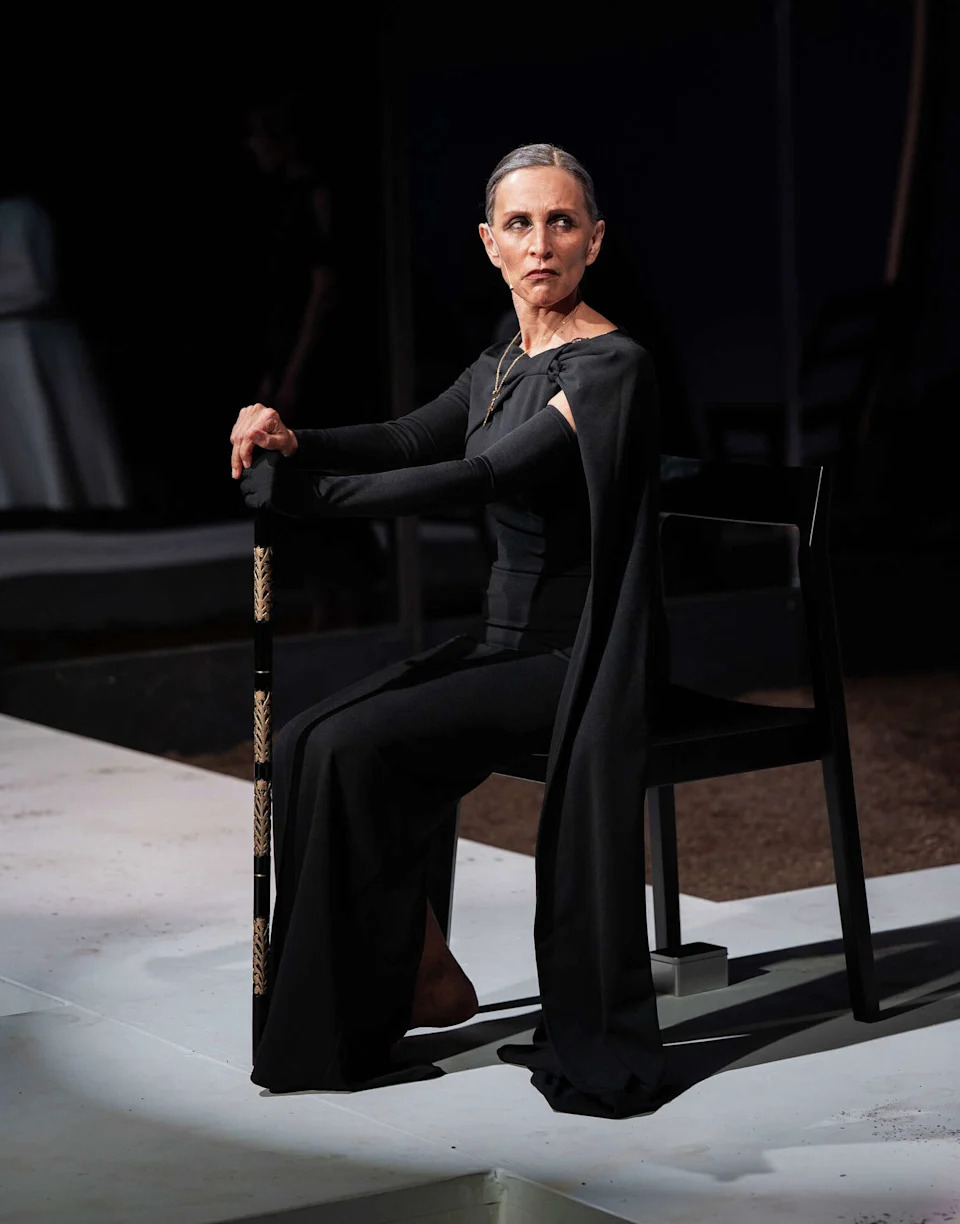
Lisa Ramirez as Bernarda Alba in “The House of Bernarda Alba.” (Ben Krantz/Oakland Theater Project)
Her husband has just died, so her five daughters must sequester themselves. “Not even a wandering breeze from the street will seep into this house,” Bernarda says, each syllable a butcher knife’s chop in Chay Yew’s flinty new adaptation.
She can’t stitch all curtains shut, though. As village heartthrob Pepe (Jaden Ramsey) makes eyes at different sisters through their windows, the Plexiglas starts to fog up.
Sky-high concepts are the modus operandi of director Michael Moran, who’s previously bestowed upon the Bay Area a “Hamlet” with backup dancers and a “Who’s Afraid of Virginia Woolf?” where the actors literally ripped the set. (Both, not coincidentally, also starred Ramirez.)
Here, however, you might wish for more focus on fundamentals.
Some actors trip on lines. Others plow their way through, as if text were an overgrown field to be threshed and not already winnowed and distilled to choice morsels: “deflated scarecrow,” “staccato footsteps,” “My head and my hands are filled with eyes.”
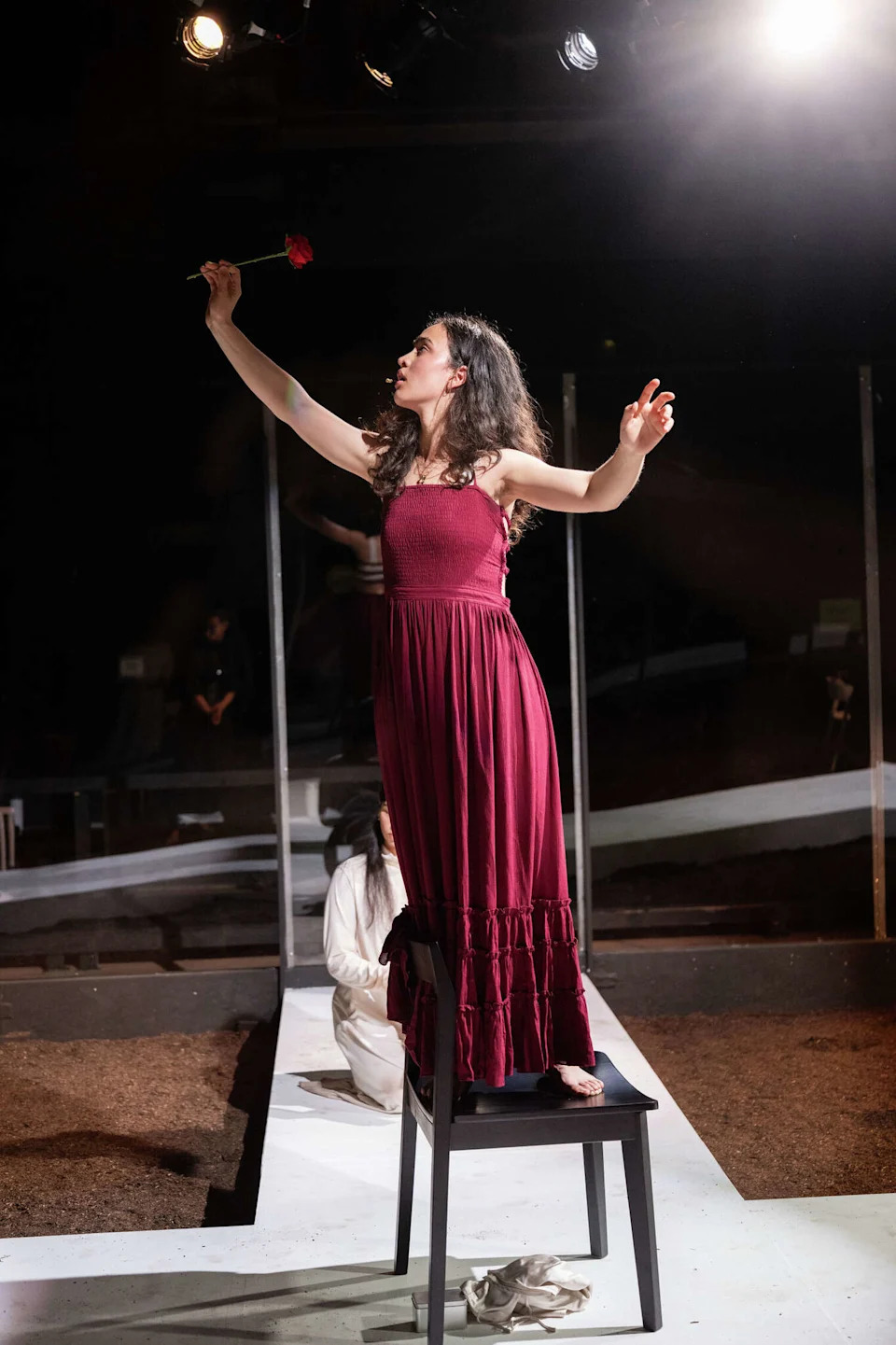
Antonella Scogna as Adela in “The House of Bernarda Alba.” (Ben Krantz/Oakland Theater Project)
Microphones frequently cut out on opening night, which despite all the heaving and hollering as the default delivery mode, meant many lines stayed inside the Plexiglas.
Live-feed video projections add little beyond a distracting split-second shadow of what’s onstage, resembling more the de rigueur choice of trendy stage direction than a device this specific story demanded.
The same goes for dance sequences, which sandbag more than propel. Music sounds like the pre-programmed starter pack that might come with a digital audio workstation, and its relentless underscoring of dialogue suggests a failure to trust the text.
But for all these quibbles, the force of Lorca’s storytelling remains sturdy and inexorable. Penning up lustful young women simply can’t end well, and the tragedy stokes sinfully delicious dread as surely as a “Just look behind you!” scene in a horror movie.
Lorca makes clear that there’s just as much rot outside the house – Faustian bargain-marriages, honor killings, starving beggars swatted away like gnats – as there is inside. When Bernarda imprisons her daughters, she’s making a “Better the devil you know” choice.
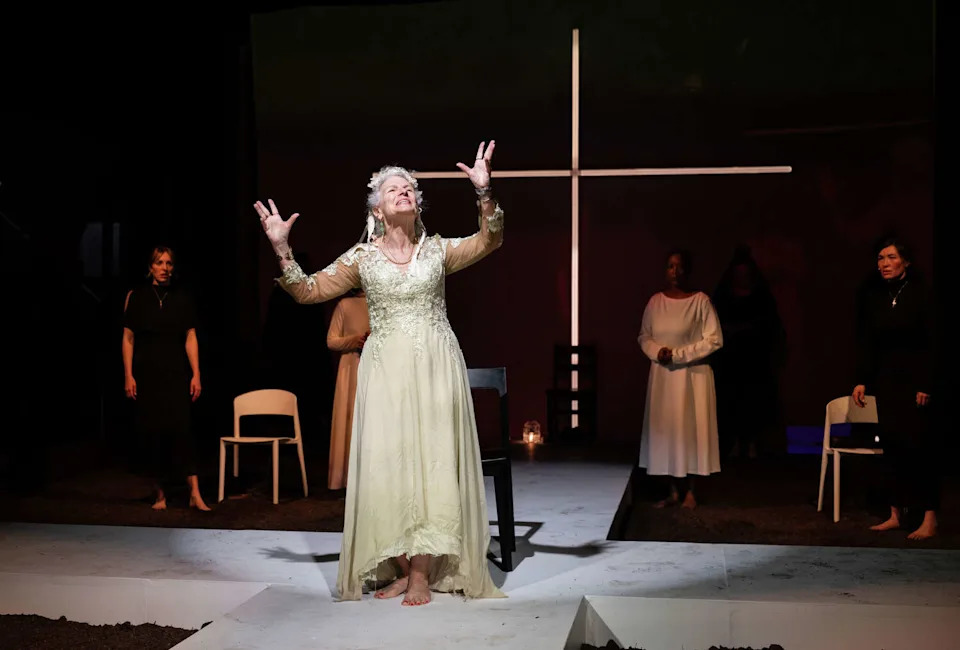
Angelina Fiordellisi as Maria Josefa in “The House of Bernarda Alba.” (Ben Krantz/Oakland Theater Project)
It’s all the same devil, though, and the only way out is through death – or age and insanity.
More Information

3 stars
“The House of Bernarda Alba”: Adapted by Chay Yew from Federico García Lorca. Directed by Michael Moran. Through June 7. One hour, 55 minutes. $10-$60. Omni Commons, 4799 Shattuck Ave., Oakland. 510-646-1126. https://oaklandtheaterproject.org
For the bulk of the show, the only woman in the family who can drift outside the Plexiglas is Bernarda’s mother Maria Josefa (Angelina Fiordellisi), who’s so convinced she’s about to get married that she wears a white wedding dress. Fiordellisi is the kind of actor who, when she embarks on some flight of fancy, makes her vision visible. Her gaze is so committed that even a skeptical viewer might be tempted to look over their shoulder to make sure something hasn’t materialized in the distance.
Still, for all the show’s overdirection, Moran achieves one moment of breathtaking beauty.
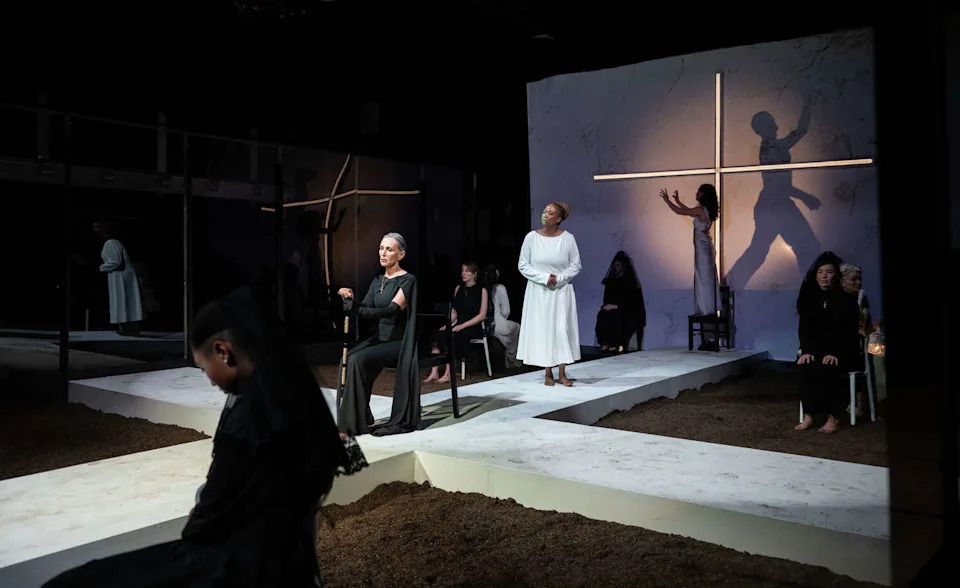
Lisa Ramirez as Bernarda Alba (seated, from left), Jacinta Kaumbulu as Poncia and Antonella Scogna as Adela in “The House of Bernarda Alba.” (Ben Krantz/Oakland Theater Project)
There’s a whole lot of talk about windows in the script – they’re like Juliet’s balcony as a fraught site of male-female visitation. All the sills could drip with bodily fluids.
Then, in one moment, the youngest sister, Adela (Antonella Scogna) is in front of the rear screen, and Ramsey’s Pepe is behind it in silhouette. Their dance moves seem to caress each other through it, but they’re bisected by the panes’ cross. He looks like he’s hanging from a crucifix.
Someone, Moran implies, will have to be sacrificed.
Subscribe
There’s more to San Francisco with the Chronicle. Subscribe today for just 25¢.
This article originally published at ‘The House of Bernarda Alba’ review: Oakland Theater Project gives this tragedy a striking new cage.