
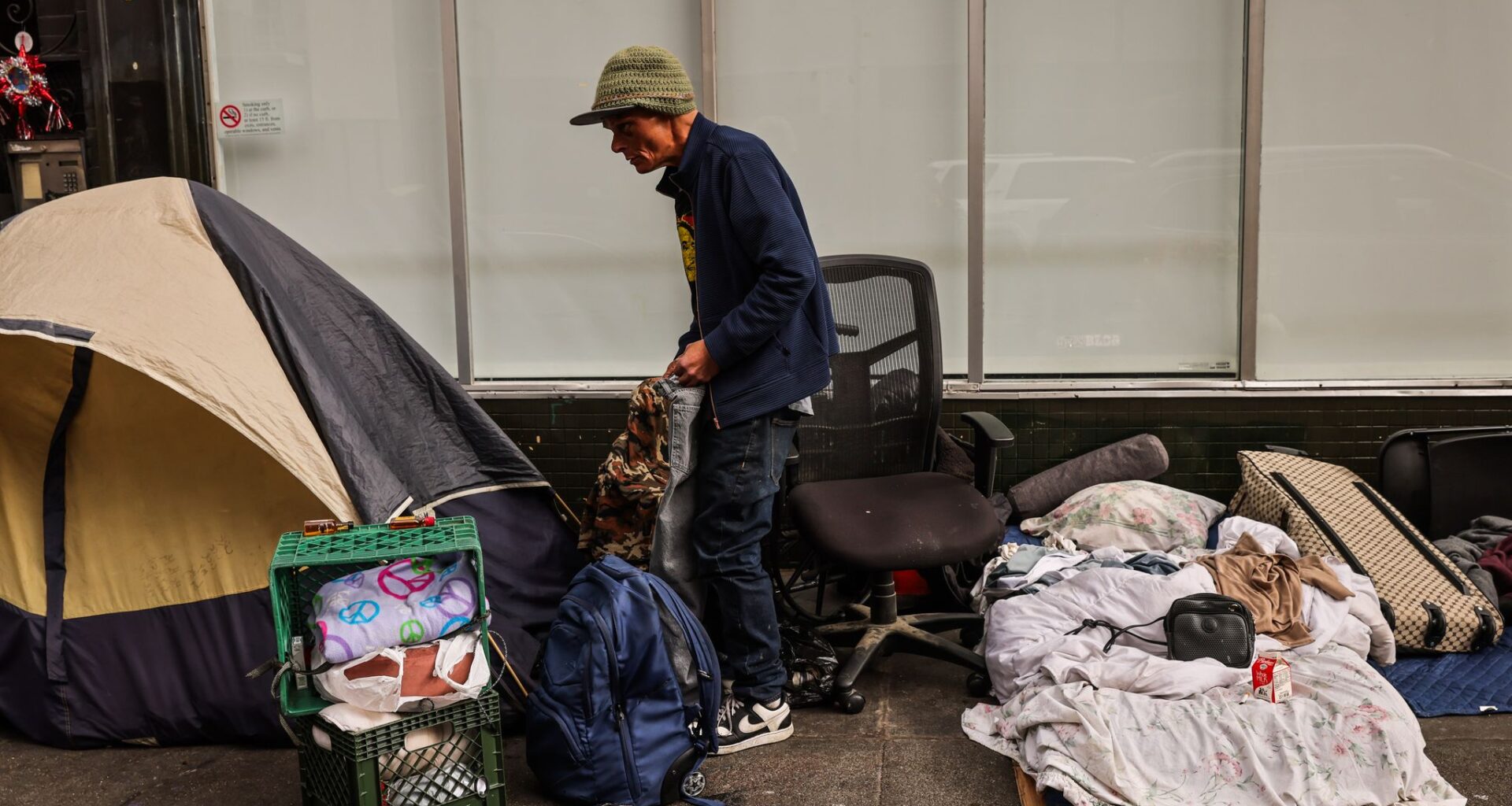
The Our City, Our Home Fund — financed by a voter-approved tax on large businesses — has exceeded forecasts and is expected to bring in more than $900 million over the next two years for homelessness spending. That’s in addition to a $450 million fund balance.
Gabrielle Lurie/S.F. Chronicle
Over the next two years, Mayor Daniel Lurie plans to spend $1.1 billion of the Our City, Our Home Fund. About $860 million would be earmarked for ongoing services and $240 million for new initiatives, including a $98 million reserve to protect against state and federal funding cuts.
Gabrielle Lurie/S.F. Chronicle
Mayor Daniel Lurie arrives to speak at a briefing with public safety leaders to highlight preparations for Super Bowl LX on Monday, January 26, 2026, in San Francisco.
Lea Suzuki/S.F. Chronicle
As Mayor Daniel Lurie works to close a major budget deficit, a dedicated funding stream for homelessness services in San Francisco is awash with money.
The Our City, Our Home Fund — financed by a voter-approved tax on large businesses — has exceeded forecasts and is expected to bring in more than $900 million over the next two years. That’s in addition to a $450 million fund balance.
The result is a rare bright spot in an otherwise bleak budget season: hundreds of millions of dollars that can be spent only on homelessness, even as other city departments brace for cuts.
Article continues below this ad
Lurie is hoping to use the windfall to cushion the city against potential federal and state rollbacks, prevent more people from becoming homeless and preserve existing services. Support for his Our City, Our Home spending plan could earn him political goodwill at a time when he is under pressure to explain how he chooses to close a budget gap and where he may make cuts.
Passed by voters in 2018, the tax measure requires that every dollar raised go toward housing and services for people experiencing homelessness. More specifically, at least 50% of the funds raised must go toward permanent housing, at least 25% toward mental health services, up to 15% toward homelessness prevention and up to 10% toward shelter and hygiene services.
San Francisco Chronicle Logo
Make us a Preferred Source to get more of our news when you search.
Add Preferred Source
That means the city cannot close its projected $643 million general fund deficit by simply diverting the money to other city services.
Over the next two years, Lurie plans to spend $1.1 billion of the Our City, Our Home Fund. About $860 million would be earmarked for ongoing services and $240 million for new initiatives, including a $98 million reserve to protect against state and federal funding cuts, according to a spending plan shared by the mayor’s office.
Article continues below this ad
The Our City, Our Home Fund is spent mostly by the city’s homelessness department, with smaller shares going to public health and the Mayor’s Office of Housing and Community Development. Last cycle, the fund accounted for about 45% of the homelessness department’s $1.6 billion two-year budget. The department’s total budget for the next two-year cycle won’t be clear until the mayor releases his full budget proposal by June 1.
The proposed $98 million reserve would help the city offset a reduction in homelessness dollars from the state, the early expiration of federal housing vouchers and other potential funding changes from the Trump Administration for homeless housing.
Gov. Gavin Newsom’s state budget proposal set aside $500 million in local homelessness funds for the upcoming fiscal year — a 50% reduction from prior years. And an emergency housing voucher program established under the Biden administration that was supposed to last until 2030 is being cut short under President Donald Trump, leaving hundreds of San Francisco families at risk of becoming homeless.
“The signals from Washington are clear that more cuts may be coming, and by creating this new reserve, we’re making sure we’ll be ready,” Lurie said in a statement, adding that the city was “leveraging every dollar available to keep families housed.”
Lurie last year proposed temporarily eliminating the spending parameters of the Our City, Our Home Fund and redirecting $90 million of it toward temporary shelter. The Board of Supervisors only agreed to reallocate about $40 million after the mayor’s proposal drew fierce backlash from service providers concerned that it would create a bottleneck in the system.
Article continues below this ad
With less funding for prevention, they warned, more people could become unhoused. With fewer dollars for permanent supportive housing, they feared, more people would struggle to move from temporary shelters into stable housing.
This year stands to be less contentious.
Megan Rohrer, policy director for the nonprofit Compass Family Services, who was briefed on the mayor’s plan, said it reflected more robust conversations with service providers and a meaningful commitment to tackle family homelessness.
The number of families experiencing homelessness in San Francisco increased by 15% over the past two years, from 405 to 465, according to the city’s most recent point-in-time count.
To address the rise, Lurie plans to add 400 new rental subsidies for families and youth, expand an emergency hotel voucher program for families to stabilize while waiting for housing and double the capacity of a family shelter program operated in partnership with San Francisco Unified School District.
Article continues below this ad
“It feels like a proposal that really could move the needle this year,” Rhorer said.
Lurie also wants to allocate about $80 million in Our City, Our Home funds to expand treatment and recovery programs for people dealing with addiction and mental illness. That includes adding more capacity to temporarily house people exiting residential treatment, expanding access to a once-monthly injectable medication to treat opioid addiction and investing in a system to transport people between shelter, treatment and housing.