
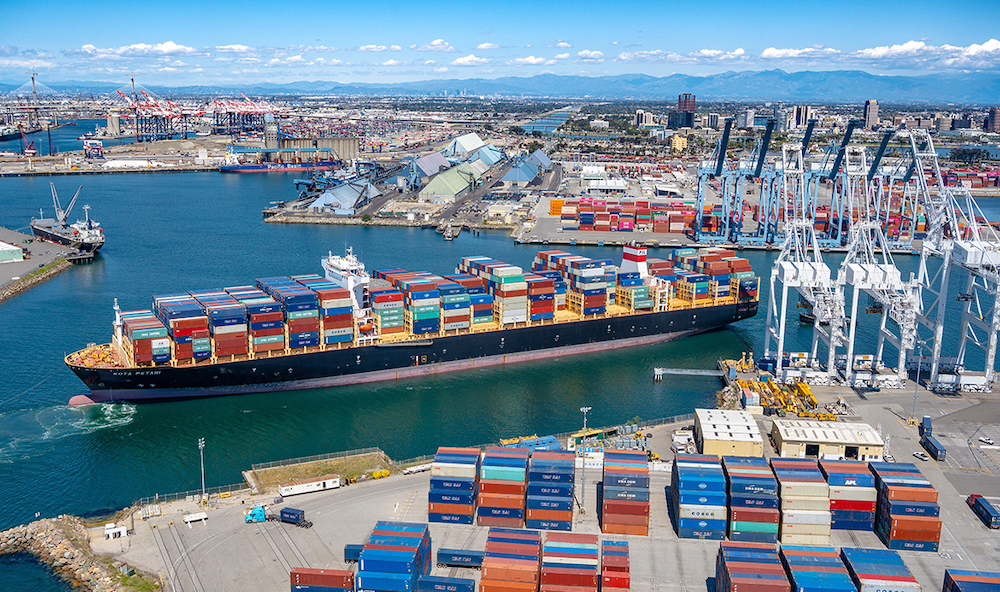
The Port of Long Beach has launched a $1m incentive programme aimed at accelerating commercial-scale methanol bunkering, becoming one of the first major US ports to directly incentivise alternative marine fuel supply infrastructure.
The port’s board of harbour commissioners approved the Clean Fuel Bunkering Challenge Incentive Award this week, targeting the growing fleet of dual-fuel methanol vessels expected to trade through the San Pedro Bay gateway.
More than 400 methanol-capable ships are already operating or on order globally, but many continue running on conventional fuels because green methanol bunkering infrastructure remains limited, particularly along the US West Coast.
Environmental group Pacific Environment welcomed the initiative but urged shipping lines and port authorities to prioritise genuinely low-emission fuel pathways.
“Frontline communities in Los Angeles and Long Beach suffer from some of the worst pollution in the nation,” said Cristhian Tapia-Delgado, climate campaigner for Southern California at Pacific Environment.
The Port of Long Beach has long positioned itself as a leader in emissions reduction technologies, including shore power deployment, as pressure grows on ports and carriers to decarbonise maritime supply chains.
“We know there is no single, magic fuel solution today, but methanol is emerging as one of the leading fuel alternatives in the maritime industry,” said Davina Hurt, climate policy director for Pacific Environment.
She cautioned that “not all methanol pathways are equal” and called for investment in “truly green methanol solutions”.
Shipping remains the largest source of nitrogen oxide emissions across the San Pedro Bay port complex, according to port emissions inventories.
The ports of Long Beach and Los Angeles together handle around 40% of US containerised imports, while surrounding communities continue to face elevated health risks linked to diesel pollution.