
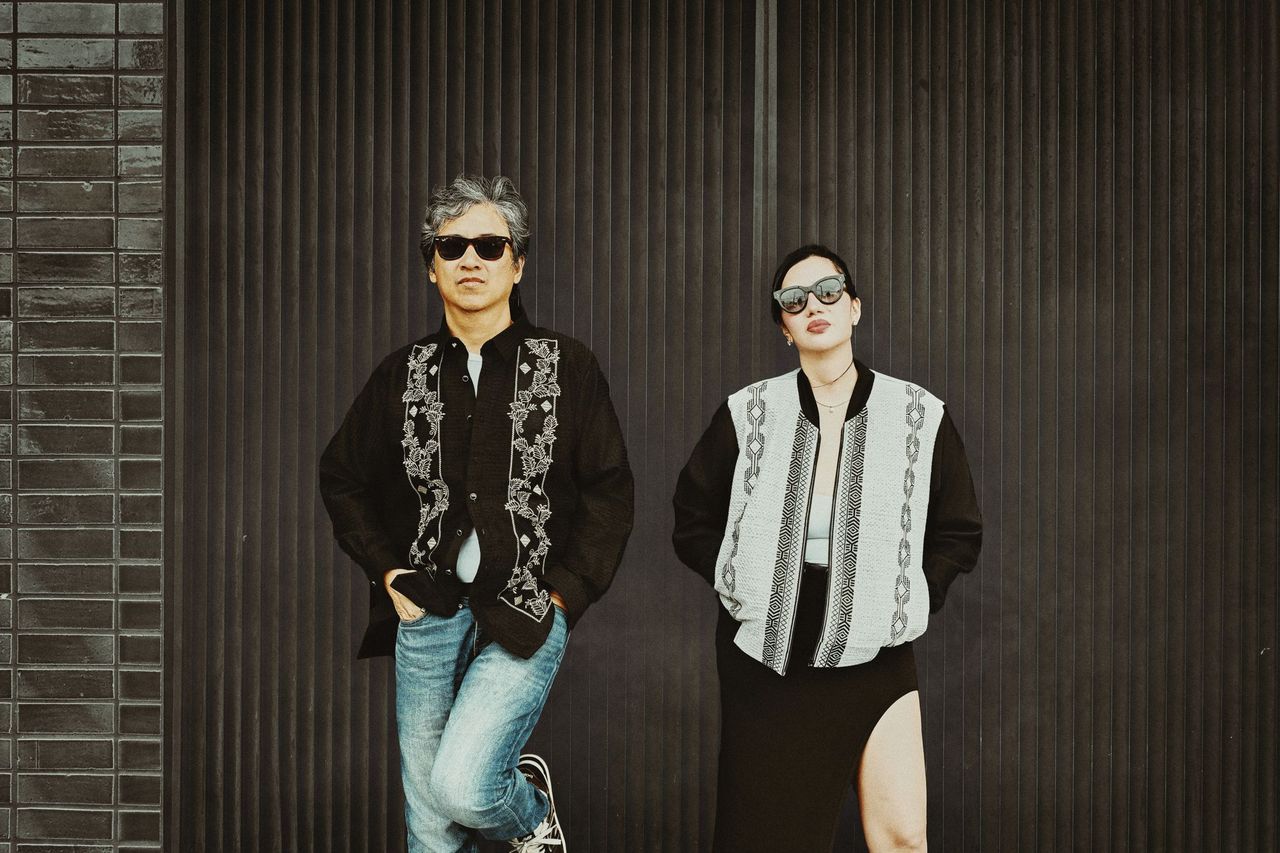
Growing up in the Philippines, then moving to America at 20, Eraserheads was life. It was my high school. It was my college. It is one of my comfort places. You know how smell is one of those senses that strongly triggers memories? Music does the same thing for me, but on a bigger scale. A scent can bring back one room, one person, one afternoon. A song can reopen a whole season. A lot of Eraserheads songs bookmark specific moments of life’s timeline. “Ligaya” arrived when I was 7. “Minsan” and “Magasin” lived with me through school and barkada years. “Ang Huling El Bimbo,” released when I was 9, has been living rent-free in my body for decades, accompanying me through mundane moments, heartbreaks, triumphs, and quiet private reckonings.
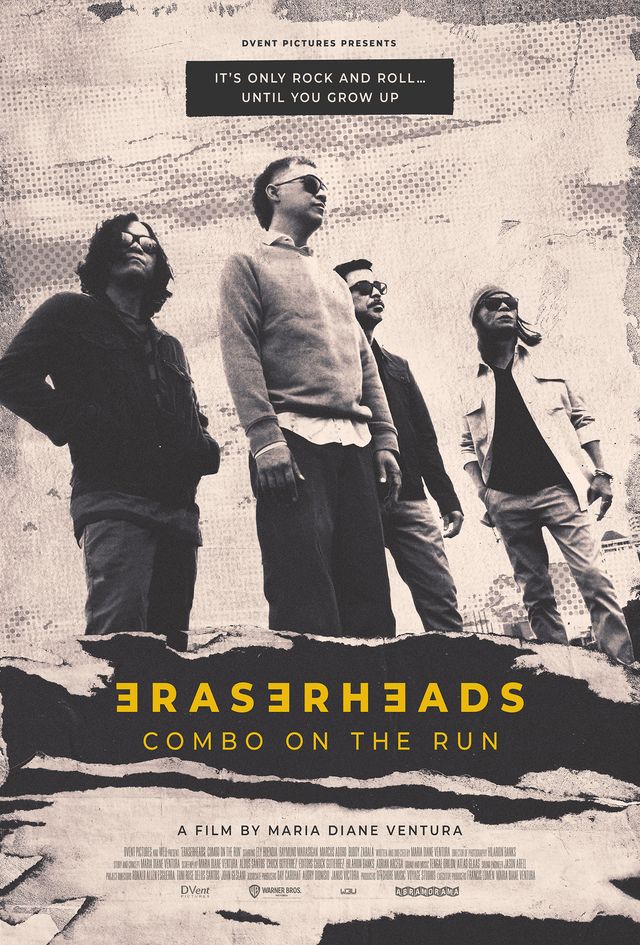 Credit: DVENT PICTURES
That is why ERASERHEADS: COMBO ON THE RUN lands with a force that feels larger than a music documentary. Directed by Maria Diane Ventura, the 102-minute film follows Ely Buendia, Raimund Marasigan, Buddy Zabala, and Marcus Adoro through the rise, rupture, mythology, and eventual return of one of the Philippines’ most influential bands. In North America, the film became a historic cultural event, opening in more than 100 cinemas on April 24, 2026, which Billboard Philippines reported as the widest theatrical release for a Filipino documentary in the continent to date.
For Filipinos in Los Angeles, that matters. This city is not merely a market for the film. It is part of the story. Pew Research Center estimates that the Los Angeles metro area is home to about 500,000 Filipinos, the largest Filipino population of any U.S. metro area. To watch Combo on the Run here, especially during AAPI Heritage Month, is to understand that Filipino memory does not stay in one country. It travels in luggage, playlists, family parties, karaoke rooms, long drives, and the strange ache of hearing a song from home while building a life somewhere else. AAPI Heritage Month, observed every May, has grown from a weeklong recognition into a monthlong celebration of Asian American, Native Hawaiian, and Pacific Islander histories, cultures, and contributions.
Ventura understands that Eraserheads are not just four men with guitars, drums, songs, and history. They are a collective emotional address. Diane Ventura’s film is a moving mosaic, harmoniously broken puzzle pieces brought together to form a collective narrative not just of a band, but of a nation that has experienced fractures throughout its history. The film’s strength is not simply that it gives fans the old songs. It gives those songs context, age, consequence, and bruises. It lets the music sit beside silence. It lets nostalgia grow teeth.
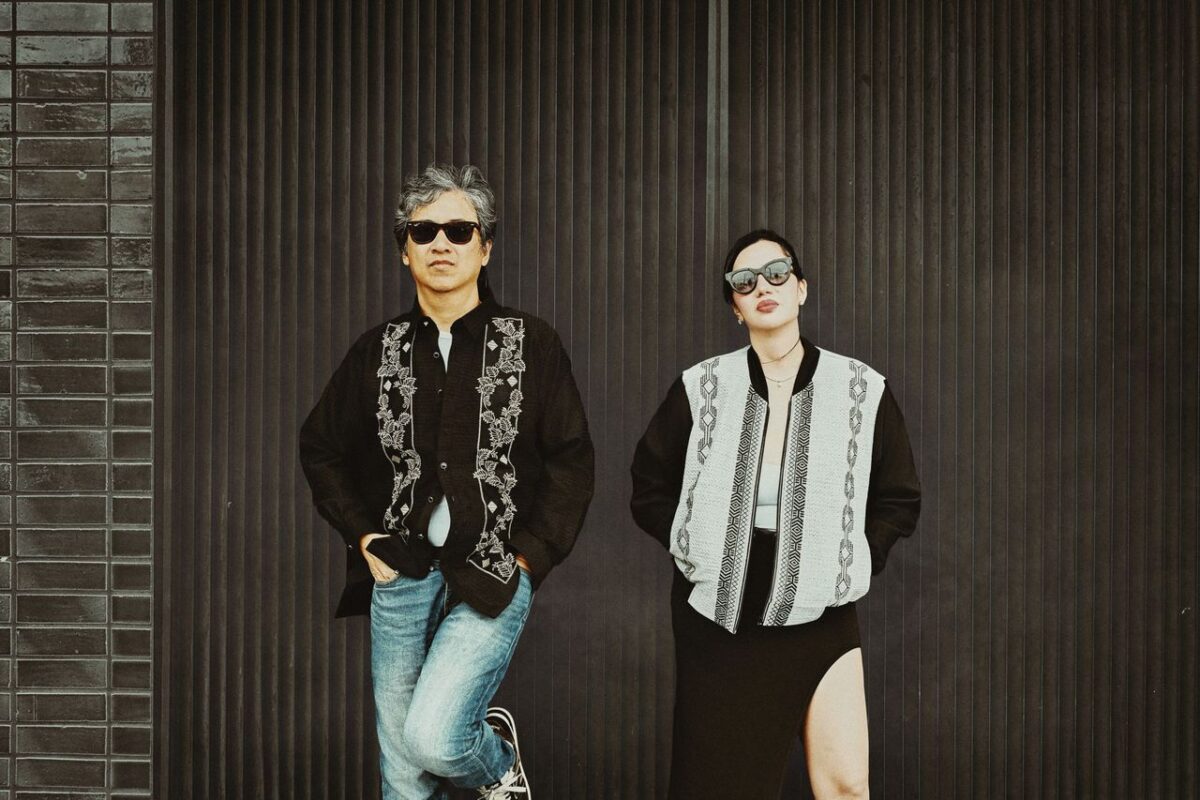 Director Diane Ventura and Ely BuendiaCredit: Irvin Rivera
In my conversation with Ventura and Buendia, that intention became clearer. Ventura said she wanted the film to be more than “the proverbial clash of egos,” because that story had already been told. She wanted something that could “stoke pride” among Filipinos, something audiences could identify with. Buendia, looking at the film from some distance, said the band’s story had become “something bigger than us and more important than the personalities involved.” That is the secret of the film. It does not flatten the band into icons. It makes the iconography human again.
The documentary works best when it explores how music becomes a shared language for people who may not always know how to speak directly. Ely says in our interview that Eraserheads affected so many people because they shared a history with their listeners, growing up in the same era, shaped by the same surroundings, singing from the same atmosphere. Diane sharpens the thought beautifully: “I think we’re more connected than we presume.” That line could be the film’s thesis. Eraserheads did not become generational because they were perfect. They became generational because they were specific enough to feel like yours, and open enough to feel like everyone else’s, too.
Scroll to continue reading
What keeps Combo on the Run from becoming mere fan service is its willingness to confront the costs of becoming beloved. The film is about songs, but it is also about fame, burnout, repression, pride, miscommunication, and the way young men can build something immortal while lacking the language to preserve each other. Ventura identifies one of the film’s most painful truths when she says that the breaking of any union does not happen from one event, but from “accumulated, unarticulated resentment.” Ely’s own reflection deepens that wound. He speaks of the insecurity of the 90s, of trying not to implode, of surviving fame and sudden fortune before emotional maturity had fully caught up.
The film is not formally radical. At times, it moves within the familiar architecture of music documentaries: interviews, archival footage, historical framing, reunion tension. But its emotional access is what makes it effective. The best parts feel less like a documentary trying to explain a band and more like a family finally opening old boxes in the living room. There is dust. There is laughter. There is tenderness. There is discomfort. There are also questions the film could have explored further, especially about whose voices are centered when painful histories beyond the band’s internal dynamics are addressed. Still, its central achievement remains meaningful: it does not ask us to worship Eraserheads. It asks us to understand why we carried them for so long.
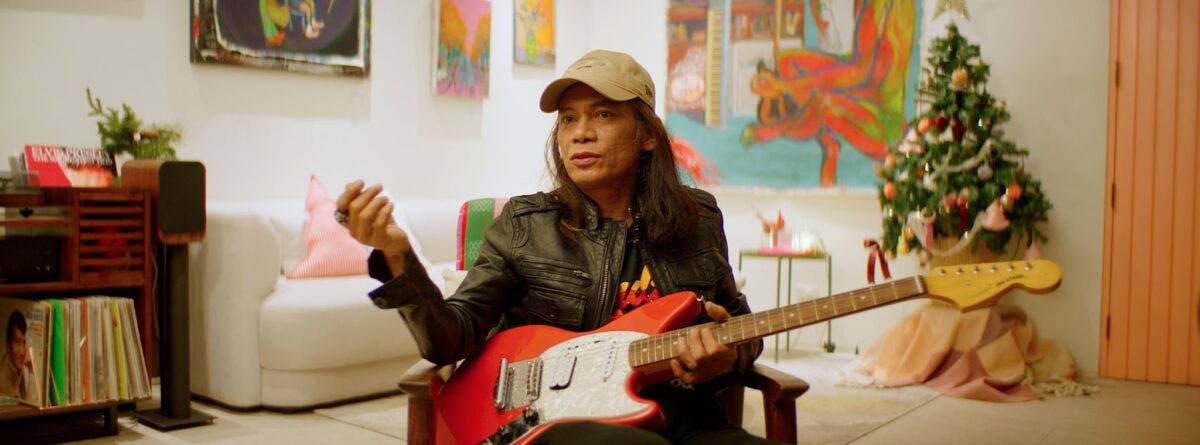 Credit: Hilarion Banks
Now, the carrying continues. ERASERHEADS: COMBO ON THE RUN will debut globally on Netflix on May 30, 2026, in more than 190 countries, featuring the band’s history and legacy. For a band that once soundtracked classrooms, campuses, sari-sari store afternoons, radio countdowns, dorm rooms, jeepney rides, and homesick Filipino apartments abroad, that global release feels both earned and necessary. It gives Filipinos around the world another chance to see ourselves not as a footnote in someone else’s cultural conversation, but as the center of our own.
That is the invitation of this film. For Filipinos in Los Angeles, across America, in the Philippines, and everywhere the diaspora has planted new roots, Combo on the Run is more than a chance to revisit a legendary band. It is a chance to show up for Filipino cinema, Filipino artists, Filipino memory, and Filipino stories told with scale, soul, and specificity. We are all grown up now. We have moved cities, countries, careers, relationships, and versions of ourselves. But the songs remain. We sang, we laughed, we cried, we yearned, we screamed, we ran, we slowed down, we lived, and are still living through their music. In the end, Combo on the Run is not only about Eraserheads finding their way back to one another. It is about Filipinos everywhere finding, through music and film, a way back home, and proudly inviting the world to listen with us.