
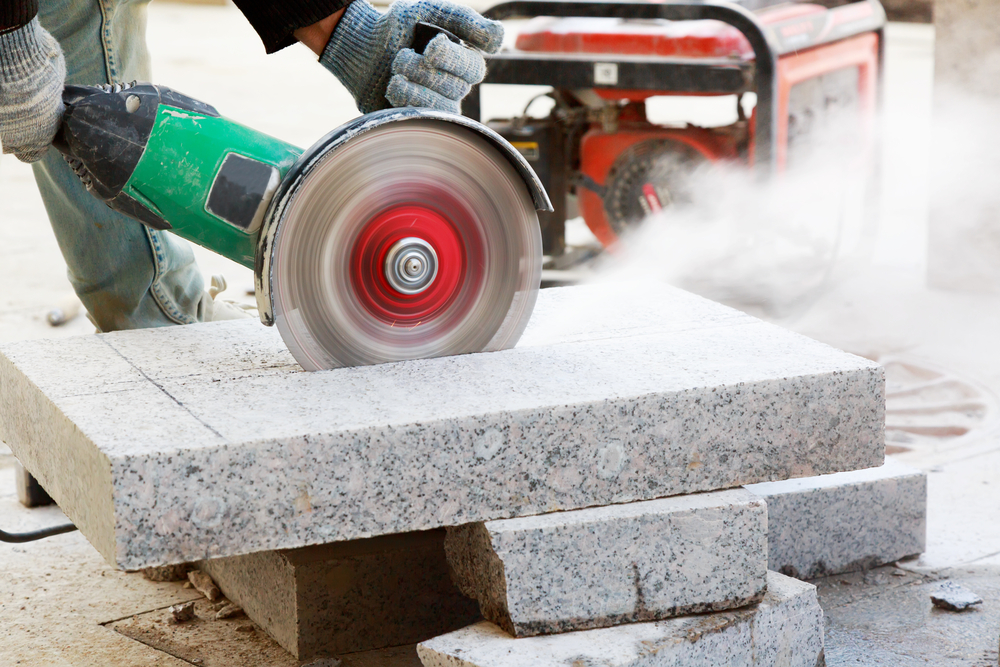
On May 21, California’s Occupational Safety and Health Standards Board granted a petition initiating a rulemaking to prohibit the fabrication and installation of artificial stone products containing more than 1% crystalline silica.
The approval of a petition from the Western Occupational and Environmental Medicine Association (WOEMA) would begin to address the hazards the material poses to workers, including life-altering illnesses and preventable fatalities, the Department of Industrial Relations (DIR) said in its May 22 announcement.
In a unanimous decision, the board requested that the Division of Occupational Safety and Health (Cal/OSHA) prepare a finding of emergency to support expedited rulemaking. The board also requested that Cal/OSHA simultaneously convene advisory committees, including a scientific advisory committee, to evaluate the feasibility and implications of potential worker protections related to silica exposure.
The WOEMA petitioned the board out of concern over increasing silicosis cases linked to artificial stone fabrication and installation in California. The California Department of Public Health (CDPH) has confirmed 562 cases of silicosis and 31 deaths resulting from worker exposure to engineered stone. The median age at diagnosis was 46, and the median age at death was 52.
In response to the petition, Cal/OSHA and the standards board’s staff conducted evaluations that found that the state’s silicosis crisis continues to worsen, and workers involved in artificial stone fabrication and installation face significant risks from exposure to respirable crystalline silica. The evaluations determined that artificial stone products containing crystalline silica pose unique occupational hazards and that existing protections are insufficient to fully address the risk.
In its petition, the WOEMA pointed out that engineered stone manufacturers in Australia already offer safer, crystalline silica-free alternatives. The group predicted that safer products will likely be made available in the California market, noting that IKEA has already removed engineered stone countertops from its U.S. retail locations.
Before the board’s May 21 meeting, the California Medical Association urged the board to prohibit the fabrication and installation of engineered stone products containing more than 1% crystalline silica.
In 2023, the standards board approved Cal/OSHA’s emergency temporary standard on respirable crystalline silica, strengthening protections for workers engaged in cutting, grinding, polishing, and cleanup involving artificial stone and natural stone containing more than 10% crystalline silica. In 2025, the board adopted a permanent silica standard that preserved and strengthened worker protections.
In 2025, Governor Gavin Newsom signed Senate Bill 20 into law, classifying silicosis as a serious illness and requiring Cal/OSHA and the CDPH to share information on reported cases.
Cal/OSHA has issued more than 900 citations through its silica special emphasis program, with proposed penalties totaling approximately $1.9 million. The agency also provided 465 on-site consultations reaching 27,665 employees, according to the DIR.
The federal Occupational Safety and Health Administration (OSHA) also has a National Emphasis Program (NEP) on crystalline silica. Industries targeted by the federal NEP include construction of residential and nonresidential buildings and utility systems, as well as the manufacture of cut stone and cut stone products, paint and coatings manufacturing, and electric power generation, transmission, and distribution.