
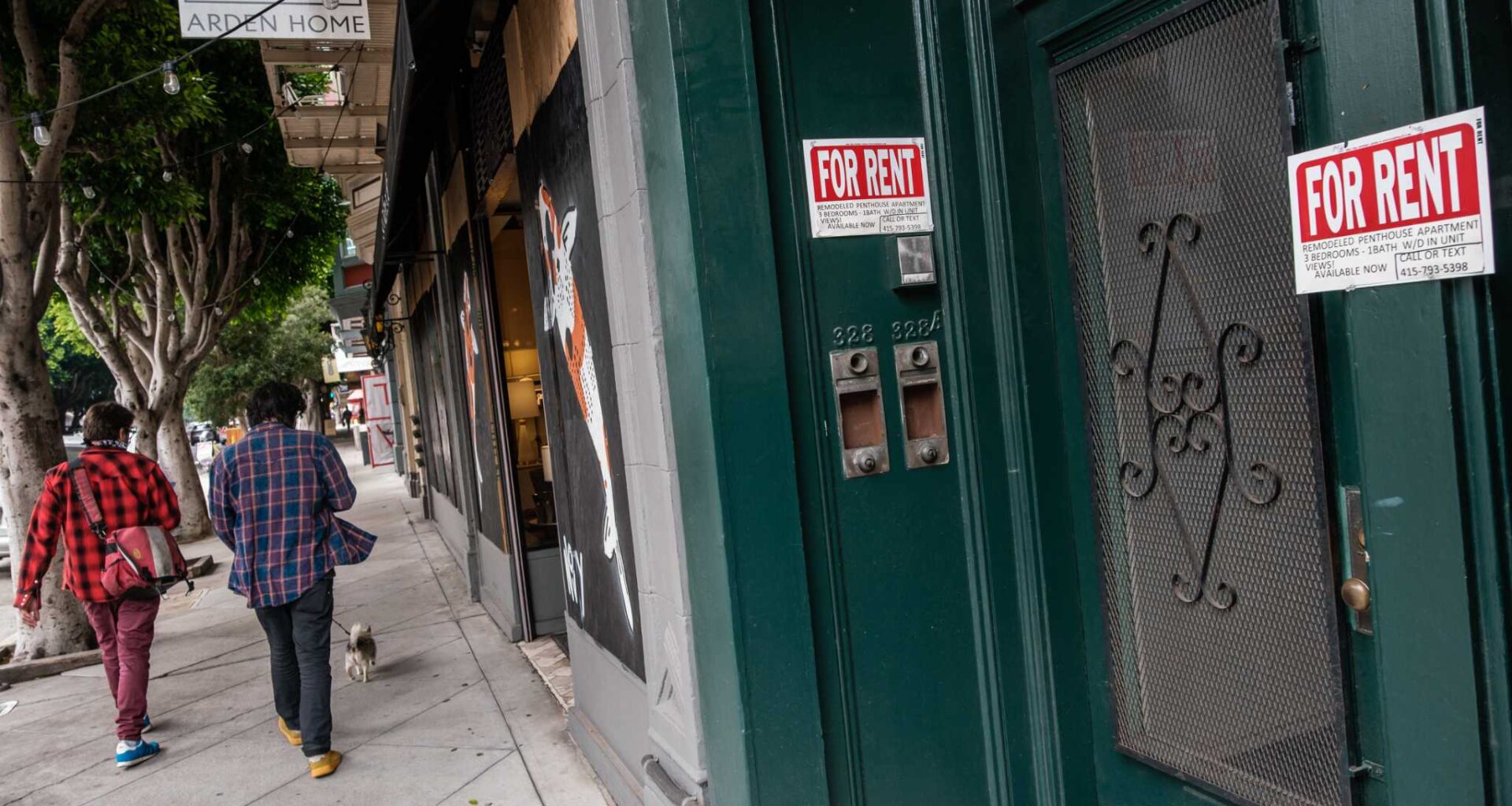
Pedestrians walk past a “For Rent” sign on Hayes Street in San Francisco in 2020. A city supervisor wants to introduce legislation that would get rid of “junk fees” for rental units.
Nick Otto/Special to the Chronicle
With unexpected fees for everything from utilities to pest control to “garbage concierge,” the dirty little secret of renting an apartment in San Francisco is tenants often don’t know how much their pad is going to cost until they move in.
The city wants to change that.
Next week Supervisor Bilal Mahmood will introduce a bill called the “No Hidden Rent Act,” which he said is designed to “ bring transparency, fairness and accountability to San Francisco’s rental market by requiring landlords to disclose the true total cost of renting in online advertisements before tenants sign a lease.”
Article continues below this ad
The proposed legislation would require that property owners advertise the “total estimated cost” in the “same font and placement” as the base rent. It would require that the same information be disclosed on the first page of the lease. Each fee would have to be itemized with a “clear explanation of their purpose and amount.” The rental listings would also include “application fees and screening fees.”
Mahmood said the legislation responds to a growing problem facing renters across San Francisco and the country: hidden and misleading rental fees that, in many cases, add between 10% and 30% to the monthly rent.
San Francisco Chronicle Logo
Make us a Preferred Source to get more of our news when you search.
Add Preferred Source
While California’s Tenant Protection Act of 2019 established limits on rent increases, landlords have increasingly attempted to make up for the lost income with recurring charges, including “trash concierge” charges, pest control fees, amenity fees and other unbundled costs.
In a 2025 study called “‘What the Heck, Dude! ’: How States Can Fight Rental Housing Junk Fees,” the National Consumer Law Center found 27 different fees that tenants face, often in high-cost markets like San Francisco.
Article continues below this ad
The legislation builds on a broader national movement toward “all-in pricing” transparency already adopted in industries such as airlines, hotels and ticketing, as well as emerging rental disclosure laws in states including Colorado, Connecticut, Massachusetts, Minnesota, and Nevada.
“San Franciscans deserve to know the real cost of housing before they sign a lease,”Mahmood said. “In the middle of a housing affordability crisis, we need transparency, honesty and accountability in the rental market.”
San Francisco’s proposal would apply to both rent-controlled and exempt units.
Charley Goss, government and community affairs manager for the San Francisco Apartment Association, told the Chronicle the group’s board of directors has not taken a position on the legislation and that the “devil is in the details.”
But in preliminary discussions about the legislation board members were generally supportive, he said.
Article continues below this ad
“As we see it, it goes hand and hand with the larger trend where consumers want to know what their true costs are going to be when they are considering something, whether that’s an airplane ticket, a concert ticket or an apartment,” he said. “If you are a renter and you are evaluating if you want to move into a certain unit, you should know what your costs are.”
He said the challenge will be to educate landlords about the new requirement.
“San Francisco has many thousands of mom and pop property owners,” he said. “We want them to be aware of the law and be able to comply with the law.”
Gail Gilman, executive director of the eviction defense collaborative, told the Chronicle that the legislation “will close a loophole that is causing San Franciscans to be at risk of losing their housing.”
Article continues below this ad
“Hidden fees, non-transparent leases, and poor accounting by landlords can easily lead to housing insecurity and homelessness,” she said. “When leases are convoluted and not transparent, those fees can be the make or break difference between whether you experience housing instability in one of the most expensive housing markets.”