
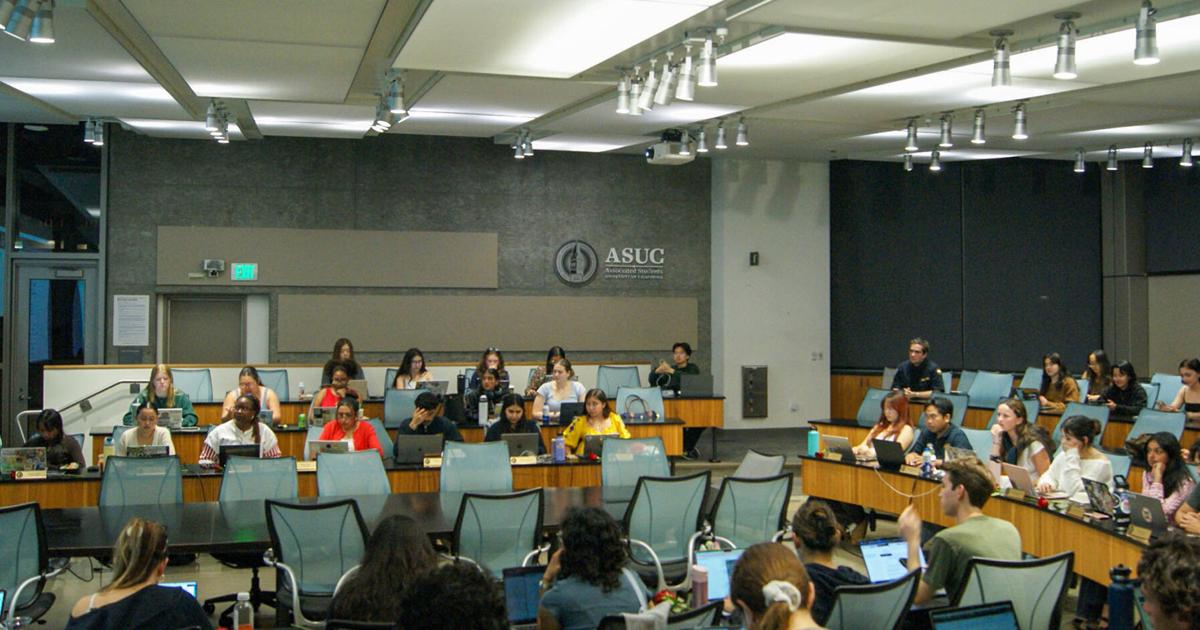
ASUC officials reported that they were denied a public meeting with the UC Berkeley Foundation Board of Trustees to discuss the campus’s divestment from companies that produce military weapons.
In April’s ASUC election, a majority of students — 74.81% — voted to pass a referendum calling for disclosure and divestment of all of the foundation’s material holdings in companies producing mass surveillance and military weapons technology.
Passing the referendum did not mean the foundation would automatically divest, but ASUC leaders said it indicated the general sentiment of the student body. The ASUC stated it would encourage UC Berkeley Chancellor Rich Lyons to meet with the foundation and “present these findings in favor of divestment.”
On May 22, five ASUC officials, including outgoing President Abigail Verino and Executive Vice President Isha Chander, posted with STEM4Palestine on Instagram that they had been denied a public meeting with the Foundation for the fall of this year.
“The UC Berkeley Foundation has a responsibility to be accountable to the campus community,” the post reads. “Instead, they want to meet behind closed doors and quietly make decisions that will continue to uphold the status quo, just like they did after the 2024 encampment.”
According to the post, Verino and Chander met with Rosemary Kim, the chancellor’s chief of staff, who said the Foundation had “zero influence” in the Berkeley Endowment Management Company’s investment decisions. The Berkeley Endowment Management Company is a subsidiary of the UC Berkeley Foundation that manages campus’s investment of endowment funds.
Campus spokesperson Dan Mogulof clarified in an email that while the foundation may not be involved in specific investment decisions, it “most certainly” has influence on investment policy.
The foundation conveyed through Mogulof that it previously deliberated divestment in 2024 and issued a report about its findings, adding that it has “no additional comment to offer beyond all that is in the 2024 report.”
Outgoing ASUC Senator Abdullah Memon, who was a co-sponsor of the ASUC referendum bill, compared the call for divestment from weapons manufacturing to the UC system’s divestment from fossil fuels. The ASUC made a similar push for fossil fuel divestment in 2013, passing a student referendum in support of the initiative, and UC announced it had fully divested in 2020.
Memon said he felt weapons manufacturing divestment was a “tougher ask,” citing pressures from President Donald Trump’s administration and the fact that the Foundation chose not to divest in 2024.
“If we do continue to have coordinated organizing and sustained pressure, I think this is something that is possible,” Memon said.
ASUC President-elect Margaret Solomon said she plans to leverage her position and keep pushing for divestment when she takes office in the fall, particularly by attending foundation meetings and continuing to reach out to members of the administration.
“Our administration is always going to do whatever protects their pocket,” Solomon said. “It’s a huge push from all of us as a student body to make sure there is that push for it, but I don’t think they’re currently in the space where they’re interested in hearing about it.”