
For more than three decades, Chula Vista has chased the dream of becoming a university city. The dream is not foolish. It is overdue. A city of our size, workforce, youth population, location and binational identity should not have to beg for proximity to four-year higher education.
But when a dream substitutes for judgment, it can become a dangerous pursuit.
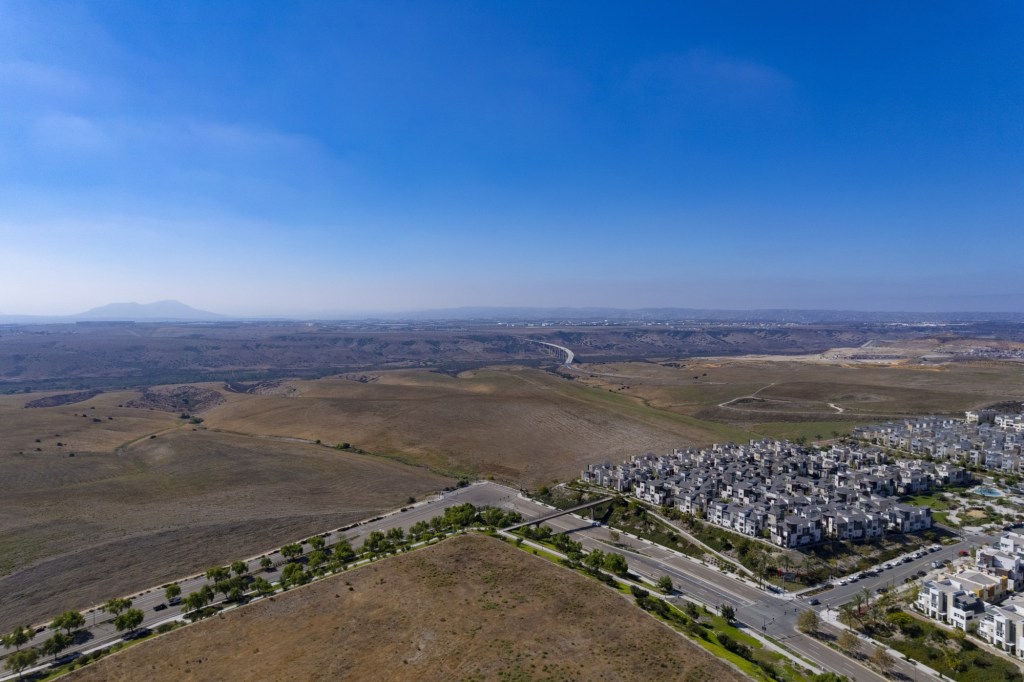
Chula Vista now has something rare: public land with civic meaning and long-term strategic value. The city’s university initiative, including the possibility of a generous long-term land lease, gives Chula Vista real leverage. A new planning effort is also exploring what it would take to bring a four-year public university presence to the South Bay.
That means the question is no longer simply whether Chula Vista deserves a university. The harder question is: What kind of university deserves Chula Vista?
That question should be asked with urgency, skepticism and civic self-respect. For years, the public conversation has been wrapped in hopeful language about access, opportunity, workforce development, innovation, equity and regional prosperity. These are good words. But they can become wallpaper when they cover the absence of a hard financial model, a precise academic identity and an honest answer to what Chula Vista is actually trying to build.
The city should not give away its most valuable land opportunity to the first institution willing to plant a flag. Nor should it confuse a few classrooms, offices, or satellite programs with the creation of a serious university ecosystem. Chula Vista does not need a ceremonial campus. It does not need a vanity project. It does not need a sleepy branch site where a sign is installed, dignitaries cut a ribbon and residents are told to be grateful. Chula Vista needs an institution that is durable, accountable and built around the actual future of the South Bay.
The cautionary tale is all around us. Across the country, small colleges have been closing at an alarming pace, especially institutions that were tuition-dependent, undercapitalized, enrollment-fragile and vague in their market position. Many had noble missions. Many served communities that loved them. Mission did not save them from math. Declining enrollment, high operating costs, weak reserves, deferred maintenance, debt and unclear strategic identity proved fatal.
Chula Vista must not import that problem onto public land. A dollar-a-year lease, or any similarly generous public arrangement, is not merely an incentive. It is a public subsidy. It is the transfer of opportunity from taxpayers to an educational operator. That may be wise, but only if the public receives something concrete in return.
So, what should occupy the space?
First, the university should be public or public-serving in substance, not merely public-adjacent in branding. A multi-institution model involving public partners may be promising, but only if it does not become bureaucratic fog. Students should know where they are enrolled, who grants their degree, who governs the curriculum, how financial aid works, where student services are delivered and who is accountable when something goes wrong.
Second, the academic portfolio must be disciplined. Chula Vista should not build a generic liberal arts campus and hope enrollment follows. The region needs targeted, high-demand programs connected to South County and the larger regional economy: nursing and allied health, teacher education, bilingual education, cybersecurity, data science, engineering technology, environmental science, climate resilience, public administration, logistics, biotech support fields, cross-border commerce, urban planning, social work, behavioral health, and applied artificial intelligence. Not everything belongs in the first wave. A serious university says no to many things so it can say yes to the right things.
Third, the school must serve local students first without becoming academically provincial. South County families know the burden of commuting, housing costs, work schedules, and family obligations. But access alone is not enough. A weak institution nearby is not better than a strong institution farther away. Chula Vista should demand both access and excellence: transparent graduation and retention targets, strong transfer pathways from Southwestern College, dual-enrollment alignment with local high schools, paid internships, employer commitments and advising that begins before students are lost.
Fourth, the university should be binational by design. Chula Vista sits in one of the most important cross-border regions in North America. Any institution that fails to understand Tijuana, Baja California, border commerce, bilingual labor markets, immigration realities, environmental interdependence and cross-border health issues is not worthy of the site.
Finally, the institution must be financially boring. Before Chula Vista grants land on generous terms, the public should see a credible financial model. Who pays for buildings, maintenance, student services and debt? What happens if enrollment misses projections? What are the clawback provisions? What are the teach-out obligations? What public benefits are enforceable?
The university initiative deserves support only if it becomes more than a dream with land attached. It must become a disciplined civic bargain: public land in exchange for public value, a long-term lease in exchange for accountability, academic prestige in exchange for local access, and workforce development in exchange for real jobs.
Chula Vista has waited long enough for a university. But waiting a long time is not an argument for lowering our standards. It is the reason to raise them.
Korgan, Ph.D., is a higher education consultant, realtor and civic leader in Chula Vista.