
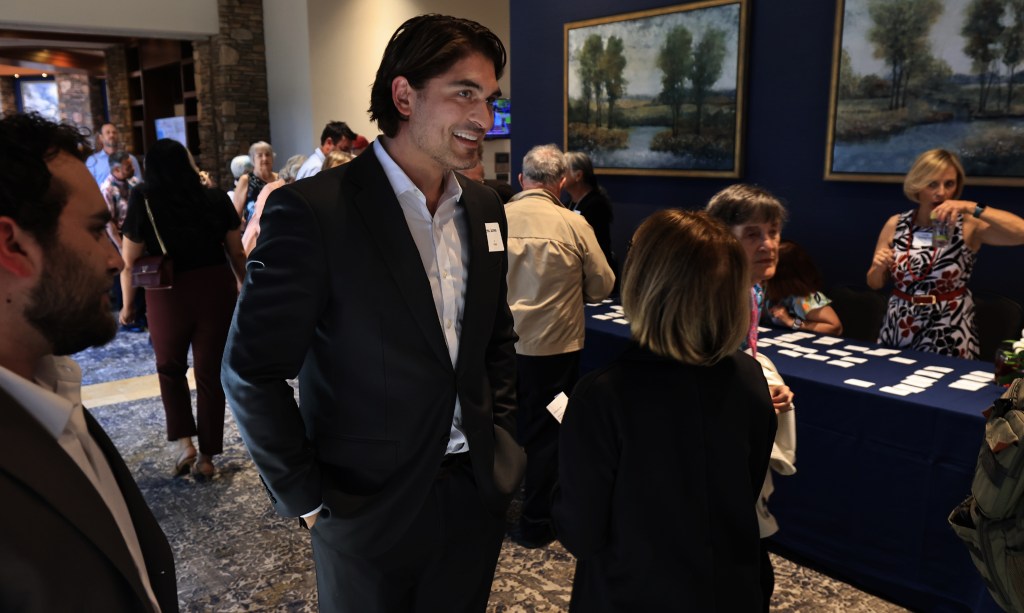
Eric Jones’ bid to unseat 14-term incumbent Rep. Mike Thompson in California’s 4th Congressional District got a huge boost in April and May when the challenger reported a pair of campaign deposits totaling $5 million. The source of the money was notable, if not entirely surprising.
It was Jones himself.
The former venture capitalist made a $4.8 million campaign contribution on April 22, and an additional donation of $200,000 on May 21. Along with the roughly $350,000 he had already contributed, they represent game-changing figures for a House of Representatives campaign that has received about $3 million total from other sources — in itself an arresting amount of money for a first-time candidate taking on a firmly entrenched Congress member. Both are Democrats.
And while many well-resourced political candidates have helped to fund their own ambitions — billionaire Tom Steyer is setting new benchmarks for that in the race for California governor — Jones is doing it differently. Most make that money available through loans that may eventually be paid back by their campaigns. Jones’ contributions have been gifts.
The candidate told The Press Democrat his personal spending was a reaction to corporate Super PACs dropping millions of dollars in support of his opponent, helping to fund attack ads.
“Rachel and I have committed to giving all our money away. We have already started that process,” Jones said, referring to his wife, their family foundation and other nonprofits they’re involved with. “But this is about political change. And something much greater than either of us. We’re driving change for everyday Americans who have been left behind.”
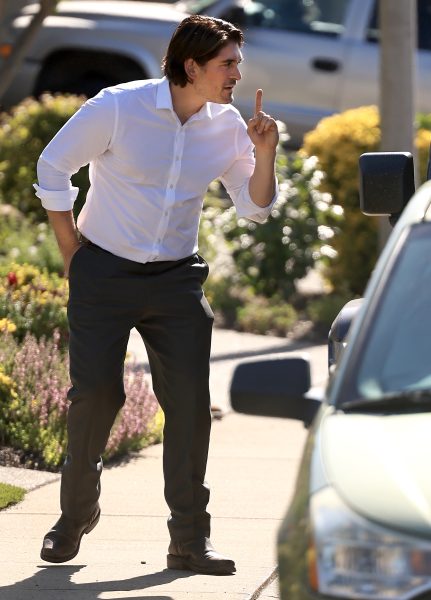 Eric Jones, Democratic challenger in the 4th Congressional District, signals to his campaign chief of staff Nick Sanitsky his intent to talk with one more prospective voter as he canvases a neighborhood in Lincoln, Wednesday, May 20, 2026. (Kent Porter / The Press Democrat)
Thompson has raised just under $3.5 million this cycle; he hasn’t contributed any of his own money.
The influx left Jones with nearly $4.3 million in cash on hand as of Friday, compared to Thompson’s $1.7 million, with only days to spare before Election Day in the June 2 primary. That means voters can likely expect a deluge of eleventh-hour ads in a race that has grown increasingly testy and personal.
And under California’s top-two rules, both will proceed to the November runoff if the two Democrats finish 1-2 in the primary, assuring there will be more of the same over the next five months.
Ads from both sides are already stacking high.

Eric Jones, candidate for California’s 4th Congressional District, campaigns in Sonoma on April 26, 2026. (Jones for Congress)

Eric Jones, middle, the Democratic challenger in the 4th Congressional District, talks with, from left, Harriet Kroot, Linda Derosier and Dudley Adair as he makes an appearance at a Placer County Democratic Party fundraiser in Lincoln, Wednesday, May 20, 2026. (Kent Porter / The Press Democrat)

Eric Jones, Democratic challenger in the 4th District Congressional race, makes an appearance at a Placer County Democratic Party fundraiser in Lincoln, Wednesday, May 20, 2026. (Kent Porter / The Press Democrat)
AP Photo/Joshua A. Bickel, File
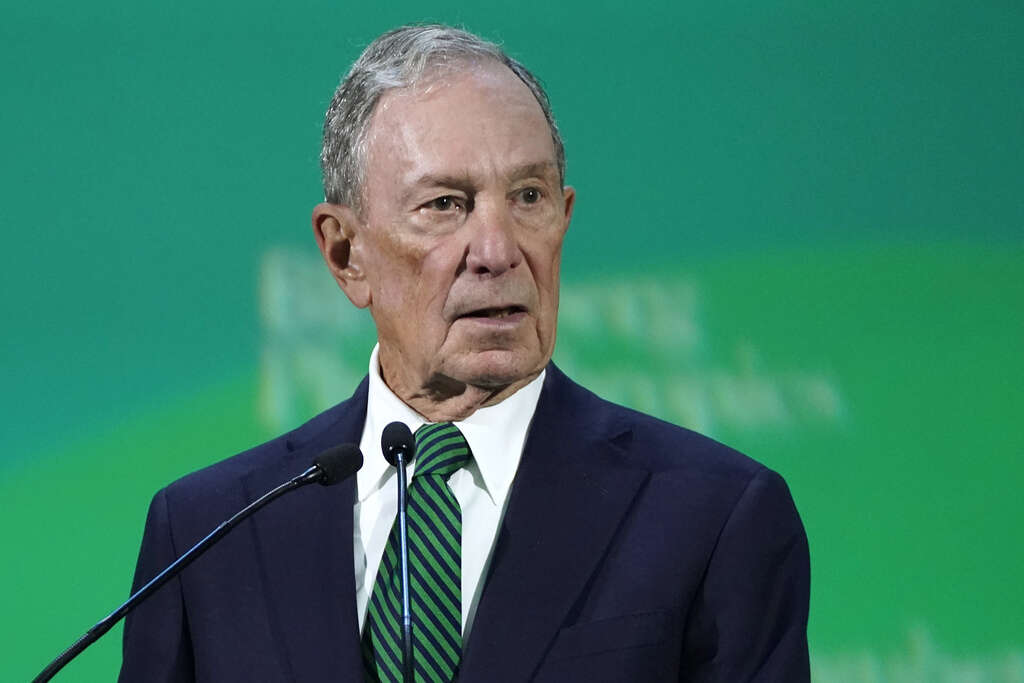
FILE – Michael Bloomberg, founder of Bloomberg Philanthropies and Bloomberg L.P, speaks at the COP28 U.N. Climate Summit, Dec. 1, 2023, in Dubai, United Arab Emirates. Bloomberg Philanthropies said Tuesday, Aug. 6, 2024, it will give $600 million to the endowments of four historically Black medical schools. (AP Photo/Joshua A. Bickel, File)
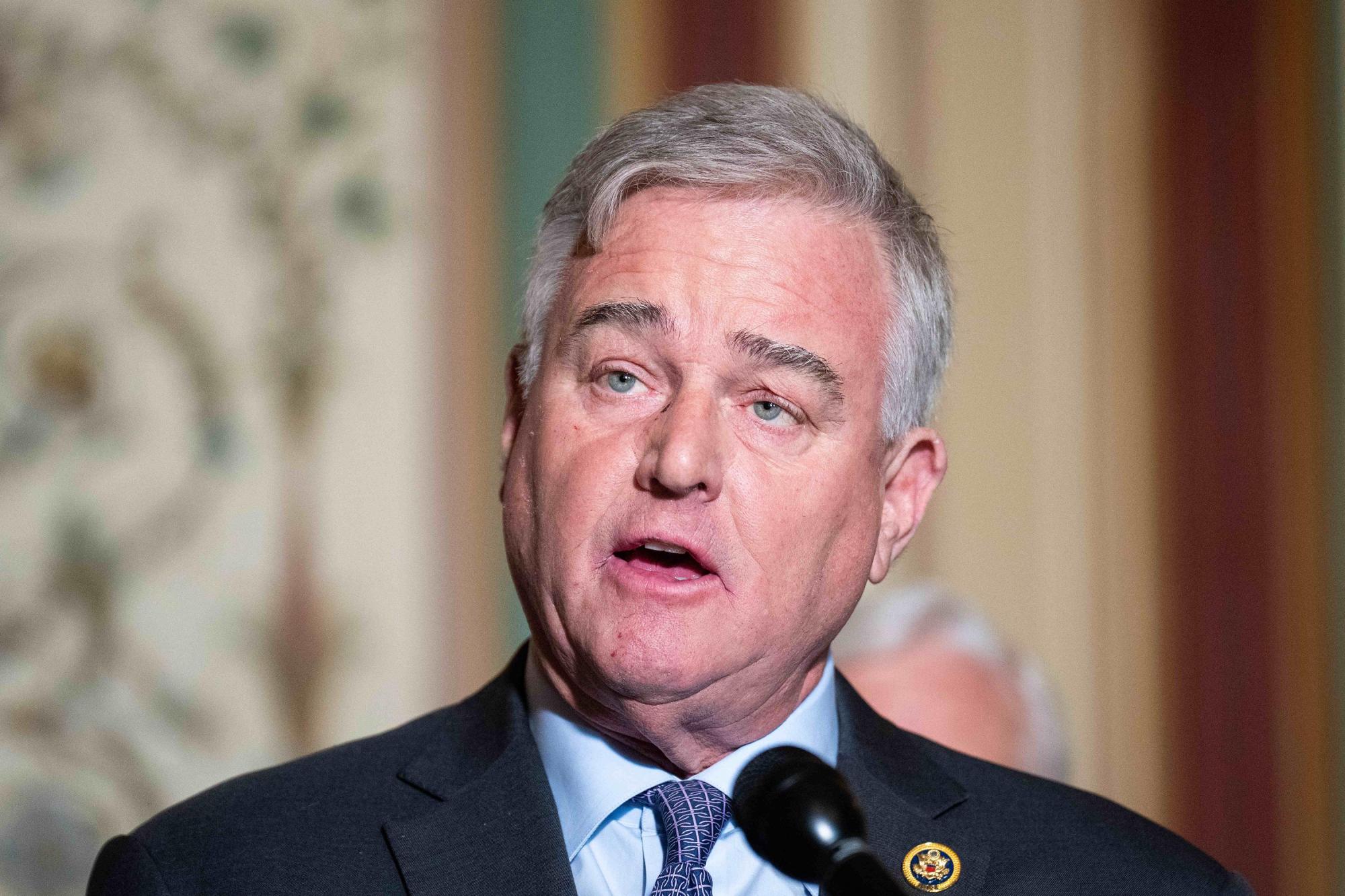
David Trone, D- Md., speaks during the news conference following the Maryland delegation’s meeting on the federal response to the Francis Scott Key Bridge collapse in the U.S. Capitol in Washington on April 9, 2024. (Bill Clark/CQ Roll Call/ZUMA Press/TNS)
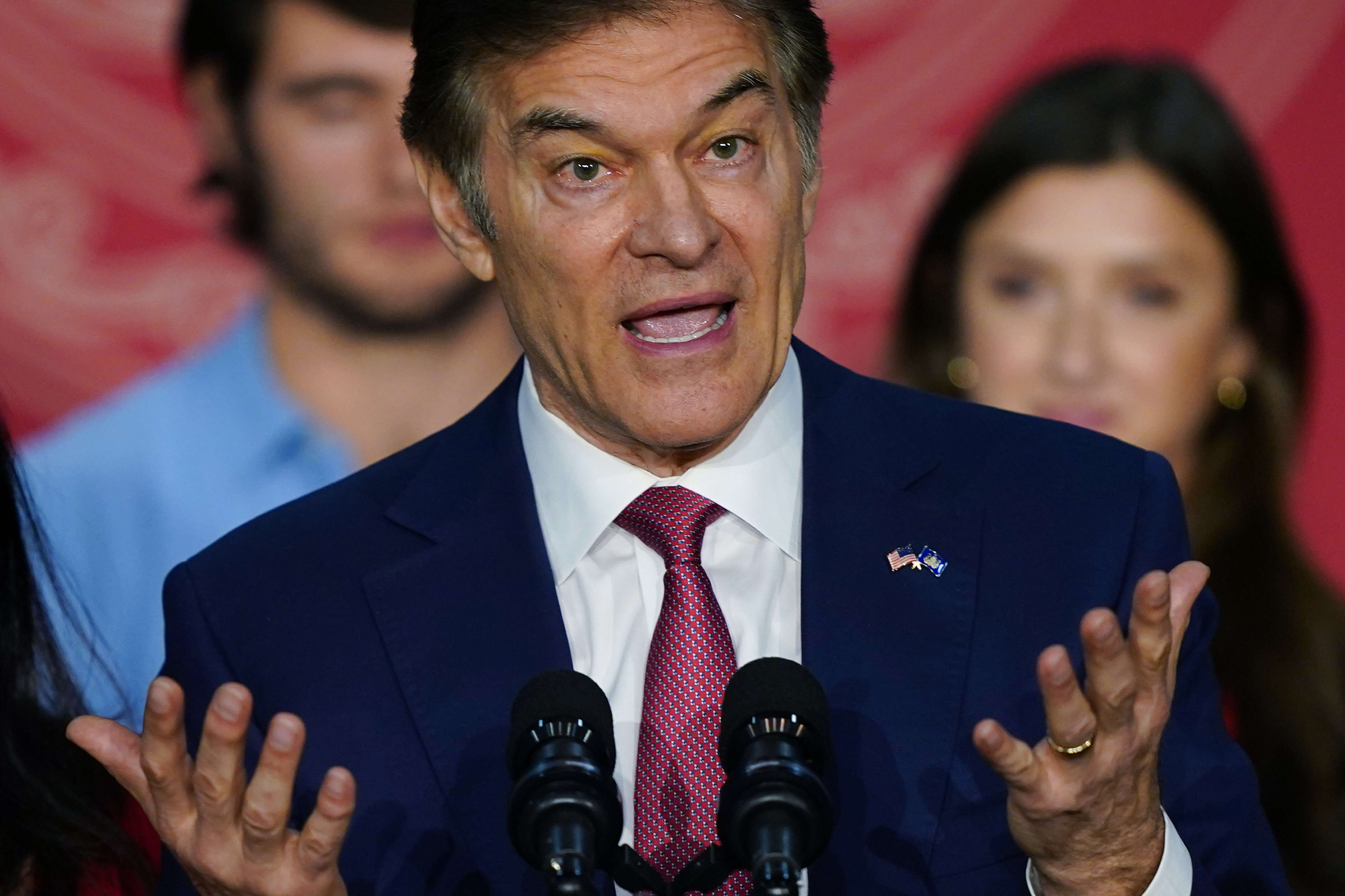
AP Photo/Matt Rourke
Mehmet Oz, the Republican candidate for U.S. Senate in Pennsylvania, speaks at an election night rally in Newtown, Pa., Tuesday, Nov. 8, 2022. (AP Photo/Matt Rourke)
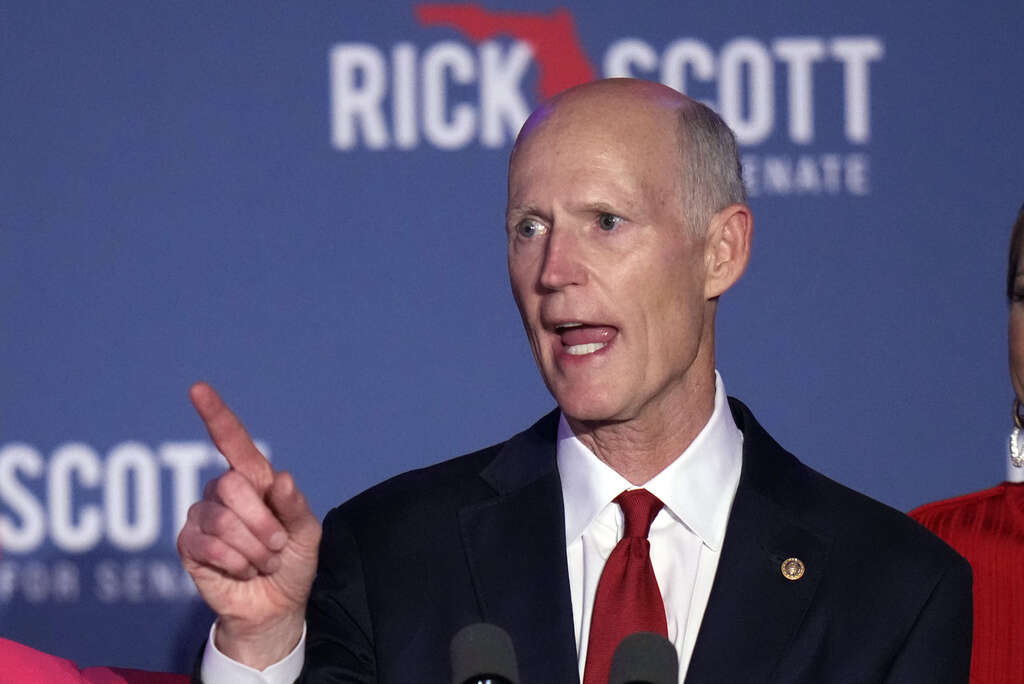
AP Photo/Chris O’Meara
Sen. Rick Scott, R-Fla., speaks at a campaign watch party on election night Tuesday, Nov. 5, 2024, in Bonita Springs, Fla. (AP Photo/Chris O’Meara)
Show Caption
1 of 7
Eric Jones, candidate for California’s 4th Congressional District, campaigns in Sonoma on April 26, 2026. (Jones for Congress)
Over the past few days, District 4 residents received eight to 10 mailers supporting Jones and nearly as many from the Thompson campaign. The majority of those have been attack ads leveled at the opposition.
Thompson’s campaign, for example, alleged that Jones’ former employer, Dragoneer Investment Group, seeded “online gaming companies accused of exposing kids to sexual predators,” and that the challenger lied about his ties to the investment firm. A pro-Jones political action committee called New Leadership Now accused Thompson of fighting for Wall Street, Big Pharma, PG&E and insurance companies rather than “hardworking families,” and of being the “least effective Democrat” in Congress.
New Leadership Now, an independent political committee funded primarily by the wife of Dragoneer’s founder, has itself become a source of contention in the race. Jones, who has touted his refusal to take money from PACs, has sought to distance himself from that committee.
“San Francisco venture capitalist Eric Jones is spending the money he made from investments in companies that endanger children online and prey on seniors,” Thompson’s campaign said in a written statement to The Press Democrat. “But this district isn’t for sale; voters understand that instead of venture capital profits, Mike Thompson brings a record of standing up to Donald Trump and his entitled millionaire friends.”
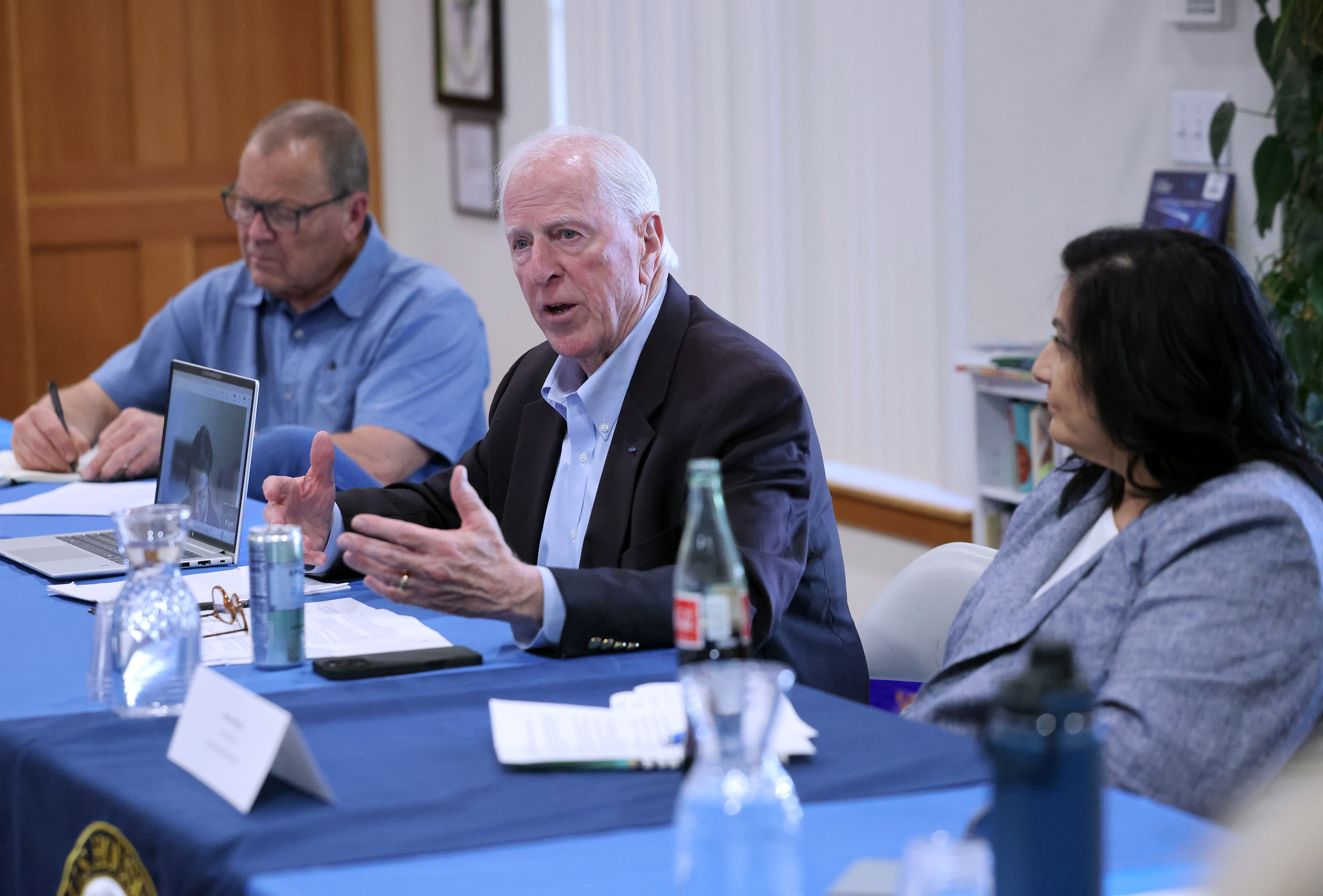
U.S. Rep. Mike Thompson attends the Sonoma Valley Affordability Roundtable at Springs Village Apartments in Sonoma Monday, March 23, 2026. (Beth Schlanker / The Press Democrat)
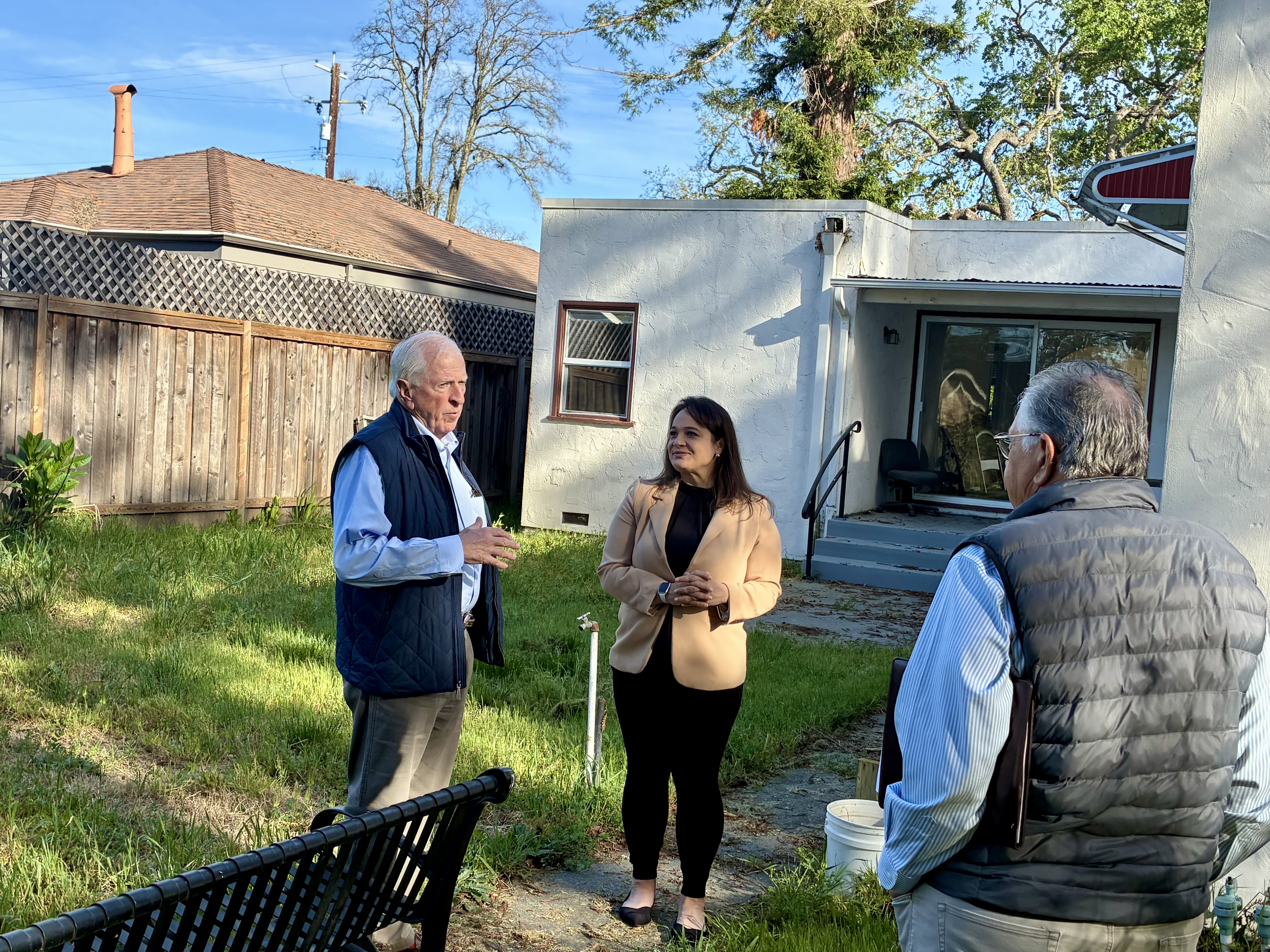
U.S. Rep. Mike Thompson talks about a Catholic Charities project in Santa Rosa with Jennielynn Holmes, CEO of the organization in Northwest California, and board member Dennis Harter. PHIL BARBER / THE PRESS DEMOCRAT

Congressman Mike Thompson talks to a mom on her way to buy baby formula along busy Hwy. 12 north of Sonoma. In the foreground is Sonoma County Supervisor Rebecca Hermosillo. PHIL BARBER / THE PRESS DEMOCRAT
Show Caption
1 of 3
U.S. Rep. Mike Thompson attends the Sonoma Valley Affordability Roundtable at Springs Village Apartments in Sonoma Monday, March 23, 2026. (Beth Schlanker / The Press Democrat)
In a financial disclosure report filed with the Clerk of the House of Representatives in January, Jones revealed assets and “unearned income” of anywhere from $18 million to $86 million — candidates are allowed to report a range — and income of $8 million from Dragoneer in the preceding year.
His self-funding is nothing new in American politics, though the trend seems to be on the rise.
It reached new heights during the 2020 presidential election, when Democratic candidate Michael Bloomberg flooded his campaign with over $1 billion of his own wealth. Steyer, another Democrat in that field, spent close to $350 million in his 2020 bid and has contributed at least $213 million to his run for governor. Also in 2020, Georgia Republican Kelly Loeffler contributed about $23.7 million to her U.S. Senate campaign.
In the 2021-22 election cycle, Pennsylvania Republican Mehmet Oz, currently President Donald Trump’s administrator of the Centers for Medicare & Medicaid Services, spent $26.8 million on an unsuccessful Senate run, and two other Senate candidates — Arizona Republican Jim Lamon and Ohio Republican Mike Gibbons — boosted their campaigns with more than $18 million each.
The dollars stacked higher again in 2023-24, typical of a presidential election cycle.
Top self-spenders during that period included Maryland Democrat David Trone ($62.9 million), Florida Republican Rick Scott ($25.6 million), Wisconsin Republican Eric Hovde ($20 million), Republican Doug Burgum ($14 million) and Ohio Republican Matt Dolan ($10.1 million). Burgum, now Trump’s Interior secretary, was running for president; the others were gunning for Senate seats.
As evidenced by those numbers, races for seats in the House of Representatives don’t tend to attract as much money, including direct funding from candidates. That doesn’t mean House candidates are paupers.
In 2019-20, Texas Republican Kathaleen Wall coughed up $9.2 million in personal funds for her campaign, California Democrat Sara Jacobs spent $6.9 million, California Republican Darrell Issa $5.9 million and New York Democrat Adam Schleifer $5.2 million, all for House seats.
In 2021-22, David Trone spent $9.9 million and Michigan Democrat Shri Thanedar spent $6.2 million in their House races.
All of these numbers are from OpenSecrets.org, a nonprofit organization that tracks political spending.
In 2023-24, according to direct Federal Elections Commission data, the biggest self-contributions in House races came from Trone ($62.9 million), Nevada Independent Greg Kidd ($9.2 million), Oklahoma Republican Paul Bondar ($5.7 million), Shri Thanedar again ($5.3 million) and Indiana Republican Charles Goodrich ($4.6 million).
Dollar amounts for the current election cycle are harder to aggregate.
The FEC has compiled lists of top congressional self-contributors, but the agency’s most recent updates run only through Dec. 31.
At that time, Eric Jones had donated $364,000 to his budding District 4 run. That self-spending ranked 37th among House challengers at the time; five incumbent U.S. representatives also had spent more than Jones, as had eight Senate candidates.
Jones’ donations were barely a blip on the national screen.
His recent deposits have changed that. To get a more accurate picture, The Press Democrat reviewed more recent FEC records for the 17 House candidates who had given $1 million or more to their own campaigns through the end of 2025.
By March 31, New York Democrat Peter Chatzky had floated a total of $11.3 million in loans to his campaign, while Maryland Democrat David Trone had provided his campaign with $10 million in loans and $406,000 in gifts.
Jones’ contributions had surpassed the other 15 candidates.
And he might be the biggest outright House spender if you exclude loans. Of those other 17 House candidates, only one — California Republican Michelle Steel — had given a substantial portion outright.
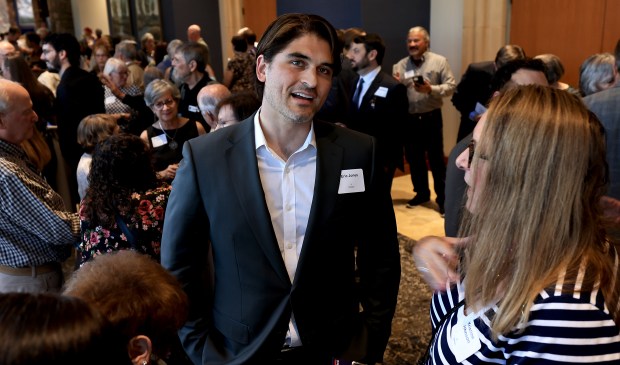 Eric Jones, Democratic challenger for the 4th Congressional District, talks with Kristine Johnson as he makes an appearance at a fundraiser in Lincoln, Wednesday, May 20, 2026. At left is campaign chief of staff Nick Sanitsky. (Kent Porter / The Press Democrat)
“Loans are common because once you’re in office, raising money becomes much easier and you can get paid back. And that money is either from supporters or from special interests,” Jones argued. “Rachel and I decided to do this as a gift, because once our polling told us we were going all the way to November, we wanted to assure all of our supporters and everyone on the team that we have the resources to fight all the way to the general election.”
But any analysis is likely incomplete, because most of the FEC financial summaries are capped at March 31. If other candidates made recent cash or loan infusions, as Jones did, they probably wouldn’t show up there.
Easily missed in the data is a fact that might prove daunting to challengers with deep pockets: They usually lose.
From 2019 through 2024, 165 political candidates spent $1 million or more of their own money, according to OpenSecrets accounting. Of those, 45 won their races. That’s a 27% success rate. Bloomberg and Steyer lost their 2020 presidential bids. Of the top 13 self-funding candidates in the 2023-24 cycle, five failed even to make it out of their primaries.
Jones thinks he can buck the trend.
“Look at those campaigns, and see how much outside money they raised,” he said. “Not a lot, in most cases. And how many of those self-funders were 35 years old, with two young kids and two working parents? Those patterns don’t fit me.”
The $5 million the Joneses gave his campaign, the candidate said, is “to seal the deal, and take us all the way to November.”
You can reach Phil Barber at 707-521-5263 or phil.barber@pressdemocrat.com. On X (Twitter) @Skinny_Post.