
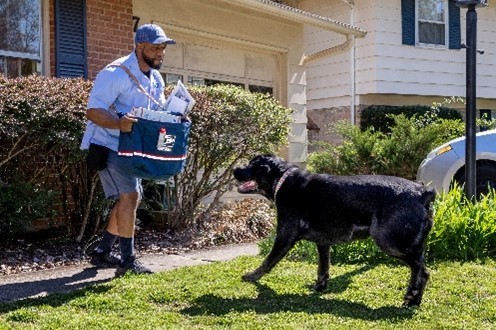
California mail carriers were attacked by dogs more than 600 times last year — more than in any other state, the United State Postal Service announced.
San Francisco and Oakland both ranked in the top 33 affected cities, the USPS said, with 16 incidents in San Francisco and 27 in Oakland in 2025. Other California cities were higher on the list of offenders: San Diego came in eighth, while Los Angeles topped the nationwide list with 70 attacks.
Dogs can act unpredictably when they’re startled by mail carriers or when they feel called to protect their territory, the USPS said. But when dogs attack postal workers, their owners can be on the hook for thousands of dollars to cover the costs of their medical care, damaged clothing, lost shifts and emotional distress.
“I was walking my route when a dog jumped the fence and lunged at me,” said San Antonio mail carrier Fiona Hudson. “I used my dog repellent and mail bag to defend myself, but it was too late.”
Hudson said she suffered a broken bone, a severe arm sprain and lasting emotional trauma. She advised customers to “take responsibility and secure their dogs during delivery hours.”
The USPS recommends owners keep their dogs in closed rooms before they open the door to mail carriers, use a leash if their dog is outside during delivery, and never accept mail directly from a carrier in the dog’s presence, which dogs can interpret as a threat.
Mail carriers are trained to avoid canine attacks by announcing their entry to yards on their route, avoiding petting the animals and, if necessary, deploying dog repellent and using their mail bags as shields.
Mail service can be temporarily suspended if a carrier feels threatened by a dog, the USPS said. In these cases, residents must pick up their mail from a local post office until the issue is resolved.
“Every single day, our postal employees serve their communities across dynamic, fast-changing environments,” said Leeann Theriault, the USPS’ employee safety and health awareness manager. “Preventing dog-related incidents requires constant, shared vigilance.”