
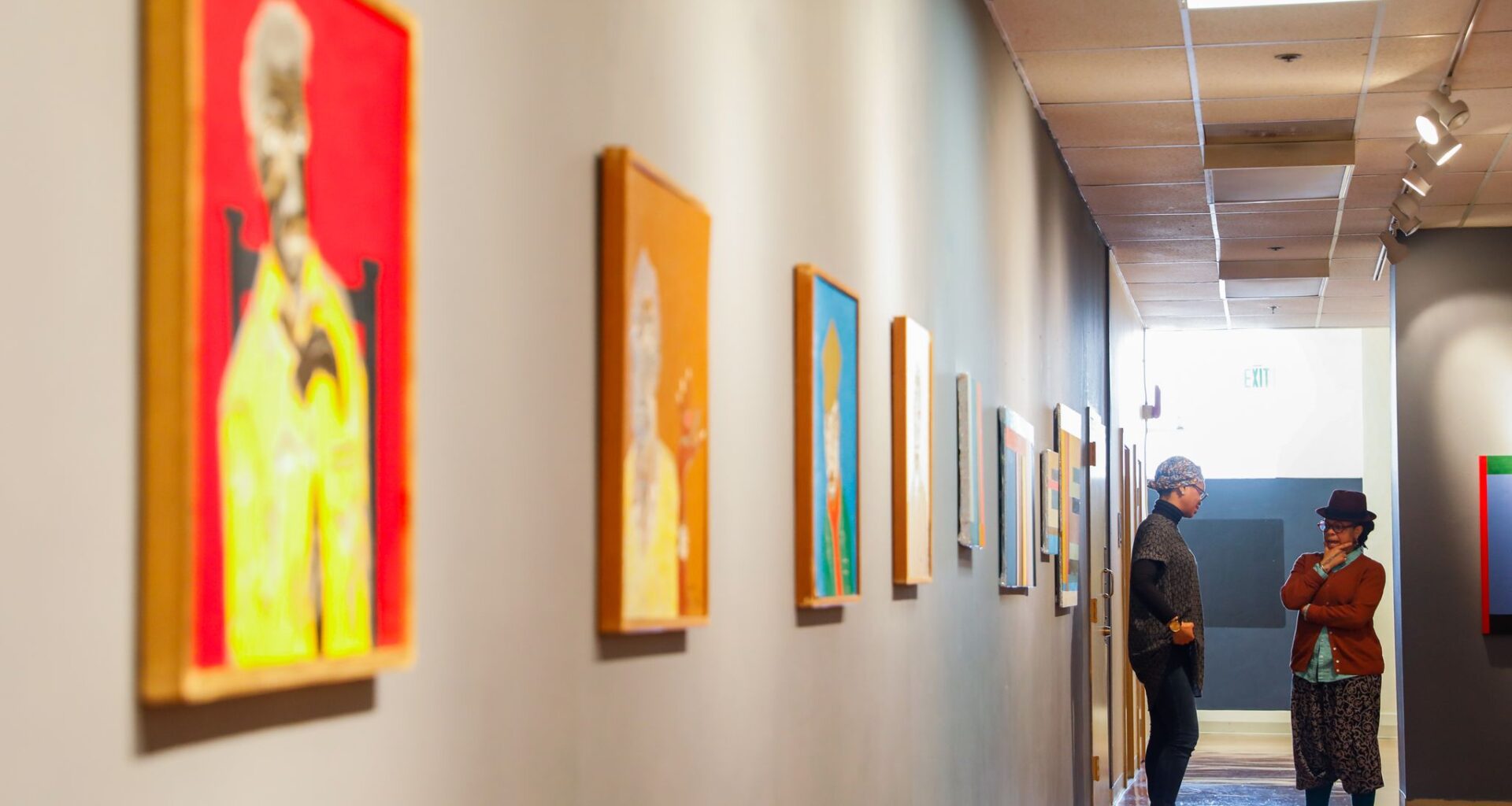
The African-American Art and Culture Complex in San Francisco, shown in 2019, has a new leader.
Gabrielle Lurie/The Chronicle
A longstanding San Francisco cultural center has a new leader.
Former City College of San Francisco Board Member Murrell Green has been selected to serve as the executive director of the African American Arts and Culture Complex, or AAACC, a city-owned cultural center at 762 Fulton St. that in recent years has faced scrutiny of its city contracts.
He succeeds interim leadership that stepped in following the departure of the center’s prior co-executive directors, twin sisters Melonie and Melorra Green (no relationship to Murrell Green) who resigned last summer amid a city audit of the the center’s finances and the city’s oversight of the nonprofit.
Article continues below this ad
For much of the past year, the center’s operations have been managed by interim director Niquole Esters, who will remain with the organization during Murrell Green’s onboarding. He is expected to start on July 6.
According to a statement issued by the center’s board of directors on Monday, Green has “longstanding ties” to AAACC, where he previously worked as an office manager and youth leader.
San Francisco Chronicle Logo
Make us a Preferred Source to get more of our news when you search.
Add Preferred Source
A native of the Fillmore and Western Addition neighborhoods, Green recently served as Dean of Counseling and Wellness Services within the California Community College system. He was appointed to the CCSF board in 2022 by former Mayor London Breed — who, prior to her rise in politics, oversaw the AAACC as executive director in the early 2000s for nearly a decade— but stepped down two years later, a few months before the end of his term.
“I return in service to a community that poured into me long before I ever carried a title,” Green said in a statement. “The Fillmore and Western Addition did not merely raise me; it shaped my consciousness, my purpose, and my responsibility to our people.”
Article continues below this ad
Green was selected after a six-month open recruitment process that drew over 300 applications for the job, according to the AAACC board.
“Following a thoughtful and community-centered search, it became clear that Dr. Green brings the vision, experience and deep relationships needed to lead AAACC into its next chapter,” said AAACC Board President Ayo Suber, who added that Green’s leadership will help to ensure that the center remains a “safe” and accessible” space for the local community during what she described as “ challenging times for the arts, for the Black community, and for the Western Addition.”
Green told the Chronicle that he was twice previously encouraged to apply for a leadership role at the center.
“I thought that this was a good time for me, regardless of the status of the cultural center, to come home, and really try to make a positive change for my community,” he said.
The audit of the center’s finances under its previous leadership was requested by the Arts Commission — which has provided a majority of the $11 million that the AAACC received since the start of the pandemic — several years ago and has yet to conclude, city officials confirmed to the Chronicle. Green acknowledged that he is stepping in at a complicated time for the center, but said “that’s nothing new” for the Fillmore and Western Addition communities.
Article continues below this ad
“We’ve been going through adversity long before I was born,” Green said. “These are obstacles that are in front of us that I think we can heal.”
Green is taking the helm of the AAACC as it and other neighborhood cultural anchors are being pulled into a broader city-led effort to stabilize the area’s commercial ecosystem, even as questions persist about how effective San Francisco has been on delivering on decades-old promises to preserve and sustain Black cultural life in the Fillmore and surrounding Western Addition.
City officials and community stakeholders moved this month to re-activate programming and address years of vacancy at the Fillmore Heritage Center, which served as the home of nightclub Yoshi’s in the years leading up to the pandemic. Meanwhile, the Recreation and Parks Department was selected to reopen the Ella Hill Hutch Community Center, which shuttered abruptly last summer due to fallout from the Dream Keeper corruption probe.
While many of the neighborhood’s residents are pushing for Black stewardship of the neighborhood’s key cultural sites, Green said he views the city’s temporary involvement with the Heritage Center and Ella Hill Hutch as a net positive.
“I’m optimistic,” Green said. “What I’m seeing is an intentional effort for improvement, and that’s much different than hearing these centers are vacant and have no chance at survival.”
Article continues below this ad
Green said he will be focused on finding a new temporary home for AAACC’s programming, as the 34,000-square-foot facility is slated to shutter for mandatory seismic retrofit work by Jan. 1. It will be closed for at least 18 months.
With physical spaces limited in the neighborhood, Green said that he will be looking at partnerships with other organizations in the area to ensure that AAACC’s programming is not disrupted.