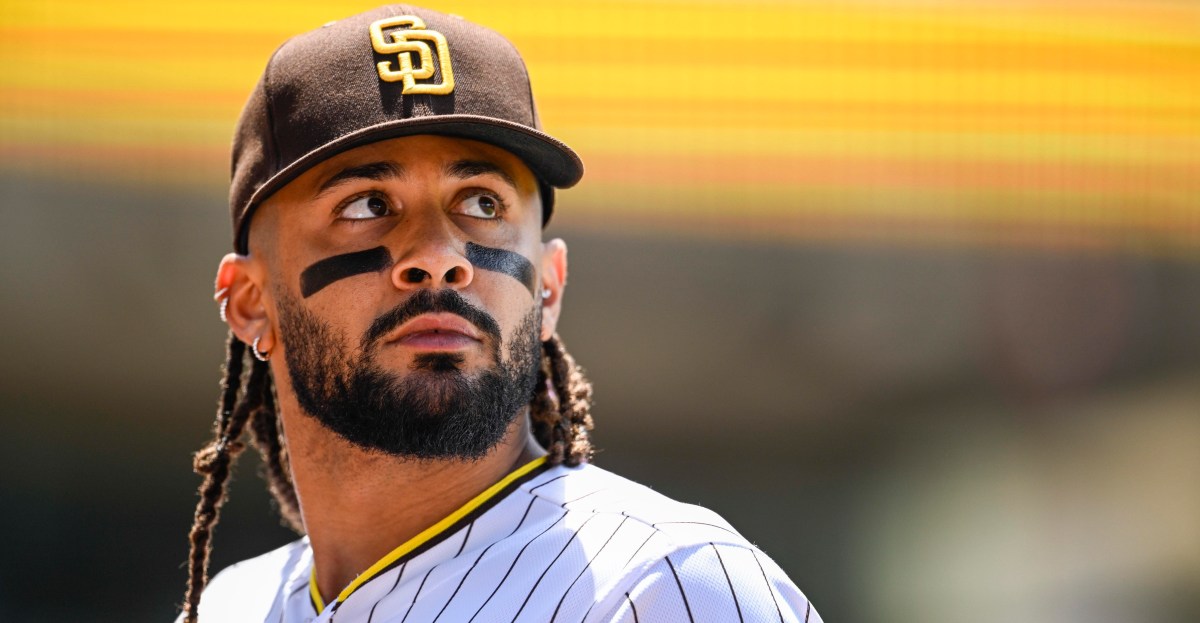
The New York Mets (27-35) say goodbye to the West Coast time zone with one final three-game set in California, this time against the San Diego Padres (32-29). This will be the first meeting between the two clubs in 2026 after the Padres took four of six last year, including all three at Petco Park. Since 2015, the Mets have lost 20 of 34 games they’ve played at Petco Park, although they’ve played San Diego to a .500 clip (16-16) overall in that stretch.
The Mets entered the series having lost five straight at Seattle’s T-Mobile Park, while the Mariners entered on a six-game winning streak overall. All the ingredients were there for the Mets to have a bad time, and for the most part they did with losses in the first two games (3-2 on Monday in ten innings, 8-3 on Tuesday), but they salvaged the finale with an impressive 7-1 win on Wednesday to halt their Seattle losing streak and end the Mariners’ eight-game winning streak.
The offense was a real sore point in the first two games, with all five runs coming via the homer. In Game 1, they managed just two hits—a Marcus Semien solo homer and a Jared Young solo shot. On Tuesday, the lone positive was Carson Benge collecting the first two-homer game of his young career as he continues to impress since the start of May. New York, who managed just nine runs over their seven-game losing streak in Seattle—you may remember that the Mets were swept there in 2024 while scoring just one run across the three losses during their mid-August slump—erupted for seven runs in the lineup thanks to a balanced offensive attack that was led by Bo Bichette’s first four-hit game as a member of the team. It was one of the more complete efforts they’ve had in a while, with seven of the nine starters picking up at least one hit. In addition to Bichette’s great game, AJ Ewing picked up three hits, while Jared Young and Luis Torrens each contributed two hits in the victory.
It seems like every time Bichette hits a real rut, he puts together one big game to temporarily silence the doubters. Following an 0-for-16 stretch, the team’s (momentary) shortstop strung together four hits, scored a run, and drove in three. It was a nice reprieve, but he’s still been one of the biggest hindrances in the lineup. He remains in the two-hole despite the struggles, and it’s fair to wonder when it might be time to start moving him down, especially to give guys like Ewing (who has also struggled, to be fair) some more time near the top of the lineup. This could give a young kid with speed some opportunities to create more runs for the club, but it remains to be seen if anything changes with the lineup.
Semien, who homered again in the first game, has been red hot as of late, even after coming off an 0-for-5 in the win. The biggest strength in his game so far has been his ability to drive in runs, as his numbers with runners in scoring position have been better than most of his teammates. With men in scoring position, Semien is slashing .340/.379/.420 with a 127 wRC+ in 50 at-bats this season. Comparatively, he’s hitting just .181/.235/.268 with a 45 wRC+ with nobody on base. At the very least, Semien is capitalizing when presented with an opportunity to contribute, even if his overall numbers are not good for the year. Since the start of the weekend series against the Marlins, he’s hitting .286/.348/.619 with two homers and a 171 wRC+ in the six games. Hey, it’s progress?
One player who has made very little progress as of late is Mark Vientos, who is putting together another poor showing after a great 2024 campaign, which has proven to be an outlier in an otherwise unimpressive major league career. On the year, Vientos is hitting .219/.254/.380 with a 78 wRC+ and a -0.6 fWAR in 53 games. Overall, he has been one of the least productive players in the sport, as his fWAR is ahead of only Marcell Ozuna in terms of qualified hitters in 2026. With Jorge Polanco on the rehab trail and set to resume first base duties if all goes well, Vientos’ spot on the roster could soon be in doubt. Beyond his inability to hit, he is also very slow and does not play any position well on the field. For more on Vientos’ shortcomings, I would direct you to Lukas Vlahos’ tremendous and comprehensive piece.
As one final aside, this will be the final time this season that the Mets have to play on Pacific Coast Time. In fact, the team does not go beyond the Central Time Zone again in 2026, and won’t unless they make a miraculous run to the postseason. It’s been a grueling and confusing schedule for New York, who had a six-game swing in St. Louis and San Francisco immediately after their opening weekend series, then returned home for six before heading straight out to Los Angeles and Chicago. Following a nine-game home stand, they again went out west for nine with Los Angeles (of Anaheim), Colorado, and Arizona. Following some recent travels within their division, they again embarked out west for Seattle and San Diego. I can only speculate as to what the schedule-makers were thinking here, but whatever it was, it wasn’t smart! It’s no excuse for the team’s poor play, but the constant ping ponging across the country has done little to help their efforts when most other teams have made no more than two west coast trips so far in 2026. On the bright side, this means they should, theoretically be more well-rested for the “stretch run”, should they not be too far out of it.
Whereas the Mets played a team in Seattle that was on a winning streak, they find San Diego on a downward trajectory as they enter the series on a five-game losing streak. After losing their last two games in May to the Nationals, they started June by getting swept in a three-game series against the Phillies. San Diego has now dropped into a second-place tie with the Diamondbacks in the National League West, 7 1/2 games behind the first-place Dodgers. They also find themselves out of the playoff picture, a half-game back of the third NL Wild Card spot.
San Diego, as an offense, is not performing all that much better than the Mets have been this season. In fact, both lineups enter play today with an 87 wRC+, though the Mets have scored 16 more runs (251) than the Padres (235). The Padres, to date, have scored the fewest runs as a team in all of baseball.
Much of that is due to the underperformance of the team’s core of stars, headlined by Fernando Tatis Jr. He enters this series hitting .270/.340/.323 with just one home run and a 94 wRC+ in a team-high 60 games, though he leads the club with a 1.1 fWAR. Then there’s Manny Machado, who is really struggling, hitting just .174/.262/.357 with a team-low 76 wRC+ among qualified hitters. This is all despite leading the team with 11 home runs, 29 runs scored, and 34 runs batted in. The team also recently DFA’ed Nick Castellanos, who was dead last on the club with a -0.8 fWAR and had a 53 wRC+ before being jettisoned off the roster. On a positive note, Ty France has had a solid season in San Diego, slashing .286/.328/.527 with a team-high 141 wRC+ and a 1.0 fWAR in 41 games.
Their pitching hasn’t been doing all that much better. Their rotation has a 4.55 ERA and a 4.44 FIP ( both 22nd in MLB). Just about the one area they excel at is relief, so if they have a lead late, it’ll be hard to come back. Their bullpen enters action with a 3.18 ERA, which is fourth best in baseball. This is mostly due to Mason Miller’s incredible performance this year, as the closer sports a sparkling 0.72 ERA with 17 saves and 49 strikeouts in 25 innings. Earlier this year, he had a 34 2/3 inning scoreless streak, the eighth-longest scoreless streak for a reliever since 1961.
Friday, June 5: Christian Scott vs. Michael King, 9:40 PM EDT on WPIX
Scott (2026): 30.1 IP, 38 K, 16 BB, 1 HR, 2.97 ERA, 3.10 FIP, 75 ERA-
It was a long time coming, but Scott finally earned his first major league victory in his 16th major league start. Scott was solid once again in his victorious effort, matching his season high with eight strikeouts while walking two and allowing one earned run on five hits over his five innings. Scott has been really strong in his last two starts, allowing just the one run over 10 2/3 innings, but both came against an offensively-challenged Marlins team, and the Padres will present a bigger challenge for the right-hander.
King (2026): 68.0 IP, 65 K, 29 BB, 6 HR, 3.18 ERA, 3.83 FIP, 81 ERA-
King’s numbers overall on the season are quite strong—among qualified National League starters, he’s 12th in ERA, 13th in HR/9 (0.79), 16th in K% (23.8%), 17th in bWAR (1.1), and 18th in FIP. However, his last two starts have not been good, with both resulting in losses. His last time out, he allowed five earned runs on five hits over six innings against the Nationals, a start that saw him walk one and strike out a season-low two batters. Prior to that, he allowed four earned runs on five hits in a season-low 3 2/3 innings against the Athletics. In that outing, he matched a season high by walking four batters and struck out four. Walks have been an issue for King, who has the second-worst BB% (10.6%) among qualified NL starters, trailing only Robbie Ray of the Giants.
Saturday, June 6: Nolan McLean vs. Griffin Canning, 10:10 PM EDT on SNY
McLean (2026): 66.1 IP, 77 K, 24 BB, 8 HR, 4.21 ERA, 3.79 FIP, 107 ERA-
McLean’s last start was encouraging, in so far as he didn’t give up seven-plus runs. However, there were still some reasons for concern. He allowed just one earned run on two hits over five innings, with the one run representing the fewest he’s given up in a start since May 8. The issue is that he walked a season-high five batters and only struck out two, which is decidedly not what you want from your budding ace. The positive that he was able to limit the damage, but he was constantly battling traffic and throwing stressful pitches. McLean remains a work in progress but is still one of their better options.
Canning (2026): 27.2 IP, 27 K, 15 BB, 6 HR, 7.16 ERA, 5.59 FIP, 183 ERA-
Canning has had a rough year in San Diego after performing relatively well with the Mets last year before suffering an Achilles injury that prematurely ended his time in New York. He’s yet to win a game while picking up four losses in his six games since debuting on May 3 for the Padres. His best outing was his season debut, as he limited the White Sox to one earned run on three hits while striking out a season-best seven. Since then, he’s allowed at least three earned runs in each of his five starts, including back-to-back outings in which he was tagged for six earned runs. He’s given up 28 hits and been charged with 22 earned runs in 27 2/3 innings while walking 15 and striking out 27. His last time out, he lost to the Nationals while giving up three earned runs on six hits over five innings.
Sunday, June 7: TBD (Likely Sean Manaea) vs. Randy Vásquez, 4:10 PM EDT on SNY
Manaea (2026): 39.0 IP, 42 K, 16 BB, 4 HR, 5.08 ERA, 3.82 FIP, 129 ERA-
The Mets have not announced Sunday’s starter, which will likely be an opener with Sean Manaea taking on the bulk of the work in the middle innings. This worked well for the left-hander and the Mets his last time out, as he enjoyed more success than he has in any single outing this year. Manaea, who did not factor in the decision, allowed just one earned run on one hits, with one walk and four strikeouts. Aside from a solo homer, he was fairly spotless. The five innings also represents a season high.
Vásquez (2026): 65.1 IP, 50 K, 18 BB, 9 HR, 3.31 ERA, 4.32 FIP, 84 ERA-
Vásquez has been enjoying his best numbers since joining San Diego in 2023 as part of the Juan Soto trade. He’s had some mixed results, especially to end May, when he allowed seven earned runs on 14 hits over his final tow starts to the Dodgers and the Phillies, both resulting in losses. He rebounded his last time out to limit Philadelphia to two earned runs on five hits over five innings, though he did not factor in the decision in an eventual loss. He does have one start in which he shut out the Rockies for seven innings, and another where he shut out the Mariners over six frames. Arguably his best start of the year was his debut outing on March 28, when he scattered two hits over six shutout innings against the Tigers, a start that also saw him punch out a season-high eight hitters.