
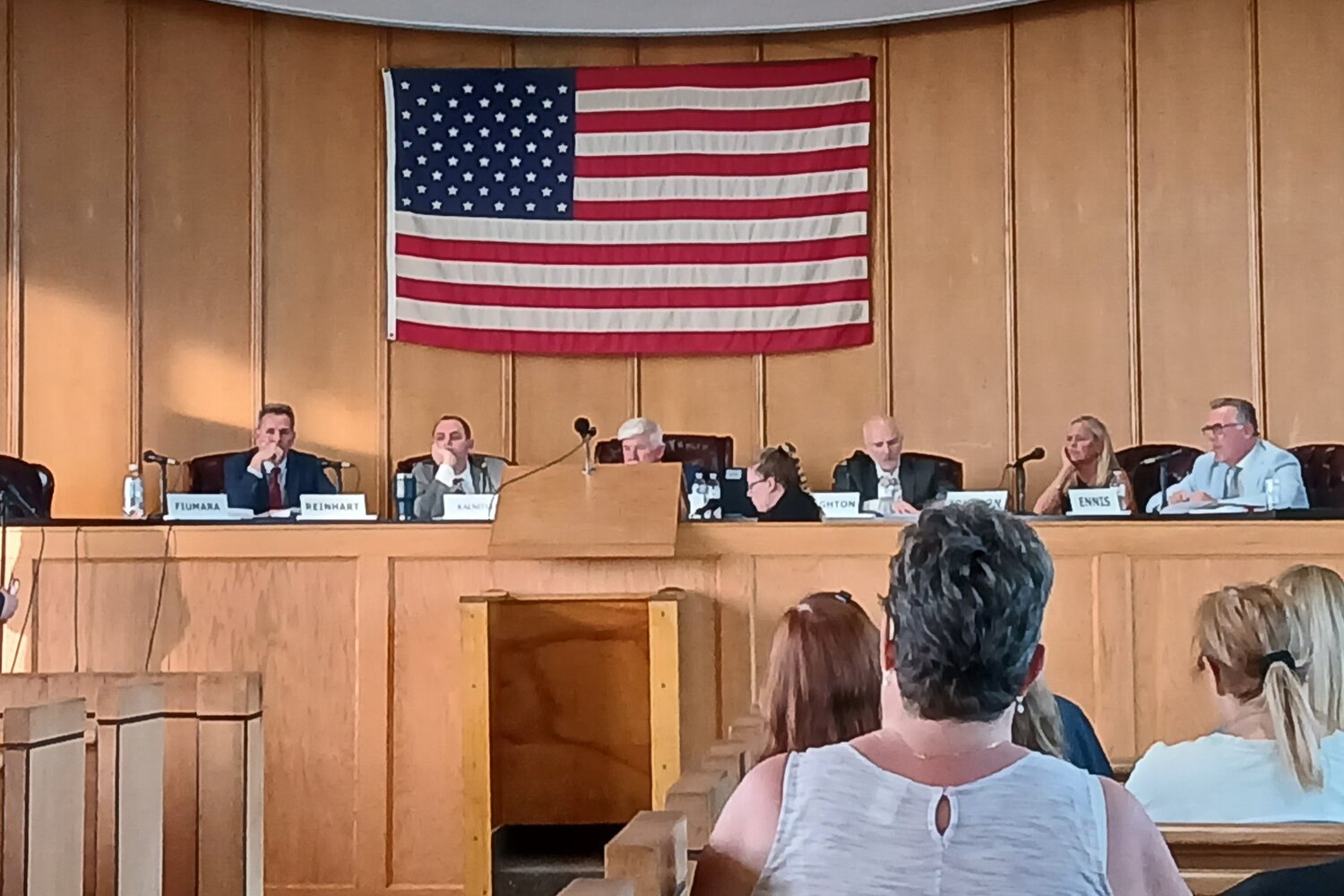
The Long Beach City Council voted to pierce the statewide tax cap by 1.5 percent during a special city council meeting held the morning of May 29. The tax increase connects to the planned 2027 budget, with anticipated expenses increasing nearly $5.5 million, or roughly 5 percent. The rising tax will result in an average increase of $229 per household per year.
The city’s tax year coincides with its fiscal year, beginning July 1. “Our taxes are billed either once a year or twice a year based on the total taxes that are due,” said City Comptroller Inna Reznik. “For some, that will be only one bill. For the majority of residents, it’s going to be split into two payments. One in July and one in January.”
Reznik delivered a breakdown of the upcoming city budget during a May 5 city council meeting. Reznik clarified that the increased tax rate is primarily attributed to an increase in the cost of fringe benefits, which are not directly controlled by the city.
A public hearing was held during the May 19 city council meeting, offering residents an opportunity to discuss budget items and voice their opinions.
During the May 29 meeting, City Councilman Michael Reinhart clarified the most impactful costs associated with the budget. “Three major components are requiring this slight tax increase,” Reinhart explained. “It’s $1.6 million additional in health benefits, $1.6 million additional in contractual raises and another $900,000, about, in pensions.”
Some residents pointed out that a portion of the upcoming budget includes salary increases for members of the administration. Of the incoming budget, changes to city council members, direct staff and administrative positions total roughly $146,000.
“I think you made a big mistake,” said Ron Paganini, local resident and former CSEA union leader, at a June 2 city council meeting. “Maybe you deserve [raises], I’m not saying you don’t, but it doesn’t look good by doing that. You could’ve just said, ‘hey, we’re cutting here, we’re cutting there and doing the best we can. I’m sorry, guys, maybe next year we can get our raises.’ And I think you failed in that way.”
Other residents pointed out the inaccessibility of scheduling the final vote at 9 a.m. on a Friday. James Hodge, a Long Beach resident and activist, was the only member of the public to comment at the special meeting. “Calling a special meeting at 9 a.m. on a weekday to override the tax cap is a disservice to this community,” Hodge said. “Holding this session during standard working hours locks out the very taxpayers who will foot the bill, giving the appearance of avoiding public scrutiny.”
Corporation Counsel Greg Kalnitsky would later clarify that, while the special meeting to vote was initially scheduled for May 26, the city charter requires a 10-day period between an item’s hearing and vote, pushing the date to May 29.
City Council President Brendan Finn discussed the issue during the June 2 meeting. “We are about the taxpayers. We are about trying to keep the taxes down,” Finn said. “Zero tax increase our first year. We were below the cap in the second year. This year, we had some insurmountable increases and one of them was health insurance. The other one is, if you look at the cost of living, we kept our tax increase below the cost of living increase.”
The last time the city pierced the tax cap was for fiscal year 2024, under a different city council administration. Taxes were ultimately raised nearly 10 percent, averaging just under $500 per household. That increase was necessitated by a multimillion-dollar lawsuit settlement paid by the city in a real estate matter.