
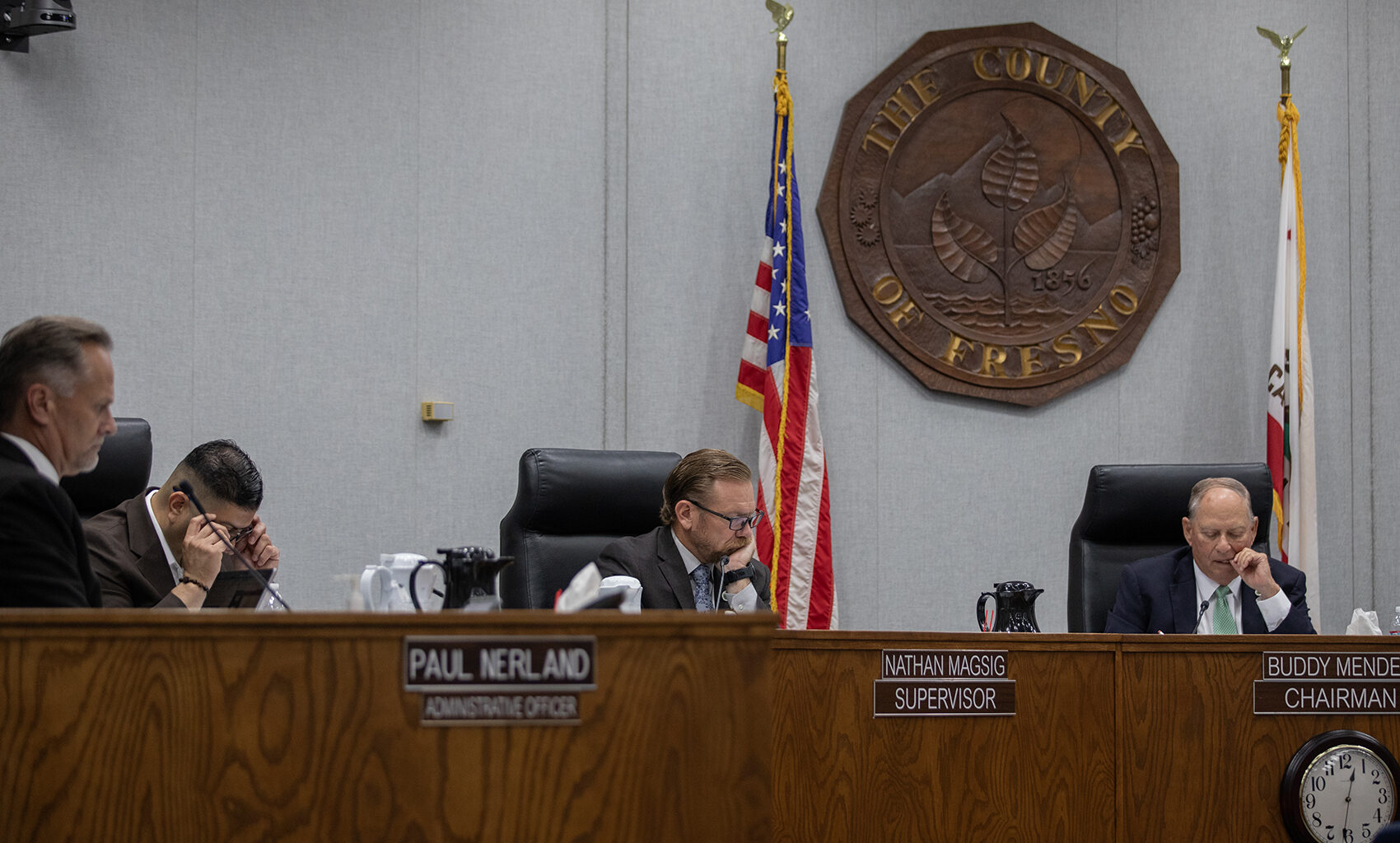
FRESNO COUNTY – Fresno County administrators face difficult decisions over the next few months as they balance slowed revenues, increased costs and the continued impact of federal legislation while balancing the numbers in the county’s multi-billion-dollar budget.
Following what Vice Chair Luis Chavez called a “sobering report” June 2, the Fresno County Board of Supervisors unanimously approved a resolution to continue budget appropriations through the summer. The interim budget will begin at the start of the fiscal year on July 1 and fund the county’s day-to-day operations using the fiscal year 2025-26 budget allocations.
Between now and September, when the board will adopt its full fiscal year 2026-27 budget, departments must weigh budget cuts of 5% while still providing the same level of service to the county’s million-plus residents.
“Despite all these things, we will work, and we will be presenting a balanced budget to your board in September,” County Administrative Officer Paul Nerland said. “We look forward to doing that, and we will come to your board with solutions based on your board’s priorities.”
In the presentation of the interim budget to the board of supervisors, County Budget Director Paige Benavides also provided a brief update on the main factors that influence the county’s finances: the state budget and county tax revenues.
Although most government entities adopt their budgets before the end of June, Fresno County waits until September. By then, the county is able to calculate its actual available fund balance based on the previous fiscal year’s books and can account for the state budget, which is adopted in June as well.
“Actual assessed property value also becomes available by the end of June, and, as you know, assessed value impacts approximately 80% of total countywide ongoing revenue,” Benavides said.
Regarding the county’s revenue outlook, Benavides said sales tax revenues have improved slightly over the prior year but continue to remain generally flat. Increases in costs continue to outpace any revenue growth, Benavides said.
Regarding the state budget, Benavides said Gov. Gavin Newsom’s May revision of the proposed budget provided just $87 million from the state general fund to help counties address the impacts of the “One Big, Beautiful Bill Act” — a fraction of the $1.9 billion requested by the California State Association of Counties.
This is important because Fresno County expects to have increased costs of up to $294.5 million tied to indigent health care, county behavioral health services and increased administrative duties — all things the county must provide regardless of funding.
Nerland said funds included in the state assembly’s budget proposal are also just a “drop in the bucket” compared to costs the county will face. The California State Assembly’s proposed budget puts aside $250 million over the next two years to help counties pay for indigent healthcare in emergency situations.
“To put that in perspective, the county’s obligations for the indigent care program are estimated to range between $40 and $240 million, just in Fresno County,” Nerland said.
Department budget cuts
Limited assistance from the state means that Fresno County will have to cut its spending elsewhere. Nerland said departments are currently looking at 5% proposed cuts in net county cost compared to last year’s budget. Net county cost is the impact on the county budget that is funded by general revenues from taxes and not covered by fees that county departments charge for services.
Nerland thanked his department heads for doing more with less.
“I know that it’s not easy, but during times like this, we need to be creative and find ways to do more with what we have,” he said.
Nerland told the board that he has asked departments to look at how to be more efficient at what they do. He also spoke to county employees who may have been listening in to the board meeting.
“You are the backbone of our organization; I want to thank you for your hard work,” Nerland said. “We’ve made progress the last few years on salaries and benefits, and my hope is that after this fiscal year, the economic environment that we’re in improves.”
Although the county has reserves that it could dip into when facing revenue shortfalls, Nerland said that these are typically used only in emergency situations after the county has exhausted all other remedies, such as cutting expenses and finding other revenue sources.
Fresno County has a reserve of around $90 million. Nerland said that while that sounds like a lot, “it’s about less than half of the target that we would like to be.”
If the county does take from its reserves, Nerland said that could also impact its credit rating, which could later on hurt the county’s ability to borrow funds at lower rates for facilities or future needs.
Supervisor input
Supervisors had few comments on the budget, with only Chavez providing any thoughts before the board approved the interim budget.
Chavez said he was glad Nerland addressed county employees, as his recommendation is for the county to be as transparent and upfront as possible about financial projections for the next couple of years.
“I think that will set realistic expectations for our folks, and I think we’re just in that time period where everybody’s going to have to get a haircut, so to speak, and that’s just part of the process right now,” Chavez said. “I think we can get there working with our employees and making sure we establish that relationship from the beginning with trust, transparency and having productive conversations with them.”
Additionally, Board Chair Garry Bredefeld at the end of the meeting said he wants county staff to conduct an analysis or study of what the cost savings would be if the county privatized its library system. Bredefeld said he wasn’t saying the county would move in that direction but he thinks it needs to have that analysis.
“I think it’s something we as a board ought to certainly take a look at in light of all of the cuts that we’re potentially facing, and certainly the loss of revenue that we appear to be facing from the feds and the state,” Bredefeld said.