
The audacious plan by gay civil rights activists to take over a snowy, sparsely populated county in the High Sierra was highly detailed and seemed plausible.
In October 1970, the Los Angeles chapter of the Gay Liberation Front announced that it had signed up 479 gay men and lesbian women to move to Alpine County — population 484 — to overthrow the government and create a refuge for queer people.
You’re reading the Essential California newsletter
L.A. Times reporters guide you through the most important news, features and recommendations of the morning.
By continuing, you agree to our Terms of Service, which include arbitration and a class action waiver. You agree that we and our third-party vendors may collect and use your information, including through cookies, pixels and similar technologies, for the purposes set forth in our Privacy Policy such as personalizing your experience and ads.
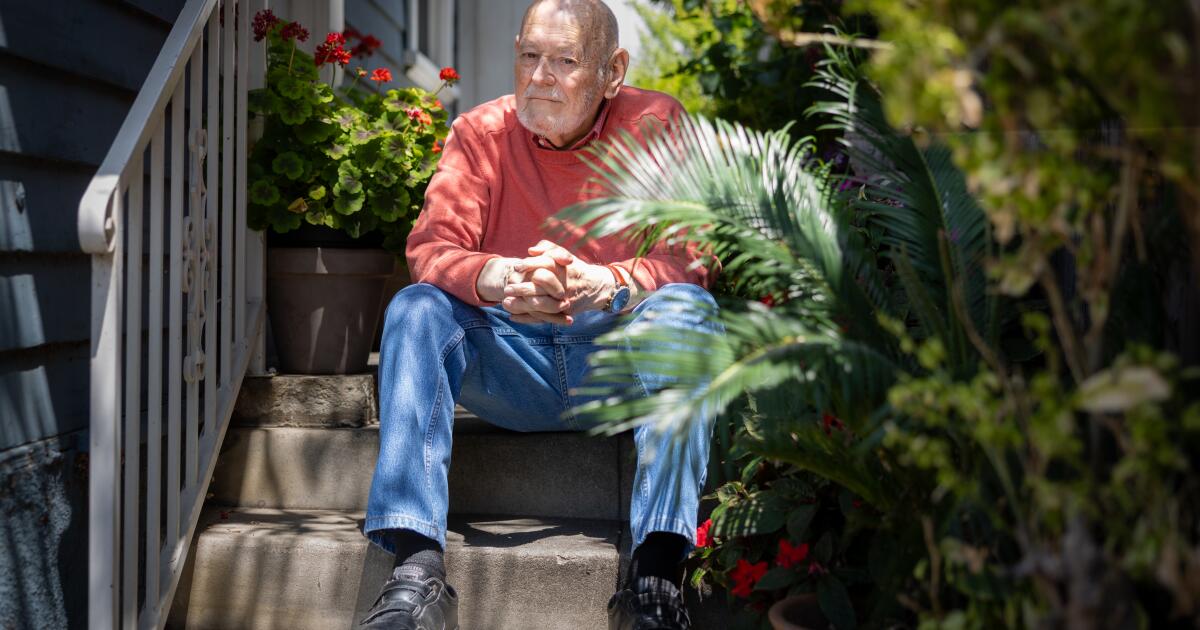
Don Kilhefner, a Gay Liberation Front organizer, detailed the plot at an impromptu news conference at the group’s East Hollywood office. In the audience was Los Angeles Times science and health reporter Lee Dye.
“As soon as enough homosexuals have lived in the county for 90 days — thus establishing a legal residence for voting — they will demand a recall of the county government, and if successful, a new government will be established with only homosexuals holding office,” Dye reported.
The plan, he wrote, was “no joke.”
As Pride Month kicked off, I spoke this week with Kilhefner, who is now 88 and lives in L.A., and describes himself as “alive, awake and feisty.” The Alpine Plan wasn’t exactly a joke, he said with a wry laugh. It was “guerrilla theater.”
The gay rights movement
Those were heady days in the LGBTQ+ rights movement. In June 1970, the Gay Liberation Front helped organize the first L.A. Pride Parade, which was so controversial that the city’s police commission tried to stop it, citing potential violence from bystanders.
Homosexuality was still classified as a mental disorder by the American Psychiatric Assn. Consensual gay sex was illegal under California law.
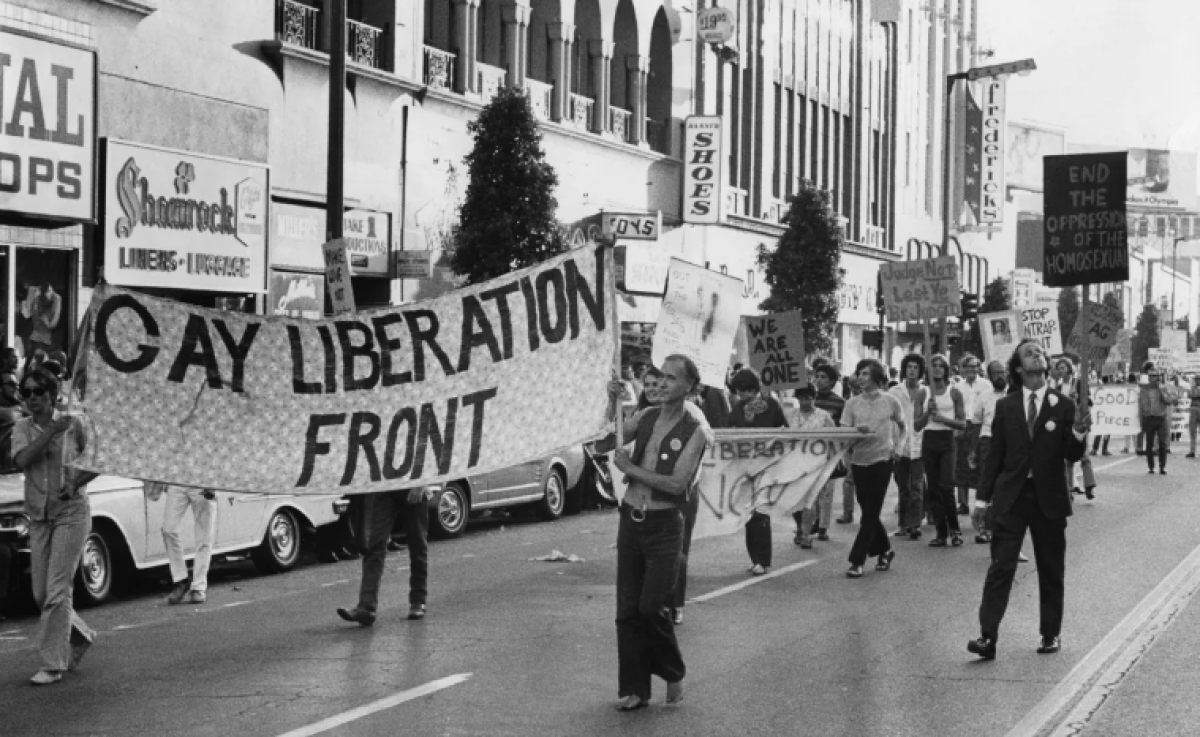
The first L.A. Pride Parade on Hollywood Boulevard in June 1970.
(Associated Press)
The idea for a rural gay utopia first came in a dream to Don Jackson, a queer rights activist and alternative press journalist, Los Angeles Magazine reported. Jackson had a vision of a doctor, who had died by suicide after losing his medical license because he had been outed as gay, reaching out his hand, saying “Come, I will show you a place,” and showing Jackson a picturesque little mountain village.
In early 1970, Time magazine reported, “reconnaissance parties of homosexuals disguised as fishermen and tourists” were dispatched to Alpine County and pronounced it “ripe for electoral conquest.” The Gay Liberation Front then “began stockpiling food [and] negotiating to buy land.”
When Dye caught wind of the Alpine Plan, he called the GLF office in L.A. and reached 32-year-old Kilhefner, a doctoral student who had become homeless after the car he had been living in got towed. Kilhefner lived at the office, sleeping on the sofa.
With the Times reporter on the line, Kilhefner told me, he improvised: “Oh, I’m so glad you called because tomorrow we’re having a news conference to announce new developments!”
Alpioneers were promised a hateful welcome
At the hastily-organized presser the next day, Kilhefner and two other activists said the migration to Alpine County would commence in January 1971.
The so-called Alpioneers, Kilhefner said, included two doctors, two lawyers and several teachers, but “we are still searching for two nurses and we need one civil engineer to serve as director of roads.”
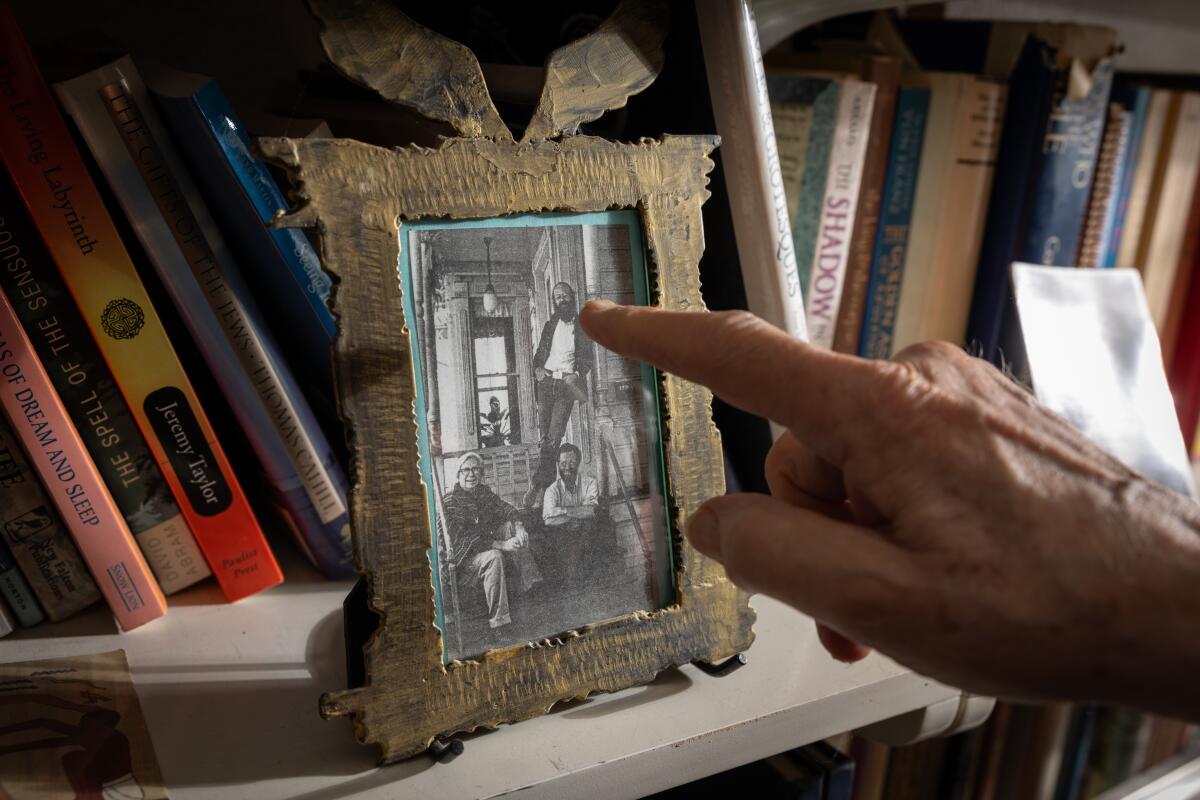
Don Kilhefner displays a black-and-white photo of himself and other LGBTQ+ rights activists in his home in Los Angeles.
(Jason Armond / Los Angeles Times)
The story drew pearl-clutching national headlines about a “gay invasion.”
In Alpine County, someone vandalized a road sign, painting it to read: “Watch for deer — Hit a queer.” A county supervisor promised “a hostile reception” and told reporters that “apples and peaches don’t grow well” in the cold region and “no fruit is very welcome up in our particular county.”
The movement didn’t change Alpine — it did help change the world
The gay government takeover never happened. Today, Alpine County — now with just over 1,000 residents — is a political blue bastion. In 2008, the county voted against Proposition 8, which banned same-sex marriage in California.
Kilhefner said that although some of the activists had taken it seriously, the Alpine Plan essentially was a publicity stunt designed to draw mainstream attention to discrimination against gay people.
The “Alpine County caper,” he said, forced people to see that gay rights activists had real power.
“It stirred up the entire nation,” Kilhefner said. “They were seeing us as a political movement,” Kilhefner said. “We were no longer ‘sick’ degenerate people — we were bright, intelligent and organized.”
The week’s biggest stories 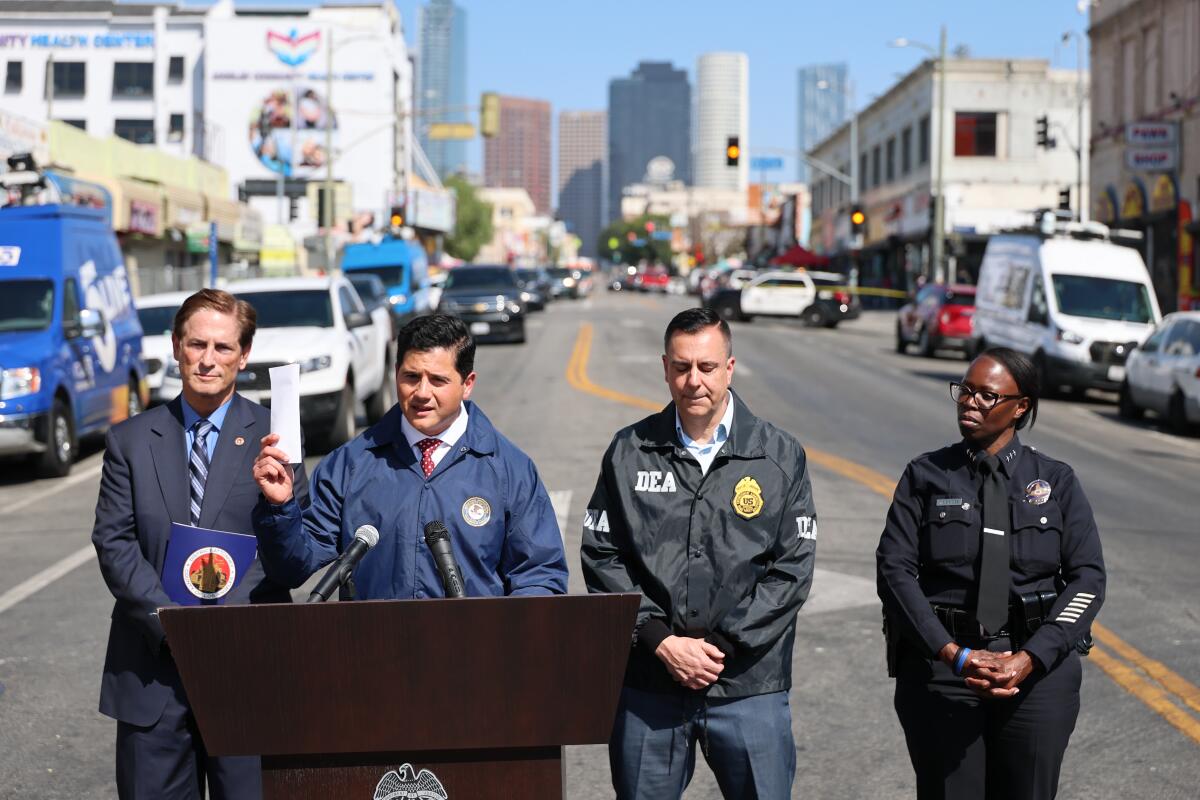
Bill Essayli, the first assistant U.S. attorney for the Central District of California, second from left, speaks during a news conference Thursday in Los Angeles.
(Allen J. Schaben / Los Angeles Times)
California primary electionCrime and courtsClimate and environmentWhat else is going onMust-readOther must-readsFor your downtime 
(Kaitlin Brito / For The Times)
Going outStaying inL.A. Timeless
A selection of the very best reads from The Times’ 143-year archive.
Have a great day, from the Essential California team
Hailey Branson-Potts, staff reporter
Hugo Martín, assistant editor, Fast Break desk
Kevinisha Walker, multiplatform editor
Andrew J. Campa, weekend writer
Karim Doumar, head of newsletters
How can we make this newsletter more useful? Send comments to essentialcalifornia@latimes.com.