
Our state is facing an affordability crisis. Every day I hear from renters who are struggling to afford their rent amid increasing utility bills and cost of living. Since 2025, at least 10 California utilities have enacted or proposed rate hikes, affecting over 33 million customers.
Yet renters — who make up 45% of California households and 70% of low-income households — cannot install solar panels on their roofs to lower their utility burden. That’s why I introduced AB 1813, legislation intended to establish a workable community solar plus storage program in our state. In late May, AB 1813 passed the Assembly floor, and the bill is now before the Senate.
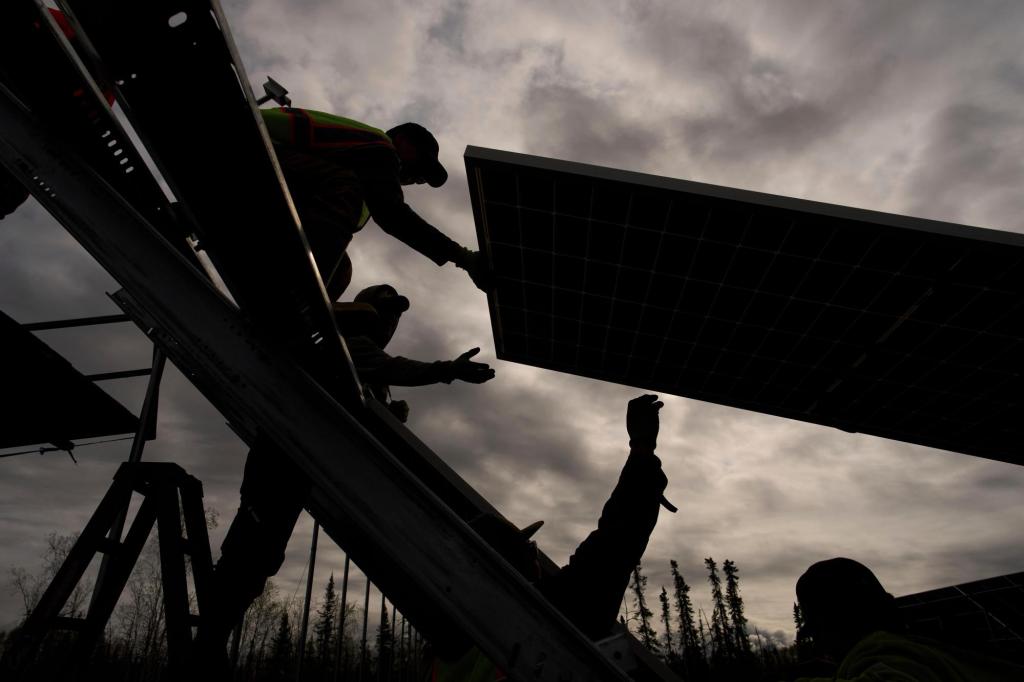
Community solar refers to small-scale solar installations built on unused farmland or commercial rooftops. Customers can sign up as subscribers to low-cost solar power, paying a monthly fee and then earning credits on their electrical bills, with estimated savings of $20-$35 per month.
Community solar plus storage is a win for renters and a win for our state. It’s an energy solution that’s fast to deploy: It can be permitted and built in 12 to 24 months. This is especially important given increases in energy demands due to data centers, which are projected to increase energy bills for consumers and small businesses by 70% nationally in 2029.
A report from Aurora Energy Research found that 5.4 gigawatts of community solar plus storage would save ratepayers approximately $6.5 billion over 20 years through lower wholesale prices, reduced procurement needs and deferred transmission investment.
Not only does community solar lower costs for ratepayers, it also reduces net peak demand, avoids costly transmission investments and displaces expensive gas generation. The storage component of this is important: batteries charge using co-located solar and discharge during expensive evening hours when the grid is most stressed.
Most importantly, community solar plus storage would open clean energy savings to the nearly half of California households that rent or cannot install rooftop solar. I’ve long thought our state needed a robust community solar program, which is why in 2022, I introduced and the governor signed AB 2316, which directed the California Public Utilities Commission to establish a new community solar plus storage program.
Unfortunately, the program created by the Public Utilities Commission didn’t fairly compensate projects for their full value and relied entirely on external sources of funding which have largely been canceled by the Trump administration. But you don’t have to take my word for it: The proof that the program is unworkable is the fact that it has resulted in no new projects being built.
In the last four years, a dozen other states have adopted community solar programs which are moving forward and producing results. California, on the other hand, has not produced one new program, job or benefit.
Which is why I introduced AB 1813 this legislative session. AB 1813 makes the needed changes to the program to ensure that the Public Utilities Commission implements it effectively, including supporting the implementation of state building codes requiring solar on most new residential units, ensuring that 51% of subscribers are low-income customers, and minimizing impact to non-subscriber ratepayers.
My hope is that I can work with the commission, along with my colleagues in the Legislature, to find an appropriate path forward that achieves the goal of the original bill. In fact, a recent poll demonstrates enormous, bipartisan support for community solar, with 8 of every 10 Californians in favor of community energy.
Community solar plus storage is a proven, scalable resource that addresses California’s most pressing energy challenges: affordability, reliability and decarbonization. By establishing a viable statewide framework, California can unlock billions in system savings, deliver tangible bill relief and accelerate clean energy deployment.
As the parent of two young children who motivate me every day to make the world a better place, I have a vested interest in ensuring that California reaches our ambitious renewable energy goals, including achieving 60% renewable energy by 2030.
As someone who has rented in expensive cities across the country, I know how much lowering bills matters when it comes to making ends meet. And as a state Assemblymember dedicated to ensuring everyone who wants to live in San Diego can afford to do so, I’m committed to getting this cost-saving legislation across the finish line.
Ward, a Democrat, is a member of the California Assembly representing the 78th District and is chair of the California Legislative LGBTQ Caucus. He lives in University Heights.