
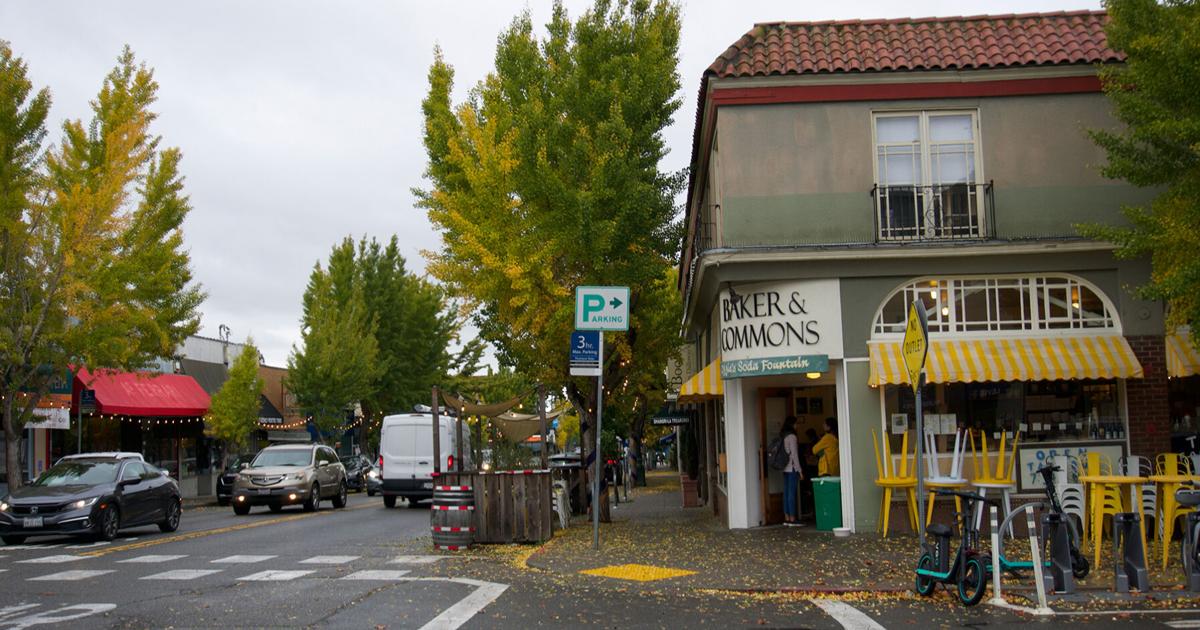
Berkeley’s Landmarks Preservation Commission rejected a proposal to designate Elmwood’s commercial strip as a historic district Thursday.
In a recommendation to the commission, city planning staff found that 28 properties in the neighborhood could meet the criteria for a historic district, noting the “exceptional values” of the architecture and the area’s historic value.
The proposed designation would have made it more difficult to develop new housing and create higher density development following the Corridors Zoning Update. Hundreds of people signed petitions in support of the designation, and the majority of the property owners on the strip expressed support for it.
“I feel like the Elmwood as a historical district is representative of physical stability in a time when Berkeley is changing dramatically, this country is changing dramatically, the world is changing dramatically,” said Elmwood resident Marty Conrad. “It’s a beautiful district — it’s a vibrant, commercial, social district.”
Some commissioners raised concerns about redlining in Elmwood’s past. Commissioner Elizabeth Greene said Elmwood was the “first time” where redlining occurred in the United States.
“My concern here is that what we are doing is not preserving all the beautiful things we talked about that make the Elmwood what it is — what we are preserving is a history that is one that our city has been trying actively to move on from,” Greene said. “Are we saying yes to retail, or are we maintaining a history of Berkeley that was the basis for segregation in the country?”
However, other commissioners pushed back against this characterization, including commissioner Steven Finacom, who noted that the commission had reviewed information about several people of color owning businesses in the district in the early 20th century.
According to the commission staff’s report, those Elmwood small businesses included a Japanese-owned dry cleaning business in 1910, and later a florist and an embroidery shop, among others. There were at least three Black-owned businesses, including a restaurant, a shine parlor and a shoe repair shop, as well as Chinese-owned restaurants and laundries. In the 1920s, an Armenian genocide survivor established a rug business, eventually becoming “one of the Elmwood district’s longest family-owned businesses.”
“There are all sorts of things that have a mixed history in the United States and the world that are understood to have all different sorts of levels of historic significance and good and bad history,” Finacom said. “We’re not Disneyland, basically. We’re not only going to landmark homes that have nice people that lived in them or anything like that.”
Finacom also addressed concerns that the designation of a historic district would block new development in the area, saying that landmarking would instead serve to make development “more contextual and historically sensitive.”
Commissioner Theo Gordon disagreed with Finacom’s argument that landmarking would not prevent development.
“It’s very clear from all of this that the motivating factor is the upzoning,” Gordon said.
Gordon added that landmarking makes projects within the district subject to discretionary review from the commission, which makes it more difficult for developers to build and could lead to abandoned projects.
Ultimately, the motion to approve the historic designation failed narrowly, with a 5-4 vote against it.
Mary Oram, a small business owner who has lived in Elmwood for around 40 years, expressed concerns with the commission’s decision.
“The people that are in favor of the Corridors Zoning Update say, ‘Well, this is a rich neighborhood, and it’s got lots of resources, and so we have to make it so more people can live there,’” Oram said. “I think that we need to leave the commercial district alone, or the resources that they think are so wonderful are going to go away, and we’re going to end up with a Berkeley that has no business districts and has lost an awful lot of the je ne sais quoi which brings people here and which they benefit from.”