
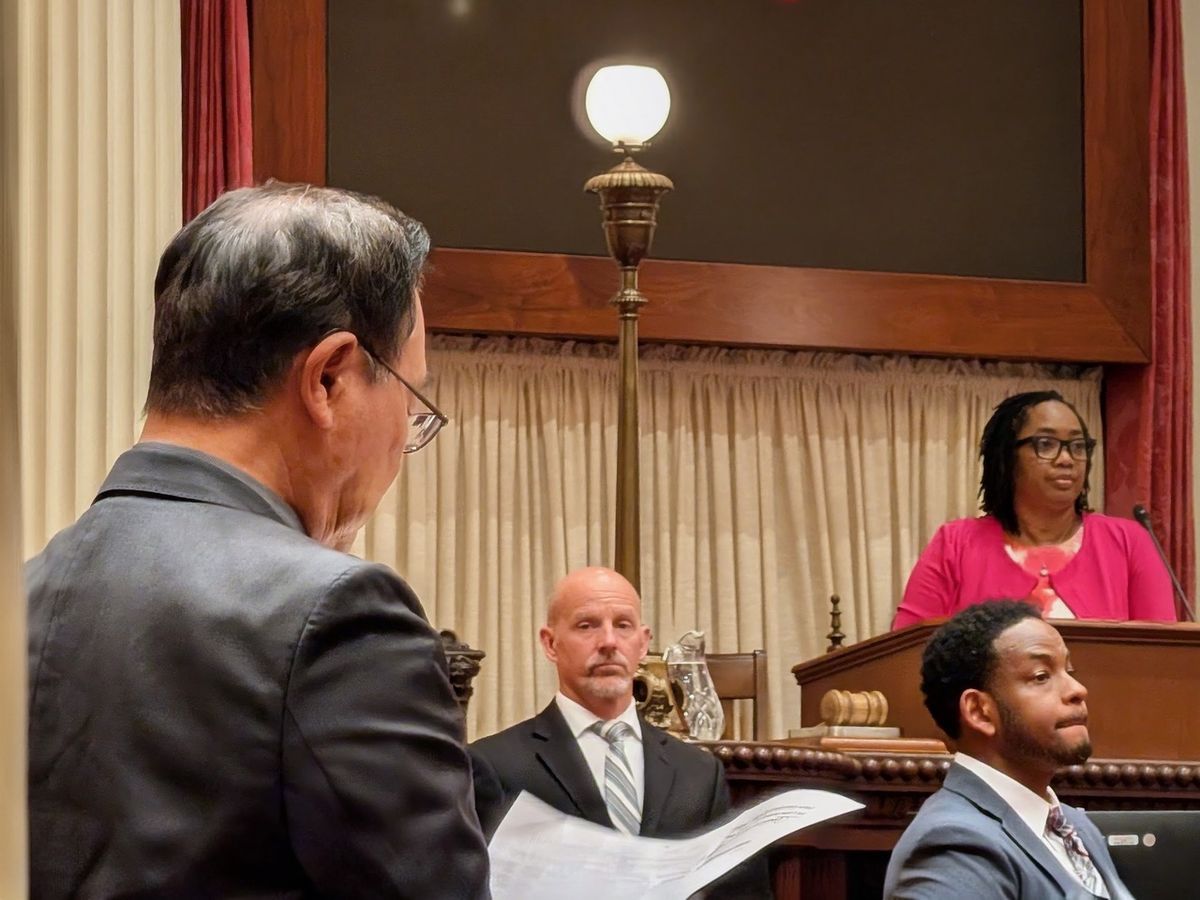
The debate intensified when presiding officer Sen. Akilah Weber Pierson (D-San Diego) interrupted Grove as she began criticizing appointee Jack Weiss during the confirmation discussion of a different commissioner.
“Sen. Grove, I’m so sorry. I know you wanted to work with all of us and do everything all at once, but since you’re specifically now talking about someone who hasn’t been presented yet, could you wait?” asked Weber Pierson, chair of the California Legislative Black Caucus (CLBC).
Grove responded by saying, “Absolutely, Madam President, I will present my comments again on Mr. Weiss. But I respectfully ask for a ‘no vote’ for this individual before us right now, Michael Ruff, who voted to let Funston out of prison.”
The Board of Parole Hearings consists of 21 full-time commissioners appointed by the governor and confirmed by the Senate.
Commissioners evaluate a range of factors to determine whether a person poses an unreasonable risk to public safety. The board plays a particularly significant role in reviewing cases involving violent offenders, including those convicted of sexual crimes.
Supporters of the confirmations argued that commissioners were carrying out their legal responsibilities by applying laws enacted by the Legislature.
Sen. John Laird (D-Santa Cruz) said the commissioners were being unfairly criticized for faithfully implementing state law. Under existing law, parole panels must consider factors such as an inmate’s advanced age, length of incarceration, and diminished physical condition when evaluating parole suitability.
“(The laws) are faithfully implemented by this board, and yet in their confirmation, they are criticized for the law rather than for the fact that they are faithfully following the law,” Laird said.
Laird also pointed to data showing that the commissioners under consideration approved parole at lower rates than the board as a whole.
“If you look at the statistics that were provided to us, overall, the commission has a grant rate of roughly 30% between the number of grants of parole and the number of denials of parole. Of these five members that we considered today, every one had a grant rate lower than the average of the entire commission.”
Meanwhile, lawmakers from both parties are pursuing reforms to California’s Elderly Parole Program in response to growing concerns about the potential release of convicted child sex offenders and other violent criminals.