
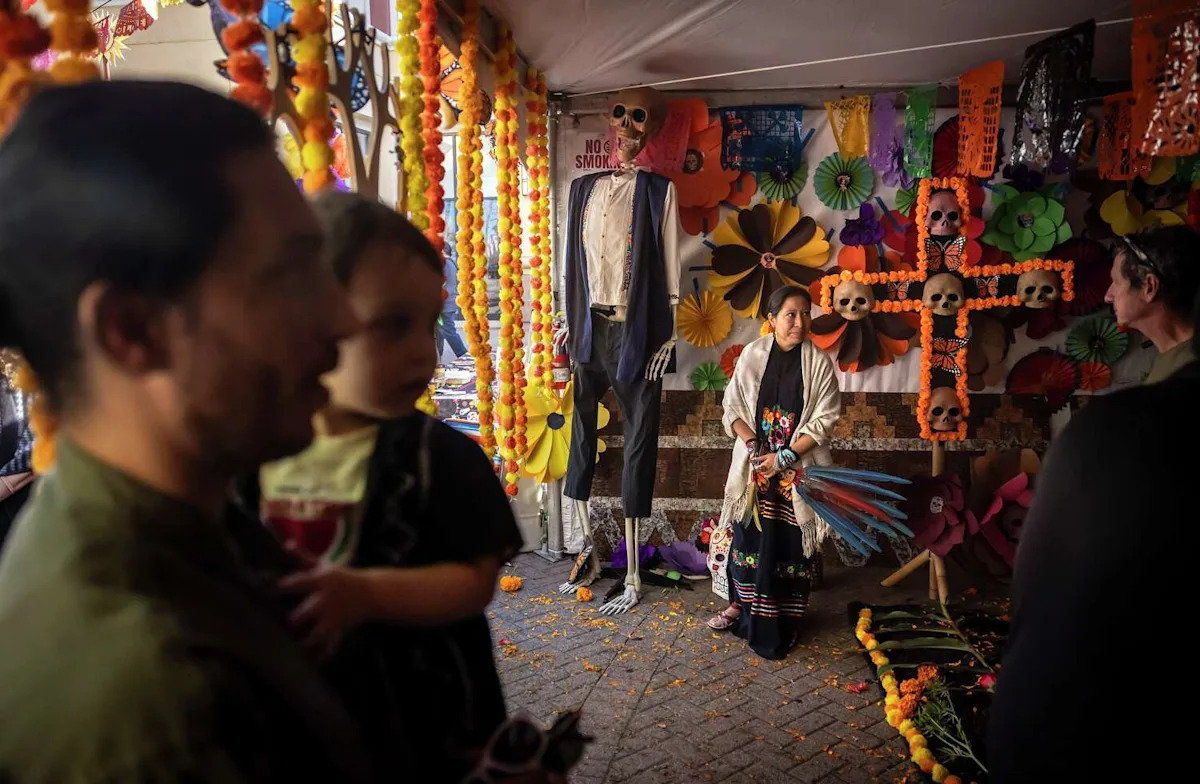
The scent of burning palo santo filled the air Sunday as thousands of people gathered in Oakland’s Fruitvale district for the annual Día de los Muertos festival.
The mood was celebratory at the event, which stretched along International Boulevard between Fruitvale and 42nd avenues. Attendees purchased pan de muerto, tamales and aguas frescas from local food vendors; spectators admired bright-colored stationed lowriders; local organizations handed out prizes and information to attendees; and children played soccer in the kids zone.
• Día de los Muertos: Spiritual reunion of the living and the dead marks a first in S.F.
On 12th Street, community members and local groups set up colorful altars to honor their deceased loved ones. Every year on Nov. 1 and 2, Mexican and Latin American families honor their ancestors by creating altars, or ofrendas, at home or bringing sugar skulls, flowers and their loved ones’ favorite foods to their graves. The tradition became more popular in the United States after the 2017 release of Disney’s animated movie “Coco,” which was inspired by the holiday.
The festival’s turnout was a relief for some Fruitvale merchants who worried that fears of a potential immigration raid could prevent people from attending. Similar concerns forced other organizers of Día de los Muertos events in the Bay Area to either cancel or scale back their celebrations, especially after President Donald Trump threatened to send federal agents to the Bay Area for an immigration crackdown two weeks ago, then backed off on the operation.
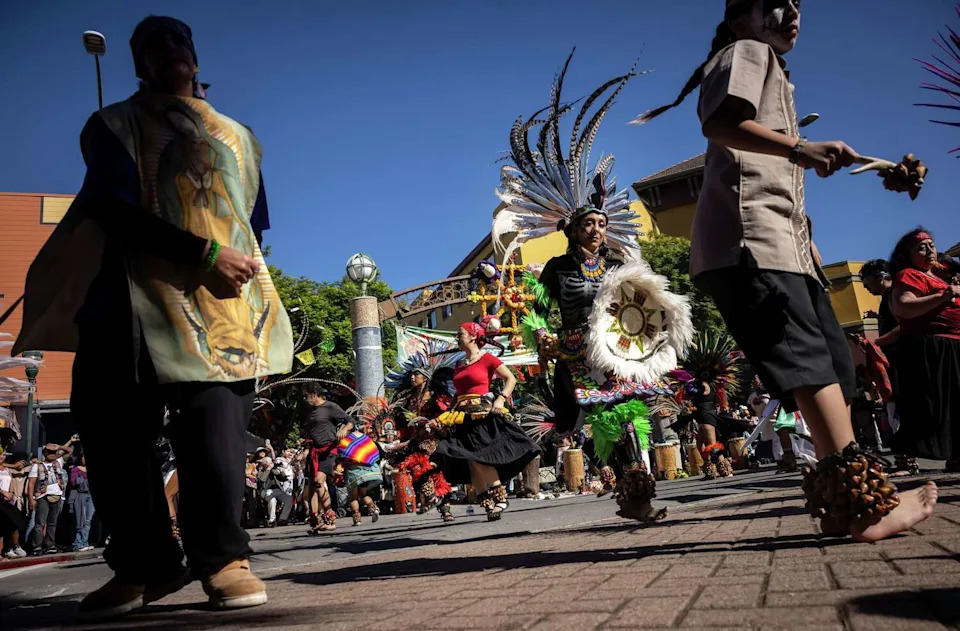
Indigenous dancers perform at Día de los Muertos in Oakland, which featured several Bay Area groups. (Carlos Avila Gonzalez/S.F. Chronicle)
But the Unity Council, organizers of the Fruitvale festival, said last week they “refuse to allow fear or intimidation to silence our joy or erase our traditions.” The festival’s theme this year was “Aquí estamos y no nos vamos” (“Here we are, and we’re not going anywhere”) to highlight the resilience of Latino and immigrant communities under attack by the Trump administration, organizers said.
On Sunday, police officers, volunteers and security crews were scattered throughout the Oakland festival, considered the Bay Area’s largest.
“People are really scared right now, but thankfully many people came out to celebrate,” said Alejandra Salgado, co-owner of Bakery El Sol in the Fruitvale Public Market.
Salgado said Día de los Muertos provides the bakery with its second-biggest sale of the year, after the Three Kings Day religious celebration in January. Just before 11 a.m., several customers lined up to buy pan de muerto and other sweetbreads.
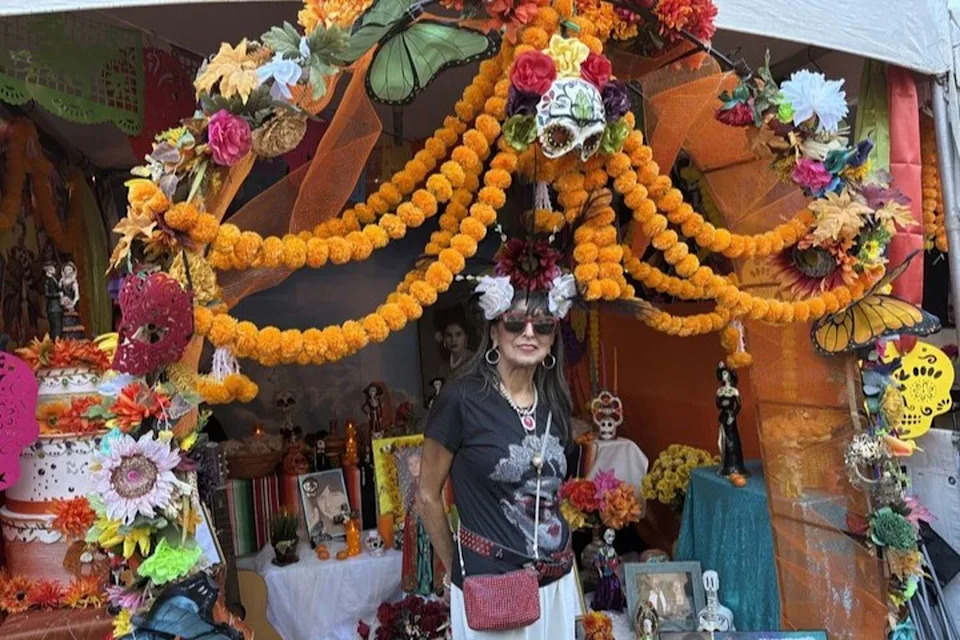
Lilia Olsen, a San Leandro resident who grew up in Oakland, shows her Día de los Muertos altar, featuring photos of deceased family members and pets, marigolds, pan de muerto and a large artificial cake. (Jessica Flores/S.F. Chronicle)
Lilia Olsen, a San Leandro resident who grew up in Oakland, has created an altar at the festival for the past 10 years. Her altar had photos of her deceased family members and pets, marigolds, pan de muerto and a large artificial cake. Olsen said it took her and her family members, who helped, about three hours to assemble it.
“I’ve been doing altars ever since my mother passed away because of the whole meaning behind it,” she said. “When you create this path, you can bring their spirits” back.
Rene, who declined to share his last name due to deportation fears, was at the festival with his partner and their 2-year-old son. The couple have attended the celebration regularly for the past few years because they enjoy watching the performances and supporting local vendors.
But this year Rene said they considered not attending because they didn’t want to risk potentially running into federal immigration officers, he said.
“I was worried for my family,” the Fruitvale resident said. “But we decided to come out because we saw a lot of people were still going.”
This article originally published at Thousands celebrate lost loved ones at Oakland Día de los Muertos amid fears of immigration raids.