
Writer and bee researcher Jennie Durant is intimately familiar with the trials and tribulations of commercial beekeepers. Her latest book, “Bitter Honey,” explores their work, lives and struggles.
Durant wants readers to know that “commercial beekeepers are essential workers in our agricultural system, and they are struggling so intensely,” she said.
“They often aren’t mentioned in the history of food or the agricultural development of the United States and California, and so part of the book’s project is to reinsert them into California’s agricultural history as an essential player,” Durant said.
Durant has a PhD from UC Berkeley in environmental science, policy and management, and a master of fine arts degree in nonfiction writing from Saint Mary’s College of California. She has been a USDA-NIFA (National Institute of Food and Agriculture) postdoctoral fellow at the University of Oregon and UC Davis. Durant has written for the Huffington Post, the San Francisco Chronicle, The Conversation and more, and is based in the Bay Area.
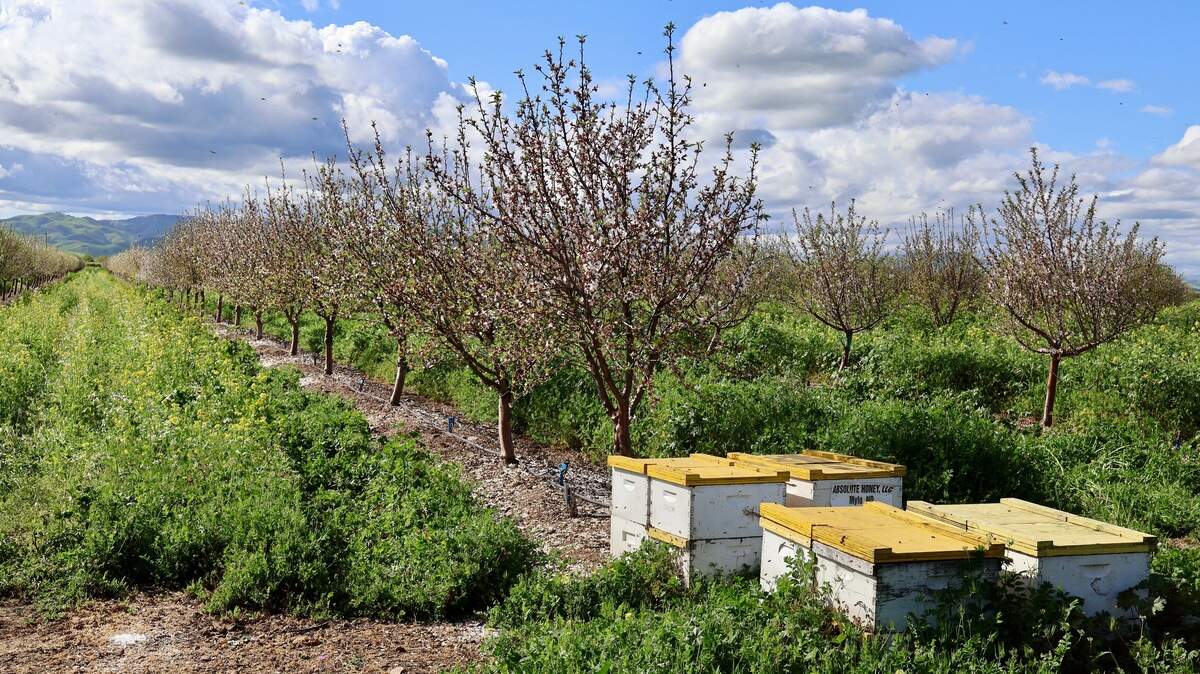
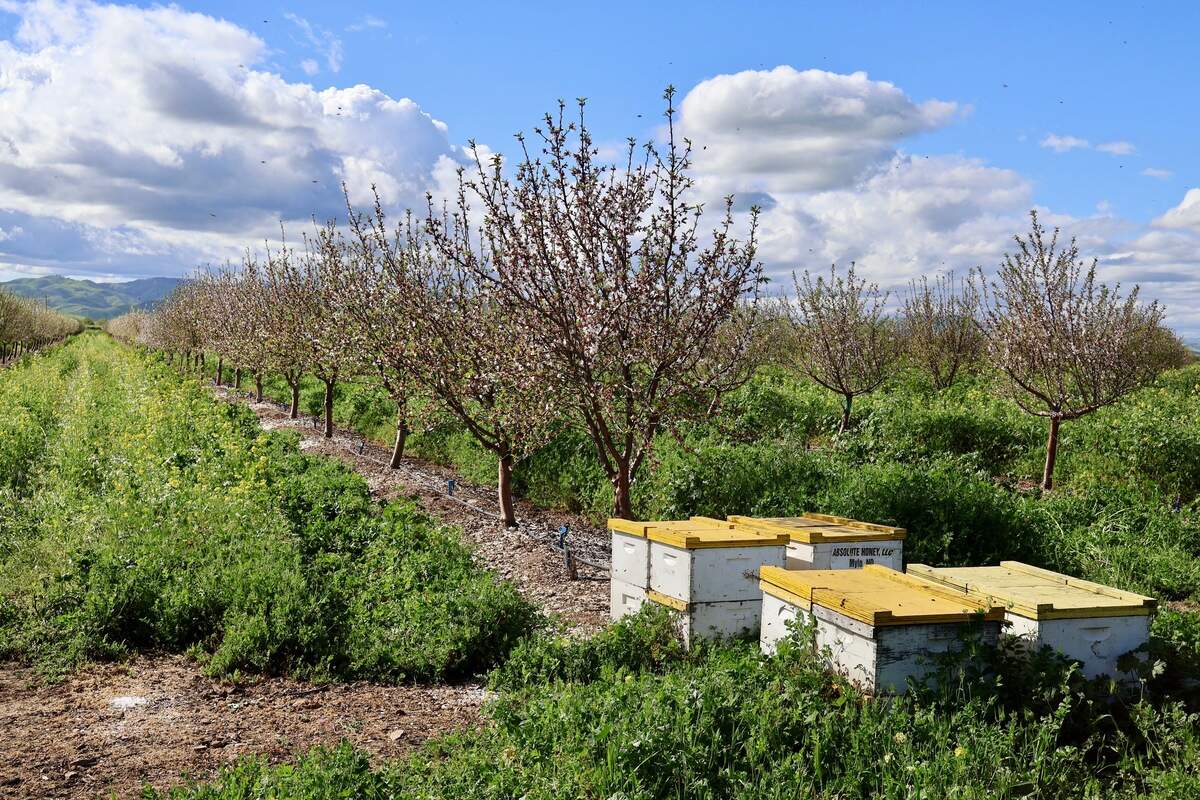 Beekeepers transport their hives in the white boxes pictured above to bring to farms all across the country. Jennie Durant
During a recent discussion about her book at Bookish Modesto, Durant shared that almond growing and beekeeping are interdependent efforts. Almond trees are originally a European crop, and the U.S.’s share of European honey bees has a centuries-long relationship pollinating that crop.
“The California almond industry grows 80% of the world’s almonds, and pretty much 100% of all the almonds consumed in the United States, with some exceptions, so there’s this huge demand for almonds coming from abroad,” Durant said in an interview with The Modesto Bee. “Because of that, almond growers can command a pretty great price per pound, and because they are relying on bee pollination, [beekeepers are] able to command a good pollination price.”
Durant did a lot of her research on beekeeping in Modesto, a city famous for its almond blossoms.
Local farmers have good relationships with beekeepers in part because Modesto and the surrounding areas receive adequate rainfall and growers therefore are open to planting cover crops and reducing fungicides. These conditions are preferable for the bees and their keepers.
“I think that some of these bee best-management practices have come about because there’s more investment and there’s more of a relationship between the grower and the beekeeper,” Durant said. “The other thing that is great about Modesto and the surrounding area is because that slightly higher rainfall is there, there’s more potential for bee-friendly practices.”
According to Durant, the struggles beekeepers face can be broken down into five P’s: pests, pathogens, pesticides, prairie loss (or forage loss) and bad policy. Pests like mites are a huge concern for beekeepers, who can lose their colonies to these insect intruders, and pathogens or diseases can be just as devastating. Prairie loss, meaning loss of food for bees, is not within most beekeepers’ control, and neither are the policies that shape their work.
During the winter that spanned late 2024 to early 2025, beekeepers in the U.S. faced an issue combining pests, pesticides and policy when a pesticide-resistant mite started destroying bee colonies amid major federal staff cuts in bee research.
Durant recently wrote an article about how the Department of Agriculture will be closing Maryland’s Beltsville Agricultural Research Center, which hosts the Beltsville Bee Research Lab — the nation’s premier bee research and disease diagnosis center.
As beekeepers faced significant colony loss in winter 2024-25, Beltsville was contacted to assist in finding a treatment response. Amid the effort, The Department of Government Efficiency’s deferred resignation program and the firing of several researchers across USDA led to significant loss of staff in the process
The result was a reduction in the Beltsville team’s manpower, delaying its ability to assist beekeepers. Those who remained on the team faced restrictions around communicating with beekeepers.
The loss of bee colonies because of the decreased federal help, she said, is estimated to be around $600 million when considering lost honey production, pollination income and colony replacement costs. And while colony loss was not as bad this past winter as the previous, it still was prevalent. Now, the Department of Agriculture is planning to shut down the Beltsville Agricultural Research Center altogether.
“Because of the communication lockdown, it took nearly six months for researchers to deliver their findings. By then, the season was over and beekeepers had been forced to navigate the crisis on their own,” Durant writes in her article.
For the most part, Durant said, beekeepers shield farmers from the impact of lost bee colonies. Beekeepers push their bees hard by feeding them supplements, trucking them cross country, treating them with harsh chemicals and exposing them to agrochemicals. They also eat some of the costs of keeping their colonies alive and ask for assistance from other beekeepers to supplement their colonies when reduced numbers are untenable.
And while beekeepers have been able to shield growers thus far, colony losses can have devastating impacts on agriculture and subsequently the price and accessibility to produce.
“As bees become more difficult to keep alive, people might be able to have less access, we might have smaller harvests, food might become more expensive, and then you know at some point our most disadvantaged are going to have a hard time affording those nutritious foods,” Durant said.
Her initial attraction to bees stemmed from the mystery of colony collapse disorder, a phenomenon that began in 2006, when worker bees disappeared from colonies. It’s a mystery still not fully understood, and Durant wanted to research the issue and understand the cause.
The issues that bees and their keepers face make the intersection of research and the beekeeping industry all the more important, Durant said. In California, UC Davis Professor Elina Niño is the only extension apiarist, who serves as a liaison between beekeepers and bee researchers.
“There are not enough researchers in California to provide the support that beekeepers need,” Durant said, even though more than 90% of the country’s bee colonies come through California for pollination at some point.
She added that a simple solution for individuals to support bees is to plant pollinator-friendly flowers and crops in their own backyards. Some examples native to the California Central Valley include white yarrow, milkweed, California poppies, sunflowers, California fuchsias, California buckwheat and Canada goldenrod.
“Anytime someone asks me how they can help bees, I always say plant bee friendly flowers, and ideally native flowers, so you can also support native bees, but really like any bee friendly flower, so we can give some food for our pollinators,” Durant said.
.jpeg "IMG_1035 (2).jpeg") A beekeeper tends to a colony on a farm where the bees are temporarily stationed to execute pollination. Jennie Durant
This story was originally published June 8, 2026 at 3:31 PM.

The Modesto Bee
Atmika Iyer covers education for The Modesto Bee. She earned her bachelor’s degree in History at UC Santa Barbara and her master’s in journalism at Northwestern University. Before coming to Modesto, she covered local government, cannabis and education.