
This week, we published our Food & Wine team rankings of six Costco rosés, and the winner truly surprised me: the cheapest bottle, priced at $8.99. I think it’s great that there are affordable, quality choices of rosé. One silver lining of the wine industry’s oversupply issue for consumers is that you can find incredible deals on wine at big box stores. I visited three Costcos and the majority of the rosé section at each was from Provence, widely considered the benchmark of rosé production. These rosés are typically light, refreshing and fruity — perfect for poolside sipping.
But, there are other options worth exploring this summer: California rosés from small independent producers. Yes, they’re more expensive than our Costco picks, but they offer a depth and diversity that you won’t find in your local warehouse. Over the past two months, I’ve tried as many local rosés as possible, spanning multiple California regions; a spectrum of pink shades; and a wide range of grape varieties, including some that you’ll rarely find in U.S.-made rosés, such as Palomino and Touriga Nacional.
At the Mr. Pink Party, a rose tasting event at Compline in Napa, I reunited with two of my all-time favorite California rosés: Arnot-Roberts’ rare, delicious Portuguese blend of Touriga Nacional with Tinta Cão, Trincadeira and Grenache ($27) and Robert Sinskey’s bright, slightly creamy Vin Gris of Pinot Noir ($36). Both of these bottles have been consistently great year after year. The Pinot Noir rosé from Sonoma’s Donum Estate also really stood out to me; it was vibrant, high-acid and juicy, if a little pricey at $50.
In April, I carried a brand new rosé down a hiking trail to a DJ set on the banks of the Napa River. Chasing Ether is an experimental label from South African winemaker Jon Berlin (best known as the longtime winemaker at Napa Valley’s El Molino), focused on fresh, easy-drinking wines at reasonable prices. Berlin told me he’s targeting younger drinkers, who he feels have been priced out of wine. “No longer can you drive up Hwy 29 or 12 and taste freely with friends and walk out of a tasting room with a couple of yummy, affordable wines under your arm,” he said. “The gateway drug is no longer available to get people into wine.”
The Chasing Ether rosé certainly checks a lot of those boxes. It’s $25, light, fresh and made with unconventional grapes. The label simply says “rosé,” and no one would guess it’s actually a blend of Mourvedre, Carignan and Palomino (the Spanish grape used in Sherry) from century-old vines. So it is both a talking point and a crowd-pleaser that will meet any summer moment involving water and bathing suits.
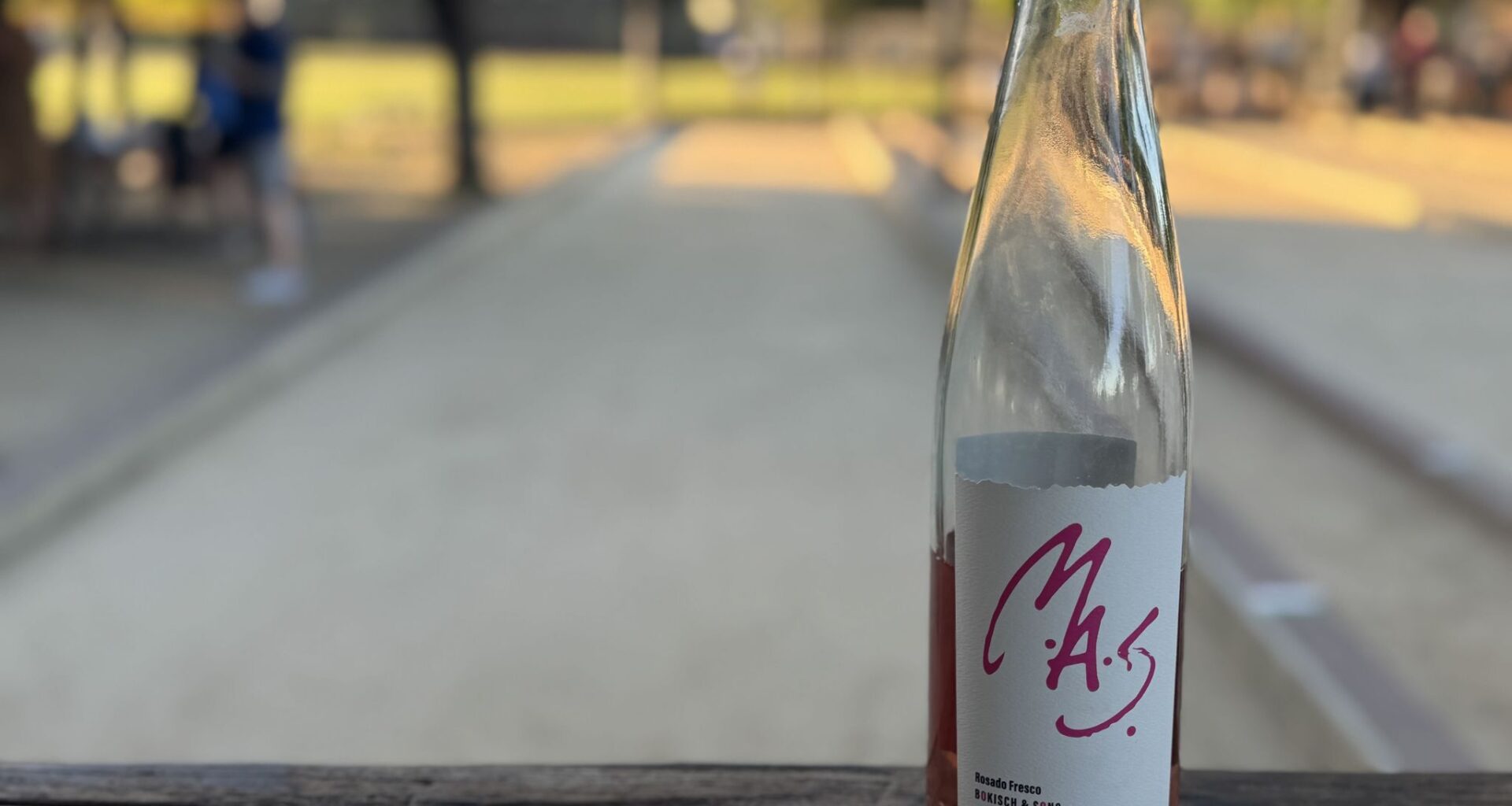
I’ve shared several bottles of rosé with my bocce ball team on recent Tuesday nights, including the Minus Tide Carignan Rose ($27) made from Mendocino County vines planted in 1908. It’s absolutely mouthwatering and works well on its own and with food. (I’ve never met a Minus Tide wine I didn’t like.) This Tuesday, I brought the Rosado Fresco ($26), a blend of Grenache and Graciano, from Lodi’s Spanish winery, Bokisch Vineyards. An icy-pink wine, it’s super-juicy, with a dominant watermelon flavor and a pear finish that lingers. I could feel the acid on my teeth, but in a good way.
I’d happily buy a case of all of these, but there’s one rosé that really wowed me: Dianthus from Paso Robles’ Tablas Creek ($40). This wine has a dark blush color that reminds me of the giant bottle of Beringer’s White Zin my mom always had in the fridge growing up, but it tastes a thousand times better. A Bandol-inspired blend of Mourvedre, Grenache, Counoise and Cinsault, it’s bursting with strawberry. This is the ultimate food rosé, thanks to some serious structure, but the tannins are delicate, preserving its crushability. I opened this at the start of a dinner party, where it was an immediate hit. While the Dianthus is sold out on Tablas Creek’s website, the winery’s Patelin de Tablas Rosé ($30), a blend of Grenache, Mourvèdre and Counoise made in the lighter Provençal style, is a worthy consolation prize.