
A view over California in June 2026.
NOAA
After months of anticipation, the National Weather Service’s Climate Prediction Center declared on Thursday that El Niño conditions have developed.

The latest data shows a 63% chance that El Niño, the seasonal climate pattern that generally brings a wet winter to California along with a cascade of global weather impacts, will become “very strong” from November 2026 through January 2027.
Article continues below this ad
California experts are closely monitoring the potency of this El Niño, which some models show as on par with the previous seven very strong events since 1950 and others forecast will make history by the end of the year.
“El Niño kept brewing, and now the telltale signs have become strong signals,” Alexander Gershunov, a research meteorologist at the Scripps Institution of Oceanography at UC San Diego, told SFGATE. “All the models basically came into agreement to predict El Niño, and most of them are predicting a very strong El Niño.”
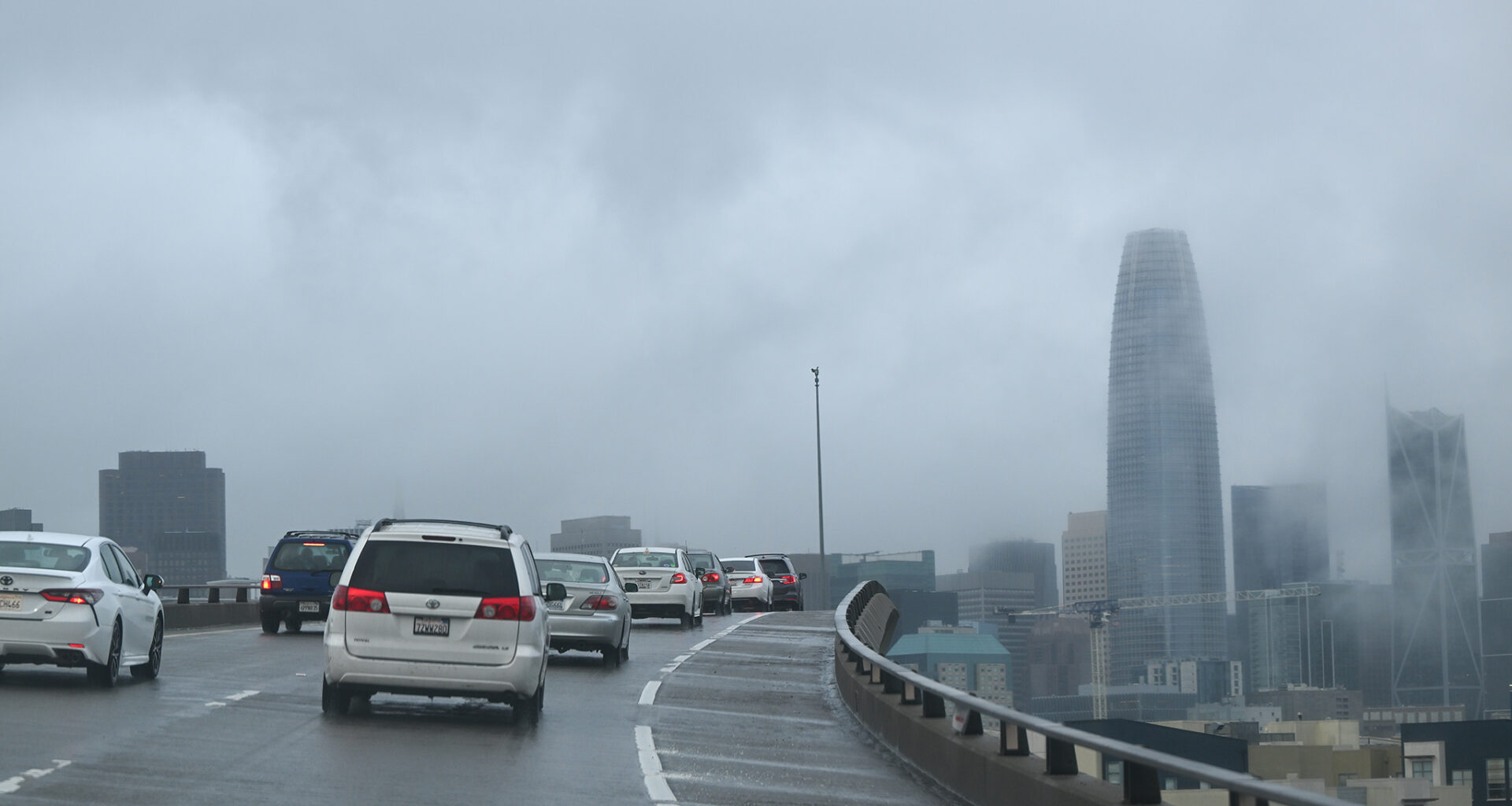
FILE: Commuters navigate the rain in San Francisco.
Anadolu/Getty Images
El Niño is the warm phase of a pattern that develops in the tropical Pacific Ocean, called the El Niño-Southern Oscillation, or ENSO. During El Niño events, weak trade winds are associated with above-average surface temperatures in those waters. The other phase, La Niña, brings stronger winds that promote cooler ocean conditions. The pattern alternates irregularly, with neutral phases in between.
Article continues below this ad
Generally, the stronger the event — meaning the warmer those seas get along the equator — the more reliable the impacts of El Niño are for forecasters. Across the U.S., scientists typically associate El Niño with drier, warmer winters in some northern parts of the country and with wetter winters in areas like the Gulf Coast and Southeast. Eastern Pacific hurricane activity can intensify. Combined with the extreme marine heat wave already baking the Pacific Ocean, the current El Niño will not only affect the weather but also likely marine life.
“A strong El Niño ensures that we’re going to break a new global temperature record this year, and this additional warmth, energy in the global environment will also foster more extremes, especially heat waves and extreme storms,” Gershunov said. “There are regional caveats like, for example, the Atlantic hurricane season is going to be diminished because of this El Niño.”
In California, the El Niño pattern tips the odds in favor of a wetter winter season, especially in the southern part of the state. The seemingly endless string of rainy days from past El Niño winters such as 1997-1998 loom large in the collective memory of residents.
Article continues below this ad
Yet scientists have to come to appreciate that El Niño years can lead to a variety of outcomes locally. In the winter of 2015-2016, for example, the infamous “Godzilla” El Niño — one of the strongest ever recorded — did not deliver the expected precipitation in Southern California.
Michelle L’Heureux, who leads the ENSO team at the Climate Prediction Center, explained the significance of Thursday’s El Niño forecast for California.

Stay informed, and entertained.
By signing up, you agree to our Terms Of Use and acknowledge that your information will be used as described in our Privacy Policy.
“A stronger El Nino historically means an increased chance of above-average [precipitation] for California,” L’Heureux wrote to SFGATE by email. “However, the CPC outlook takes in account other factors too and the El Nino signal is not very strong over California. In particular, over the recent decade or so, there has been a drying trend which complicates the El Nino signal for California.”
Article continues below this ad
Jan Null, a meteorologist and private weather consultant with Golden Gate Weather Services, told SFGATE a similar story about the Golden State based on the records of past El Niños.
“Let’s say we know for sure that it’s going to be a strong or very strong El Niño, and that’s a fairly good likelihood, but what does that mean for California rainfall?” he said. “It tilts the meter toward more rain than normal, but there are no absolutes in this game.”