
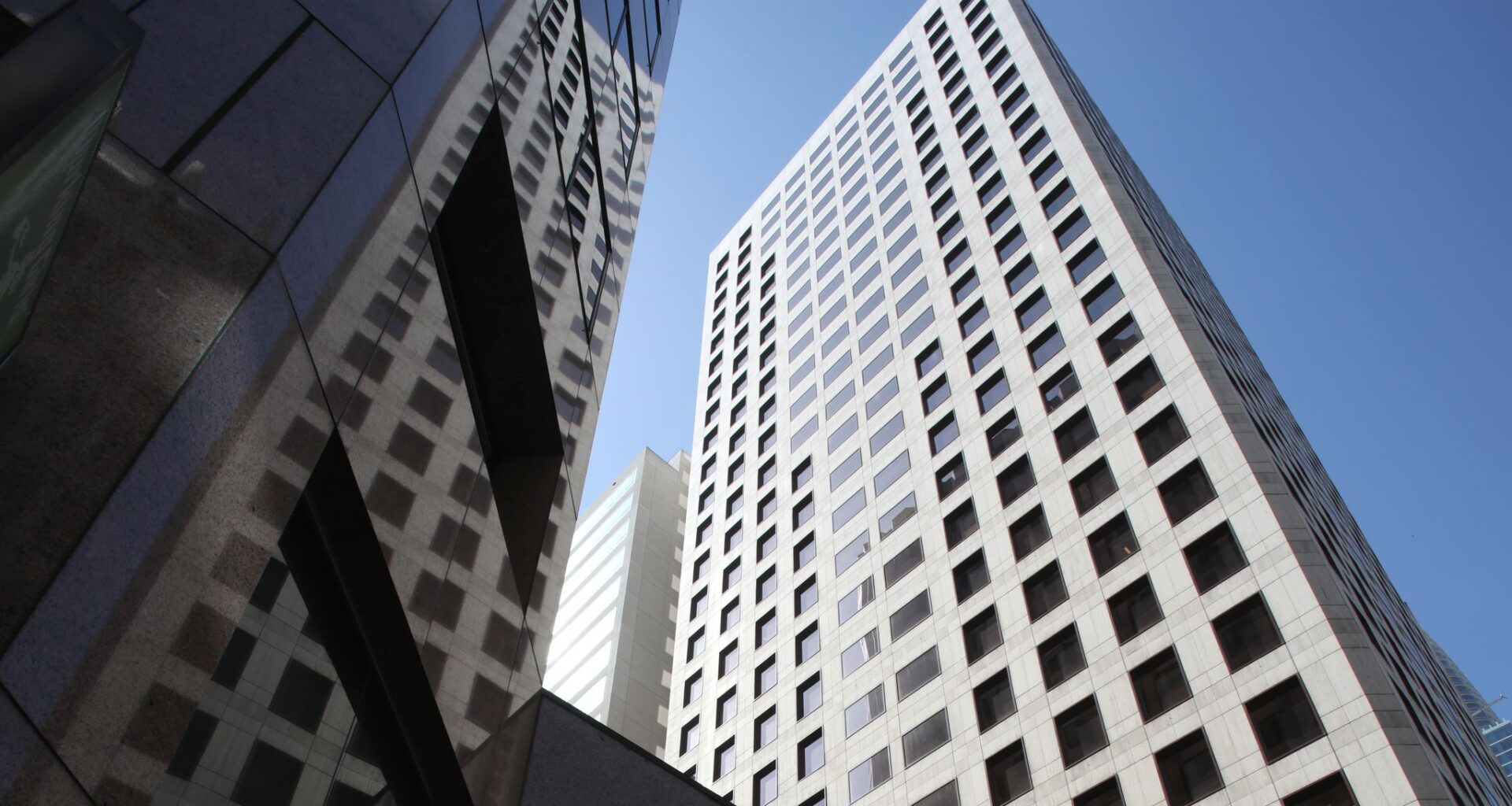
The office building at 123 Mission St. in San Francisco recently sold. These types of transactions would have seen their transfer taxes cut under a proposal floated by Mayor Daniel Lurie that he recently dropped.
Liz Hafalia/The Chronicle
Mayor Daniel Lurie and Supervisor Bilal Mahmood are dropping a controversial proposal that would have cut transfer taxes on high-end real estate transactions and instead will focus on a previously planned part of the plan that would tax foreclosures.
Lurie and Mahmood had argued that the proposal would kick-start residential construction and would not result in lost tax revenue because of the plan to tax foreclosures. They backed off the idea of cutting transfer taxes amid pushback due to the city’s ongoing budget deficits. Very few homes are under construction in San Francisco as residential rents continue to rise at a brisk pace amid the city’s AI boom.
The original proposal would have rolled back former Supervisor Dean Preston’s 2020 Prop I, a ballot measure that doubled the transfer tax on large real estate deals and was championed by supporters as a way to generate funds for affordable housing. In recent years, however, the transfer tax revenue has gone into the city’s general fund, rather than being dedicated to housing.
Mahmood and Lurie introduced on Tuesday the “Foreclosure Tax,” a November ballot measure that would standardize property transfer taxes to include acquisitions of foreclosed commercial and residential buildings, which have been exempt from the tax since 1984. If approved by voters, the measure is expected to generate about $67 million a year over the first three years after it goes into effect, according to Mahmood. It will not include single-family homes or buildings with less than five units.
Article continues below this ad
If passed, the tax would allow the city to collect a 3% to 6% tax on the value of commercial properties when they are foreclosed on.
“When large financial institutions transact off of a foreclosure they should pay a tax like every other property seller,” said Mahmood. “This measure ensures that financial institutions, like investment funds and private equity firms, contribute back to this community when they foreclose on our housing stock.”
San Francisco Chronicle Logo
Make us a Preferred Source to get more of our news when you search.
Add Preferred Source
In a statement, Lurie said the “measure will make our tax code simpler and fairer so that anyone buying a building plays by the same rules.”
“Consistency and certainty are critical for welcoming investment as we drive downtown’s recovery and keep our city moving in the right direction,” said Lurie.
Article continues below this ad
The decision not to go forward with the transfer tax cut, first reported by Mission Local, is a blow to market-rate developers who said that the measure, called the BUILD Act, would have helped spur the construction of thousands of housing units that are approved but stalled due to economic infeasibility.
“It’s a bummer,” said Corey Smith, executive director of the Housing Action Coalition. “We say we want housing and then we are taxing housing as if we have too much of it.”
The BUILD Act would have decreased transfer tax to pre-2020 levels: from 5.75% to 2.75% for transactions of at least $10 million and from 6% to 3% for deals of at least $25 million. Transfer taxes brought in $324 million from 2021 to 2024.
Instead of rolling back taxes, Mahmood said the “focus is on taxing corporate lenders who foreclose on large commercial buildings, including apartments and offices.”
With the city facing a $634 million deficit over the next two fiscal years, Mahmood said “right now we want to shift to focusing on raising revenue because there hasn’t been a consistent plan from the city in how we do that comprehensively.”
“This is our measure from the board and the mayor to do that,” he said.
Article continues below this ad
Mahmood said that he is supporting other policies and initiatives aimed at generating construction of new housing, including lowering the amount of affordable units developers must include in market rate developments. He also pointed to the recent plan to increase the city’s annual contribution to a trust fund for affordable housing from $52 million to $125 million. He said the city needs to make sure it has enough money to pay for the increased trust fund.
“I agree that (the transfer tax cut) is good policy and I agree that it is one of the necessary components to help spur new construction,” he said. “Once the deficit is in a better place we can revisit the conversation.”
Preston said despite its name, the BUILD Act was “just a huge tax break for billionaires.” Preston and the Democratic Socialists of America are working on a ballot measure that would preserve the current transfer tax rate and ensure that the money collected goes to affordable housing.
“It’s good that it’s paused and it never should have been introduced in the first place,” he said. “I hope they permanently back off of trying to repeal it but there is still the fact that the need has only grown and they still should be dedicating that revenue to affordable housing.”
Article continues below this ad
San Francisco adopted in 1984 a tax exemption on properties acquired during a foreclosure. Since then the foreclosure exemption has lost the city billions of dollars of potential revenue that could have been used for city services, according to Lurie and Mahmood.
If passed by voters in November, the Foreclosure Tax would go into effect in March of 2027.