
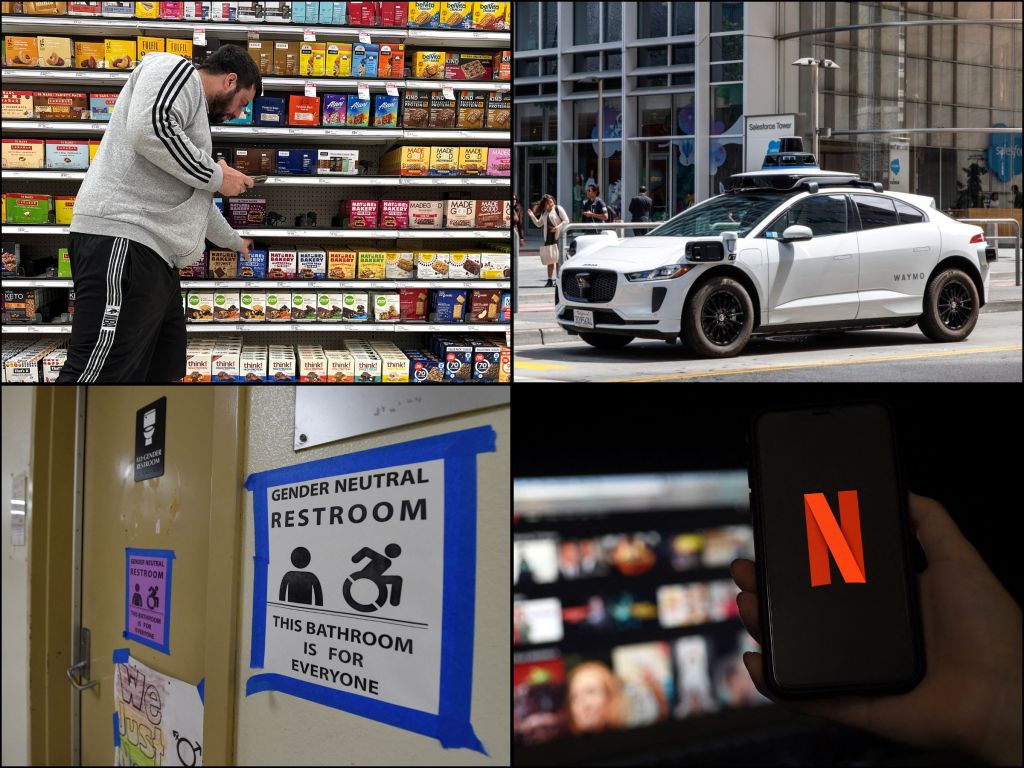
An array of new laws are set to take effect in California on July 1, 2026. These laws cover everything from streaming service advertisements to school bathrooms.
Here is a selection:

John Burgess / The Press Democrat
SB 68: Under the new ADDE (Allergen Disclosure for Dining Experience) Act, restaurants in California with 20 or more locations are required to list major food allergens on their menus. Those allergens include milk, eggs, peanuts, tree nuts, fish, shellfish, wheat, soy and sesame. (John Burgess / The Press Democrat)
 AB 660: Starting July 1, food manufacturers are required to use standardized language for “quality” and “safety” dates. Products must use either “best if used by” or “best if frozen by” to indicate quality, or “use by” or “use or freeze by” to indicate food safety. The law also bans using “sell by” dates that are visible for consumers. Eggs and infant formula are exempt from the new law. (Photo by Justin Sullivan / Getty Images)
 AB 1127: Licensed firearm dealers must cease the sale of certain semiautomatic pistols, most notably Glock-style handguns, that this bill re-classifies as “machinegun-convertible pistols,” due to a specific trigger mechanism that can be easily converted into an automatic weapon. (Photo by Charly Triballeau / AFP via Getty Images)
 SB 576: Beginning July 1, video streaming services like Netflix are prohibited from playing commercial advertisements louder than the accompanying video content. According to a statement from the Governor’s office, the state law builds on the Commercial Advertisement Loudness Mitigation (CALM) Act, passed by Congress in 2010, which applied to broadcast television stations and cable operators. (Olivier Douliery / AFP via Getty Images)
 AB 1777: Self-driving vehicles like Waymo robotaxis will be subject to traffic tickets starting July 1. Police will be able to issue citations to autonomous vehicles for violations, which will be sent to the Department of Motor Vehicles for penalty assessments. Self-driving cars must also be installed with a call line for emergency responders to talk to a remote human operator in the event the vehicle is involved in a crash or must be moved. (Dai Sugano / Bay Area News Group)

John Burgess / Press Democrat
AB 727: Public middle and high schools, as well as public colleges and universities in California must include an LGBTQ+ suicide hotline and text line on student identification cards. The bill expands on existing law that requires public and private schools in the state serving students in grades 7 to 12 to have the 988 Suicide and Crisis Lifeline numbers printed on student ID cards. (John Burgess / Press Democrat)
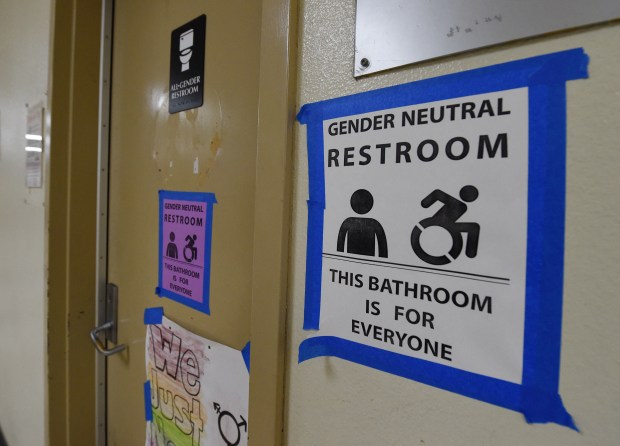 SB 760: By July 1, public and private elementary, middle, and high schools must provide a clearly marked and well-maintained gender-neutral restroom that is available to students. (Photo by Mark Ralston / AFP via Getty Images)
AP Photo/Rick Bowmer, File
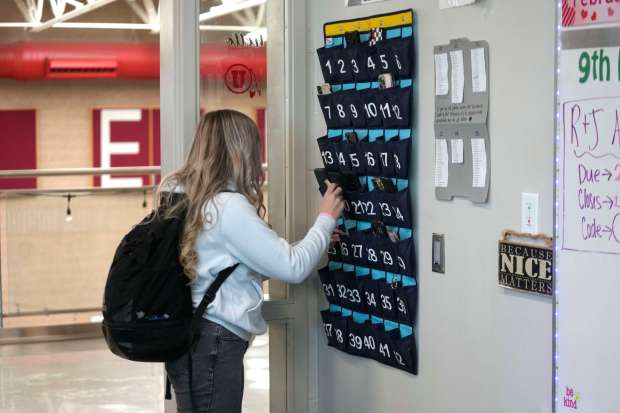
AB 3216: All California school districts, charter schools, and county offices of education are required to adopt and implement policies that limit or prohibit student smartphone use on school campuses by July 1. Under the law, students will be allowed to use smartphones in case of emergency or if directed by school staff. (AP Photo/Rick Bowmer, File)

AP Photo/Rich Pedroncelli
SB 79: The Abundant and Affordable Homes Near Transit Act preempts local governments to allow denser multi-family housing developments to be constructed near major transit stops, including bus routes and rail stations, across urban centers in the state. (AP Photo / Rich Pedroncelli)
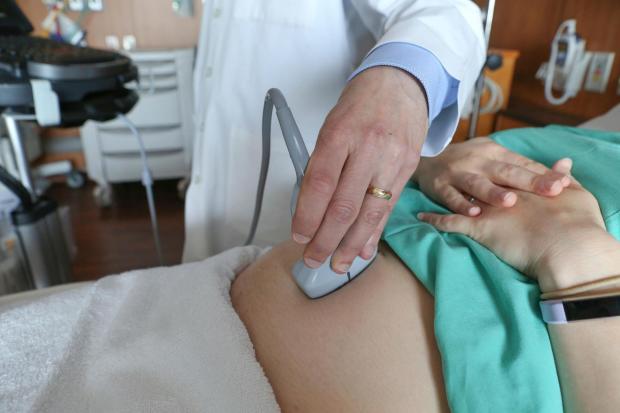 SB 669: July 1 is the deadline for the California Department of Public Health to establish a 10-year pilot project to allow rural hospitals to establish standby perinatal services to ensure safer maternal health access. The bill includes various criteria for selecting participating hospitals with regard to standards and resources. (AP Photo/Teresa Crawford, File)