
Democrat Xavier Becerra’s path to victory in last week’s gubernatorial primary election was built on liberal voters’ fear of Democrats being shut out of the November election, according to UC Berkeley political science professor and co-director of the Institute of Governmental Studies Eric Schickler.
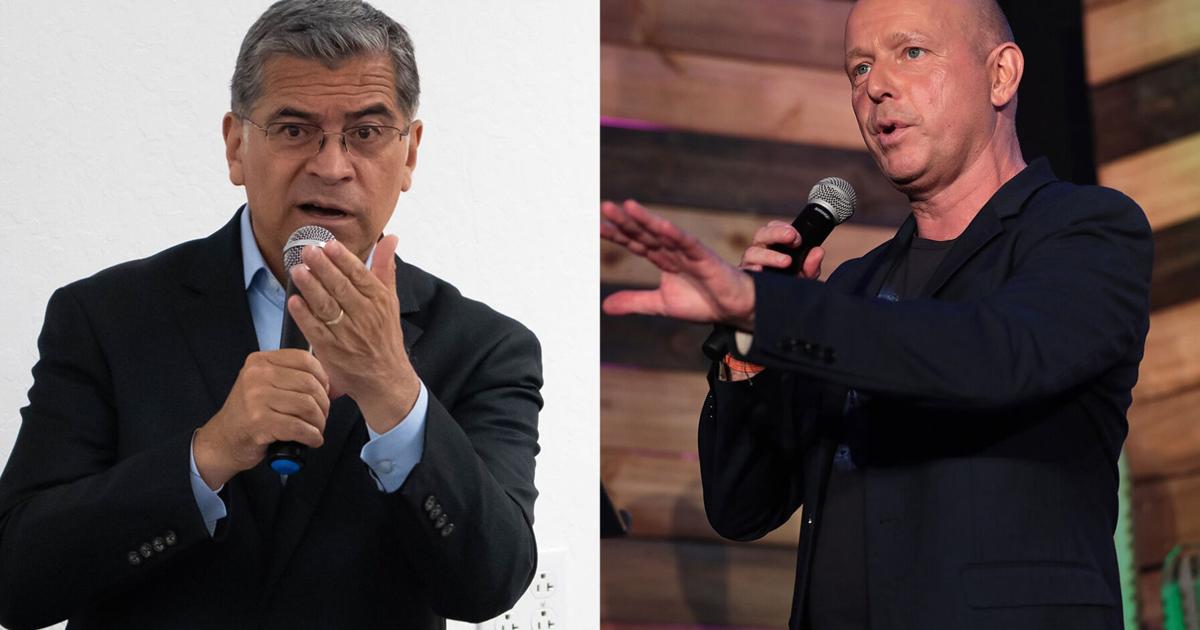
Becerra, the Biden administration’s health and human services secretary, will face former Fox News host Steve Hilton in the general election this November, despite billionaire Tom Steyer’s unprecedented $200 million self-funded campaign.
Schickler said Becerra was the “plausible” candidate in many voters’ eyes after former Rep. Eric Swalwell dropped out of the race following multiple sexual misconduct allegations in April — a sharp turnaround from March, when the IGS poll had him outside the top five candidates.
Meanwhile, Steyer’s spending had diminishing returns, according to Schickler.
“It’s not clear that being the one who spends $200 million versus somebody who spends, I don’t know, $60 million is really gonna be decisive,” Schickler said.
He added that running as a progressive billionaire created “a bigger obstacle” with Democratic voters.
Mark DiCamillo, director of the IGS poll, said voters coalesced strategically across the state, such as in the Los Angeles mayoral race where some progressive voters who initially supported Rae Huang swung to fellow progressive Nithya Raman, who polled higher in the final IGS poll. Despite polling at 9% in May, Huang finished with 2.9% of the vote. IGS correctly predicted the outcome of the race, polling both incumbent Mayor Karen Bass and Raman as the top two candidates in May, despite many other polls predicting Republican Spencer Pratt to compete with Bass in November.
“Polls are accurate, as you know, snapshots in time,” DiCamillo said.
The IGS also correctly polled the outcome of the gubernatorial primary, having both Becerra and Hilton as its top two candidates.
DiCamillo attributed the poll’s accuracy to its methodology. While most pollsters limited their gubernatorial surveys to the top eight candidates, the final IGS poll presented likely voters with all 61 names on the ballot.
“You don’t really know what the impact of the presence of the other 53 candidates are having on the electorate,” DiCamillo said.
The poll’s online format, conducted by email and text, also allowed for a large sample size, according to DiCamillo. More than 8,500 surveys, weighted to 3,500 likely voters statewide, were sent out by the IGS.
California faces national criticism for its slow ballot count. Schickler said a weeklong count could give “a lot more oxygen” to fraud accusations in a close midterm race; however, he said IGS polling shows California voters care more about counting and verifying every valid ballot than about speed.