
When Jae Wook Baek studied abroad in San Francisco in 2006, he noticed a gap in the restaurant scene.

“While there are so many kimbap restaurants in Korea, they’re relatively hard to find in the United States,” he said. (SFGATE interviewed Baek in Korean with the help of a translator; the interview was translated into English for this story.)
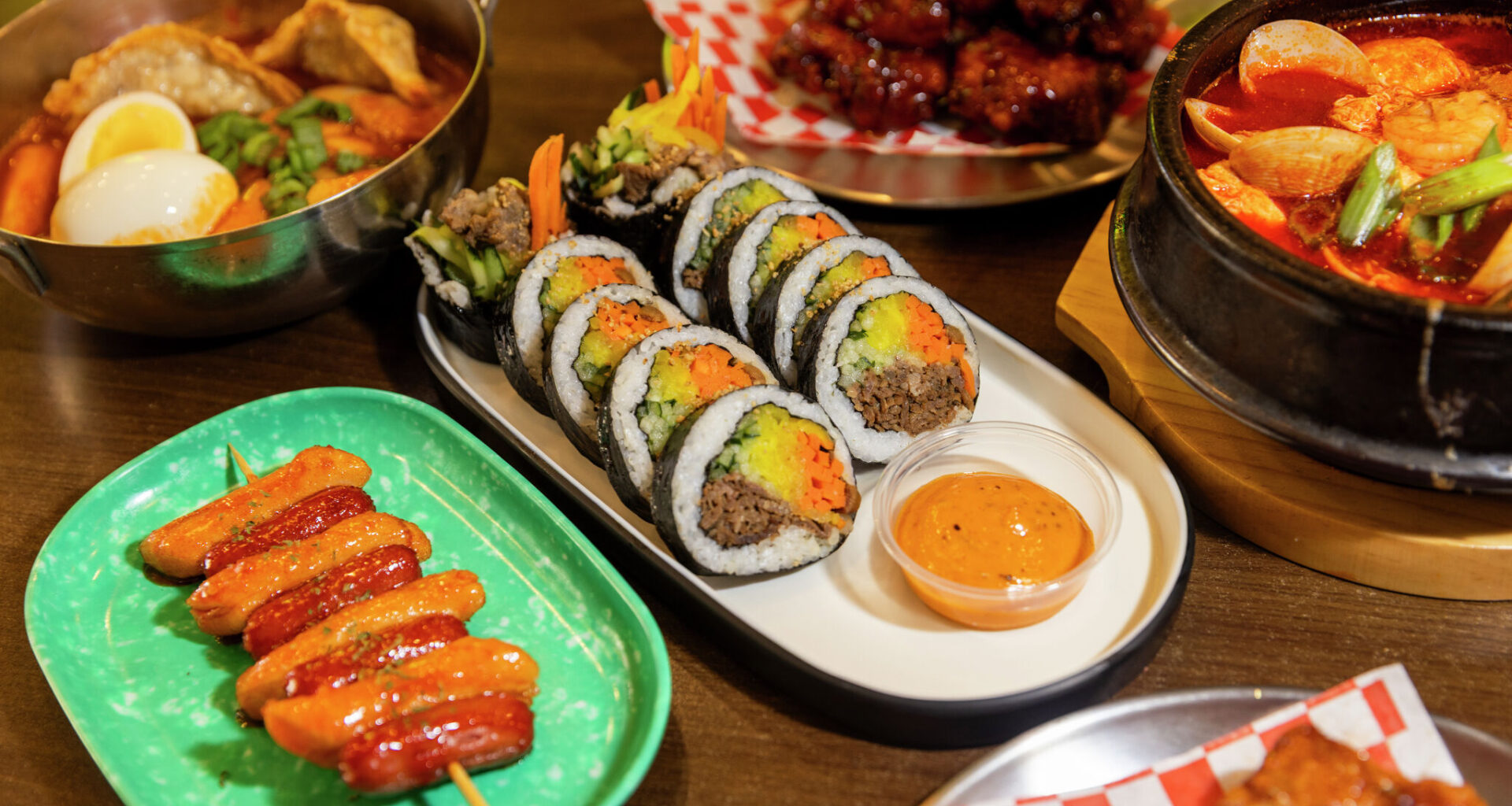
Kimbap is a Korean dish that visually resembles sushi, but with a very different taste profile: Rice seasoned with sesame oil is wrapped in seaweed and stuffed with fillings such as bulgogi or fish cake and vegetables such as carrots and danmuji (yellow pickled radish).
Article continues below this ad
Today, Baek runs Kingbob, a small Korean eatery on Clay Street in San Francisco’s Chinatown. The restaurant is beloved by downtown office workers, Korean tourists and Chinatown residents alike for its affordable kimbap lunches: A 10-piece roll costs as little as $8.75.
But it wasn’t an easy road to get here, from having to drain his savings to living across the world from his family for over two years.
After returning from his time studying advertising design in San Francisco, Baek spent years working in advertising and running a business in South Korea. But eventually, he decided it was time to pursue his dream of opening a restaurant in the U.S.
Article continues below this ad
Owner Jae Wook Baek holds the bulgogi kimbap at Kingbob in San Francisco on June 3, 2026.
Douglas Zimmerman/SFGATE
First, he needed experience. At the age of 40, he found no restaurant owner in South Korea would hire him, so he had to get creative. He started going out to different restaurants every day in search of the perfect kimbap.
“If I thought something had the right taste, I would go to eat it every day,” he said. “I would become friends with the owner and learn the recipe.”
Finally armed with his perfect kimbap recipe and ready to start his own restaurant, he decided to move to San Francisco — both because of his prior connection to the city, and because he believed the people here were open-minded.
Article continues below this ad
“There are a lot of people who are willing to try new things rather than be trapped in old habits,” he said. “So I thought this would be the best place to open my restaurant.”
He arrived in San Francisco in 2020, leaving his wife and then-7-year-old daughter behind in South Korea. Knowing no one in the city, he moved into a garage he found for rent on a Korean community website. But his timing was unfortunate — he had purchased the restaurant at 645 Clay St. just before the COVID-19 pandemic hit.
While Baek was able to open Kingbob’s doors by late April 2020, he then began experiencing visa issues. The Korean embassy was closed at the time, so he couldn’t do the interviews required to extend his 90-day visa. In July 2020, he was forced to fly back to South Korea, and Kingbob closed.
Soondubu jjigae with seafood cooking on the stove at Kingbob in San Francisco on June 3, 2026.
Douglas Zimmerman/SFGATE
Flavored soju bottles at Kingbob in San Francisco on June 3, 2026.
Douglas Zimmerman/SFGATE
A customer dines at Kingbob in San Francisco on June 3, 2026.
Douglas Zimmerman/SFGATE
It wasn’t until March 2021 that Baek was able to secure the proper visa to return to San Francisco. He reopened the restaurant, slowly building a customer base by handing out kimbap samples to people passing by on the street. Back then, he was only charging about $5 per 10-piece roll.
Article continues below this ad
“My goal is to share kimbap with a wider audience, so I’ve intentionally kept my prices accessible,” he said. “I want as many people as possible to try it and become familiar with this everyday Korean food.”
Today, all but one kimbap on the menu is still under $10 — the bulgogi kimbap, his most popular roll, is $10.95, due to the high cost of beef. Most other rolls are between $9.25 and $9.95. He’s not sure how long he can keep prices this low, but he plans to hold out as long as possible.
“I really believe kimbap should be sold at prices in the single digits,” Baek said.
To keep his prices affordable, he has to sell a lot of kimbap. While the ingredients are not very expensive, kimbap is labor-intensive — each roll is made to order.
Article continues below this ad
“Because kimbap takes a lot of time and labor, if only a few rolls were sold a day, this business would not have succeeded,” he said. “But because we are a kimbap restaurant and kimbap is our main item, kimbap is the thing we sell the most.”
An employee assembles a bulgogi kimbap with marinated beef, pickled radish, burdock, carrot and cucumber at Kingbob in San Francisco on June 3, 2026.
Douglas Zimmerman/SFGATE
Owner Jae Wook Baek puts toppings on the bulgogi kimbap at Kingbob in San Francisco on June 3, 2026.
Douglas Zimmerman/SFGATE
The bulgogi kimbap with marinated beef, pickled radish, burdock, carrot and cucumber at Kingbob in San Francisco on June 3, 2026.
Douglas Zimmerman/SFGATE
On my weekday lunch visit to Kingbob, K-pop music videos were playing behind the counter, the peppy tones of Twice’s “What Is Love?” accented by the sounds of an employee slicing bulky kimbap rolls into pieces. While one customer dined in, most opted for takeout, retreating back to their desks with boxes of kimbap and Korean fried chicken in hand.
Article continues below this ad
I ordered the fried shrimp kimbap ($9.95) and the chamchi (tuna) kimbap ($9.75). While both tasted very fresh, I preferred the more flavorful tuna roll with creamy wasabi mayo, accented by a crunchy, sweet-savory symphony of julienned pickled radish, cucumber, carrot and burdock. Each roll also came with a side of spicy mayo for dipping.
Another popular roll is the jaeyook, or spicy pork, as well as the most budget-friendly choice on the menu: the classic, a ham and egg roll for $8.75. Other fillings include surimi imitation crab, tonkatsu, kimchi and fried tofu.
Kingbob’s menu also extends beyond kimbap to include rice bowls, kimchi fried rice, ramyun and tteokbokki. One dish Baek is particularly proud of is the soondubu jjigae, which took him years to perfect.
Soondubu jjigae with seafood at Kingbob in San Francisco on June 3, 2026.
Douglas Zimmerman/SFGATE
Ganjang (sweet soy garlic) Korean fried chicken at Kingbob in San Francisco on June 3, 2026.
Douglas Zimmerman/SFGATE
Classic tteokbokki at Kingbob in San Francisco on June 3, 2026.
Douglas Zimmerman/SFGATE
“Even though the restaurant has been open for five, six years, the soondubu is a new menu item,” he said. “In my opinion, if a menu item is not good enough for customers to want to come back for it, then I don’t put it on the menu. Because I am of the perspective that the recipe should be perfect.”
Article continues below this ad
For those willing to spend a little more than the price of kimbap, the seafood soondubu jjigae ($19.95) lived up to Baek’s high standards. The broth had a vibrant, peppery heat and complex savory flavor, and was teeming with jiggly tofu, perfectly cooked shrimp, squid and mussels.
The exterior of Kingbob in San Francisco on June 3, 2026.
Douglas Zimmerman/SFGATE
Since first opening Kingbob, Baek has watched Korean food skyrocket in popularity in the U.S. — today, you can even find kimbap in the frozen section at Trader Joe’s. Things weren’t easy at first, but now, the restaurant is a success. He’s even been able to move his wife and daughter over to the U.S. Plus, he’s seeing his dream come true: San Franciscans love kimbap.

Stay informed, and entertained.
By signing up, you agree to our Terms Of Use and acknowledge that your information will be used as described in our Privacy Policy.
“I hope many people will eat and come to know kimbap,” he said. “Making money is of course important, but my goal is for customers to return even once a month to eat kimbap, that kimbap becomes more well-known and even one more person tries it.”
Article continues below this ad
Kingbob, 645 Clay St., San Francisco. Open Monday through Saturday, 11 a.m.-8:30 p.m., closed Sunday.