
UC Berkeley is undergoing a crisis. Computer science students are failing like never before, math skills are at a historic low and professors are spending valuable class time reviewing middle-school material. Federal funding cuts and a reliance on artificial intelligence each threaten higher education and student achievement, yet it is difficult to definitively pinpoint a singular cause of student underpreparedness. The solution is even harder to identify.
More than 1,400 UC Berkeley STEM faculty, however, seem to believe that a two-hour-and-14-minute high school exam can fix UC Berkeley’s structural dysfunction and bring students back to normal.
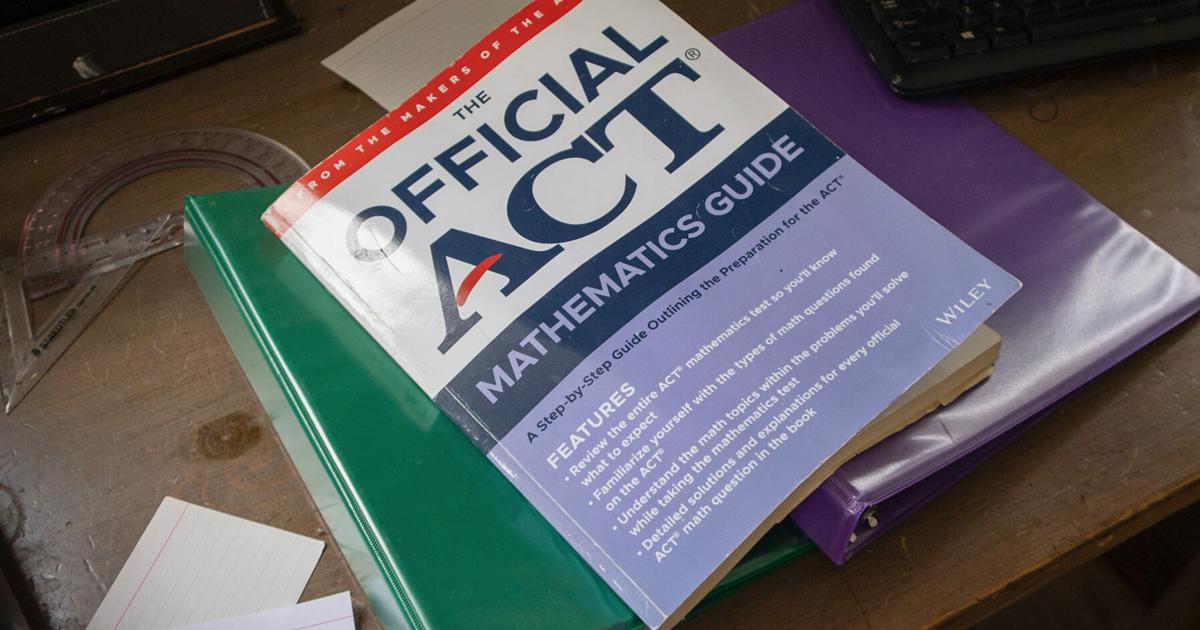
Recently, these faculty signed a petition demanding that UC Berkeley consider applicants’ SAT and ACT scores in STEM admissions, with a hope that an enforced standardized test will cause UC Berkeley to admit only students prepared for higher-level classes.
UC Berkeley has not considered standardized testing in admissions since 2020, following a lawsuit alleging that its testing practices excluded underrepresented students. However, some faculty believe that the campus’s current test-blind policy allows for the admission of poorly prepared students.
If standardized tests are necessary to weed out the students who fall below UC Berkeley standards, then UC Berkeley needs to change those standards to be inclusive of a wider range of people. The focus should not be on students who have had the resources to properly study and succeed on standardized exams, but rather on students who have shown drive and potential through their high school experiences.
Not all curriculum needs to be made easier. Rather, students need multiple paths that can accommodate peers on a wide spectrum of preparedness. While the lack of standardized testing could possibly be at fault for the admission of “underprepared” students, the concern is more UC Berkeley’s “solution” to that underpreparedness.
Students from lower-income families usually score worse on standardized tests than higher-income students. Preparation is hard when your school has a smaller budget and you do not have the time or money to enroll in test preparation classes. That difficulty should not play a role in whether someone should attend UC Berkeley or not.
UC Berkeley wants diversity, yet paradoxically wants to make it more difficult for certain communities to come to UC Berkeley. For example, Black and Latino students are highly underrepresented on campus, and they also disproportionately score lower on the standardized tests due to stereotype threat, verbal questions that potentially favor white students, white-centered cultural biases and enforced racial and socioeconomic educational segregation. When accepting minority students means having to allocate more resources to those students, real support for them disappears.
Educational and functional disabilities complicate the matter even more. With one-size-fits-all exams that don’t accommodate individual needs, students who don’t fulfill all expectations of ability fall behind despite having potential.
Elite institutions need to accept that not all students come from elite backgrounds. An underprepared student is still a student worthy of education. If UC Berkeley only wants elitism, it cannot also claim to be a leader in social mobility. If the campus wants to boost its reputation through claims of helping minority students, it needs to stick by those claims with action. If only advanced courses are provided, students with less background knowledge don’t have the opportunity to reach higher courses in which they could flourish. UC Berkeley can still provide advanced courses, but there ought to be ways to get students up to speed through more in-class review and preparation.
The move to reinstate standardized testing also completely ignores the possibility that failing grades could be caused by a reliance on artificial intelligence. UC Berkeley is currently developing a center focused on AI research and partners with Google Gemini, an AI platform. UC Berkeley profits from its partnerships with AI corporations, while “underprepared students” require UC Berkeley to put more money into supporting them.
Students who cannot fulfill standardized expectations become scapegoats for falling performance, and SAT and ACT testing becomes the bandage to cover up the extreme issues contributing to educational inequality. All the while, UC Berkeley continues to employ AI in the classroom despite the fact that these tools reduce the quality of student learning. Letting AI mostly flourish while attempting to shut down the SAT shows that UC Berkeley wants the prestige of high-scoring students without a real dedication to student growth and education.
Some supporters of standardized tests claim that they are a neutral way for all students to showcase their abilities compared to inflated GPAs, thereby encouraging diversity. This argument falls flat in the face of studies showing how family income, education, and race create higher variance in test scores (40%) than in high school grades (less than 10%). It is possible that enforced standardized testing could make students more well-versed in preestablished fundamentals, but it definitely does not create a more diverse student body. Historically, standardized tests have been a weapon against people of color, and that reality cannot suddenly cease to exist. Initially made as a white supremacist tool to segregate people of color from public education and assert the “superiority of the Nordic race group,” the tests continue to hold bias against Black, Latino, and Indigenous kids. Support for standardized tests is a way for colleges to exclude certain populations, while not directly admitting that exclusion.
Adopting additional standardized tests will not magically lessen broader systemic inequalities. If there is a dip in student performance, the attention should be on AI, a “resource” that removes the grit and effort required for education. If that performance inequality persists, better math placement, pre-freshman summer courses, and more focus on reviewing fundamentals would all allow students to learn at the level that they need.
Colleges are at a crossroads between a diverse student body or a fully “prepared” student body. The correct path is a diverse student body. Inaccessible higher education only strengthens systemic inequality that keeps oppressed people from equal access to economic opportunities. Students who do not score high on standardized tests may have just as many abilities and experiences as their peers, even if they do not manifest in a high score. There are endless ways to be prepared for college, many of which cannot ever be measured in just one two-hour exam.