
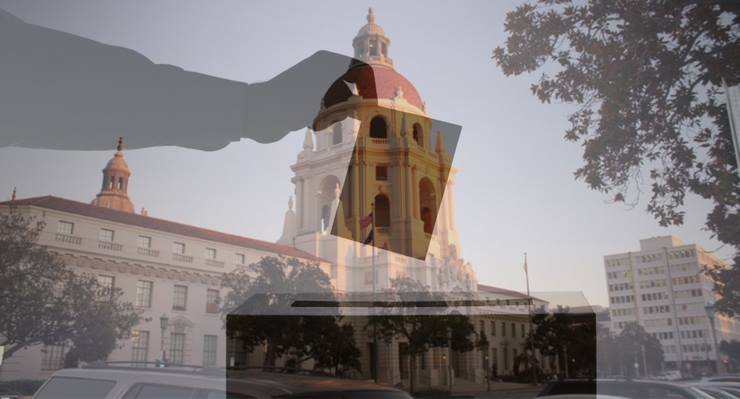
On the eve of California’s statewide special election, Pasadena voters are joining millions across the state in weighing Proposition 50, a measure that would temporarily replace California’s independent congressional map with new lines drawn by the Legislature beginning in 2026. The decision, set for Tuesday, carries practical implications for who speaks for Pasadena in Washington and administrative consequences for counties preparing to update voting materials.
At its core, Prop. 50 asks voters to authorize the use of legislatively drawn congressional districts through the end of the decade, then return the map-making job to the state’s independent Citizens Redistricting Commission after the 2030 census. State election officials describe the fiscal impact as a one-time cost to counties—up to a few million dollars statewide—to retool printed guides and other materials.
For Pasadenans, the near-term meaning is straightforward: any change approved Tuesday would not affect existing districts until the 2026 cycle.
What the measure does—and what Tuesday’s vote means
California redraws its congressional districts every ten years after the U.S. census; each state decides how to conduct that process, subject to federal law. Under current California practice, maps are drawn by the 14-member Citizens Redistricting Commission. Prop. 50 would create a temporary detour: new maps written by the Legislature would govern federal House elections beginning in 2026 and stay in place through 2030, before control reverts to the commission in 2031. A “No” vote keeps the commission’s existing 2021 map in force through the decade.
The Legislative Analyst’s Office—the state’s nonpartisan fiscal and policy referee—summarizes the effect this way: a “Yes” vote means California would use new, legislatively drawn congressional maps starting in 2026 until the commission draws maps following the 2030 census. A “No” vote means the state would continue using its current commission-drawn maps.
The stakes as described in the official guides
The Secretary of State’s Official Voter Information Guide frames Prop. 50 as a temporary change with an administrative price tag: counties would incur one-time costs (up to a few million dollars statewide) to update election materials reflecting any new congressional lines. Those costs are limited to implementation; the measure does not alter the broader rules that govern who may vote or how ballots are cast.
The guide also reiterates the basics of redistricting: states redraw districts after each census to account for population shifts and must comply with federal requirements. California’s independent commission is set to resume drawing congressional lines after the 2030 census unless voters approve a different path Tuesday.
Pasadena’s Monday: what to know before Election Day
Los Angeles County’s voting system—used by Pasadena—relies on countywide vote centers rather than neighborhood precincts. Voters can choose any open site, many of which have been operating for days.
On Monday, Nov. 3, all L.A. County vote centers are open 10 a.m.–7 p.m.
County officials say they have expanded capacity ahead of Tuesday. In an Oct. 30 update, the Registrar-Recorder/County Clerk announced that 140 additional vote centers would open for the final stretch, bringing the total to 251 vote centers countywide from Saturday through Election Day. Pasadena voters can consult either the list view or the live locator to confirm the nearest site and hours before heading out.
The county’s media kit outlines the arc of the special election period—ballot guides and sample ballots mailed in advance, initial vote centers opening on Oct. 25 with daily service, and the run-up to the Nov. 4 close of polls. For Monday, the key takeaway is simple: in-person options are already open, and county links carry the most current information.
Mechanics and timelines (statewide)
The statewide voter guide’s calendar notes the long voting window typical of California elections. Vote-by-mail has been open throughout October and remains available through Election Day, and polls will be open Tuesday from 7 a.m. to 8 p.m. On Election Day (Tuesday, Nov. 4), all L.A. County vote centers are open 7 a.m.–8 p.m. Those statewide rules apply in Los Angeles County as well; Pasadena voters who prefer to cast ballots on Tuesday can do so at any county vote center.
What comes after Tuesday’s vote
The Legislative Analyst’s Office describes the downstream timeline succinctly: if voters approve Prop. 50, California would use new, legislatively drawn congressional maps starting in 2026 and continue using them until the commission returns to its regular role after the 2030 census. If the measure fails, the commission-drawn map adopted in 2021 stays in place through the decade. Either path would be implemented by state and county election officials under the standard canvass and certification schedule following Tuesday’s results.
 Get our daily Pasadena newspaper in your email box. Free.
Get all the latest Pasadena news, more than 10 fresh stories daily, 7 days a week at 7 a.m.