
California’s state park system already protects about 1.65 million acres across 280 sites, including beaches, redwoods, deserts, lakes, historic sites and recreation areas. That scale means choosing the best California state parks is about matching the right park to the right trip, whether it is a camping stay, a road trip or a beach vacation.
It is also set to grow. On April 22, state officials announced a plan to add three new state parks in California and expand the existing network by 30,000 acres by the end of 2030.
California’s Top State Parks
California state parks cover nearly every kind of landscape travelers associate with the state, from Pacific beaches and redwood forests to desert wilderness, alpine lakes and historic towns.
The largest, Anza-Borrego Desert State Park, is around 600,000 acres, while the smallest, Simon Rodia State Historic Park, is merely 0.11 acres.
To find the best California state parks, I interviewed California natives who grew up visiting them and travel experts with firsthand experience guiding, planning or working in California.
1. Anza-Borrego Desert State Park, Recommended For Desert Adventures
Fonts Point is an overlook in Anza-Borrego Desert State Park in southern California.
Getty
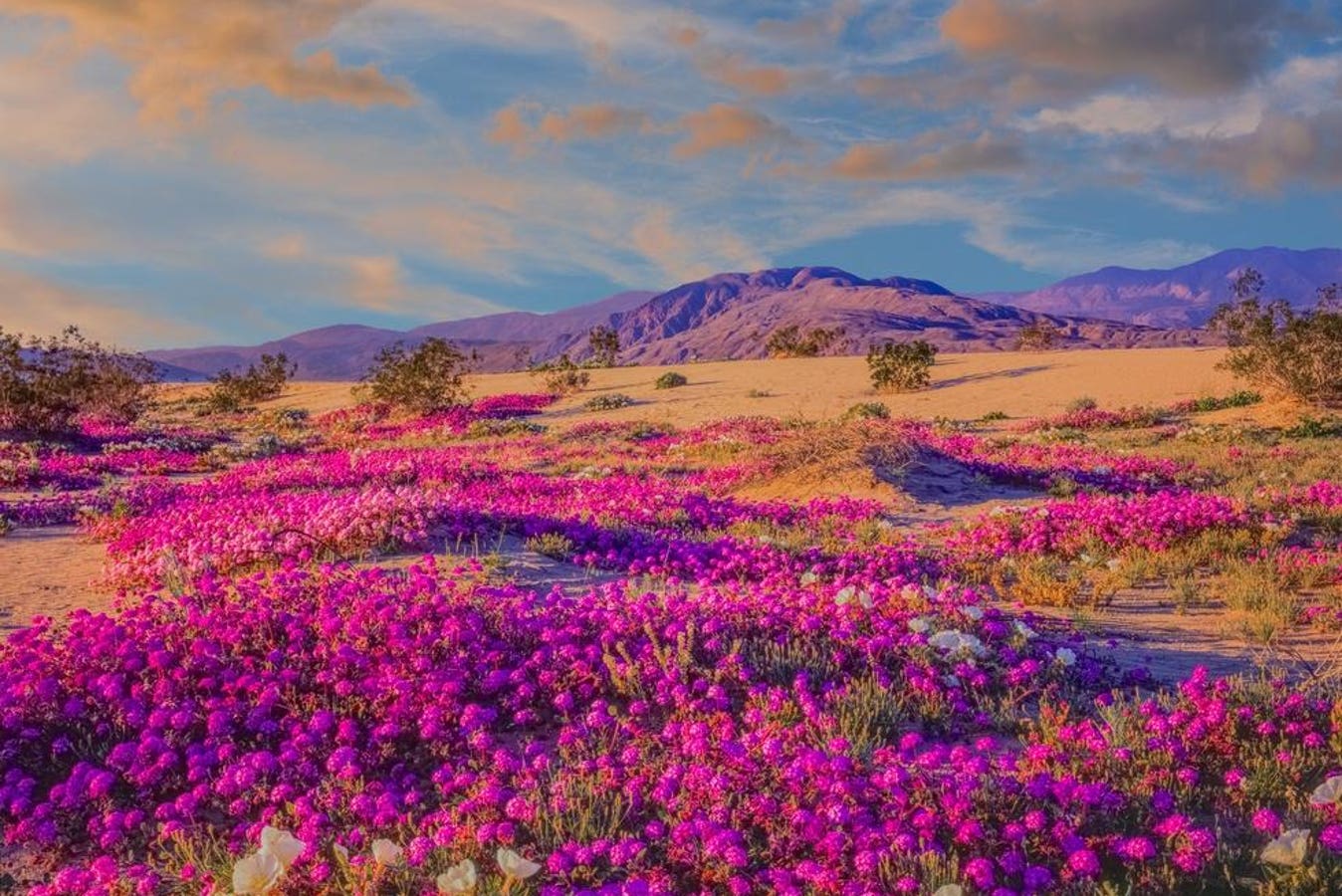
Anza-Borrego Desert State Park spreads across Southern California’s Colorado Desert, with Borrego Springs as the main gateway. Established in the early 1930s, it is California’s largest state park and is known for slot canyons, wildflowers, palm groves, bighorn sheep, dirt-road drives and vast desert views.
Alexandra Dubakova, a California travel expert with FreeTour, recommends Anza-Borrego for its siltstone slot canyons, where “the walls twist tightly together that you can touch both sides as you hike through.”
The park is best in cooler months, especially winter and spring. Stay in Borrego Springs, then add stargazing, desert sculpture viewing or a drive to nearby Ocotillo Wells for a broader desert trip.
2. Crystal Cove State Park, Recommended For For Beaches
The beach at Crystal Cove State Park in southern California.
Getty
Crystal Cove State Park sits off Pacific Coast Highway between Corona del Mar and Laguna Beach. It is one of Orange County’s most appealing coastal escapes, with 3.2 miles of beach, tide pools, sandy coves, offshore waters, canyon trails and a district of rustic historic cottages from the 1930s.
Kate Wheeler, president and CEO of Crystal Cove Conservancy, says, “Crystal Cove State Park offers something increasingly rare — a place where California’s natural beauty, cultural history and spirit of conservation come together in one unforgettable experience. Visitors can spend the day exploring miles of protected coastline, tidepools and backcountry trails, then step into the Historic District and connect with a story that has shaped generations of Californians.”
Stay in one of the restored cottages, or book your accommodation in nearby Newport Beach or Laguna Beach. Moro Campground is on the beach, a perfect base for surfing and tide pooling.
3. Emerald Bay State Park, Recommended For Lake Tahoe Views
Emerald Bay State Park is known for its alpine scenery and lake views.
Getty
Emerald Bay State Park sits on Lake Tahoe’s southwest shore, near South Lake Tahoe and Tahoma. Established in the 1950s, it is known for its alpine scenery, clear water and one of California’s most recognizable lake views featuring Fannette Island.
Tom Mannings, CEO of Top Villas, a vacation rental company with more than 1,000 properties in California, says, “Visitors can kayak across Lake Tahoe’s iconic bay or dive California’s first underwater maritime heritage trail, where historic boats and barges remain below the surface.”
Rob Holmes, a U.S. travel expert with Journeyscape, also recommends this park for sunrise kayaking, hiking and panoramic viewpoints.
Visit early in the summer or in the shoulder season to avoid peak parking pressure. Stay nearby in South Lake Tahoe or Tahoe-area rentals.
4. Point Lobos State Natural Reserve, Recommended For Seeing Wildlife
Point Lobos State Natural Reserve is known for its headlands, coves, marine life and more.
getty
Point Lobos State Natural Reserve, “the crown jewel of the California State Park System,” sits just south of Carmel-by-the-Sea on the Monterey Peninsula. It is known for dramatic headlands, turquoise coves, Monterey cypress, tide pools, marine life, accessible trails and protected underwater habitats.
Jeanine Romo, a California native and adventure travel creator from Le Wild Explorer, notes that it works for many types of visitors, from hikers and wildlife watchers to certified divers exploring kelp forests in Monterey Bay National Marine Sanctuary.
Stay in Carmel or Monterey, and visit on a clear morning to catch sea otters holding hands or harbor seals playing in the waters.
5. Prairie Creek Redwoods State Park, Recommended For Redwoods And Camping
Prairie Creek Redwoods State Park is in northern California and is ideal for hiking and camping.
Getty
Prairie Creek Redwoods State Park is in Humboldt County, near Orick and the Redwood National and State Parks corridor. It was established in 1923 to protect old-growth coast redwoods.
Linda Mohammad, a California resident, travel expert and author known as The Bucket List Traveler, recommends visiting Prairie Creek during elk rutting season between August and October. “Some of the tallest and largest coast redwoods call this place home, along with a healthy population of Roosevelt elk that are often found grazing by the meadow along the Newton B. Drury Scenic Parkway,” she explains.
Mohammad also recommends hiking the Fern Canyon Loop, which she says feels “straight out of prehistoric time.” Movie fans may recognize the scenery from The Lost World: Jurassic Park.
Stay near Orick, Trinidad, Eureka or inside the park if you can secure camping via reservecalifornia.com. Spring through early fall works well for hiking, when misty weather can make the redwoods feel even more eerie.
6. Julia Pfeiffer Burns State Park, Recommended For Big Sur Scenery
A main feature of Julia Pfeiffer Burns State Park is McWay Falls, which drops over a cliff into the Pacific Ocean.
Getty
Julia Pfeiffer Burns State Park sits along Highway 1 in Big Sur, about 37 miles south of Carmel. Named for respected Big Sur pioneer Julia Pfeiffer Burns, it is known for McWay Falls, redwoods, rugged coastline and some of California’s most photographed coastal scenery.
Richard Laermer, spokesperson and travel expert for Guest Reservations, singled out McWay Falls, saying there is “nothing else like it on the planet.” It is an 80-foot waterfall dropping from granite cliffs toward a secluded turquoise cove directly at the beach.
The park is best for Highway 1 travelers, photographers and visitors who want a dramatic Big Sur stop.
Stay in Big Sur, Carmel or Monterey, and check road, trail and parking updates before visiting, since access can change after storms and due to repair work.
7. Mount Tamalpais State Park, Recommended For For Hiking
Mount Tamalpais State Park is in Northern California and great for hiking.
Getty
Mount Tamalpais State Park rises just north of San Francisco’s Golden Gate Bridge in Marin County. The park has more than 60 miles of trails that connect to a broader 200-mile trail system, including the Golden Gate National Recreation Area.
The most accessible trail is the 0.75-mile Verna Dunshee Trail to East Peak viewpoints. Advanced hikers should head to Steep Ravine Trail to hike the redwood-filled canyon route and marvel at the view from a 2,571-foot peak.
Sean Kelly, co-founder of BookRetreats.com and a Bay Area native, recommends Mount Tamalpais for summer cloud inversions. “On July and August mornings, marine fog rolls in below the peaks, so the ridgelines float above a sea of cloud with 25-mile views out to the Farallon Islands,” he says.
Stay in Mill Valley, Sausalito, Stinson Beach or San Francisco, and visit early for cooler hiking and easier parking.
8. Bodie State Historic Park, Recommended For Gold Rush History
Bodie State Historic Park is a former gold-rush boomtown.
Getty
Bodie State Historic Park sits in the Eastern Sierra near Bridgeport, close to the Nevada border. The former gold-rush boomtown became a state historic park in the 1960s to preserve its buildings, streets and interiors.
Aïda Mollenkamp, a California native, travel expert, and founder of Salt & Wind Travel, says Bodie is about one hour from her house, and every time she goes there, it feels like stepping straight into the 1880s. “It’s frozen exactly as the last residents left it, right down to dishes still on the tables and goods still on the store shelves,” she says.
Stay in Bridgeport, Lee Vining or Mammoth Lakes, and pair it with a visit to Mono Lake or an Eastern Sierra road trip.
9. Mount San Jacinto State Park, Recommended For Alpine Views
San Jacinto State Park is known for its trails, pine forests and mountain meadows.
Getty
Mount San Jacinto State Park sits above Palm Springs and Idyllwild in Southern California, established in 1933 to protect high-elevation wilderness. San Jacinto Peak is 10,834 feet, the highest peak in California. The park is known for high-altitude trails, pine forests, mountain meadows and cool alpine air.
Mannings describes it as “one of California’s most dramatic landscape contrasts,” especially for visitors who ride the Palm Springs Aerial Tramway from the desert heat into high-mountain scenery.
Stay in Palm Springs, Idyllwild or nearby desert resorts. Visitors need a permit not only for camping but for day trips, although the latter is free.
10. Jedediah Smith Redwoods State Park, Recommended For Old-Growth Forests
Redwoods and ferns grow in Jedediah Smith Redwoods State Park.
getty
Jedediah Smith Redwoods State Park sits nine miles east of Crescent City in far Northern California. It protects 10,000 acres of primeval redwood groves, with rhododendrons, azaleas, ferns and river scenery. This park is also home to the Tolowa people, whose descendants are still present and practicing their traditions.
Mohammad recommends Jedediah Smith for Howland Hill Road, a 10-mile unpaved route through the heart of the forest surrounded by the “gentle giants.”
“As an avid park lover who has visited all of the U.S. national parks, I’ve driven thousands of miles of scenic roads across the United States, traveling from park to park. But there’s one scenic drive that I daydream and keep going back to — the Howland Hill Road,” she says.
Stay in Crescent City or camp in the park, and pair it with Prairie Creek Redwoods, Del Norte Coast Redwoods and Redwood National Park for the ultimate redwoods road trip.
11. Van Damme State Park, Recommended For Sea Caves And Pygmy Forest
Van Damme State Park is in northern California and popular for its sea caves and hiking.
getty
Van Damme State Park sits three miles south of Mendocino on the Northern California coast. It was established in 1934 after Charles Van Damme left the land to the state. It is known for kayaking and diving in sea caves, and for walking through a rare pygmy forest with mature cypress and pine trees.
Liz Lucas, deputy operations manager at The Wildland Trekking Company, a U.S.-based adventure travel company that operates under the umbrella of Intrepid Travel, says Van Damme stands out because visitors can kayak into sea caves in the morning and hike beneath redwoods in the afternoon.
Stay in Little River, Mendocino or nearby coastal inns, and plan around tides, weather and kayaking conditions. It is especially good for travelers who want a quieter base on the Mendocino Coast.
12. Año Nuevo State Park, Recommended For Elephant Seal Watching
Elephant seals rest on the beach at Año Nuevo State Park.
Getty
Año Nuevo State Park sits on the San Mateo Coast near Pescadero, about 55 miles south of San Francisco, established as a state park in the 1980s to protect the coastal habitat of the northern elephant seals.
Mollenkamp recommends Año Nuevo because the park is more than a simple roadside stop. From December through March, visitors must join a guided walk to see northern elephant seals during the breeding and pupping season.
“You hike out into the dunes to stand close enough to hear two-ton bulls bellowing and clashing while the females nurse their newborn pups. It is something you genuinely can’t do anywhere else on the coast,” she says.
From April through August, seals return for molting season, while September through November brings juvenile haul-outs. During these periods, visitors can usually explore the viewing area on a self-guided basis with a free permit.
Stay in Half Moon Bay, Santa Cruz or Pescadero, and reserve ahead for guided tours.