
It’s a Sunday afternoon in Alameda, and several of the Bay Area’s most gifted young brewers are gathered at the Rake, the taproom attached to Admiral Maltings, to say farewell to one of their own.

Phil Emerson — founder of San Francisco’s recently shuttered Olfactory Brewing & Blending and former brewmaster at Almanac Beer Co. — is leaving California for Vermont, where he will soon begin a new brewing job nearly 3,000 miles from a beer community that will miss him.
The Rake sits beside Almanac at Alameda Point, the former naval base that has evolved into one of the West Coast’s densest hubs for beer, wine and spirits producers. Emerson spent seven years here as Almanac’s brewmaster, helping guide the company through a period of rapid growth while shaping some of its most celebrated recipes.
Article continues below this ad
Beer industry insiders and supporters mingle inside the Rake in Alameda, Calif., May 31, 2026.
Douglas Despres/For SFGATE
The mood in the taproom feels familiar. Brewers, beer buyers, taproom managers and longtime supporters of the scene reconnect to laugh, hug, and reminisce over pints of local beer, glasses of homemade sangria and shots of Underberg.
Two weeks earlier, some of these same faces gathered at Trumer Brewery in Berkeley, where longtime brewmaster Lars Larson shared farewell toasts beneath imposing brewing vessels that will no longer produce his renowned pilsner. Earlier this spring, Trumer’s Texas-based parent company sold the brewery to Firestone Walker Brewing Company, which announced plans to absorb production into its much larger Central Coast facility.
“I was there from the very beginning, the very first day,” Larson told me several days later.
Article continues below this ad
FILE: Lars Larson is the only brewmaster Trumer Berkeley has ever had, and one of the last employees on staff as the brewery winds down operations.
Lester Black/SFGATE
Since 2017, the Bay Area has witnessed the closure, consolidation, relocation or acquisition of many of its largest breweries. Speakeasy Ales & Lagers ceased operations before later resuming production in Fresno. 21st Amendment Brewing closed its San Leandro facility before being acquired by Philadelphia-based Evil Genius Beer Company. Bear Republic Brewing shuttered its Healdsburg brewery following its acquisition by Drake’s Brewing, which just announced plans to merge with Figueroa Mountain Brewing and relocate most of its production volume to Buellton — the same Santa Barbara County city where Trumer beer will now be brewed.
And while there are signs that Anchor Brewing may rise again at its historic Potrero Hill location, it is unlikely that staffing levels and compensation would return to their previous scale. The result is a Bay Area beer labor market flooded with experienced brewers, cellar workers and industry ambassadors.
Ironically, the closure of these facilities coincides with an unprecedented peak in beer quality for Bay Area consumers. While fewer nationally recognized brands are being produced in the region, the smaller outfits replacing them are producing world-class beer more consistently than ever before. Drinkers today have access to a wider range of technically accomplished, brewery-fresh beer than at any previous point in the region’s history.
Article continues below this ad
FILE: The sign on the front door of Anchor Brewing Co. in San Francisco.
Justin Sullivan/Getty Images
Whether it is the parents who pack Almanac’s Adventureland campus in Alameda every weekend, the tourists who line up at Humble Sea’s Pier 39 location or the locals who carry boxes of June’s Pizza into the Brix Factory tasting room in West Oakland, across the Bay Area, consumers have access to a wider variety of brewery-operated retail spaces than ever before.
Beer industry talent is being redistributed from the mid-sized, wholesale-focused breweries like 21st Amendment that once defined the region into smaller, self-distributing, retail-focused operations that now form the craft beer vanguard. In some cases, that shift is elevating already elite breweries to even higher levels. In others, it is pushing experienced beer professionals into part-time work, other industries or out of the Bay Area entirely.
In other words, Bay Area beer is better than ever for consumers, while simultaneously becoming economically unsustainable for many of the people who produce it.
Article continues below this ad
“The bigger picture of the Bay Area is that the larger breweries — you don’t want to say [there are] none, but there are very few left,” Larson said. “What’s left over are the small, taproom-focused breweries. Those jobs are often jobs for people at the beginning of their careers, as opposed to people who are trying to maintain a family.”
Trumer provided full medical, dental and healthcare benefits, Larson noted, something that is increasingly rare in a Bay Area beer industry shifting toward smaller operations built around self-distribution and direct-to-consumer sales.
FILE: Trumer Berkeley produced all of the brewery’s pilsner that’s sold in the United States.
Lester Black/SFGATE
“Trumer was a farm team for the Bay Area beer industry,” Ryan Frank, an industry veteran now serving as chief operating officer of Headlands Brewing Company, told me, describing the brewery as an unofficial training ground for the region’s production workforce.
Article continues below this ad
Over the years, brewers who developed their skills within Trumer’s meticulously process-driven brewery dispersed throughout the region, carrying those standards with them to other companies. As one of the last remaining regional craft breweries in the East Bay, Trumer offered something most locally focused breweries could not: a place where brewing could provide a relatively comfortable Bay Area livelihood.
Larson is the only brewmaster Trumer Berkeley has ever had. Today, after more than two decades overseeing one of the defining beers of Bay Area drinking culture, he remains among the last employees still on staff, helping supervise the brewery’s decommissioning.
“My instinct is that I will be looking at beer-adjacent industries,” Larson said when I asked what comes next for him professionally. “That is the more likely path for me now.”
Larson is hardly alone. From brewery production floors to retail beer counters, even some of the most accomplished people in American beer are struggling to find the kind of long-term careers their résumés would seem to warrant.
Article continues below this ad
Nicole Erny, a master cicerone, pours beer behind the bar at Good Times in Oakland, Calif., on June 5, 2026.
Douglas Zimmerman/SFGATE
Nicole Erny is one of only 29 master cicerones in the world. Over the years, she has contributed to many of the Bay Area’s top beer bars and designed sensory-based quality-assurance programs for some of the region’s most respected breweries. Today, she works part-time at Good Times, a beer and wine shop in North Oakland.
“It’s kind of scary to think about even trying to put myself out there,” Erny told me, “because I know breweries can’t afford anything right now.”
Article continues below this ad
For Erny, the current labor market reflects long-simmering structural problems within craft beer itself: physically demanding work, wages that struggle to keep pace with the rising cost of living, and an industry culture in which passion often substitutes for economic stability.
“People get paid in Skittles and shred their bodies out of love for the beer,” she said.
At the same time, Erny still believes deeply in the kind of face-to-face beer culture the Bay Area does especially well.
“Real beer education happens one-on-one,” she said. “You give somebody a taste of something adjacent to what they already drink, and suddenly they discover this whole new world. That’s how beer culture got built in the first place.”
Nicole Erny, a master cicerone, works as a bartender at Good Times in Oakland, Calif., on June 5, 2026.
Douglas Zimmerman/SFGATE
The challenge is finding living-wage work in an industry returning to the smaller, more intimate scale she describes. Today, many industry veterans are struggling to find stable employment, even as smaller Bay Area breweries assemble the strongest teams they have ever had.
Article continues below this ad
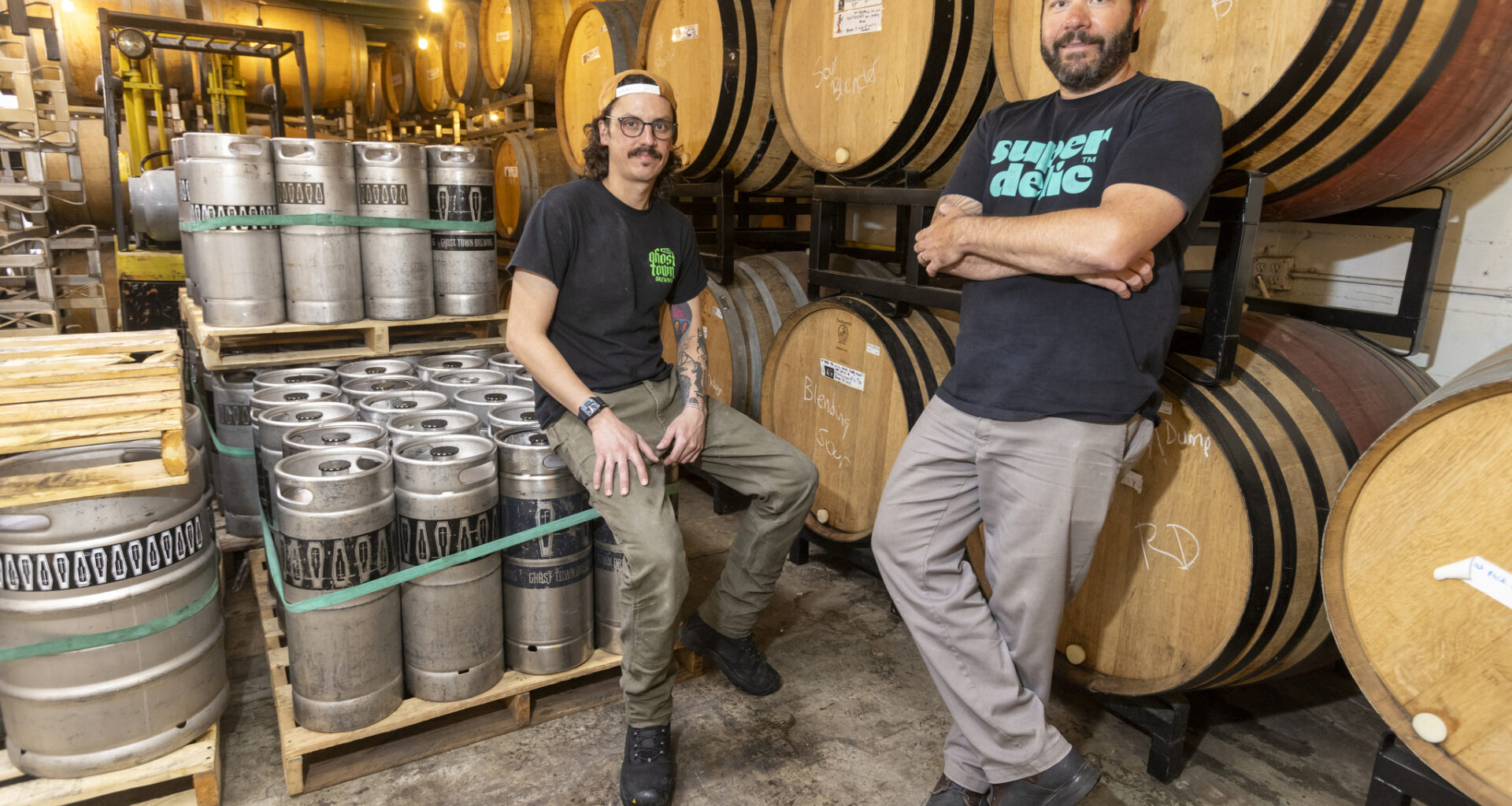
Few illustrate that shift more clearly than Oakland’s Ghost Town Brewing. Already one of the most decorated breweries in the country over the past several years, Ghost Town has recently added former Drake’s employees, including brewer Kyle Murdock, who spent six years as a lead brewer at the larger regional brewery.
“It was almost impossible for me to find anybody,” director of brewing operations Justin Burdt told me. “A year ago, we put an ad up, and we only had two people apply.”
Ghost Town brewer Kyle Murdock keeps an eye on a batch of beer being brewed at Ghost Town Brewery in Oakland, Calif., on June 8, 2026.
Douglas Zimmerman/SFGATE
Now, suddenly, some of the most experienced production workers in Northern California are available.
Article continues below this ad
“Our SOPs are pretty complicated,” Burdt said, referring to the brewery’s standard operating procedures. “And within two weeks, Kyle had it dialed.”
Burdt said the recent closures have reshaped staffing across the Bay Area beer scene far beyond Ghost Town itself. Fellow Oakland breweries like Original Pattern and Cellarmaker have benefited from the sudden availability of experienced brewing talent, as have Emeryville’s Wondrous Brewing and San Francisco’s Barebottle Brewing. Smaller breweries throughout the region are now recruiting workers who likely would have been out of reach just a year or two ago.
Ghost Town brewer Kyle Murdock, left, and director of brewing operations Justin Burdt with barreled beer and beer kegs at Ghost Town Brewery in Oakland, Calif., on June 8, 2026.
Douglas Zimmerman/SFGATE
Anthony Raggio, Drake’s director of packaging and logistics, jokingly described the shift this way: “We call Ghost Town ‘Drake’s North’ and Original Pattern ‘Drake’s West.’”
Article continues below this ad
Ryan Frank has watched this transformation from both sides. Before taking his current position at Headlands, Frank previously brewed at both 21st Amendment and Fort Point, two breweries that helped define an earlier era of Bay Area craft beer built around larger batches and rapid wholesale growth.
That model may no longer be economically viable. But the people who built those breweries have not disappeared. Many of them are turning up inside smaller breweries that are finding success in a market that rewards freshness and proximity more than broad distribution and production scale.
Ron Silberstein, co-founder of Admiral Maltings, holds maturing barley in Alameda, Calif., May 31, 2026.
Douglas Despres/For SFGATE
Headlands is one such company. Over the past two years, the growing brewery has opened three new locations in the East Bay, including one on the UC Berkeley campus, while adding talented brewers displaced by closures at 21st Amendment and Heretic.
Article continues below this ad
“The beers we’ve been making over the past six months are absolutely elevated by the quality of labor that we’ve had access to,” Frank said.
From the beer drinker’s perspective, this may well be the strongest local beer culture the region has ever had. Whether it can continue to attract and retain the talent that made it possible is a more difficult question.
Frank has watched talented people leave beer entirely for more stable industries.
Brennan Fleming, founder of Dunloe Brewing in Davis, removes empty beer kegs on the back side of the Rake in Alameda, Calif., May 31, 2026.
Douglas Despres/For SFGATE
“I don’t know one person who has left brewing for biotech and come back,” he told me.
Article continues below this ad

Stay informed, and entertained.
By signing up, you agree to our Terms Of Use and acknowledge that your information will be used as described in our Privacy Policy.
For now, the talent that once powered the Bay Area’s larger breweries is increasingly showing up in the smaller, fresher, more intimate brewery experiences consumers have been gravitating toward for years. Whether the people responsible for that transformation will be able to build sustainable lives here remains to be seen.
Sayre Piotrkowski is an advanced cicerone and has been working in the craft beer industry for more than 20 years. He currently serves as executive director of the Bay Area Brewers Guild and publishes the organization’s weekly newsletter, the Brew Deck.