
Award-winning filmmaker C. Fitz has never been interested in entertaining the stories history books share. With the upcoming re-release of JEWEL’S CATCH ONE, Fitz once again shines a spotlight on the legendary Jewel Thais-Williams, the first out Black lesbian to own a nightclub in Los Angeles and the legendary force behind Catch One, the iconic nightclub that became a sanctuary and cultural hub for generations of Black and LGBTQ+ Angelenos far and wide. Sometimes inaccurately referred to as the “West Coast Studio 54,” Catch One was much more revolutionary than it was trendy. Sure, it was a place to dance and vibe out to. But more importantly, it served the community as a place to organize, to celebrate, to connect with one another, and to belong.
In our deeply moving conversation, Fitz reflects on the six-year journey of making the critically acclaimed documentary, the political urgency of preserving Black queer history, and why spaces like Catch One still matter in an age of social media and cultural turmoil. With wit, honesty, and a palpable admiration for Jewel’s unapologetic drive, Fitz talks not just as a filmmaker but as an usher of a legacy too powerful to fade quietly into the shadows. As Pride Month and Juneteenth converge against an increasingly polarized American backdrop, JEWEL’S CATCH ONE arrives as both a celebration and a much-needed and appropriately timed call to action.
A resounding congratulations on the upcoming re-release of JEWEL’S CATCH ONE! What first drew you to the story of Jewel Thais-Williams and Catch One?
My initial inspiration came when I met Jewel in 2010 while directing a short piece on her community work. The moment I stepped into her world, I realized how much of her story had gone undocumented. As a filmmaker, that immediately felt like something I needed to change.
What stayed with me was not just who she was as a pioneering entrepreneur and activist, but the scale of what she built and how many lives her community touched. There was very little written about her, and I made a conscious decision to commit to capturing that history before it was lost. That led to six years of making the film, followed by two years on the festival circuit, where I focused on building momentum to get the film distributed so this history could reach a much wider audience.
From a storytelling perspective, it was important for me to go beyond a single narrative and trace the broader cultural impact. The film connects Jewel’s story to the evolution of Black and LGBTQ+ life, as well as music, fashion, pop culture, and politics. I wanted to reveal her not just as a local figure, but as a hidden hero whose influence reached far beyond what most people realize.
Catch One has often been called the “West Coast Studio 54,” but your film reveals something much more. How would you describe what the club truly represented for Black LGBTQ+ communities?
I wanted to capture a time when community wasn’t optional, but it was survival. I approached the film with that urgency in mind, to make the audience feel, through visuals, the intimacy, resilience, and joy that existed inside those walls.
Catch One was more than a club. It was a safe haven for Black and LGBTQ+ communities at a time when that kind of space meant the difference between isolation and belonging. It was home to many who had lost theirs. In shaping the film, I focused on blending archival material with a cinematic language captured in the present day that brings those decades and community milestones to life.
Why do you think stories like Jewel’s have historically been overlooked in mainstream LGBTQ+ history?
It has always been a struggle for POC LGBTQ+ stories to be properly recognized and canonized, both now and in Jewel’s time. Jewel was inspired to start the club not only because of the racism her community faced in local neighborhood bars, but also because of the discrimination she and her friends experienced in trendy West Hollywood nightclubs.
When I began making the film in 2010, the industry wasn’t supporting these stories or this history. I had a VERY hard time getting support, including grants from mainstream resources. I had to chip away at it, which also makes this story so powerful, as I filmed for six years while gathering decades of exclusive archival material from the community. I didn’t have the funds to jump into a full production or edit of the movie. I do feel that more resources for films and stories like this emerged over time; however, today it feels like those resources are being stripped back again.
My film is proof that audiences want to see these stories. They shouldn’t be passed over or overlooked. These fabulous pieces of history, stories of how we got to where we are today, should be celebrated and supported by everyone who supports filmmaking: studios, producers, grant organizations, and even cities preserving their own history. So are these stories overlooked, or are they just really hard to make?
And I do want to shine a light on the people who made this possible. I had incredible support from my closest film colleagues who helped me bring this story to life. Without this amazing crew, especially Pat Branch, who was with me since Day 1 as a writer, producer, and all-around crew person; producers Tim Vermeulen and Carmen Quiros; the fabulous DP Abe Martinez (Hunting Wives, The Lincoln Lawyer); and the immensely talented Kelly Boesch, I don’t know if I could have made the film I wanted. It was a labor of love, and I had some great help bringing it to life.
As both Pride Month and Juneteenth approach, this re-release feels especially timely. What conversations do you hope the film ignites in our community today?
Real change comes from within. Like Jewel, one incredible woman ignited her friends, community, and city to help create change. I hope the film sparks conversations around the need to be active in our communities and with our neighbors in order to fight racism and discrimination in all its forms. Jewel’s life and the injustices her community faced still resonate with our current political climate. I hope the tenacity within this storytelling inspires action and helps people work toward a brighter future.
Jewel Thais-Williams was the first out Black lesbian to own a nightclub in Los Angeles, which is a groundbreaking achievement in itself. What struck you most about her courage and leadership?
What struck me most about Jewel was her sheer tenacity in pursuing her goals. Her people needed a safe space, and she kept those doors open. She stood in the doorway when the cops came, even buying time for patrons to flee or hide. She stood up again and again. Somehow, this one woman had the energy of ten, and always with a sense of humor.
The film also captures how nightlife can become not only political but even spiritual. Why are queer gathering spaces so essential, especially during periods of social backlash?
Safe spaces are always essential, especially for the LGBTQ+ community, where family support is often jeopardized. The space becomes home, a place to be whoever you are in peace and to find love and support. Often like church, but usually open to everyone.
During the AIDS crisis, Catch One became a hub for activism, fundraising, and care. What did you learn about community resilience while researching this chapter of the story?
In the face of patrons, friends, and loved ones dying all around her, Jewel and the community came together. Instead of saving what little she had and closing the club, she turned the parking lot into a soup kitchen for sick patrons and worked even harder to help them. Against all odds, with minimal financial and political support, Jewel and the community poured more love and hard work into helping those who needed it most. That’s what real community is and does. This story shows audiences the true meaning of community.
Do younger generations fully comprehend what spaces like Catch One meant before social media and mainstream acceptance?
No, and how could they, when so many have never had the opportunity to experience spaces like these? Some haven’t needed a safe space, and in this social media age, they don’t crave one in the same way. Online spaces can feel “safe,” in a sense. I hope a film like Jewel’s Catch One encourages people to step outside those digital walls, feel the music, experience the people dancing, and discover a “Catch One” in their own backyard. There’s nothing like it, and they’re missing out if they never experience it.
With the film also capturing the music and fashion of the era, how important was it for you to preserve not just the politics of the era, but its joy and glamour as well?
HUGE! The world of Catch One and spaces like it is where fashion is born and thrives. I wish I had a mini-series so I could show everything I witnessed in the photos and ball culture footage from our archival collection. It was incredible, and incredibly important, to celebrate the fabulous fashions of the ’70s, ’80s, ’90s, and early 2000s. It was a blast, and I only wish I’d had more time to show the world even more of the incredible trend-setting imagery.
What surprised you most while exploring the history of Catch One and the communities built around it?
The desperation to meet love. The community protects each other and fights so hard together. These were times when one wrong move could cost you everything, your job, family, or home. People were fearless, and Jewel was a leader in that fight.
The film arrives at a moment when LGBTQ+ rights and Black history are increasingly politicized in the United States. Did revisiting this story feel different now than it did during the original release?
I’m so thrilled to be partnering with Freestyle for the re-release. The original release was about celebrating the story and preserving this history on film forever. I never imagined we’d need to be shining a light on it again just a few years later because of today’s polarized climate.
This is one of the biggest reasons I made the film. I wanted Jewel’s inspirational story to encourage people to become heroes in their own communities. I didn’t know at the time that all of America would one day feel like a single backyard in need of inspiration, but here we are.
How did Jewel herself respond to seeing her life and legacy reflected back through the documentary?
When I first approached Jewel on the day we met, I told her how incredibly impressed I was by everything she had created and was doing: running the club, running the nonprofit health clinic, and, at the time, also running a vegan restaurant, an entire chapter I filmed and interviewed people about that ultimately had to be cut. I told her we needed to make a full documentary about her. She humbly shrugged and said, “Sure.”
Years later, when we were attending film festivals, and I would bring her onstage, she would receive standing ovations. For Jewel to receive her flowers not only at Los Angeles film festivals, where so many patrons and club workers had lived, but from audiences all over the world, was incredibly moving. It deeply touched her. And I felt very blessed to witness it and help shine a light on a true hero in our community.
As a filmmaker, how do you balance documenting trauma and discrimination while still honoring celebration and joy?
It was a challenge, and my first rough cut was over 10 hours long! I think you have to understand the purpose of showing trauma and discrimination in order to fully tell the story of how Jewel and her community overcame it, rose above it, and created real change. That’s where the inspiration lives.
There were moments, I’m not going to lie, when I struggled with letting go of certain stories. But the goal was to inspire change through the film’s storytelling, just as Jewel’s life inspired change. That balancing act was painful at times, but it felt worth it when audiences told us the film made them want to look at their own communities and ask what they could do to help make a difference. That made all the time and sweat that my editors and I poured into it worthwhile.
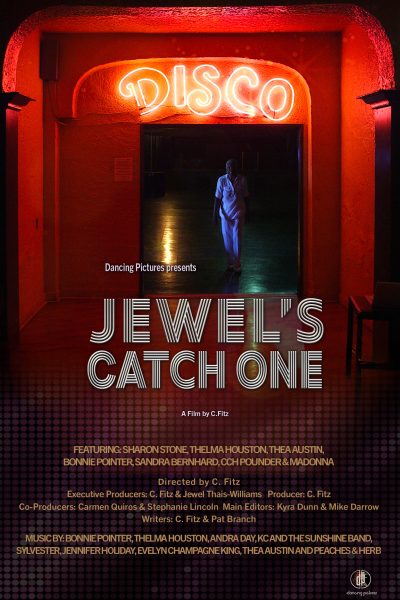 Jewel’s Catch One re-releases on June 16th
July 2026 will mark one year since Jewel Thais-Williams’ passing. How has her absence changed the emotional meaning of this re-release for you?
I’m very sad that Jewel isn’t here to witness the documentary’s next chapter and new audiences discovering her work, tenacity, and legacy. We traveled the world with this film, and, as I mentioned, seeing audiences everywhere discover her work and celebrate her was the best part of making it.
In today’s climate, I know she would be happy to contribute to the resilience needed to reclaim what we’ve lost and continue fighting for equality, just as she did through Catch One and her foundation.
If Jewel were here today watching the current cultural and political climate surrounding LGBTQ+ rights, what do you think she would want communities to remember about resilience and resistance?
Jewel was a doer. She didn’t wait for someone else to open the door, rather, she opened it herself and then held it open for everyone behind her. I think she would want communities to remember that real change doesn’t come from watching it happen; it comes from showing up again and again, even when the odds are against you.
She did it with minimal resources, in a climate that was often hostile, and she never stopped. I think she would say: look at what we built, look at what we survived, and know that we can do it again.
Her life is proof that one person with enough tenacity and love can change everything. That is ultimately why this re-release matters so much to me. Jewel’s story is not just history. It is a roadmap.
The film will be re-released on June 16, 2026, across major streaming platforms throughout North America, including Apple TV, Amazon, Kanopy, cable VOD, and additional digital outlets. Check out the pre-order link on AppleTV.