
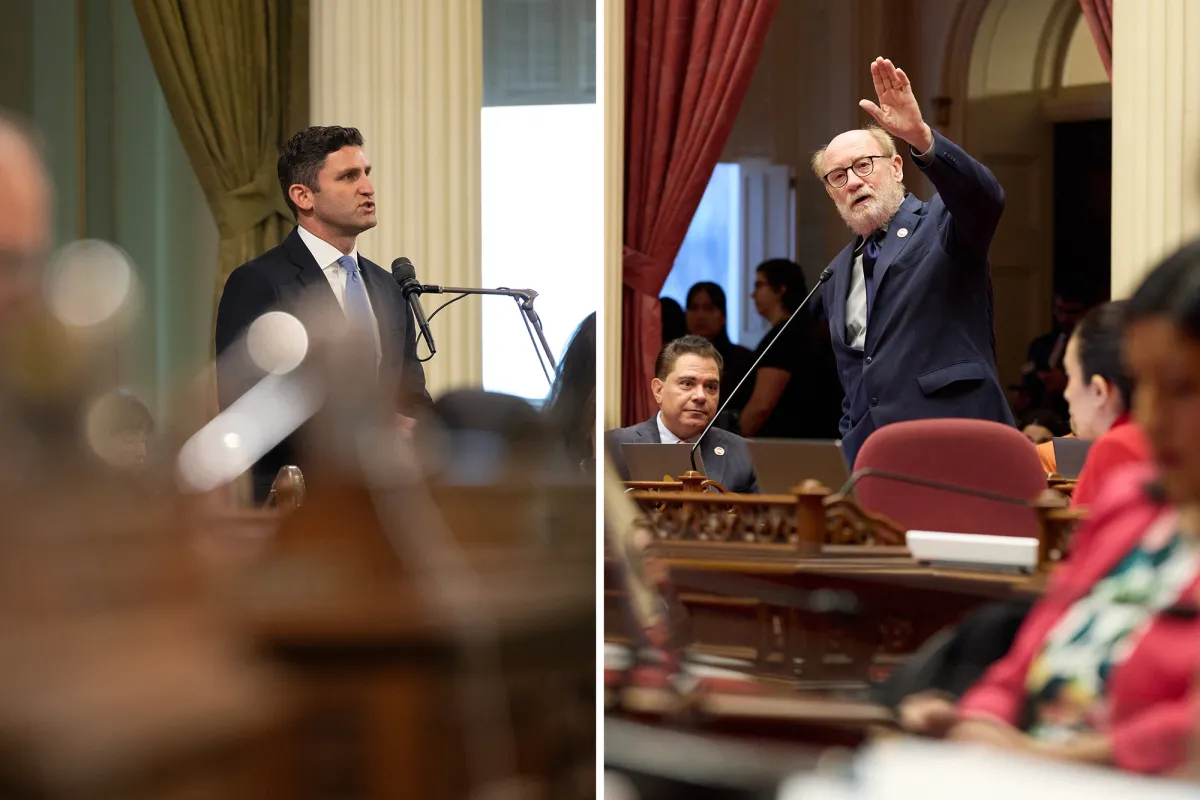
Banking on a rosier revenue forecast, state lawmakers proposed $2.7 billion more in funding for TK-12 schools and community colleges than Newsom did in May.
Schools and educators were hoping for more. They wanted the Legislature to reject Newsom’s proposal to withhold $3.9 billion in constitutionally guaranteed school money — an accounting mechanism to prevent overpaying schools in case the projected revenue doesn’t materialize.
“We demand that the Legislature and the governor follow the law, stop with the gimmicks and the shell games, and fully fund our schools,” said David Goldberg, president of the California Teachers Association. “Our union is prepared to do whatever it takes to hold them accountable if they don’t. Our students deserve no less.”
More generous with counties
The Legislature’s spending plan would give counties more money to step up eligibility checks for Californians applying for food stamps and health care benefits, reviews that are now required under Trump’s spending bill.
It would also allocate $125 million to help counties reestablish indigent care — a program serving low-income Californians that largely went away under Obamacare.
State lawmakers also want to set aside $900 million for the state’s homelessness fund, whereas Newsom included just $500 million in his proposal.
More revenue, please
Newsom proposed three new tax measures and lawmakers are on board with them:
The proposals come at a time when California voters have rejected most local tax initiatives during the June primary. But Newsom’s proposals require no voter approval — just the support of two-thirds of each legislative chamber.
There’s still an appetite among lawmakers to make corporations pay up. Senate Democrats had proposed a monthly charge on big employers for having employees enrolled in Medi-Cal, but have now backed away from the plan, instead asking the next governor to pitch “fully viable options” next year.
Save more money for rainy days
There’s a consensus between the Legislature and the governor to raise the ceiling on the revenue the state can deposit into its rainy day fund. The question is how much. State leaders are constitutionally required to make deposits into the account each year, but the balance cannot exceed 10% of the state’s general fund tax revenue under current law.
Changing that amount would require voter approval. Lawmakers are considering placing a measure on the November ballot that would allow them to sock away more money for lean years. They have a tight deadline of June 25 to settle on what they want to put before voters.