
San Diego County gas prices have dropped to their lowest level in nearly three months, but economists say drivers shouldn’t expect pre-conflict prices anytime soon.
SAN DIEGO — Gas prices are finally moving in the right direction for San Diego drivers, but experts say it will likely be several months before prices return to where they were before the conflict in the Middle East.
The drop comes after President Donald Trump announced on Truth Social Sunday that a deal with Iran had been reached, saying the Strait of Hormuz will reopen on Friday once the agreement is signed.
“Ships are starting to go out now, and Friday it will be completely open,” Trump said today at the G7 Summit in France on Monday. “Hopefully, it’s gonna be a good relationship, and we’re gonna get along. And if we don’t, we go back to where we started, but I don’t think that’s going to be necessary.”
Here in San Diego, drivers said they’ve already noticed prices beginning to fall.
“I’ve been noticing over the last couple of weeks, for sure, that the gas prices have been going down,” said Shaka, who filled up his tank at Gas King Monday. “Hopefully, it doesn’t keep fluctuating.”
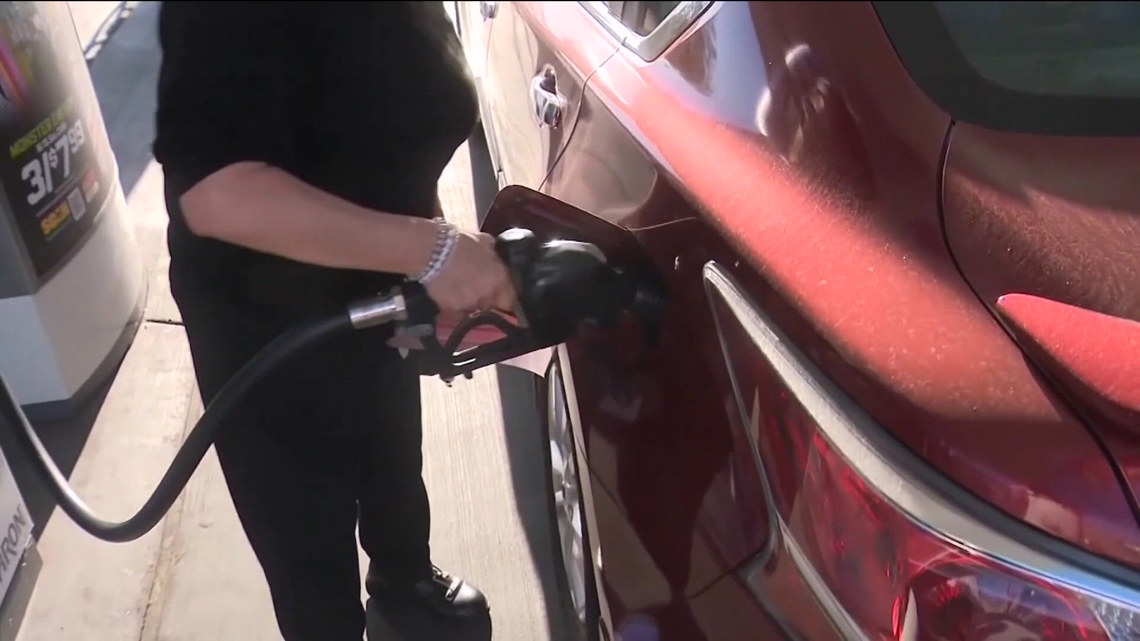
According to AAA, the average price of a gallon of regular self-serve gasoline in San Diego County has dropped 40 cents over the past month. Following news of the Iran deal, the average fell another half-cent Monday to $5.77 per gallon, the lowest price in three months.
Even so, prices remain well above the $4.67 average recorded on Feb. 27, the day before the conflict began.
University of San Diego economics professor Alan Gin said markets are responding to optimism that tensions in the region could ease.
“They’re reacting on hope, they’re reacting on hope that the conflict will end,” Gin said.
Gin expects gas prices to continue to gradually decline this week, but cautioned that the situation remains unpredictable.
“We still could have a few days left to go, and given the volatility that’s occurring over there, you never know,” Gin said.
Even if the agreement holds, Gin said drivers should not expect an immediate return to pre-conflict prices.
“It takes a while, then, to ship oil from the Middle East to different sites and then back, and so again, it’ll be probably many months before we get back to a semi-normal situation,” Gin said.
Until then, some drivers are preparing for more uncertainty.
“Every single day I actually take a gas can, and I fill up a water jug, one or two more gallons, so whenever something does hit the fan, I never have to worry about gas,” Shaka said.
Gin said the effects of lower oil prices could extend beyond the gas pump. If the agreement holds and oil markets continue to stabilize, shipping costs and airfare could also decline in the coming months.