
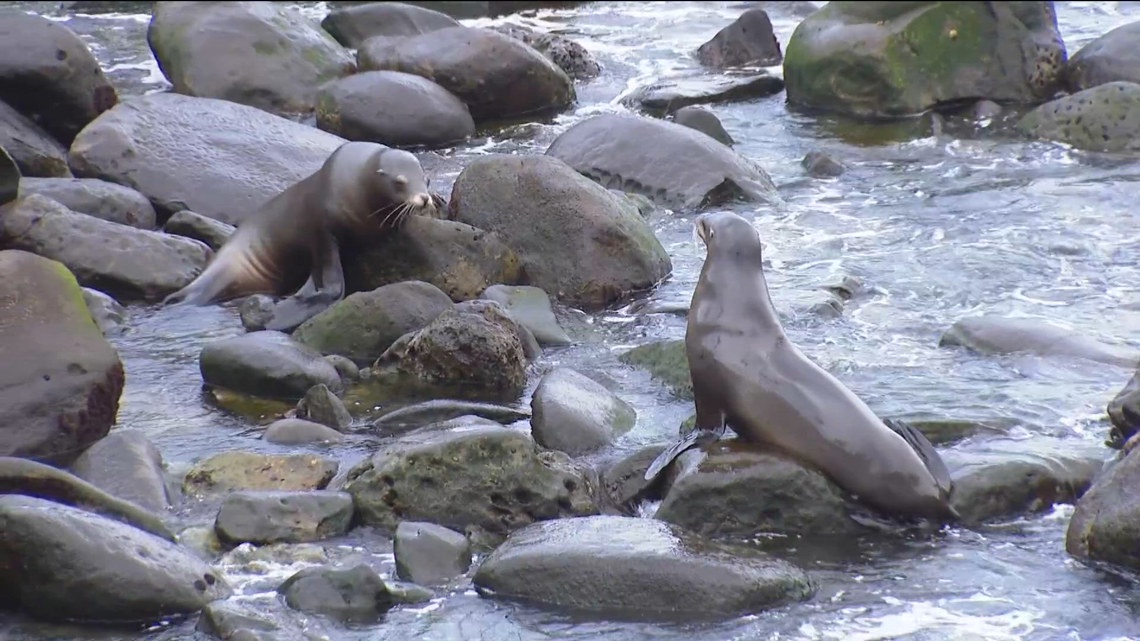
San Diego is gearing up to bring back a bacteria-based odor spray along the cliffs above La Jolla Cove, but not everyone is on board with the City’s plans.
SAN DIEGO — The City of San Diego is gearing up to bring back a bacteria-based odor spray along the cliffs above La Jolla Cove to manage the pungent odors in the area. While some are in support of the plans, not everyone believes this is the right move.
“It smells horrible out here. People want to come here for vacations, you know, enjoy the beach and all of that. But then when they come by, it smells so horrible,” Levy Rodriguez, a San Diego resident, said.

This story continues below.
The City of San Diego Parks and Recreation Department has applied for a permit to let crews treat the cove with “Bioactive Odor Counteractant and Cleaner” (BIOCAAC), manufactured by ARK Environmental Solutions based in Coronado.
The target is not the wildlife itself, but the stench from animal waste left behind.
“We shouldn’t do [anything] about it, because I feel like this is going to ruin how they are in there naturally habitat. And why are we going to mess with them if they don’t mess with us?”, Manuel Espinoza, a San Diego resident, said.
A City spokesperson told CBS 8 the spray is a water-based blend of cultured, non-pathogenic bacteria and surfactant — similar to those in household soaps. It creates a foaming effect to keep the mixture from running off the bluffs.
“This same product has been utilized many times in the past to mitigate the odor in those areas, and the City’s environmental team and partnering wildlife groups are working together to ensure work in this area does not impact wildlife or the water quality for swimming conditions. The cost for a single application of the product is approximately $325. It would be funded by the General Fund. The application of the product is expected to be used as needed and not on any set schedule, and will begin following review by the appropriate regulatory agencies,” Benny Cartwright, a Supervising Public Information Officer for the City of San Diego, said.
Christine Cavarlez, a free dive instructor at La Jolla Cove, was among those who were unconvinced, saying that if the product is sprayed on the rocks, it could end up in the water,
“The impact, I feel, has to be a lot more looked into because this is a public beach. There’s wildlife here, there’s humans here [who] use it every day. And if all of a sudden all this bacteria goes into the water, there could be health implications that could impact everybody, not just the wildlife,” she said.