
Ahead of fire season intensifying across California, Cal Fire crews are training for a time when wildfires can be especially vulnerable: overnight.At McClellan Airfield, pilots, crews, and command staff took part in a nighttime aerial firefighting exercise designed to prepare them to battle wildfires after dark, when cooler temperatures and higher humidity can help slow fire activity.Before the night flights began, crews conducted a daytime reconnaissance mission over a simulated fire near Auburn. During a briefing, Cal Fire Battalion Chief Sean Ryan told crews they would follow a specific route out of McClellan Airfield.“When you get off of McClellan, you’re going to take a due east approach,” Ryan said during a briefing.Ryan said crews also reviewed where they would draw water during the exercise, identifying Lake Clementine as the planned source. The daytime reconnaissance was intended to help crews study the route, identify hazards, confirm the water source, and ensure everyone was operating under the same plan before nighttime operations began.Ryan said the training is critical because it allows crews to prepare before they are faced with a real wildfire.“For us to be able to get together and train before there are actually flames, to be able to make sure that we’re operating on the same page for the airspace at night is super important,” Ryan said. “When we actually do have the fire, everything goes smoothly.”Ryan said nighttime operations can offer firefighters a major advantage.“Because the temperatures are cooler, the humidities are higher, the fire activity is generally lower,” Ryan said. “We’re able to do a lot more good as far as fire suppression on the fire.”During the day, wildfire airspace can be crowded with air tankers, lead planes, helicopters, and intelligence aircraft. At night, much of that traffic disappears, but the mission remains complex, with crews still needing to manage terrain, wires, communications, and spacing in the air.“We fly aided with night vision goggles at night. That’s how we’re able to see what we’re doing,” Ryan said.Ryan said the exercise has expanded in recent years from a smaller effort into a broader regional training that includes more coordination with Cal Fire aviation resources and other agencies.“We’ve really been ramping it up over the past few years to meet the need that California has been throwing at us as far as fire activity,” Ryan said.The training near Auburn is part of a broader effort taking place across the state as Cal Fire prepares for the height of wildfire season.Cal Fire will be conducting similar trainings this week across the state. See more coverage of top California stories here | Download our app | Subscribe to our morning newsletter | Find us on YouTube here and subscribe to our channel
SACRAMENTO, Calif. —
Ahead of fire season intensifying across California, Cal Fire crews are training for a time when wildfires can be especially vulnerable: overnight.
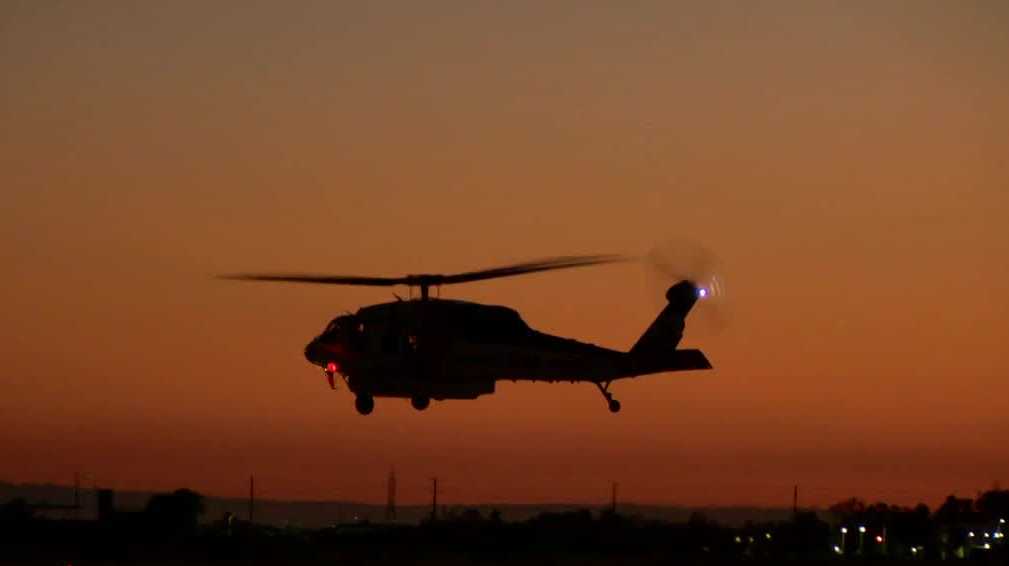
At McClellan Airfield, pilots, crews, and command staff took part in a nighttime aerial firefighting exercise designed to prepare them to battle wildfires after dark, when cooler temperatures and higher humidity can help slow fire activity.
Before the night flights began, crews conducted a daytime reconnaissance mission over a simulated fire near Auburn. During a briefing, Cal Fire Battalion Chief Sean Ryan told crews they would follow a specific route out of McClellan Airfield.
“When you get off of McClellan, you’re going to take a due east approach,” Ryan said during a briefing.
Ryan said crews also reviewed where they would draw water during the exercise, identifying Lake Clementine as the planned source.
The daytime reconnaissance was intended to help crews study the route, identify hazards, confirm the water source, and ensure everyone was operating under the same plan before nighttime operations began.
Ryan said the training is critical because it allows crews to prepare before they are faced with a real wildfire.
“For us to be able to get together and train before there are actually flames, to be able to make sure that we’re operating on the same page for the airspace at night is super important,” Ryan said. “When we actually do have the fire, everything goes smoothly.”
Ryan said nighttime operations can offer firefighters a major advantage.
“Because the temperatures are cooler, the humidities are higher, the fire activity is generally lower,” Ryan said. “We’re able to do a lot more good as far as fire suppression on the fire.”
During the day, wildfire airspace can be crowded with air tankers, lead planes, helicopters, and intelligence aircraft. At night, much of that traffic disappears, but the mission remains complex, with crews still needing to manage terrain, wires, communications, and spacing in the air.
“We fly aided with night vision goggles at night. That’s how we’re able to see what we’re doing,” Ryan said.
Ryan said the exercise has expanded in recent years from a smaller effort into a broader regional training that includes more coordination with Cal Fire aviation resources and other agencies.
“We’ve really been ramping it up over the past few years to meet the need that California has been throwing at us as far as fire activity,” Ryan said.
The training near Auburn is part of a broader effort taking place across the state as Cal Fire prepares for the height of wildfire season.
Cal Fire will be conducting similar trainings this week across the state.
See more coverage of top California stories here | Download our app | Subscribe to our morning newsletter | Find us on YouTube here and subscribe to our channel